

Introduction: The Evolution of Industrial Handling
Modern manufacturing demands more from material handling than ever before. Factories need logistics that are efficient, safe, and flexible. Traditional methods — overhead cranes and forklifts — have served industries for decades. But they were not designed for today’s complex production environments.
An Automated Guided Vehicle (AGV) is a driverless vehicle that moves materials within a facility following programmed paths. In AGV warehouse systems, these vehicles integrate with management software to automate inbound, in-process, and outbound logistics. The global AGV market was valued at USD 7.3 billion in 2025 and is projected to reach USD 25.1 billion by 2034, growing at a CAGR of 14.7%. The growth reflects a major shift in how factories manage material transport.
Many large factories are already moving toward automation. The real challenge is choosing the right handling system. For large factories moving heavy loads — sometimes tens or hundreds of tons — the choice between traditional equipment and heavy-duty AGVs requires careful evaluation. This article compares the two approaches across cost, safety, flexibility, and long-term return on investment.
Limitations of Traditional Handling Equipment
Overhead Cranes
Overhead cranes move loads along fixed rails. This works well for repetitive tasks within a defined area. But the limitations are significant. Cranes cannot easily serve multiple workstations. Their coverage is restricted to the rail layout. Adding new pick-up or drop-off points often requires track extensions or structural modifications. In many factories, this also means production downtime.
Safety is another concern. Heavy load transport safety with cranes depends heavily on operator attention. Crane operations involve lifting loads above floor level. Any failure — mechanical or human — creates a falling hazard.
Manual Forklifts
Forklifts are versatile and widely available. But they are also labor-intensive. A typical two-shift operation with five forklifts requires ten operators. A forklift operator can cost around $80,000 per year, including wages, insurance, and related expenses. For ten operators, labor costs can reach $800,000 annually, or nearly $4 million over five years.
The challenges go beyond direct labor cost. Forklifts require trained drivers. They face visibility limitations, especially with bulky loads. In narrow aisles or congested areas, accident rates rise. Forklift accidents result in approximately 85 fatalities and 34,900 serious injuries in North American warehouses each year. Each incident brings direct costs (medical, compensation, equipment repair) and indirect costs (investigations, lost productivity, morale issues).
Inefficiency of Manual Methods
Traditional material handling equipment performs poorly on complex or changing paths. Cranes require dedicated tracks. Forklifts depend on driver route decisions, which vary by shift and experience. Both systems struggle when production layouts change — a common need in modern manufacturing.
Advantages of Automated Guided Vehicle Systems
24/7 Operation
AGVs do not take breaks. They do not get tired. They do not need shift changes. An AGV robot can operate continuously, moving materials as production demands. This consistent operation directly reduces automated guided vehicle cost over time because the same vehicle produces output across three shifts without additional labor expense.
According to A3, the operating cost of one autonomous mobile robot can be as low as 10% of comparable labor costs and about 20% of forklift operating costs. The comparison considered 24/7/52 operation — something human drivers cannot match.
Flexibility
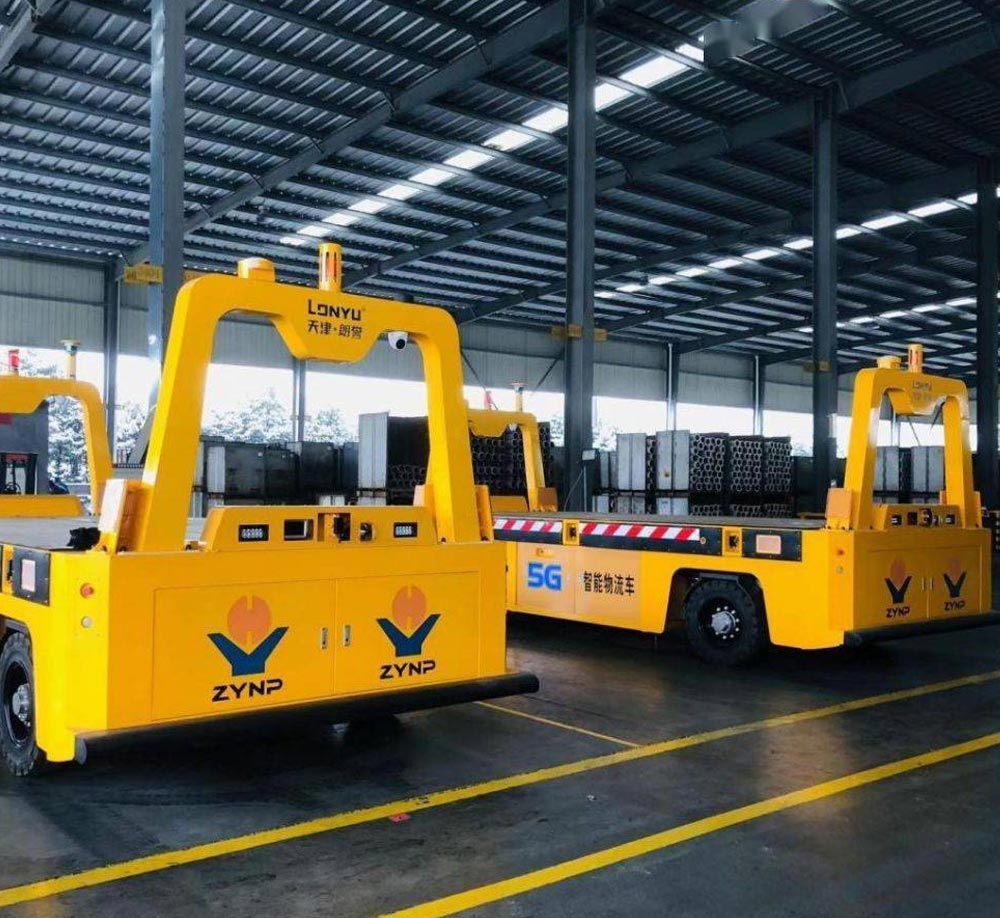
This is where AGVs clearly outperform traditional equipment. Trackless transfer carts and omni-directional AGVs move freely across factory floors. They navigate around obstacles. They adapt to layout changes without infrastructure modifications. If the production layout changes, engineers can usually update AGV routes within a few hours.
AGV robot systems integrate directly with Manufacturing Execution Systems (MES) and Warehouse Management Systems (WMS). This integration allows real-time task assignment, traffic management, and data collection. Factory managers can see exactly where every load is at any moment — something impossible with manual forklifts.
Safety and Precision
AGVs use laser scanners, cameras, and other sensors to detect obstacles and stop automatically. They follow programmed paths with centimeter-level precision. This removes human error from the equation.
Available data supports this safety advantage. When AGVs with proper safety design are deployed, incident rates can drop 40% to 70% within one to three years. A 2025 survey of U.S. warehouse workers found that 60% of those using robotics reported fewer workplace injuries, and 59% noted reduced physical strain.
AGVs also deliver more consistent operating performance because their speed, routes, and handling behavior are controlled by software. Heavy load transfer happens at consistent speeds, with consistent accuracy.
Customized Solutions
Not all heavy loads are the same. A coil transfer car moving steel coils faces different demands than a mold transfer cart moving injection molds in automotive manufacturing. Automated guided vehicle manufacturers offer specialized designs for these applications. Options include magnetic guidance, laser navigation, natural feature navigation, and hybrid systems combining multiple technologies.
Cost-Benefit Analysis
In most large factories, the final decision depends on long-term operating costs and productivity. A direct comparison helps illustrate the differences.
Initial Investment
AGVs typically have a higher upfront price than forklifts. An AGV unit may cost $50,000 to $200,000, while a forklift ranges from $20,000 to $80,000. However, this comparison is incomplete. A forklift requires an operator. An AGV does not. To replace the output of a three-shift operation, you would need multiple forklifts and multiple drivers — or one AGV running continuously.
Operating Costs
The real difference appears in operating expenses (OpEx). Consider this example from AIM Consulting: five forklifts running across two shifts with ten operators. At $80,000 per driver annually, five-year labor cost alone reaches $4 million. Adding overtime, injury costs, maintenance, product damage, and management time brings the five-year total to approximately $6.2–$6.7 million.
An automated guided vehicle system replacing those five forklifts might use eight AGVs (safety considerations mean a slight ratio adjustment). If the $2.4 million AGV investment is financed over five years, annual payments would be around $601,000. Add residual labor (a material coordinator and maintenance support, roughly $240,000 annually), AGV maintenance ($10,000 per unit per year), energy costs, and software support. The fully burdened five-year AGV system total lands around $4 million — even after financing costs.
The table below summarizes this comparison:
| Cost Category | Manual Forklift Operation (5 yrs) | AGV System Operation (5 yrs) |
| Labor (drivers) | $4,000,000 | $0 |
| Overtime | $600,000 | $0 |
| Injury & compensation | $450,000 | Reduced (included in maint.) |
| Equipment maintenance | $600,000 | $400,000 |
| Product damage | $300,000 | Lower by 80%+ |
| Management time | $250,000 | $0 |
| Residual labor | $0 | $1,200,000 |
| Equipment capital | (in maintenance) | $2,400,000 |
| Financing interest | $0 | $600,000 |
| Total (approximate) | 6,200,000–6,200,000–6,700,000 | ~$4,000,000 |
Space Utilization
AGVs operate in narrower aisles than forklifts. A forklift requires turning radius and clearance that a trackless transfer cart does not. This allows warehouse AGV automation to increase storage density without expanding building footprint. For facilities with constrained floor space, this benefit translates directly into capacity gains.
ROI Calculation
Real-world ROI data is available from documented implementations. A study of AGV projects published by cdrongxi.com reports the following payback periods:
- E-commerce warehouse: 32 AGVs, total investment ~$480,000 (equivalent), annual savings ~$373,000, payback ~1.3 years.
- Automotive parts plant: 56 AGVs, total investment ~$850,000, annual savings ~$732,000, payback ~1.2–1.8 years.
- Chemical plant (explosion-proof): 6 AGVs, investment ~$275,000, payback ~4.2 years due to specialized safety requirements.
For large factories handling heavy loads, the typical payback period ranges from 1.5 to 3 years. Actual ROI varies by factory conditions, including load size, operating shifts, and infrastructure requirements.
Lonyu Robot: Heavy-Duty Solutions
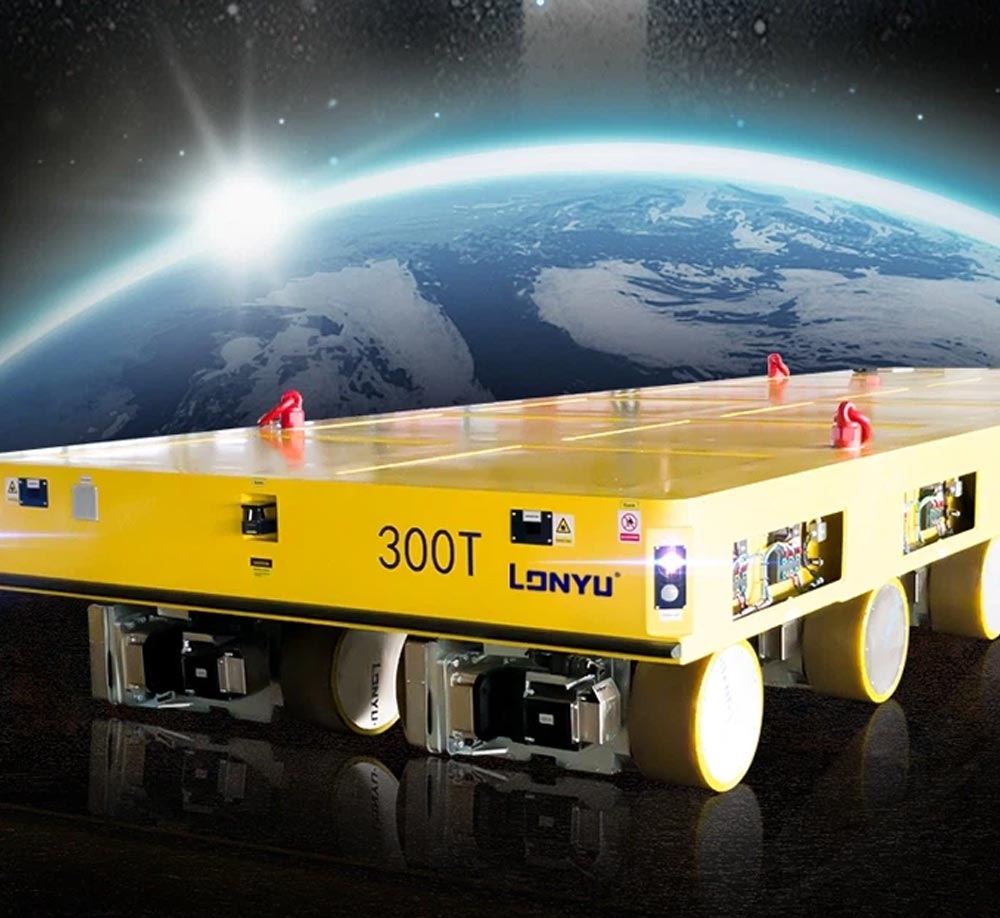
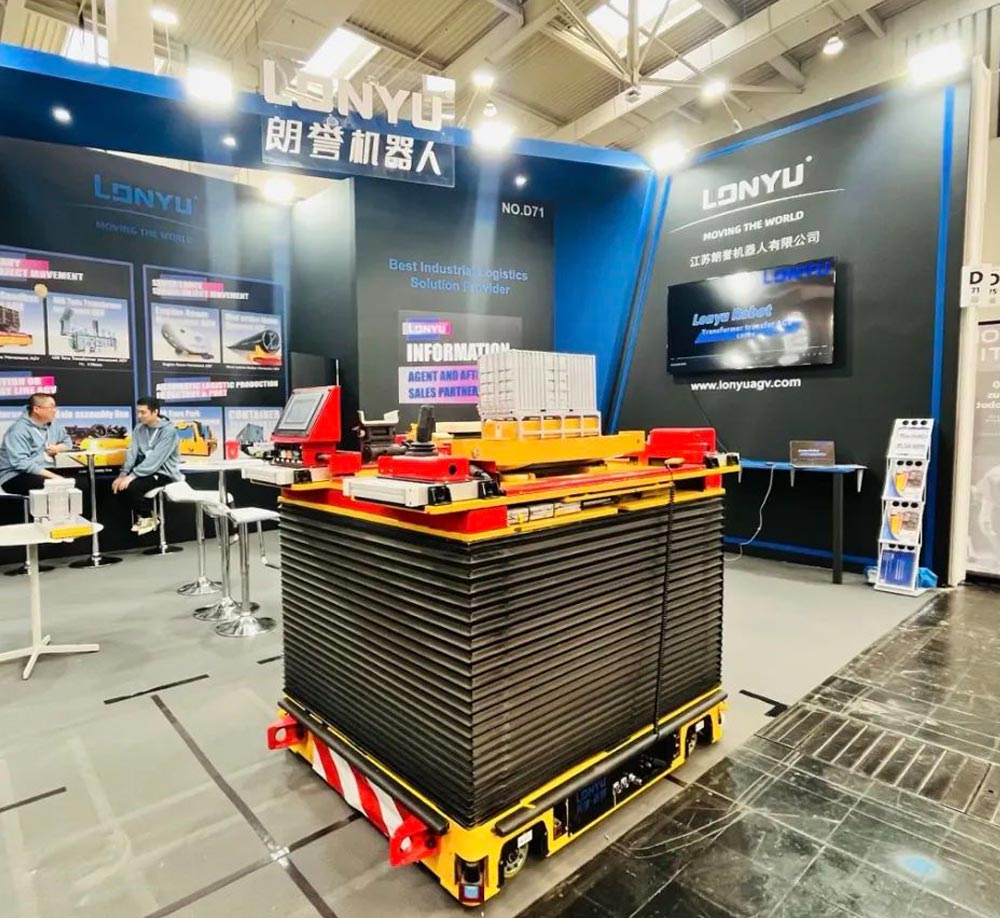
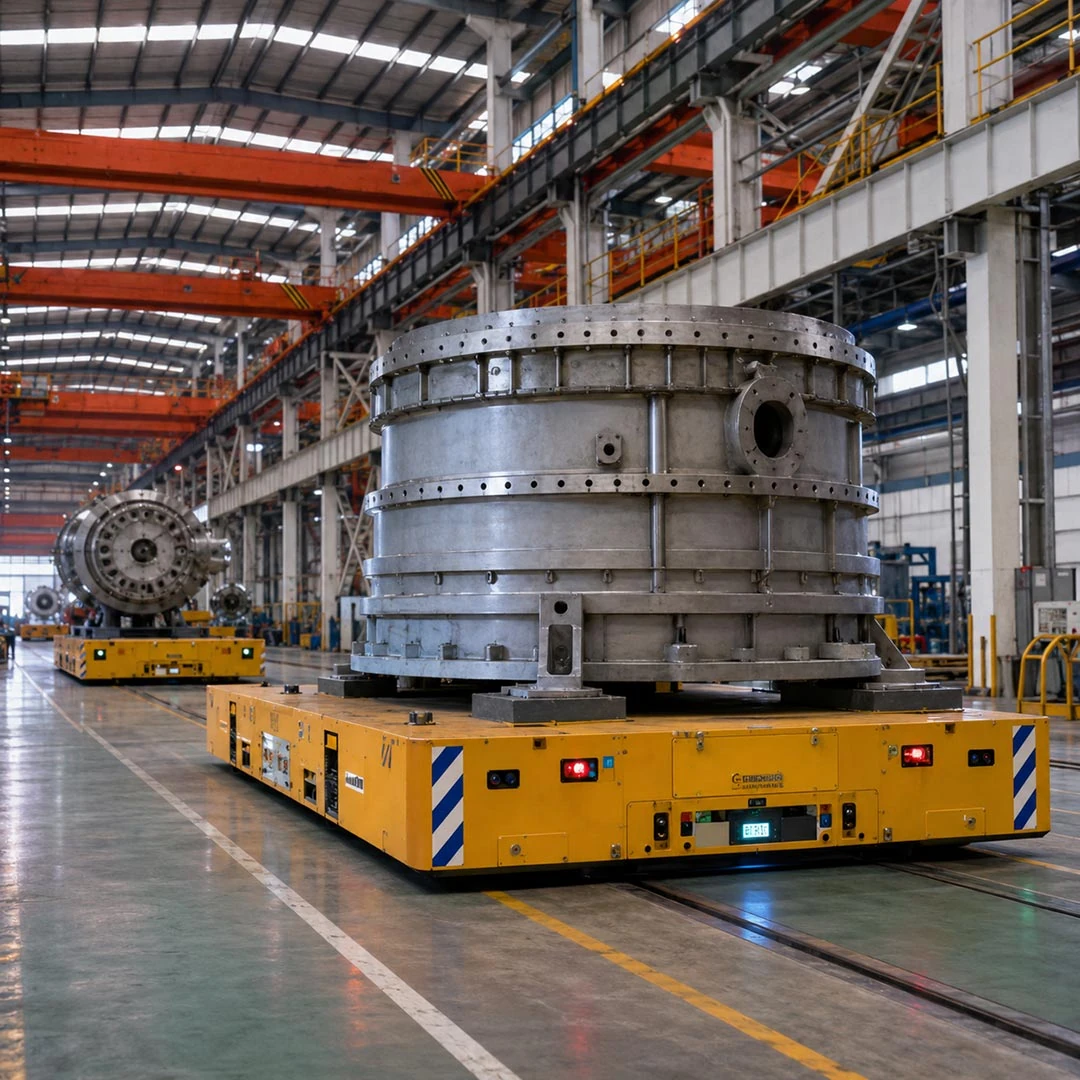
Lonyu Robot (Tianjin Lonyu Robot Co., Ltd.) is an AGV robot manufacturer focused on heavy-duty AGV applications. The company specializes in moving loads that standard automation equipment cannot handle. Moving loads above 100 tons is not an extension of standard automation — it is a different engineering problem.
Key product categories include:
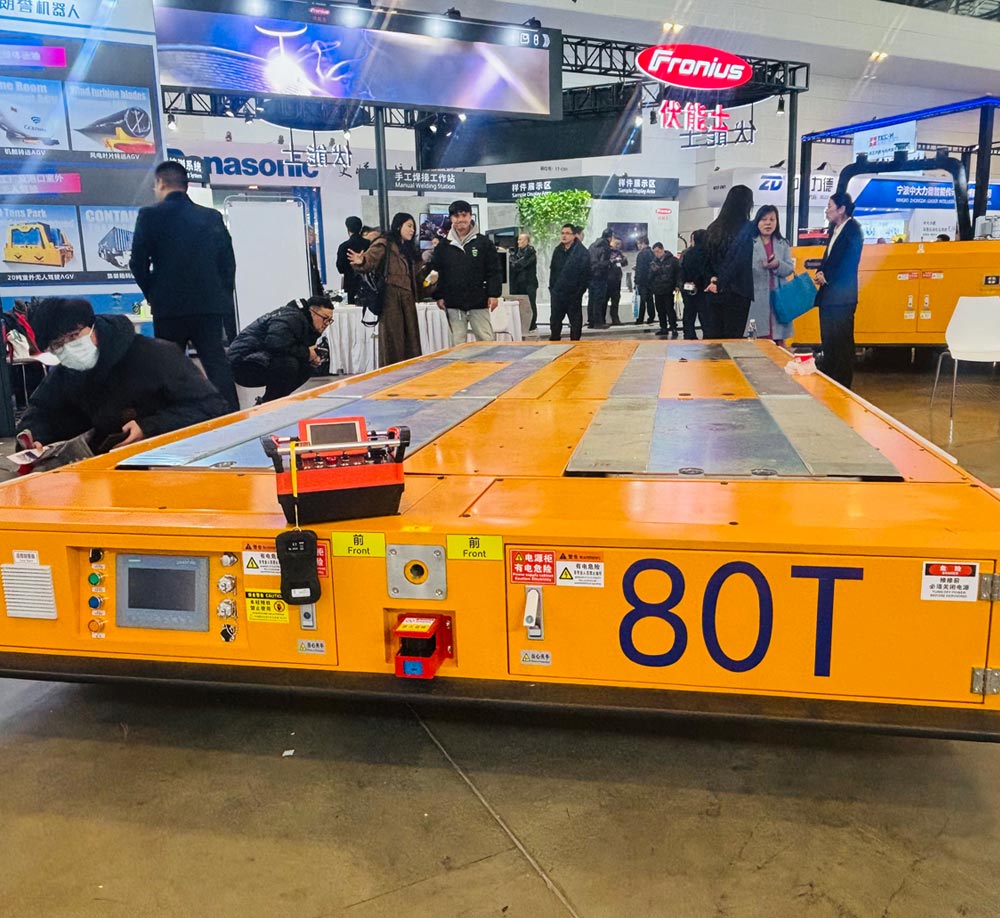
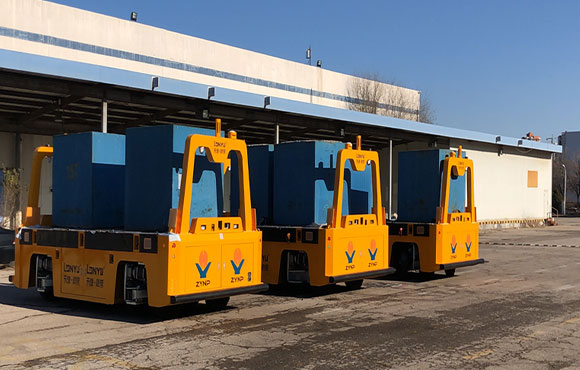
- Heavy-duty transporters for wind energy, aerospace, and transformer industries (heavy load transformer transport).
- Battery transfer carts and electric transfer carts with automotive-grade lithium iron phosphate batteries.
- Motorized transfer trolleys and industrial transfer trolleys for workshop transport.
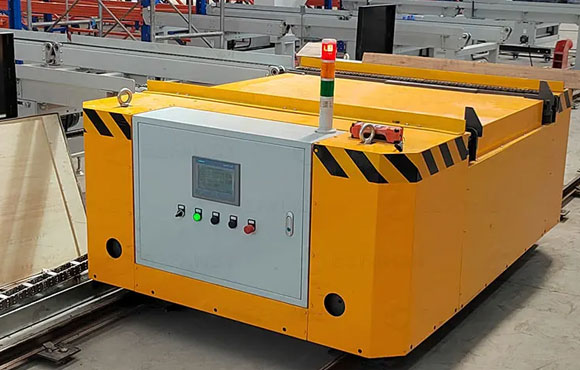
- Rail transfer carts for fixed heavy-load paths where maximum efficiency is required.
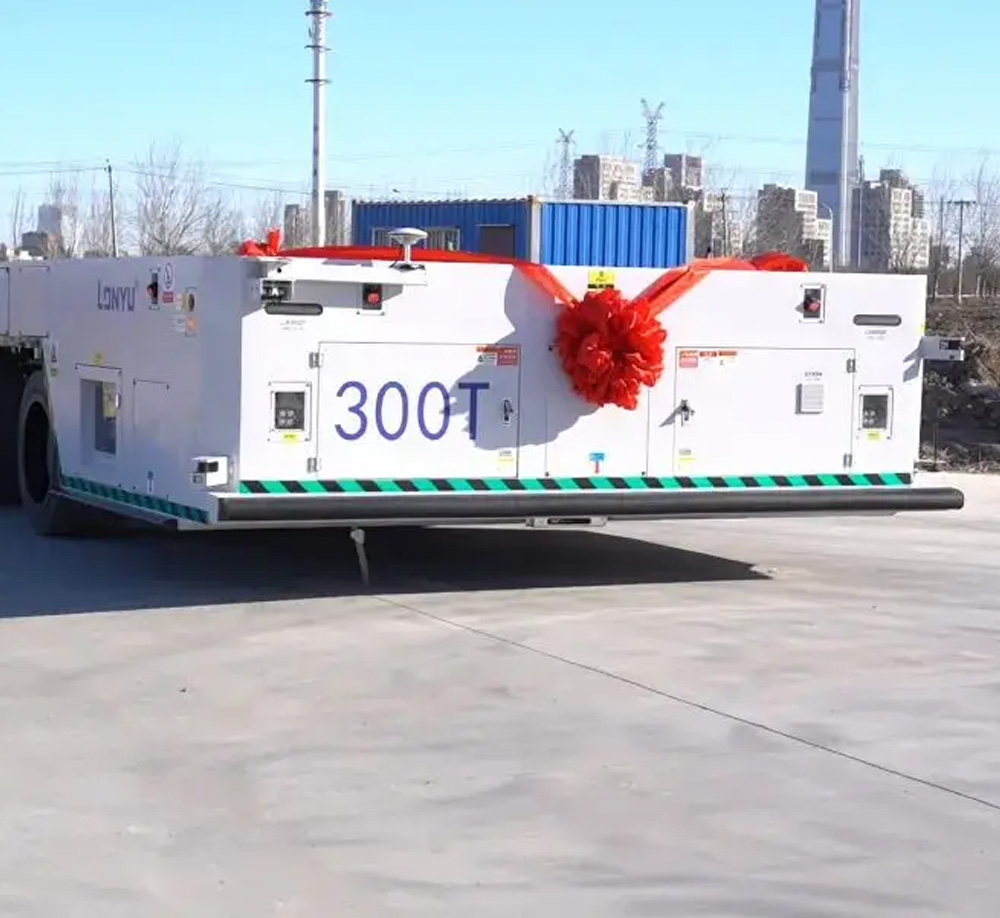
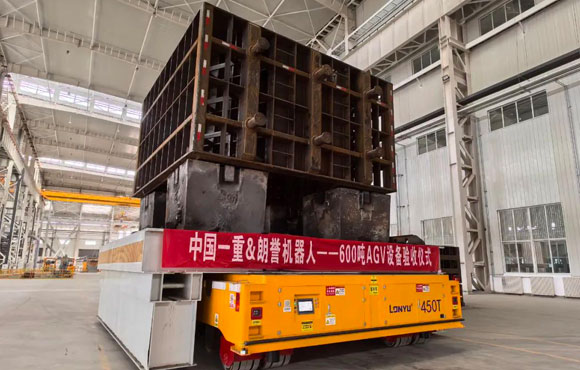
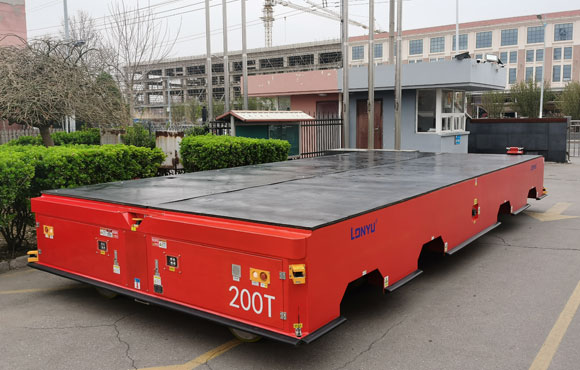
Lonyu’s heavy duty AGV products include configurations reaching 600 tons. One such unit measures 8.5m in length, 4.54m in width, and 1.1m in height, with a maximum load capacity of 600 tons and an operating speed of 20 meters per minute.
The company serves international markets including AGV robot Singapore, AGV robot Malaysia, and AGV robot India operations, providing on-site support for global customers.
Automated Guided Vehicle Applications in Practice
Automotive Manufacturing
In automotive plants, mold transfer carts handle heavy dies between storage and presses. Traditional methods involve cranes or forklifts with significant setup time. An AGV system automates the entire exchange process. The cart positions itself under the mold, lifts it, and transports it to the press — all without manual intervention. Cycle times drop. Safety improves because no workers are near suspended loads.
Steel and Metals Processing
Coil handling is a demanding application. Steel coils can weigh tens of tons and reach high temperatures. A coil transfer car for this environment requires heat-resistant construction and precise positioning for uncoiling lines. Lonyu has deployed solutions for 70-ton steel coil transport in mills. The AGVs navigate between storage racks and processing equipment, automatically queuing coils for production.
Smart Warehousing
AGV robot warehouse configurations combine multiple vehicle types working together. One common setup uses heavy-duty AGVs for bulk material movement and smaller robots for picking. The system communicates with the WMS to prioritize urgent orders and balance traffic. This approach has proven effective in large distribution centers handling mixed product types.
Frequently Asked Questions (FAQ)
Q: What is the typical payback period for an AGV system in a large factory?
A: Based on real implementation data, the payback period generally ranges from 1.5 to 3 years. Projects in automotive and e-commerce sectors often reach payback in under two years. Chemical or explosion-proof applications may take longer due to specialized equipment costs.
Q: How does AGV safety compare to forklift operation?
A: AGVs remove human error from material transport. Data shows workplace injuries drop 40–70% after AGV deployment in comparable environments. Forklifts are involved in approximately 85 fatalities and 34,900 serious injuries annually in North America alone.
Q: Can AGVs operate outdoors?
A: Yes. Outdoor AGVs use GNSS navigation, inertial navigation, and visual navigation to operate in industrial campuses and ports. Lonyu’s outdoor models include multi-sensor fusion positioning with centimeter-level accuracy and operating speeds up to 10 km/h.
Q: What loads can heavy-duty AGVs handle?
A: Commercial heavy-duty AGVs handle loads from 50 tons to over 600 tons. Lonyu has delivered AGVs with maximum load capacity of 600 tons for heavy equipment manufacturing.
Q: Do AGVs require special floor modifications?
A: Trackless transfer carts do not require fixed guides or floor modifications. They navigate using laser or natural feature navigation. Rail transfer carts do require tracks, but these are only specified for applications with fixed, repetitive paths where maximum efficiency is needed.
Conclusion
For many factories, AGV adoption is driven less by technology trends and more by long-term cost reduction and operational efficiency. The data shows that for large factories moving heavy loads, AGVs offer lower total operating costs, improved safety, and greater operational flexibility.
The economic benefits of AGVs become more obvious when companies evaluate labor, maintenance, safety, and productivity together. For factories beginning this evaluation, the recommended first step is a small pilot. Deploy three to five AGVs in a controlled area. After the pilot phase, factories can evaluate productivity improvements and decide whether to expand deployment. This approach minimizes risk while building internal expertise.
To explore specific heavy-duty transfer carts or coil transfer car solutions for your operation, consult an AGV supplier with proven experience in your industry. Lonyu Robot provides custom configuration for heavy-load applications, backed by documented case studies in wind energy, transformer manufacturing, steel processing, and port logistics.