

Introduction: The “Giant Problem” in Wind Energy
How can a “giant arm” longer than a football field be moved safely and efficiently in a wind farm at night? This is the daily reality facing the wind power industry—the transportation of blades measuring hundreds of meters in length. Traditional methods rely on manually operated forklifts and manual adjustments, which are not only inefficient and costly but also pose significant safety risks at night or in complex environments.
The Pain Points: Why Traditional Transport Fails
1. Low Efficiency: Manual coordination slows operations.
2. High Costs: Labor expenses + consumable waste (pads/straps).
3. Safety Hazards: Poor visibility at night or on rough terrain.
4. Precision Issues: Blade damage from unstable handling.
5. Nighttime Limitations: Darkness halts critical operations.
A breakthrough tool: Tianjin Lonyu Robot’s dual-vehicle linked AGV solution
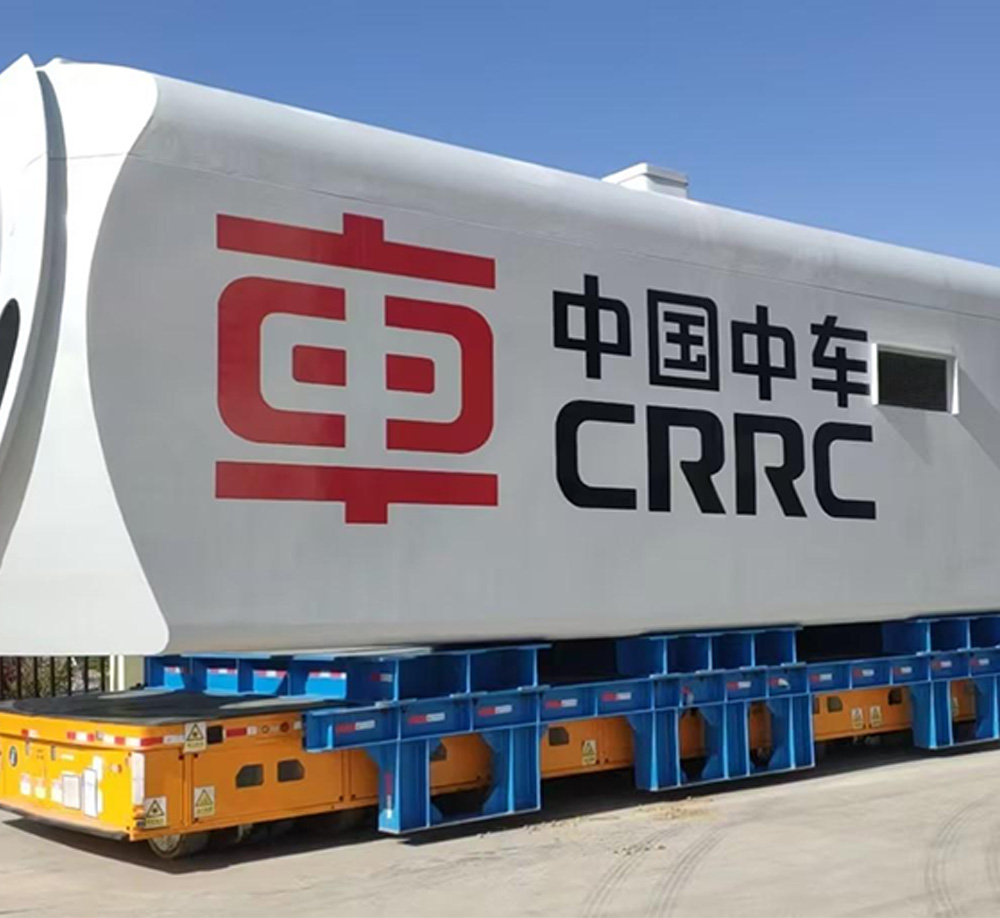
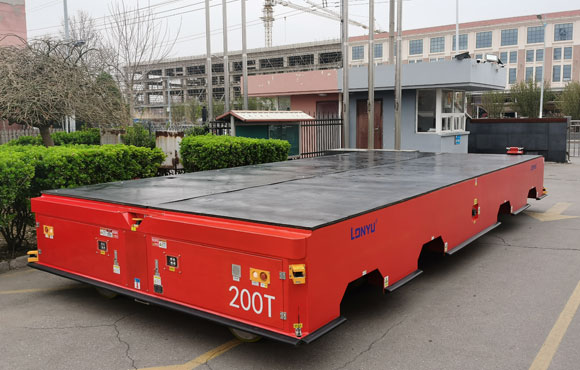
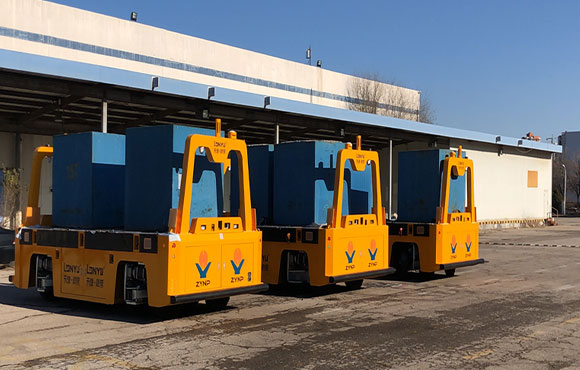
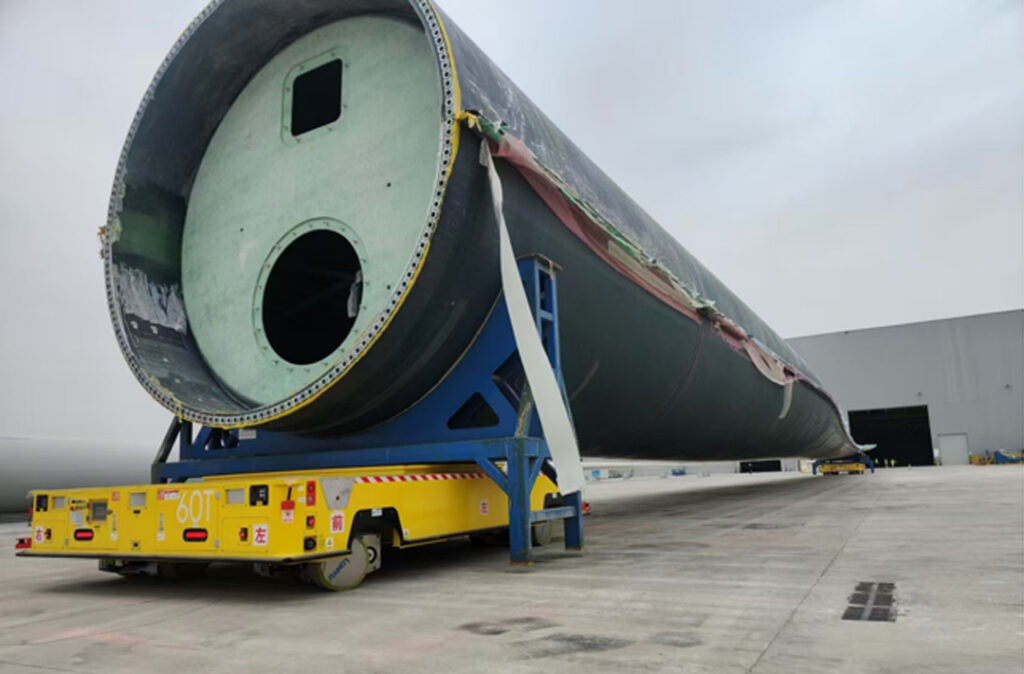
Faced with these industry-wide challenges, Tianjin Lonyu Robot Co., Ltd. has innovatively launched a dual-vehicle linked heavy-duty AGV system. The core of this solution lies in the coordinated operation of two intelligent AGVs, with the front and rear vehicles supporting both ends of the blade, like two well-coordinated “steel partners,” to achieve the synchronized, smooth, and efficient transfer of extra-long materials.
Real-world performance: The outstanding capabilities of the 60-ton dual-vehicle AGV system
Take our widely adopted 60-ton dual-vehicle system as an example to see how it excels in wind power construction sites:
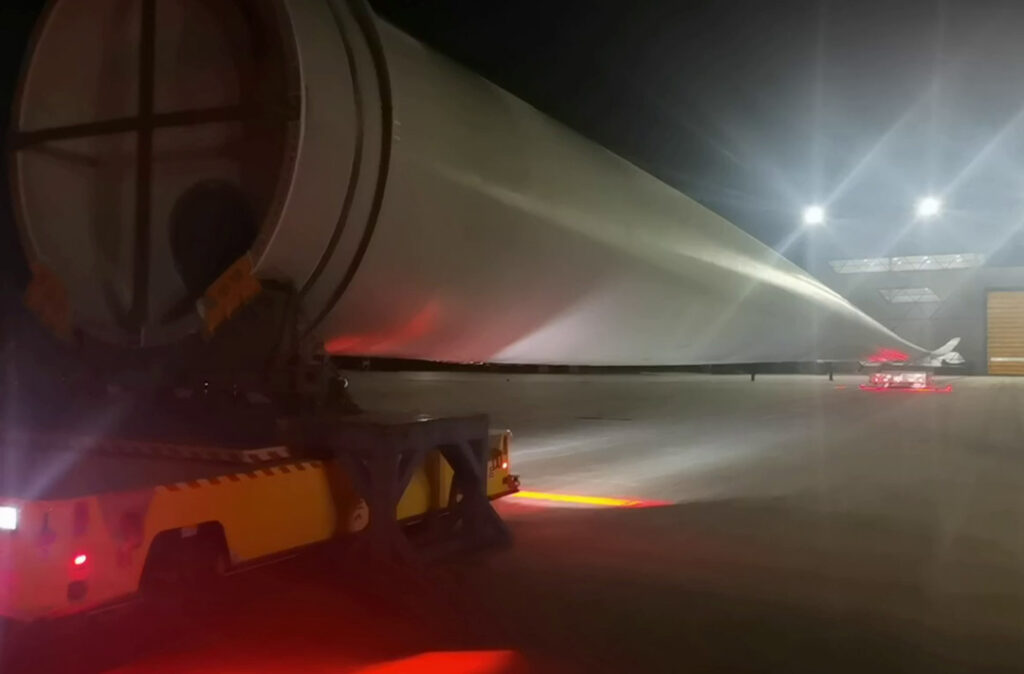
Zhangjiakou Base (Mingyang New Materials) at midnight:The cold wind is cold and the rain is falling. Traditional management has long since stopped. However, the Lonyu AGV, equipped with built-in high-intensity lighting and high-visibility contour warning lights, clearly illuminates the transportation path. Operators uses an industrial-grade remote control to remotely control the two cars from a safe location. The vehicles move synchronously, and the ultrasonic radar constantly scans the surrounding environment, and automatically slowing down or stops when encountering obstacles. The hydraulic suspension system will automatically level the vehicles, ensuring that the blades can remain stable even on wet roads. Night restricted area has been successfully broken!
Zhuzhou Factory Workshop (Times New Materials): Compact space with limited turning radius. Traditional forklift trucks struggle with “tail swing” and often scrape equipment or walls. Lonyu AGVs can easily execute the mode of “small radius turn” or even “in-situ rotation”, use its omni-directional maneuverability to flexibly maneuver in a limited spaces, and accurately transport the blades to designated workstations, which significantly improves the utilization rate and turnover efficiency of workshop space.
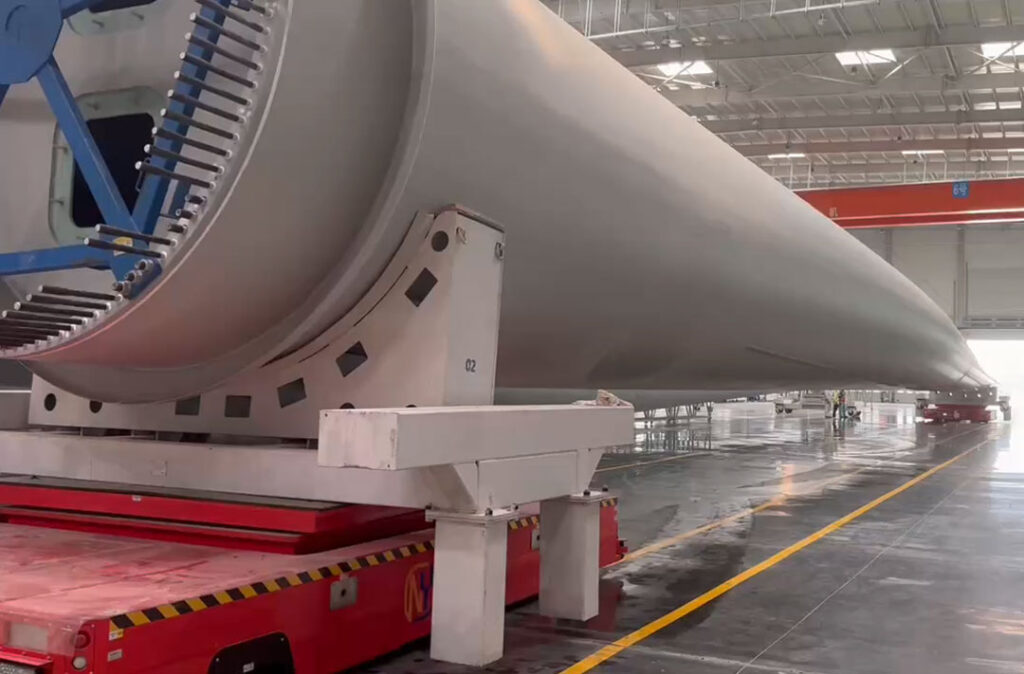
Complex factory floor conditions: Ditches, uneven terrain, and mild slopes are inevitable. The AGV’s large-diameter drive wheels (optional solid rubber tires or wear-resistant polyurethane-coated tires) and intelligent hydraulic suspension system are key. The AGV’s support suspension mechanism is designed with a pivot shaft that allows for minor angular oscillations (designed oscillation angle of ±2 degrees), ensuring stability while addressing uneven surfaces. Through minor oscillations and the combined effect of the workpiece’s gravity, the workpiece remains level. Rubber supports are designed around the pivot shaft to serve as a swing damping system, preventing excessive swaying. The support structure is fitted with 20mm-thick polyurethane plates. In cases of non-parallel conditions, the polyurethane can absorb part of the deformation through compression, acting like a “cushion” to protect the fragile blade structure from damage.
Why do wind power giants choose Lonyu dual-car AGVs? Taking a 60-ton dual-car AGV as an example
1, safety first, multi-layer protection
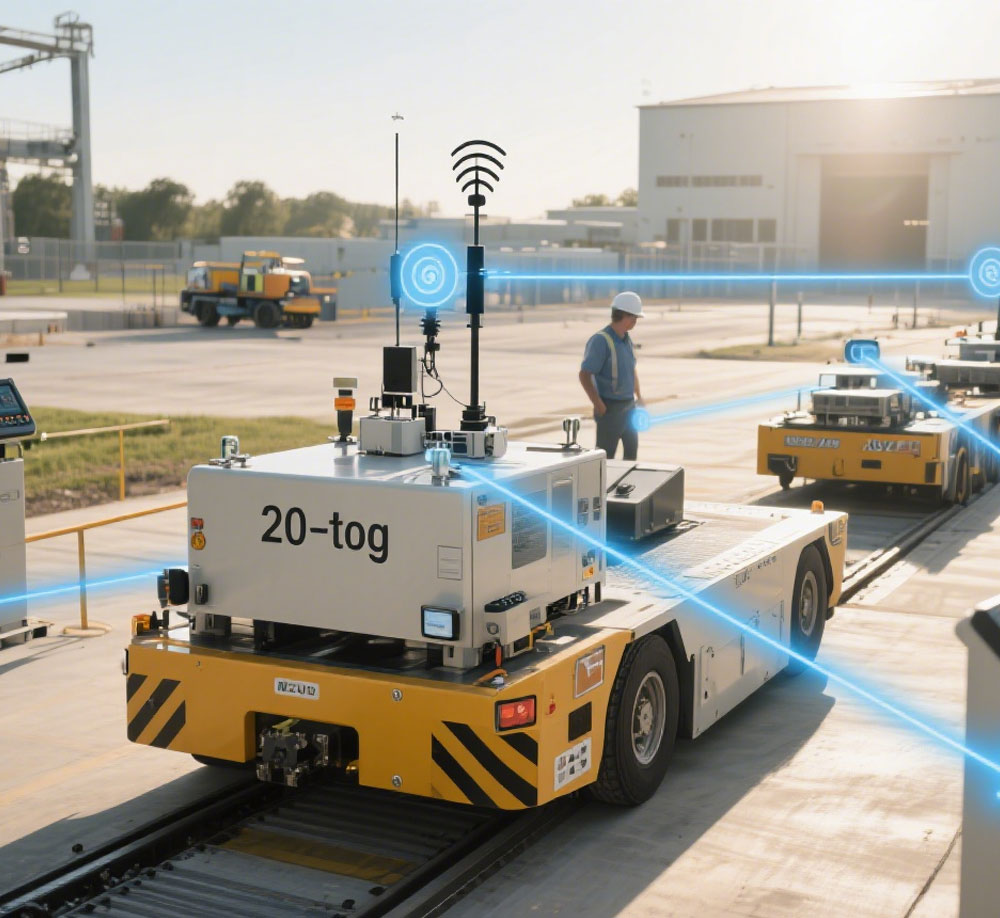
Active defense: Lidar detects ≥ 10m (it can slow down within 1-10m, and stop within 0.2-1m) +anti-collision device, which can detect moving or stationary obstacles in front in real time, and control the vehicle to slow down or stop according to the distance to the obstacle.
Passive protection: Collision-proof rubber strips around the vehicle; Triple emergency stop protection device (on-board button, wireless remote control, remote control)
Audio-visual warnings: High-decibel alarm, three-color warning lights, contour lights, turn signals, providing comprehensive warnings to personnel.
2. Intelligent, efficient and accurate control
Dual-vehicle coordination: Wireless module control synchronizes the movement and posture of both vehicles in real time via laser ranging, eliminating “lagging behind” or “pulling apart.”
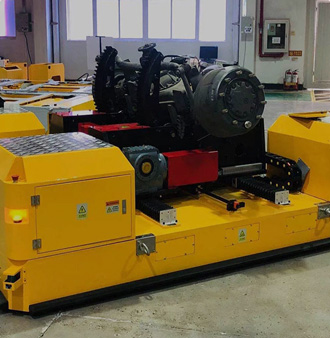
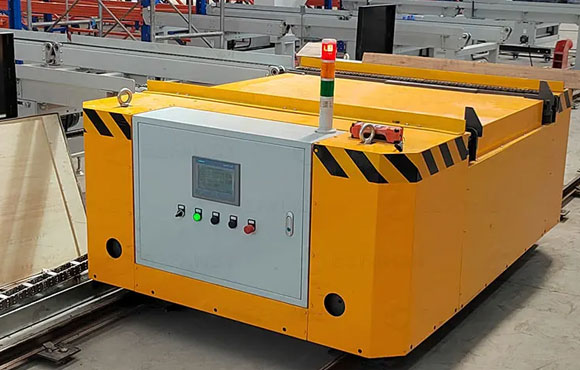
Omnidirectional movement: Forward/reverse, lateral movement, tail-slide turning, on-the-spot rotation, hill climbing, and obstacle crossing—capable of anything, minimizing turning space requirements.
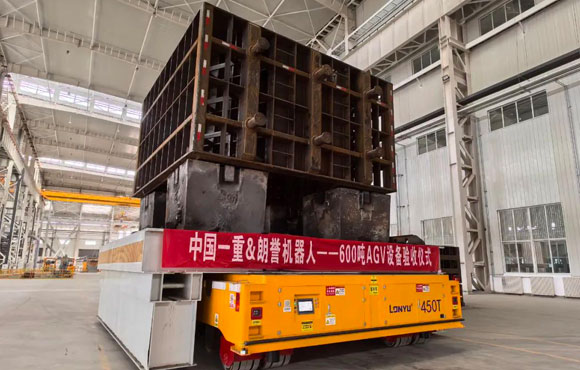
Strong and stable: Strong load capacity, four-wheel drive, eight-wheel multi-drive coordinated control, stepless speed regulation ≤30 meters/minute, powerful, smooth operation.
3, durable and reliable, all-weather running.
Extended running time: Power lithium-ion batteries can provide 6-8 hours of running time, and the charging time is less than 3 hours, which can meet the demand of high-intensity production.
Adapt to harsh environment: it can work in temperatures range of-35 degrees Celsius to 50 degrees Celsius, and it can also work normally in light rain or heavy snow.
Modular design: modular design of drive modules, control cabinets and hydraulic systems, ensuring structural strength, easy maintenance and high stability through finite element analysis.
4. Cost optimization and significant value:
Cost reduction: Significantly reduces the need for labor (especially in high-tech, high-risk positions), lowers consumable waste, and minimizes potential accident compensation costs.
Efficiency enhancement: Continuous operation at night and in extreme temperatures, precise and rapid operation, and shorter project cycles.
Value retention: Long lifespan and high reliability design provide long-term investment returns.
Successful cases: the choice of industry leaders
Tianjin Lonyu Robotics’ dual-vehicle AGV system has successfully served many leading wind power companies and withstood rigorous testing.
· Dongfang electric: 120-ton double-car AGV system.
· Imagine energy: 60-ton, 120-ton and 160-ton dual-vehicle AGV systems (various models.
· Times New Materials: 60-ton dual-vehicle AGV system.
· Yang Ming new Materials: 60-ton double-car AGV system.
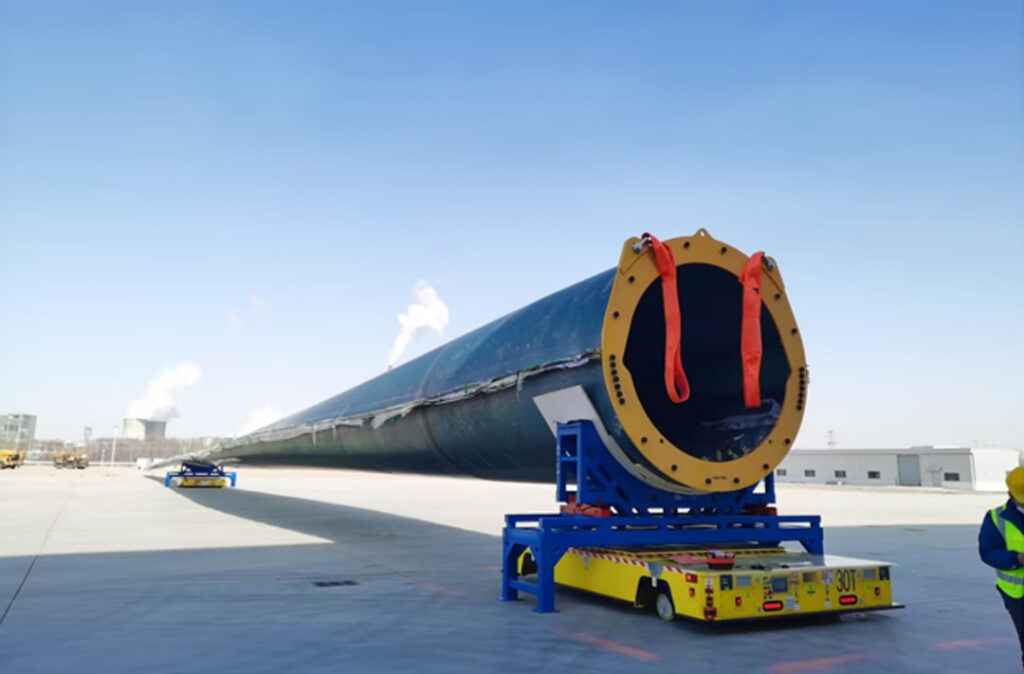
For each project, Lonyu will tailor the driving wheel configuration and suspension system optimization according to specific site conditions (road conditions, spatial layout, blade specifications and climate characteristics) to ensure the best performance.
Conclusion: Intelligent logistics empowering a green future.
The trend toward larger wind turbine blades is irreversible, and the need for efficient, safe and intelligent logistics solutions is becoming more and more urgent. Tianjin Lonyu Robotics’ dual-vehicle heavy-duty AGV, with its core advantages of ultra-high load capacity, precise flexibility, multiple safety features, and robust reliability, is emerging as a revolutionary tool in the transportation of wind turbine blades. It not only solves the current “handling challenges”, reduces overall costs and ensures the safety of personnel, but also provides a strong logistics infrastructure foundation for the large-scale development of the wind power industry and the realization of the national “double carbon” goals through automatic and intelligent solutions.
Choosing Lonyu makes the transportation of 100-meter blades as effortless as lifting a feather.