

Brief introduction
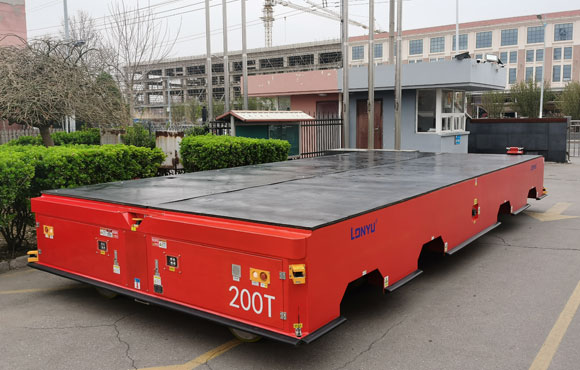
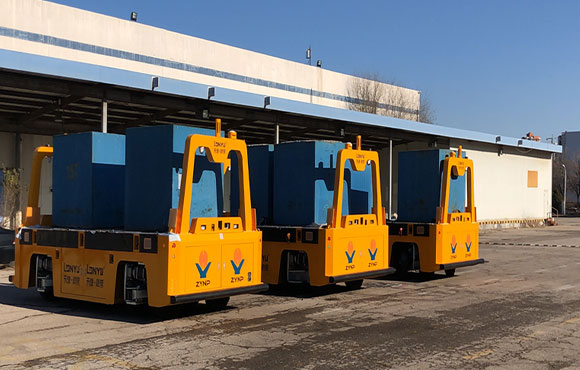
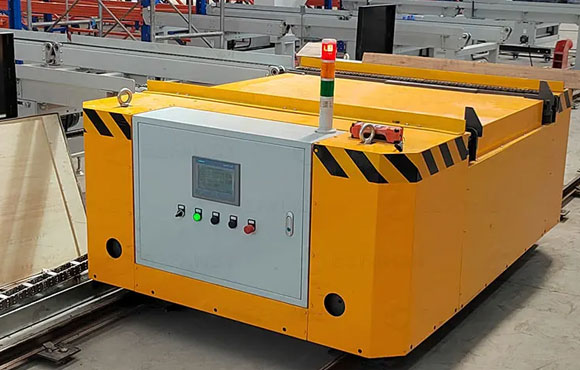
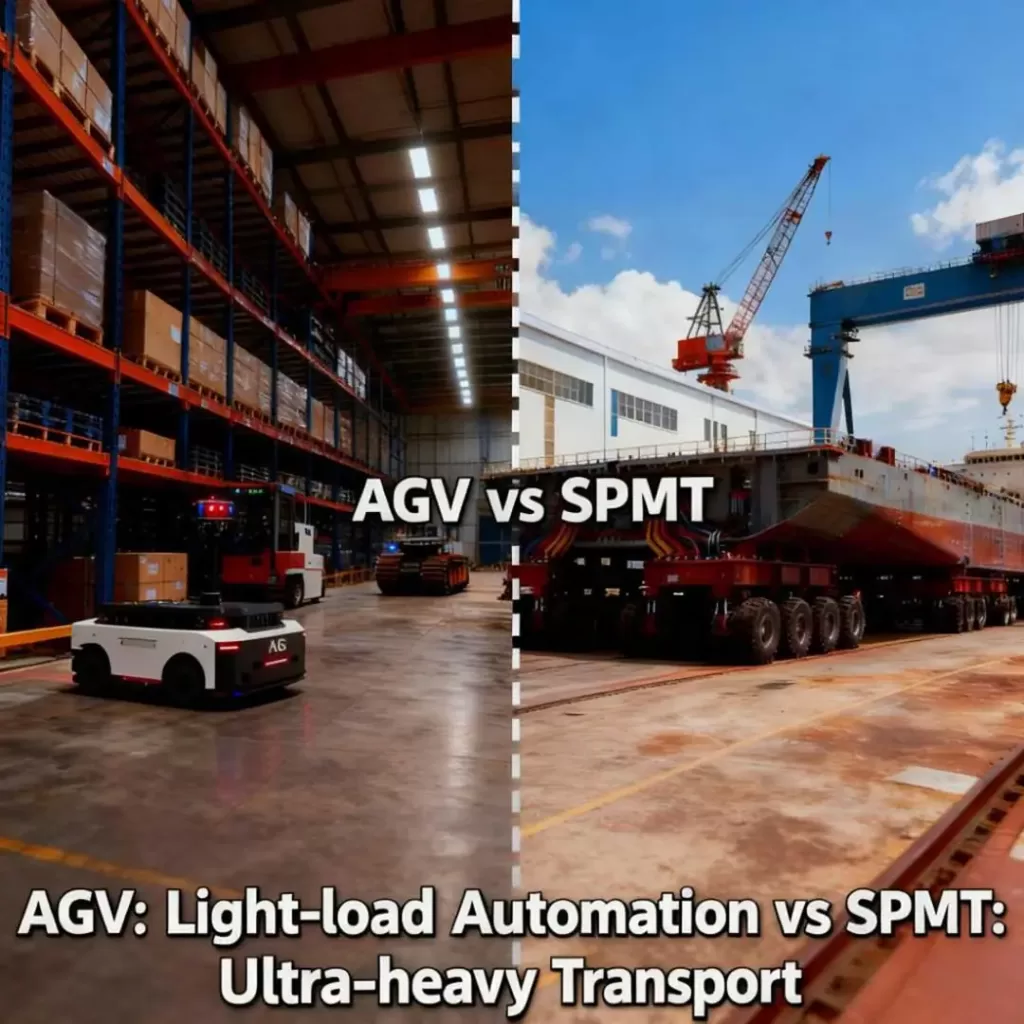
In the era of automated material handling and heavy-duty engineering logistics, two technologies stand out: AGV (Automated Guided Vehicle) and SPMT (Self-Propelled Modular Transporter). Although both of them serve transportation purposes, their price points, technical capabilities and application scenarios are quite different. This paper discusses the core differences between AGV and SPMT, and helps enterprises to make wise decisions based on industry data, technical specifications and real-world use cases.
Definitions: what are AGV and SPMT?
Automatic guided vehicle Definition
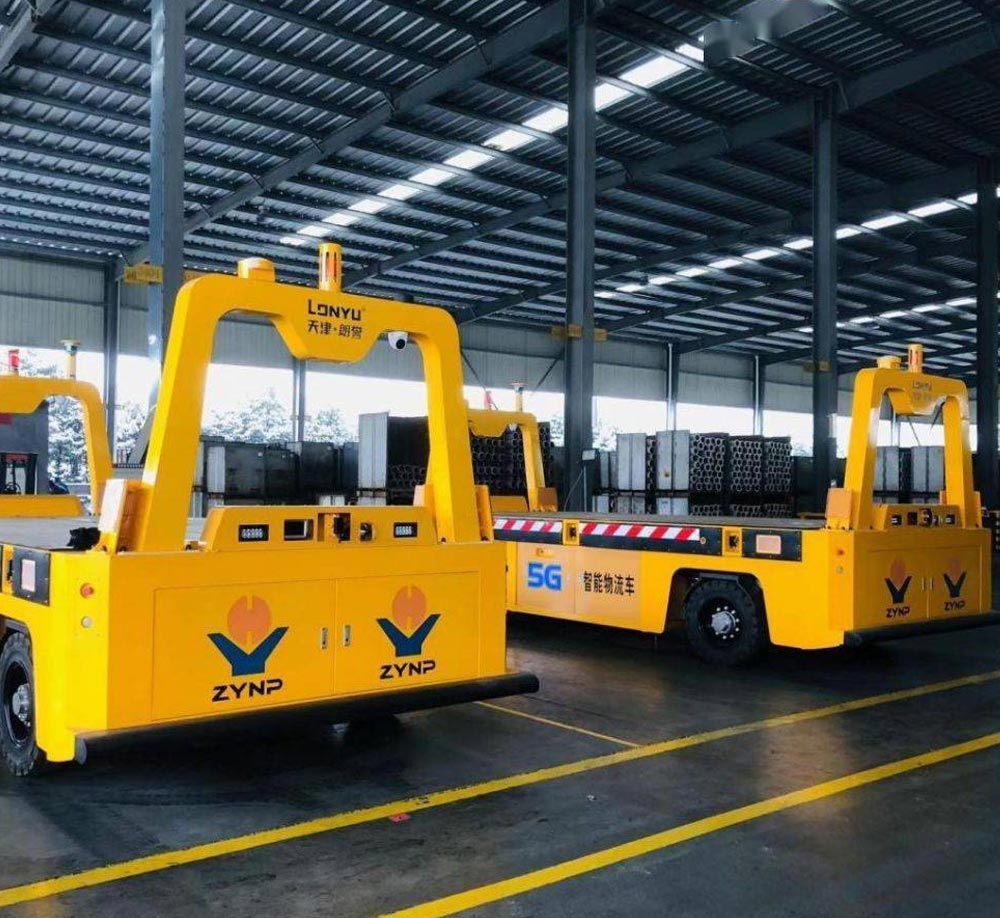
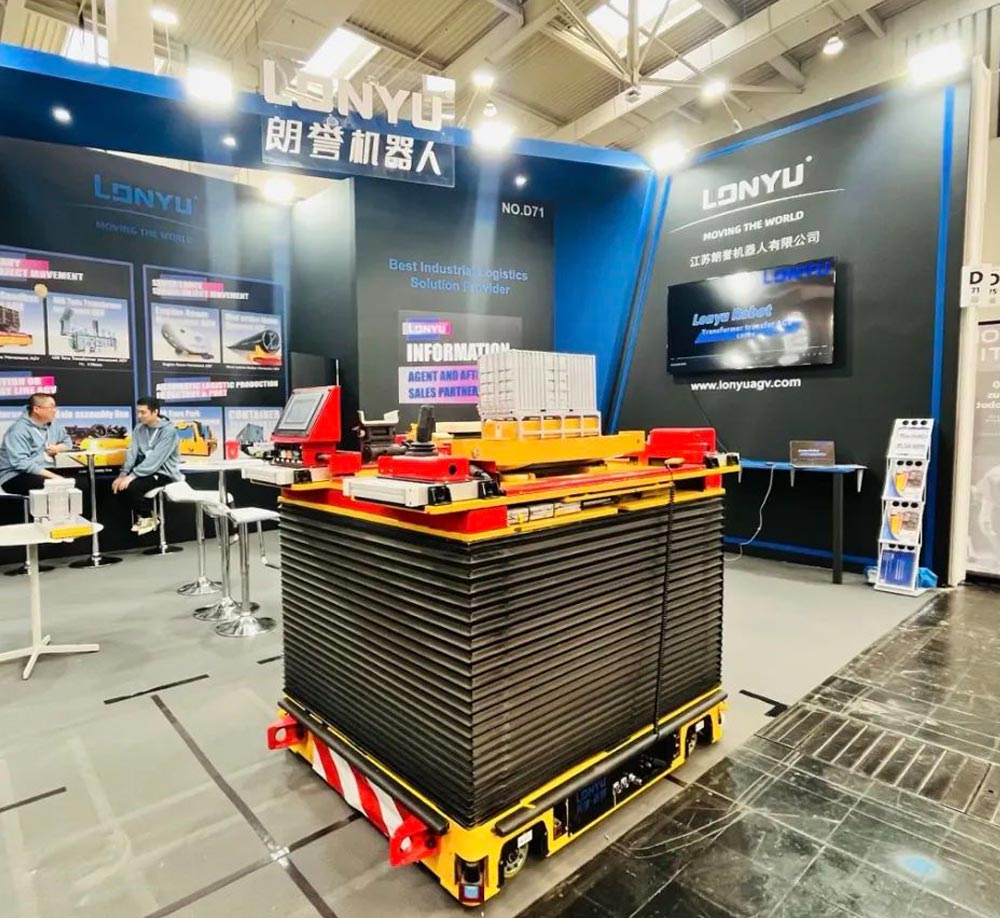
AGV is a computer-controlled, wheel-based load carrier, which runs without an on-board operator and navigates through a predefined paths or autonomous navigation systems. According to Institute of Materials Processing (MHI), AGV relies on technologies such as magnetic tape, two-dimensional codes, laser SLAM or multi-sensor fusion to ensure safe and accurate movement in warehouses, factories and logistics centers. Their primary function is automating light to medium-load transportation with flexible route adaptation.
The Definition of SPMT
SPMT is a modular heavy-duty transportation system, which is specially designed for super-large and overweight goods. Defined by the International Association of Heavy Transport and Rigging (IAHTR), Spots feature self-propelled modules with synchronized steering and hydraulic systems, enabling them to handle loads exceeding thousands of tons. Unlike AGV, Spots gives priority to mechanical coordination and ultimate load capacity rather than flexible navigation.
Unique advantages of AGV over SPMT
Advantages of AGV
- Flexible navigation: Economical AGV uses tape/QR code navigation, and high-end models integrate laser SLAM and AI for dynamic path planning and obstacle avoidance.
- Multifunctional cost: Prices ranges from 15,000 – 37,000 (economical) to 60,000 – 120,000+ (high-end), which is suitable for diversified budgets.
- Extensible customization: suitable for e-commerce, automobile and electronics industries, and customization options may increase costs by as much as 50%.
- Efficiency improvement: MHI reported that AGV systems reduced labor costs by 37% and minimized product damage in 24/7 operations.
The Advantages of SPMT
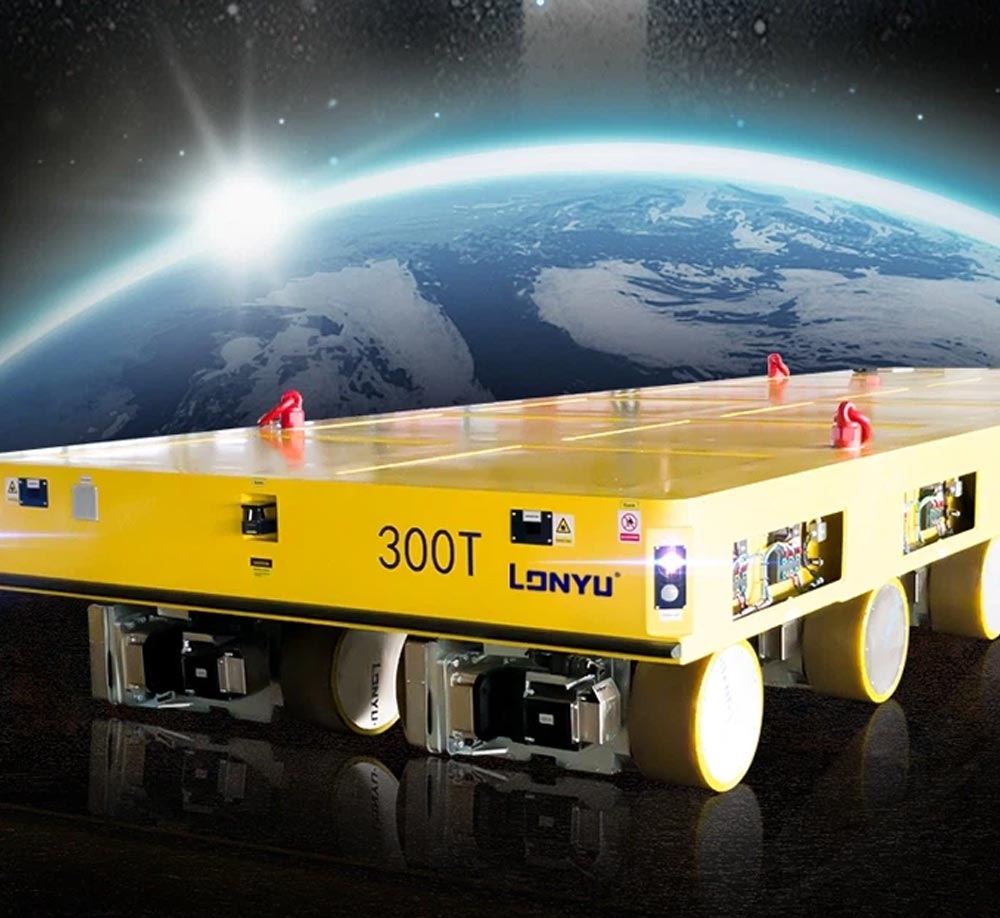
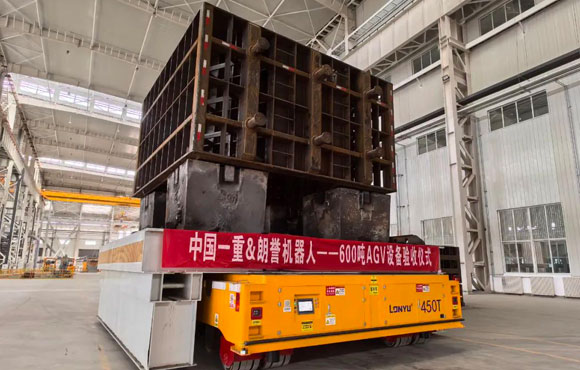
- Ultra-heavy load capacity: the modular design enables Spots to handle loads as high as 5,200 tons, as demonstrated in China’s self-developed ship transport SPMT.
- Precision synchronization: advanced hydraulic systems and steering monitoring ensure the millimeter accuracy for large-scale engineering projects.
- Extreme Environment Resistance: Built to withstand harsh conditions in bridge construction, shipbuilding, and offshore wind energy projects.
- Modularity adaptability: the horizontal/vertical modular connections can be customized for goods with irregular shapes.
Product specification and price comparison
| Specification | AGV | SPMT |
| Range of price | 15 k–37 k (economic); 60 k–120 k+ (high-end) | Over $1.5 million per unit |
| Payload Capacity | Light to medium (< 50 tons) | Ultra-heavy (up to 5,200 tons+) |
| Navigation Technology | Magnetic tape/QR code (economic); Laser SLAM+AI (high-end). | Modular synchronization and precise positioning systems |
| Core Components | Battery power supply, sensor arrays and WMS integration | Hydraulic power packs, modular platforms, synchronized steering |
| Customized Cost | Special needs increase by up to 50% | High (technical barriers and monopolistic parts) |
Main application scenario
Applications of AGV
- E-Commerce Warehouses: Automated order picking and pallet transport (e.g., Amazon’s fulfillment centers).
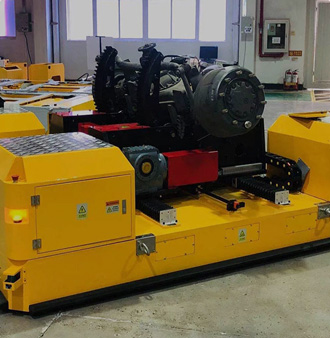
- Automobile manufacturing: delivering Parts to assembly lines through accurate routes.
- Electronics Industry: Transport precision parts with anti-vibration function.
- Logistics center: integrated with WMS to realize all-weather logistics optimization.
The Applications of SPMT
- Shipbuilding: moving the whole hulls or hull sections between two construction stages.
- Bridge Construction: transport prefabricated concrete blocks and steel beams.
- Heavy engineering: relocation of industrial machinery (e.g., Power station turbines).
- Offshore energy: transport wind turbine components to installation sites.
Core differential Factors
Technological Paths
- AGV: Focuses on software-driven flexibility (navigation algorithms, AI optimization), with costs increasing with the level of intelligence.
- SPMT: Mechanical engineering (modular design, hydraulic systems) is emphasized. Due to the requirement of precise synchronization, research and development costs are high.
Industry demand drivers
- AGV: the large-scale adoption in retail, automobile and e-commerce has created competitive prices, and 68% of cost changes are related to load and accuracy.
- SPMT: Niche demand in heavy engineering and infrastructure projects, international technology monopolies and extreme environmental requirements lead to price increases.
Step-by-Step Guide to Choosing Between AGV and SPMT
- Evaluate the load demand: when the loads is less than 50 tons, choose AGV; Standard maximum tonnage of ultra-heavy cargo (> 1,000 tons).
- Assess Precision Needs: AGV suits ± 5 mm accuracy (manufacturing); 1 mm SPMT (for engineering).
- Analyze Operational Environment: AGV for indoor/gentle outdoor use; SPMT is suitable for building sites or extreme conditions.
- Budget planning: allocate 15k -120 to AGV; More than US$ 1.5 million is spent on SPMT (including maintenance costs).
- Custom inspection: AGV customization is cost-effective; SPMT needs to cooperate with manufacturers as soon as possible.
FAQ
Question 1: Why do AGV and SPMT have such a huge price gap?
Answer 1: the gap stems from the complexity of technology and market demand. AGV uses mature, scalable technologies, while SPMT relies on specialized engineering, modular synchronization, and monopolized components.
Question 2: Can AGVs be used for heavy-load applications?
Answer 2: High-end AGVs can carry 50 tons, but they lack the structural integrity of overweight loads. For goods larger than 100 tons, SPMT is the only feasible option.a
Question 3: How long will it take to deploy AGV and SPMT systems?
Answer 3: The AGV systems is deployed within 4-8 weeks (standard configurations); Due to the integration of customized modules and the training of operators, SPMT takes 6-12 months.
Question 4: Are Spots affected by international trade restrictions?
Answer 4: Yes, core components such as precision hydraulic systems have historically been monopolized by European manufacturers, which has increased the costs of non-Western markets.
Question 5: What is the return on investment schedule of AGV and SPMT?
Answer 5: AGV can usually see the return on investment (saving labor) within one to three years; Spots has a longer schedule (3–7 years), but it is irreplaceable for large-scale projects.
Summary
AGV and SPMT are different technologies, which are applicable to completely different usage situations. AGV plays a leading role in the field of light to medium load automation in logistics and manufacturing, providing flexibility and cost-effectiveness. In contrast, SPMT is the gold standard for ultra-heavy, precision-required engineering transport, with prices reflecting its technical barriers and niche demand. By understanding their core differences (from load capacity to pricing structure), enterprises can choose suitable solution to optimize efficiency and return on investment. Whether you need to automate warehouse operations or move a 5, 000-ton ship hull, AGV and SPMT represent the pinnacle of their respective transport categories.