

The ultra-high voltage (UHV) transformer industry is facing extreme logistics challenges: heavy-duty transporters usually weigh 300-600 tons, which has high monetary value and is extremely sensitive to vibration and impact. Traditional methods-bridge crane, rail car or heavy-duty trailer-have poor flexibility, limited range, high risk of load damage and rely on manual operation. With the expansion of UHV projects in the world, the demand for safe, accurate and efficient heavy-haul transportation is unprecedented. This is where the automatic guided vehicle (AGV) technology changes the landscape, especially through dual-vehicle synchronization systems designed for overweight payloads.
What is an automated guided vehicle? Core Definitions for Heavy-Duty Applications
To understand this revolution, we must first be clear: what is AGV? An automated guided vehicle (AGV) is a battery-powered autonomous driving machine, which uses navigation tools (laser SLAM, tape or vision) and safety sensors to transport materials without continuous manual supervision. What AGVs refer to is Fleets of these units that work independently or cooperatively.
A modern automatic guided vehicle system combines:
- Hardware: heavy-duty chassis, multi-wheel drive, and lifting mechanisms for a heavy-duty transportation vehicle.
- Software: centralized control, real-time synchronization algorithms and path planning logic.
- Safety: LiDAR, 3D vision and emergency braking systems to protect high-value goods.
For decades, material handling equipment has relied on manpower, fixed rails or cranes–these solutions are not suitable for 600-ton transformers. Nowadays, it is imperative to change to intelligent and flexible material handling equipment: human error brings heavy losses, fixed infrastructure limits the change of layout, and labor shortages disrupt production plans. Heavy-duty AGV systems solve all these thorny problems and make it the backbone of modern transformer logistics.
The Power of Synchronization: Lonyu‘s 600-Ton Dual-Vehicle AGV Linkage System
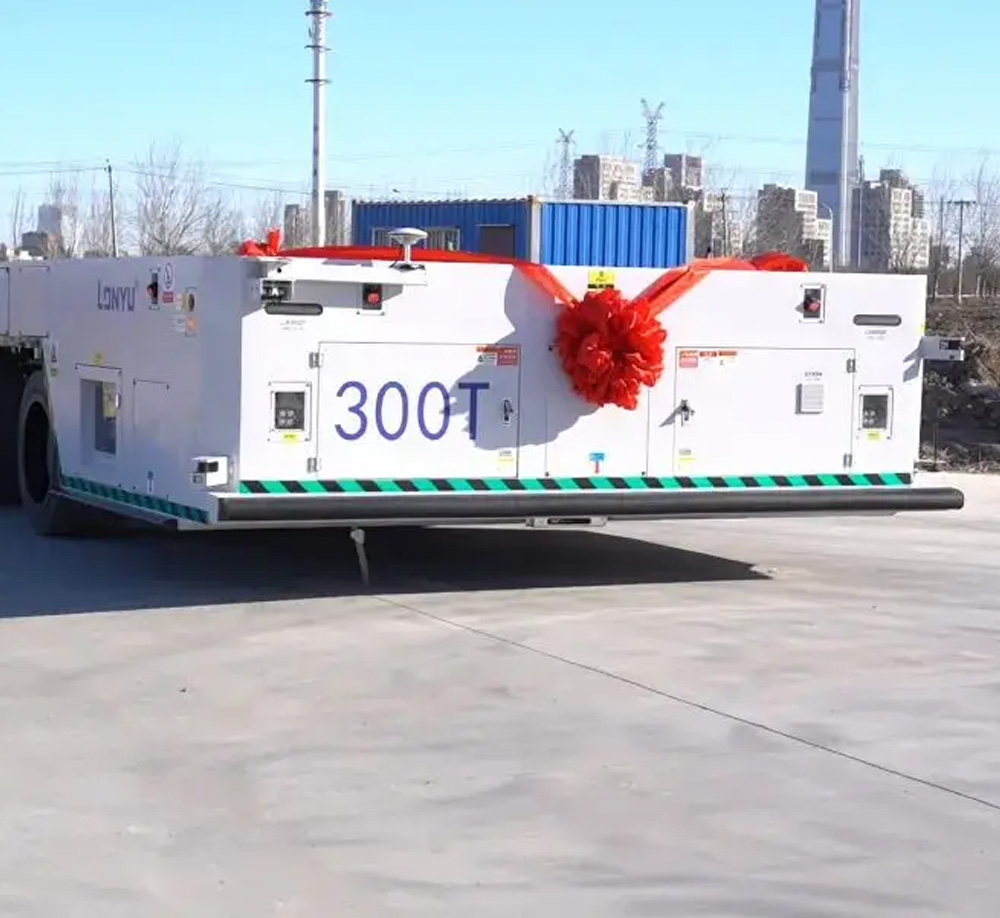
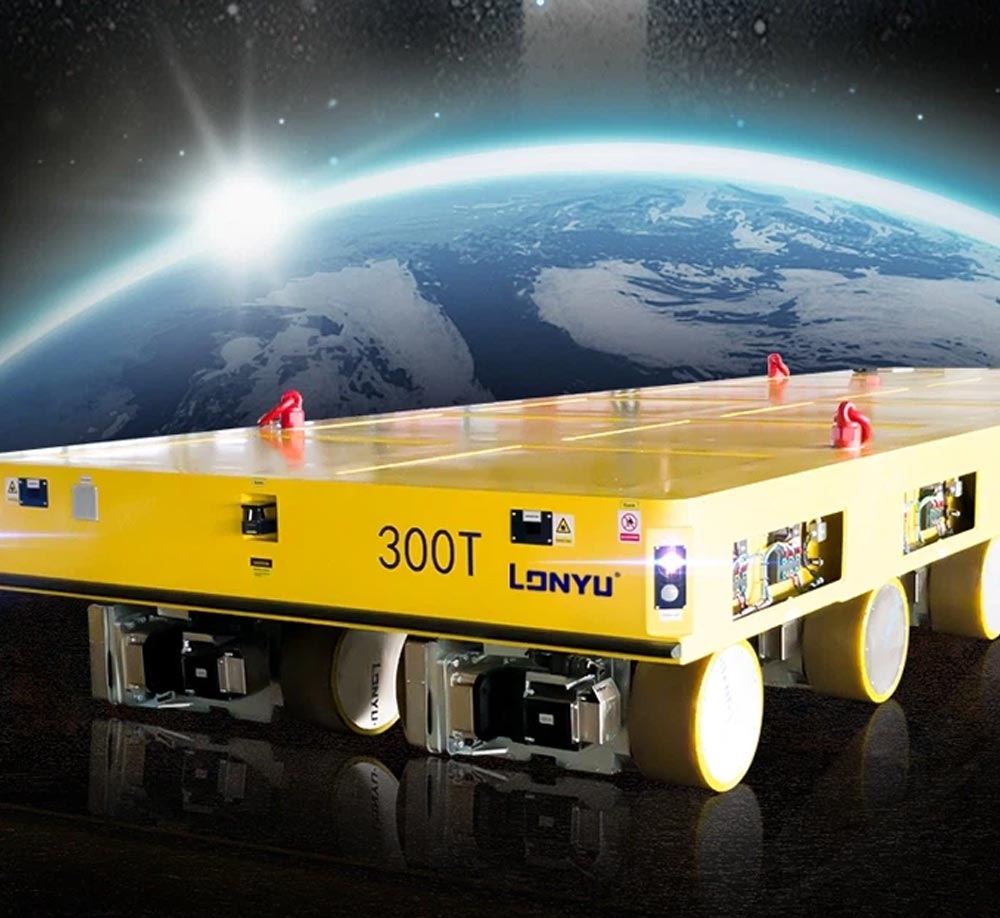
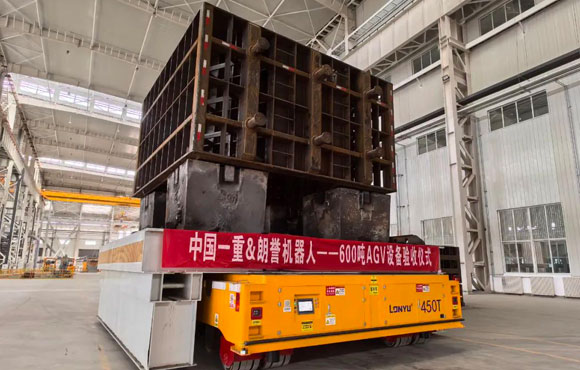
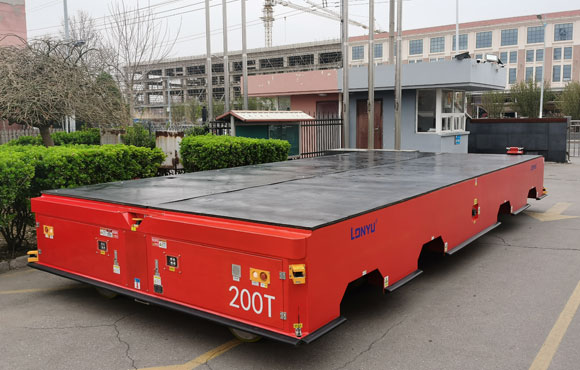
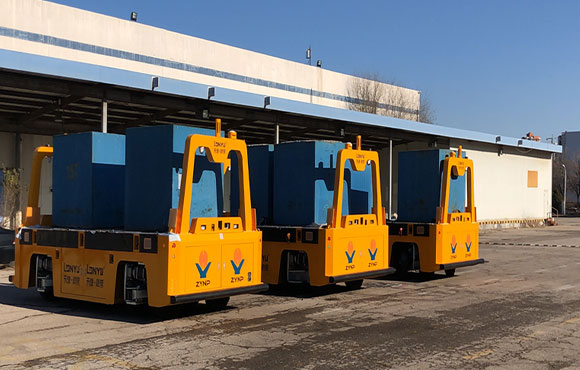
Lonyu Robot, a leading AGV manufacturer, redefines heavy-duty transportation with its 600-ton dual-vehicle AGV system: two 300-ton heavy-duty AGV units operating as a synchronous machine. This design shatters the limits of single-vehicle transport while preserving unmatched flexibility.
Dual-Vehicle Linkage: Breaking Payload Barriers
A 300-ton AGV can carry standard transformer parts, but moving a 600-ton vehicle requires cooperation. Lonyu’s system is connected with two AGVs through the master-slave control structure.
- Main Unit: receives navigation commands and sets speed/steering parameters.
- Slave Unit: Mirrors the master’s movements with millisecond-level synchronization, adjusting for minor terrain or load imbalances.
This modular method means that two AGVs can work together to deal with super-heavy loads, or be divided into independent 300-ton units to deal with smaller tasks, so as to maximize the equipment utilization and return on investment.
Precise Synchronization and Wireless Communication
The core of the system is real-time synchronous driving and steering control, which is powered by.
- 5G/Wi-Fi Wireless Link: Transmits 100+ data points per second (speed, position, load pressure) between units.
- High-Precision Encoder: Track wheel rotation and position with ± 5 mm accuracy.
- Adaptive algorithm: if an AGV encounters resistance (e.g., uneven floor), preventing load stress.
For heavy-haul transporter, this level of coordination eliminates the risk of “hunting” or uneven force of a multi-truck fleet and keeps the transformers stable and vibration-free.
Multi-Sensor Safety Integration
A heavy-duty transformer can cost millions, so safety is not negotiable. Lonyu’s automatic guided car technology includes 360 protection.
- Long-Range LiDAR: Detects obstacles up to 20 meters away, triggering slowdowns.
- 3D Vision Cameras: Monitor load posture and contact pressure in real time.
- Safety Edges: a physical buffer that stops moving when touched.
- Vibration Sensors: If the vibration levels exceed the safety thresholds of precision windings, it will alert the operators.
This layered system covers the entire combined footprint of the two AGVs, ensuring zero collision and minimum vibration during heavy load transfer.
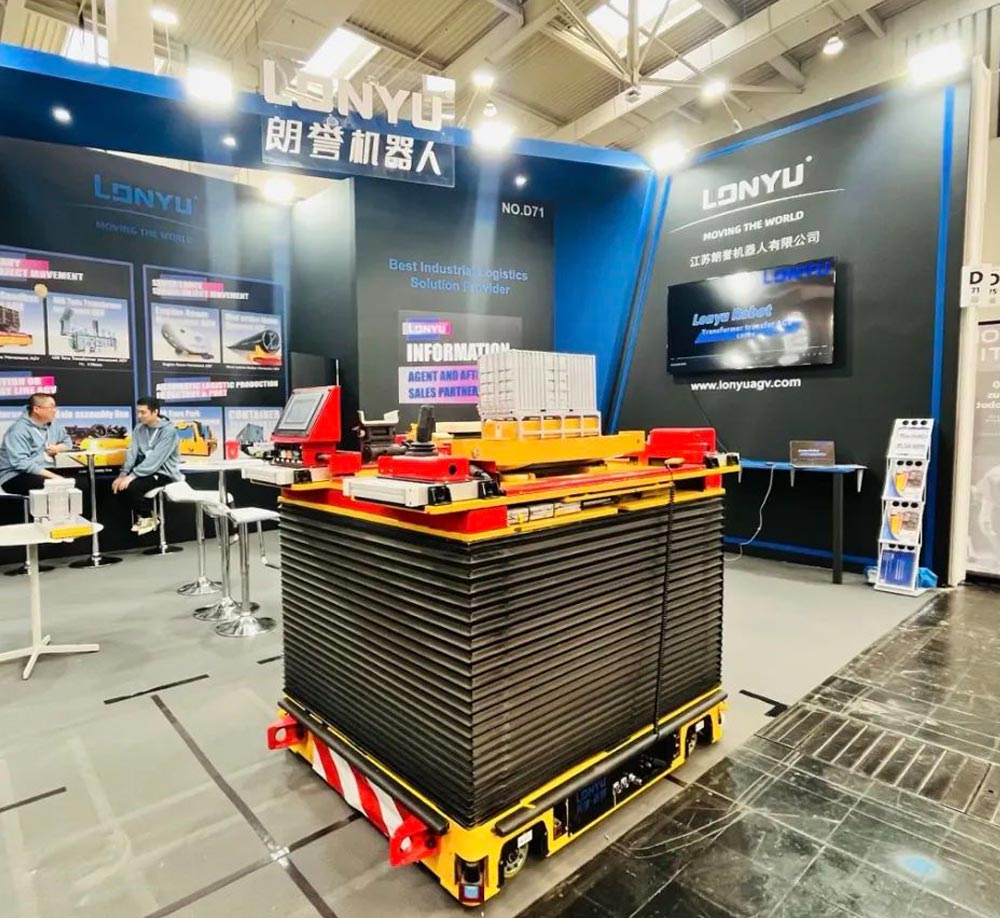
Product Alignment: Lonyu‘s Portfolio of Heavy-Duty Transfer Carts
Transformer manufacturing involves not only the transportation of the final unit, but also the movement of the coil, iron core, mold and shell in the factory workshop. Lonyu’s heavy-duty transfer cart portfolio addresses every step of this workflow, integrating seamlessly with its dual-vehicle AGV system.
Trackless Transfer Cart: Flexible, No Fixed Paths
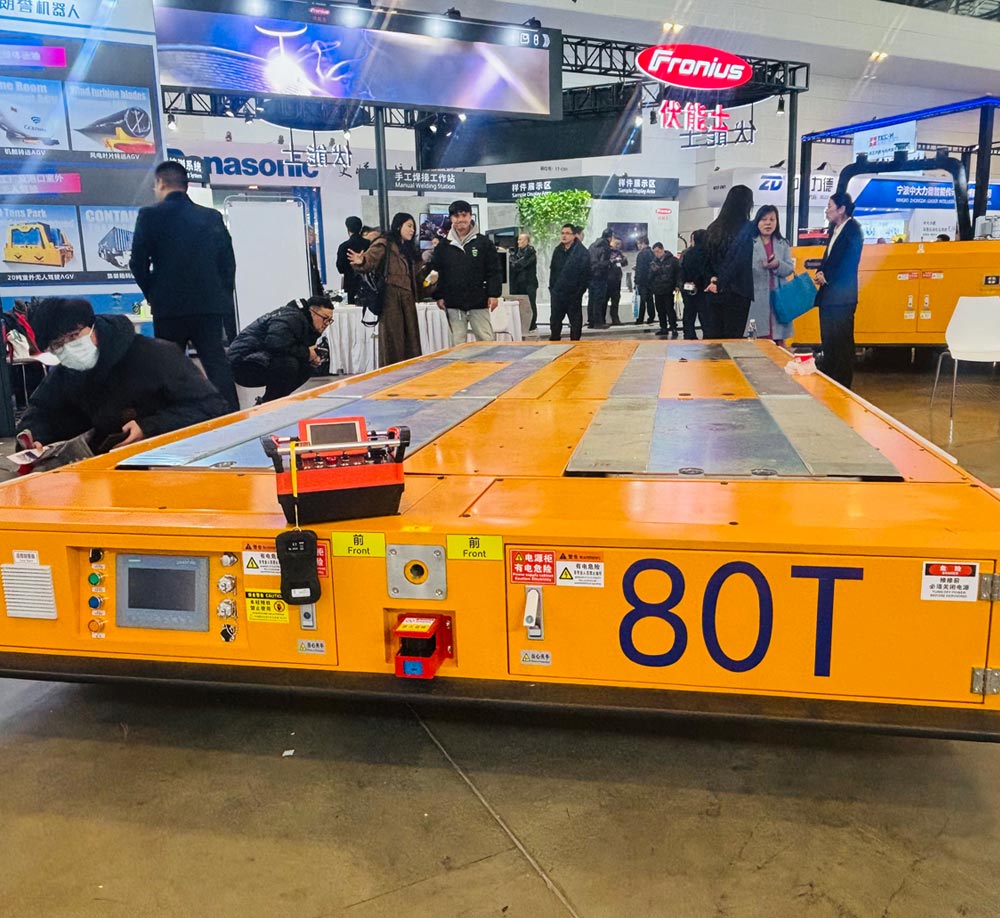
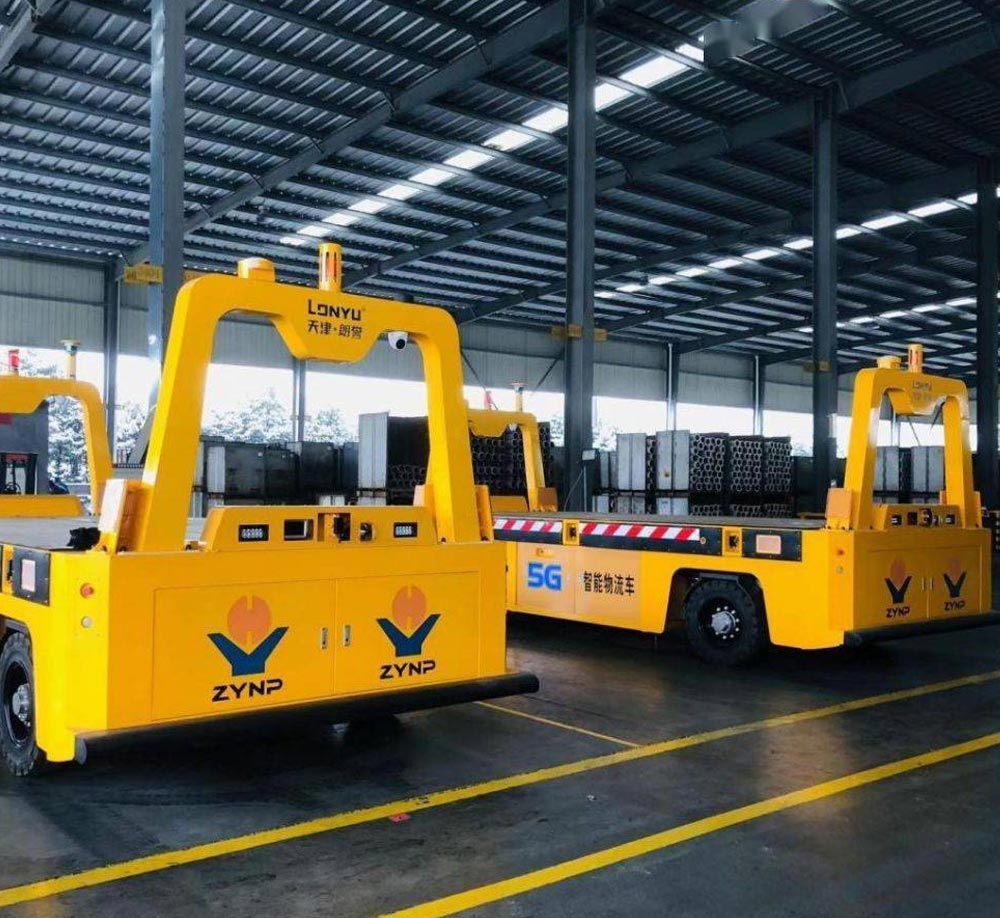
A trackless transport vehicle uses laser SLAM navigation to move freely on the factory floor without tracks or tape. Ideal for transformer housings (50–200 tons), it navigates narrow aisles and adapts to layout changes, a critical advantage over rail-bound industrial transfer cart options.
Battery Transfer Cart: Green, Indoor-Safe Transport
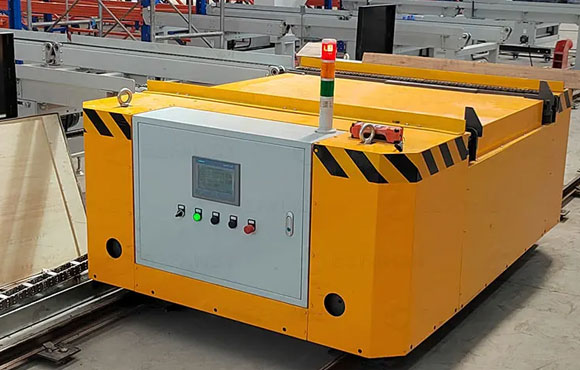
For indoor operations (e.g., moving the completed coils to the test stations), the battery transfer vehicle (also known as the battery-powered transfer vehicle) provides zero emissions and quiet operation. The running time of each charge is 8-12 hours, which can support 24/7 production, and is integrated with AGV warehouse automation systems to realize seamless logistics.
Specialized Carts for Transformer Components
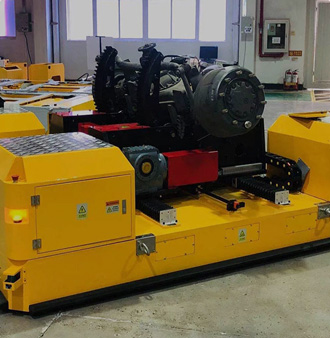
- Coil transfer Car: specially designed for large-scale silicon steel coils (100-250 tons), with an adjustable bracket to prevent deformation.
- Mold Transfer Cart: Heavy-duty platform for moving casting molds (200–300 tons) between machining and production areas.
These AGV solutions work with the dual-vehicle AGV to create a unified logistics ecosystem, reducing bottlenecks and ensuring that each component moves safely and efficiently.
Technical Evaluation: Dual-Vehicle AGV System vs. Traditional Material Handling
In order to quantify the value of Lonyu’s solution, we compare its dual-vehicle AGV system to traditional heavy trucks and bridge cranes in key transformer logistics indicators.
| Metric | Dual-Vehicle AGV System | Heavy Duty Tractor Trailer | Overhead Crane |
| Max Payload | 600 tons (linked); 300 tons (single) | 200–300 tons (with multiple trailers) | 300–500 tons (fixed hook) |
| Turning Radius | Omni-directional (0° tight turns) | 15–20 meters (wide aisles required) | Limited to crane bay dimensions |
| Vibration Risk | Ultra-low (sensor-monitored, smooth acceleration) | High (road bumps, gear shifts) | Medium (suspended load swing) |
| Automation Level | Fully autonomous (no operator required) | Manual driver + spotters | Manual pendant control |
| Flexibility | Reprogrammable paths; works indoors/outdoors | Fixed routes; limited to paved surfaces | Fixed bay; no off-coverage transport |
| Safety for High-Value Loads | 360° sensors; collision avoidance; vibration alerts | Human error risk; limited obstacle detection | Swing risk; load drop hazard |
| Utilization Rate | 90%+ (split into 2x300t units when not linked) | 50–60% (specialized for heavy loads) | 40–50% (tied to crane bay) |
Main points:
1. Flexibility of payload: When connected or divided into two 300-ton units, the two-car system can handle 600 tons of goods, which is unmatched by any heavy trucks or single crane.
2. Space Efficiency: Omni-directional movement outperforms heavy-duty tractor-trailer trucks in tight factory layouts, reducing required aisle width by 30%.
3. Preventing damage: Vibration monitoring and smooth control reduce the risk of load damage to near zero, while the risk of traditional methods is 5-10%.
4. Automation integration: the system is connected to MES/WMS software to realize the automation of AGV warehouse and comprehensive production traceability, which is very important for meeting the Industry 4.0 standard.
Applications of Heavy-Duty AGVs in Global Smart Factories
As Industry 4.0 is reshaping the manufacturing industry, heavy-duty AGV systems are becoming standard in transformer and heavy machinery factories all over the world. Driven by the demand for flexible and efficient material handling, it is predicted that by 2032, the global AGV market will grow by 7.7% CAGR.
Transformer manufacturing and transcendence
In the transformer factory, ages are being processed.
- Raw material (steel plates, copper coils) is transported to production lines.
- Work-in-progress transport (cores, windings) between stations.
- Move the finished products to testing, painting and transportation areas.
In addition to transformers, these systems also support.
- Wind Energy: Transporting 80+meter turbine blades.
- Shipbuilding: moving the hull parts and engine components.
- Metallurgy: handling high-temperature ingots and finished coils.
The Expansion of Global Markets
Emerging industrial markets are rapidly adopting heavy-duty AGV technology to improve logistics.
- Singapore: High-tech manufacturing center uses agv robot Singapore solutions to realize precise transportation in a limited space.
- Malaysia: the AGV robot Malaysia system is deployed in automobile and electrical factories to support 24/7 production.
- India: the growth of UHV infrastructure has driven the demand for AGV robot India solutions, which are used to move large transformers across new power plants.
In all regions, the core driving factors are the same: automatic guided vehicles are superior to traditional methods, higher efficiency, lower risk and seamless integration with smart factory systems.
Frequently Asked Questions (FAQs) of Engineering Buyers
Q: What factors determine the cost of heavy-duty AGV?
A: The automated guided vehicle cost (and AGV robot price) depends on four key factors.
- Payload Capacity: 300–600 ton units cost more than smaller AGVs due to reinforced chassis and heavy-duty components.
- Synchronization Technology: Dual-vehicle systems require advanced control algorithms and wireless communication, adding 20–30% to the base AGV’s price.
- Navigation and safety: Laser SLAM, 3D vision and vibration sensors will increase costs, but will reduce long-term risk.
- Customization: Transformer-specific features (adjustable cradles, load monitoring) add engineering and manufacturing costs.
Usually, the price of a 300-ton heavy AGV ranges from $ 500,000 to $ 1.2 million, while the price of a 600-ton dual vehicle system ranges from $ 1.5 million to $ 2.5 million.
Q: Why use a dual-vehicle AGV instead of a larger single transport vehicle?
A: Compared with a 600-ton transport vehicle, the two-vehicle design provides three key benefits.
- Higher utilization rate: When the 600-ton transformer is not moved, the two AGVs operate independently to perform smaller tasks (for example, coiled material transportation), so that the available capacity can be doubled.
- Flexible Deployment: a single 600-ton transport device is oversized for most daily tasks, while a double 300-ton device is suitable for mixed workloads.
- Cost Efficiency: The cost of two standard 300-ton AGVs is lower than that of a customized 600-ton device, and the maintenance and repair costs are lower.
An example of AGV comes from the customer data in Lonyu: A transformer factory reduced logistics costs by 35% by using double 300-ton AGVs instead of a single 600-ton transport vehicle.
Q: How do we choose a reliable supplier of heavy-duty automatic guided vehicles?
A: Evaluate the potential AGV suppliers according to five criteria.
- R&D and engineering: verify the synchronization algorithm and the internal design capabilities of heavy-duty chassis (avoid dealers).
- Production Capacity: Confirm the AGV factory can build and test 300–600 ton AGVs in-house, with quality control for critical components.
- Industry Experience: AGV manufacturers with transformer or heavy machinery logistics case studies are preferred (for example, a UHV transformer project company).
- After-Sales Support: Ensure global service teams, spare parts inventory, and training for your maintenance staff.
- Certifications: Look for ISO 9001, CE and industry-specific regulatory compliance (such as electrical safety for transformer transportation).
Lonyu Robot meets all these criteria, with 10+years of heavy-duty AGV experience and a track record of successful transformer logistics deployments worldwide.
Partner with Lonyu Robot for Ultra-Heavy Load Transportation
For transformer manufacturers and heavy industry enterprises, upgrading logistics from manual and high-risk methods to synchronous heavy-haul transportation is no longer dispensable, but inevitable in competition. Lonyu Robot, a trusted AGV manufacturer and heavy-duty transporters provider, delivers customized dual-vehicle AGV systems and heavy-duty transfer cart solutions tailored to your unique workflow .
By partnering with Lonyu, you gain:
- Mature Technology: A 600-ton dual-vehicle system has been tested and deployed in real transformer factories.
- End-to-end support: from design, manufacturing, to installation, training and after-sales service.
- Future-Proof Solutions: Systems scalable for larger payloads and integrable with evolving Industry 4.0 tools.
Are you ready to reform your transformer logistics? Visit Lonyu Robot Homepage to connect with our engineering team and request a customized quote for your heavy load transport needs.