

Key Takeaways
- Calculate the full carried weight, including pallets, racks, fixtures, and lifting attachments, before selecting rated payload.
- Check the load’s underside, support points, and pickup height to confirm compatibility with a back-loading lifting AGV.
- Match navigation and movement functions to the route, turning space, and frequency of layout changes.
- Assess positioning accuracy, stopping distance, floor conditions, and safety functions before commissioning.
- Verify model-specific details, including speed units, battery specifications, and lifting requirements, rather than relying on general product information.
Introduction
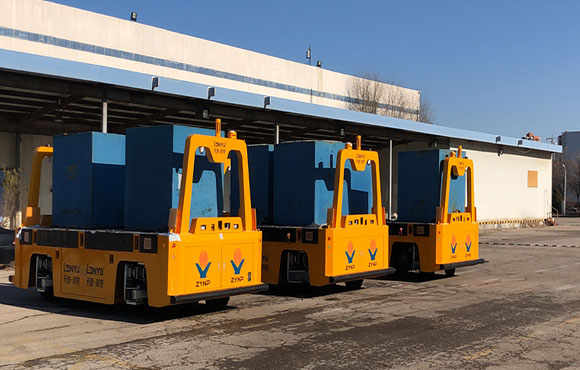
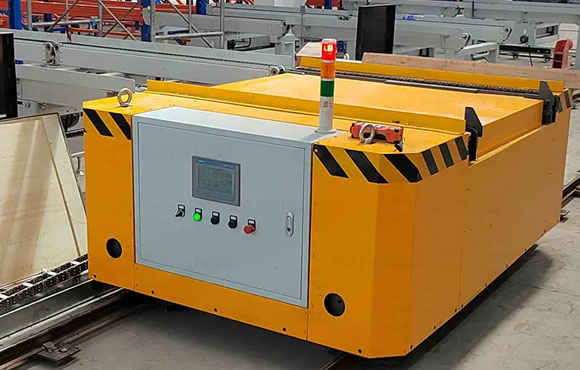
Moving heavy materials between production lines, warehouses, and workstations can create bottlenecks when forklifts compete for space or workers repeatedly perform the same transport tasks. A heavy duty AGV can automate these movements, but rated payload alone does not determine whether a vehicle suits a factory.
The vehicle must carry the complete load, reach the pickup position, follow the planned route, and deliver materials accurately enough for the next operation.
Start With the Load, Lifting Method, and Transport Route
Define the handling task before comparing vehicle models. Load weight, shape, pickup method, and route determine which designs are practical.
How Much Payload Capacity Is Required?
Calculate the weight of the material together with its pallet, rack, fixture, or lifting attachment. Weight distribution also matters because a load concentrated at one end may affect stability even when its total weight is below the rated payload.
For example, a steel assembly weighing 10,800 kg with a 700 kg fixture creates a total carried weight of 11,500 kg. A vehicle rated for 12,000 kg has only 500 kg between this load and its nominal rating. That difference alone does not confirm suitability. The supplier must also review the center of gravity, support points, load arrangement, and operating restrictions.
When the calculated load approaches the rated limit, ask the supplier to assess the complete arrangement. A payload rating does not guarantee that every load below that weight can be handled under all conditions.
Should the AGV Lift the Load or Carry It on a Platform?
The handling method determines how the vehicle collects, supports, and releases materials. A back-loading lifting AGV may suit loads that can be accessed from the required direction and supported at compatible points.
Check the clearance beneath the load, vehicle entry direction, support points, and required pickup and release heights. A low crossbar beneath a rack, for example, may prevent the vehicle from entering. A machine base with insufficient clearance can cause the same problem.
If the load cannot be accessed from the required side or its support structure does not match the lifting arrangement, another design may be needed. Confirm compatibility early to avoid choosing a vehicle that can carry the weight but cannot collect the load.
Will the Vehicle Fit the Factory Route?
An aisle that accommodates an empty vehicle may not provide enough room to turn with a long or wide load. Measure the narrowest aisle, door opening, turning area, pickup point, and unloading point. Include columns, machine guards, storage racks, and other fixed obstacles.
For long loads, check the full swept path during turns rather than measuring the vehicle body alone. Floor joints, ramps, uneven surfaces, and changes in floor level may also affect stability, traction, and positioning. Include the load’s full dimensions when checking clearance.
Compare the site layout with the load drawing to confirm that the vehicle can reach each station, complete the required turns, and leave enough space for nearby equipment and personnel.
Choose Navigation, Movement, and Safety Features
Once the load and route are defined, assess how the vehicle will navigate and maneuver. Consider route stability, required alignment accuracy, and potential hazards.
Is Magnetic Navigation Suitable for the Site?
Magnetic-strip navigation follows a defined route and can suit repeated movements between fixed stations. It is worth considering when production lines and transfer points are unlikely to change often.
Route changes may require adjustments to the magnetic strips and route configuration. This can add maintenance work when the production layout changes frequently. Other navigation methods may offer more flexibility, but their capabilities depend on the vehicle and site conditions.
Not every automated guided vehicle supports every navigation method. Even flexible navigation requires checks of positioning performance and obstacle handling. For stable routes, magnetic navigation is a practical option to assess. For frequently changing layouts, compare the available methods and ask the supplier to explain how route updates are performed.
Which Movement Functions Are Needed?
Straight travel may be sufficient for a long, unobstructed route. A vehicle entering a narrow workstation or aligning with a rack may need additional movement functions.
Check whether it can travel forward and backward, move sideways, or rotate in place. Sideways movement can help with lateral alignment, while in-place rotation may reduce the space needed to change direction. Mark pickup and unloading positions on the layout drawing and identify where each maneuver is required. The supplier can then assess whether the vehicle can complete these movements with the full load.
What Safety Functions Should Be Checked?
Heavy loads increase the potential consequences of collisions, unexpected stops, and load shifts. Assess safety equipment against the actual route and surrounding work activities rather than treating it as a standard list of accessories.
A laser obstacle-avoidance sensor detects obstacles within its effective detection area. A safety-edge touch device provides a contact-based response, while sound and light alarms warn nearby personnel. An emergency-stop button allows a person to initiate an emergency stop when it is accessible and used according to procedure.
These devices serve different purposes, and their presence alone does not prove that a vehicle is suitable for every environment. Check detection coverage, stopping distance, blind corners, pedestrian crossings, and any load extending beyond the chassis. Define how the vehicle should be checked before restarting after an emergency stop.
ISO 3691-4:2023 covers safety requirements and verification for driverless industrial trucks and their systems, including AGVs. It can serve as a reference when discussing safety design and verification with the supplier.
Before commissioning, review the vehicle’s protective functions and safety documentation. A practical demonstration should cover obstacle detection, stopping behavior, emergency-stop operation, and restart checks. Site procedures should also define pedestrian access and emergency response.
Verify Technical Specifications Before Ordering
Published specifications help narrow the options, but they must be compared with the actual task. Dimensions, accuracy, cycle time, and operating requirements deserve particular attention because any one of them can prevent reliable operation.
Which Dimensions and Accuracy Figures Matter Most?
Overall length, width, and height determine whether the vehicle can access the route and pickup position. Chassis ground clearance matters when floors have joints or level changes, while positioning accuracy affects how consistently the vehicle reaches a loading or unloading point.
Compare the vehicle drawing with the narrowest access point and the most demanding transfer station. A vehicle may fit through an aisle but still fail to align with a close-fitting rack or conveyor. Include the load dimensions if the cargo extends beyond the chassis.
Navigation accuracy and positioning accuracy should not be treated as interchangeable without checking their definitions. Ask how each figure is measured, which test conditions apply, and whether the stated tolerance covers the final transfer position.
How Should Speed and Operating Time Be Assessed?
Higher travel speed does not always mean higher output. A complete cycle also includes pickup, lifting, alignment, unloading, waiting, and movement through shared areas. A vehicle that travels quickly but spends too long waiting at workstations may complete fewer trips per shift than expected.
Estimate trips per hour or shift, loaded and unloaded travel distances, and time required at each station. Use these figures to assess the expected cycle under the planned operating conditions rather than relying on maximum speed alone.
Battery capacity, charging method, and operating duration also affect availability. Confirm the battery specification, charging requirements, and expected operating time for the exact model. If the product page does not provide these details, keep them as open technical questions rather than borrowing values from another model.
Why Consider Lonyu’s 12-Ton Backpack AGV?
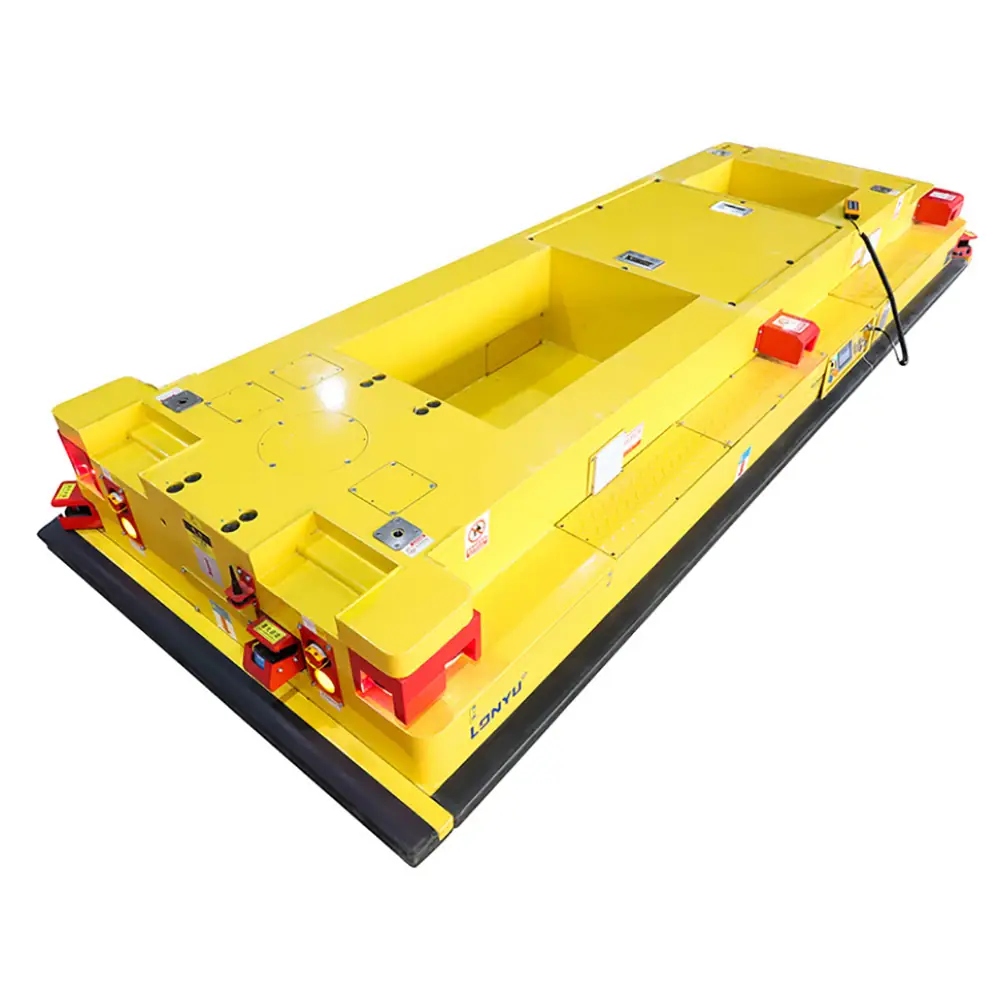
Lonyu’s 12-ton backpack AGV is worth evaluating for indoor handling when the load structure is compatible with its back-loading lifting design. Its published specifications provide a starting point for checking the vehicle against load, route, and workstation requirements.
Key Specifications
| Item | Published specification |
| AGV type | Back-loading lifting AGV |
| Rated payload | 12,000 kg |
| Vehicle mass | 3,000 kg |
| Overall dimensions | 3,400 × 1,200 × 440 mm |
| Chassis ground clearance | 35 mm |
| Navigation method | Magnetic strip |
| Positioning accuracy | ±10 mm |
| Navigation accuracy | ±10 mm |
| Operating environment | Indoor use |
| Listed safety devices | Laser obstacle-avoidance sensor, safety-edge touch device, sound and light alarm, emergency-stop button |
Back-Loading Lifting for Compatible Loads
This design may suit loads that can be accessed from the required direction and have adequate clearance and compatible support points. It may be considered for repeated transfers involving suitable racks, fixtures, or industrial assemblies.
The key question is whether the vehicle can enter the pickup position and support the load as intended. Low crossbars, restricted underside clearance, or unsuitable support points may prevent transfer even when the rated payload is sufficient.
A Rated Payload of 12,000 kg
The model’s published 12,000 kg rating makes it a candidate for evaluating heavy materials or assemblies whose complete carried weight falls within the manufacturer’s permitted operating conditions.
Include the carrying fixture in the total load calculation. If the combined weight approaches the rated limit, ask the supplier to verify load distribution, support arrangements, and operating restrictions. Rated payload alone does not prove that every load below 12,000 kg can be handled.
Magnetic-Strip Navigation for Established Routes
Magnetic-strip navigation can suit regular indoor transfers between defined pickup and delivery points. When the production layout remains stable, a fixed route can make repeated movements easier to plan and maintain.
For operations with frequent layout changes, the effort required to modify the magnetic-strip route may affect long-term suitability. Discuss the route-update process before settling on this configuration.
Safety Devices for Site-Specific Assessment
The published model lists a laser obstacle-avoidance sensor, safety-edge touch device, sound and light alarms, and an emergency-stop button. These devices provide different protective functions and should be assessed against the route and nearby work activities.
At sites with pedestrian crossings or narrow passages, sensor coverage and stopping behavior under the planned load deserve particular attention. Ask the supplier how the vehicle responds to obstacles and what checks are required before it returns to operation.
Dimensions for Access Checks
The published dimensions are 3,400 × 1,200 × 440 mm, with a chassis ground clearance of 35 mm. These figures provide a starting point for checking access and floor clearance, but they do not establish the required aisle width or turning space.
The load may extend beyond the chassis, and turning may require more room than straight travel. Review the complete load dimensions and site layout together before finalizing the route.
Frequently Asked Questions
What Is the Rated Payload of Lonyu’s 12-Ton Backpack AGV?
The published rated payload is 12,000 kg. The complete carried weight must include the material, pallet, rack, fixture, or attachment. Check the load arrangement and operating conditions before approving the vehicle for the task.
What Are This Model’s Dimensions and Navigation Method?
The published overall dimensions are 3,400 × 1,200 × 440 mm, and the model uses magnetic-strip navigation. Its published positioning accuracy and navigation accuracy are both ±10 mm. Confirm how these figures are defined and tested when evaluating a close-fitting transfer position.
Which Safety Devices Are Listed for the 12-Ton Model?
The published list includes a laser obstacle-avoidance sensor, a safety-edge touch device, sound and light alarms, and an emergency-stop button. Protective coverage and stopping performance still need to be assessed for the intended route.
Can a 12-Ton AGV Carry Every Load Weighing Less Than 12 Tons?
No. Total weight is only one part of the assessment. Load dimensions, weight distribution, center of gravity, support points, lifting method, floor conditions, and operating restrictions can all affect suitability. Check the complete load arrangement, not just the weight on the label.
Is Magnetic Navigation or a More Flexible Method Better for a Factory?
Magnetic navigation is worth considering when routes are stable and stations remain in fixed positions. A more flexible method may suit factories where routes change frequently, provided the selected vehicle supports the required functions. Compare route-update work, positioning needs, site conditions, and verified vehicle capabilities before deciding.
Conclusion
An AGV should fit into the production sequence, not operate as an isolated transport unit. Its value depends on whether materials arrive when the next workstation is ready, whether handovers can be completed consistently, and whether vehicle movements work alongside other activity on the factory floor.
A suitable agv robot should be evaluated as part of the material flow. Check whether pickup and unloading positions allow repeatable transfers, whether the route can accommodate the vehicle and its load without awkward maneuvers, and whether receiving equipment can accept the material without extra manual adjustment. These details often determine the practical value of automation.
For a heavy load transport application, a site trial using the actual load or a representative test load can help verify access, alignment, stopping behavior, and handover to the next operation. OSHA’s workplace guidance on powered industrial truck hazards can also inform general site risk planning, alongside safety requirements applicable to the specific AGV and installation.
If you are sourcing an industrial agv robot for your operation, provide the load dimensions, total carried weight, pickup and unloading requirements, factory layout, planned route, expected transport frequency, and operating conditions. Lonyu can review these requirements, help determine a suitable AGV configuration, and provide a customized quotation.