

1. The Shift in Heavy Industrial Intralogistics
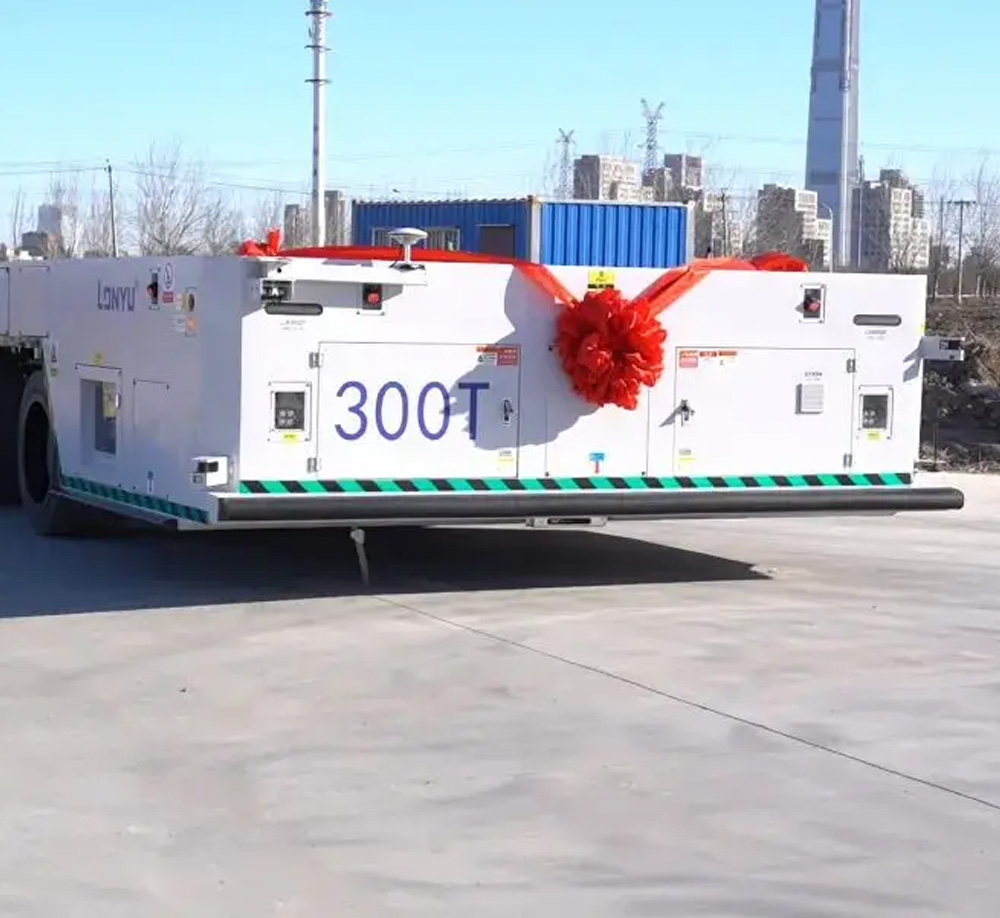
In heavy manufacturing plants, moving oversized components such as transformers, turbine nacelles, and steel structures remains one of the most challenging logistics tasks. Traditional methods such as overhead cranes, rail-guided carts, and manual steerable trailers often struggle with limited flexibility, high infrastructure costs, and safety risks when handling payloads that can exceed hundreds of tons. Transferring a 300-ton transformer from an assembly bay to a testing area or across an outdoor storage yard requires millimeter-level precision, smooth acceleration, and absolute floor protection, requirements that conventional equipment cannot always satisfy.
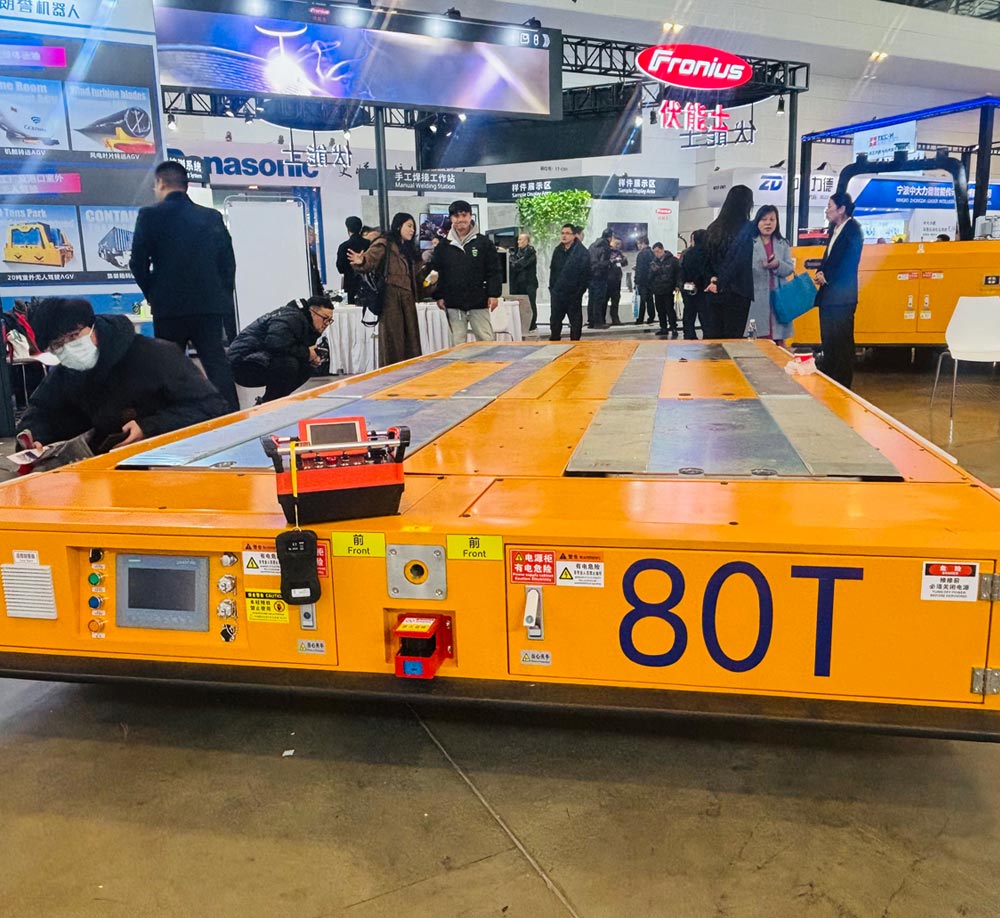
Modern factories are progressively shifting away from fixed rails and crane-dependent workflows. They are adopting flexible, autonomous guided vehicles that operate without physical guiding infrastructure. These heavy duty transporters are designed to navigate complex plant layouts, collaborate in synchronized fleets, and move loads ranging from 20 tons to well over 400 tons with intelligent steering and safety systems. The adoption of these systems is mainly driven by manufacturers’ need for faster material flow, safer operations, and greater production flexibility. Recent market research indicates that heavy-duty autonomous mobile robots and AGVs are experiencing rapid growth as factories look for safer and more flexible material handling solutions. Battery-powered omnidirectional AGVs allow factories to increase throughput, improve workplace safety, and modify production layouts without installing permanent rails or major floor infrastructure.
2. The 400-Ton Super Heavy-Duty AGV Solution: A Closer Look
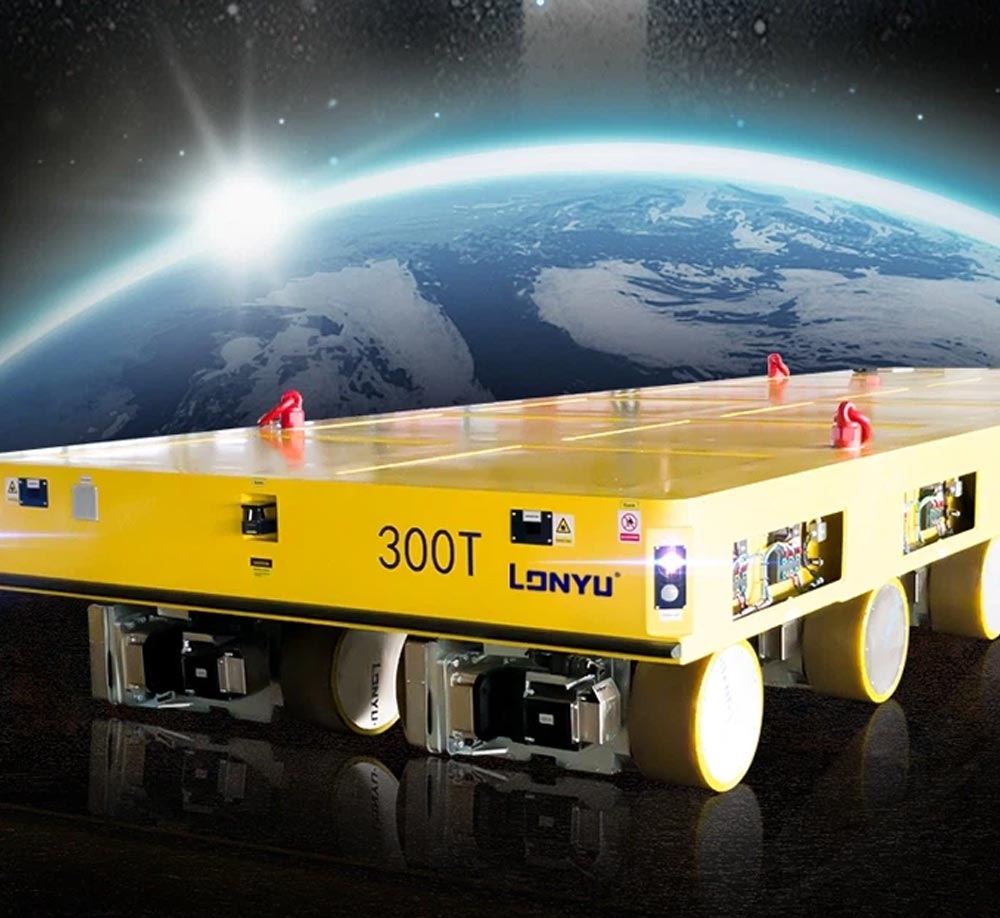
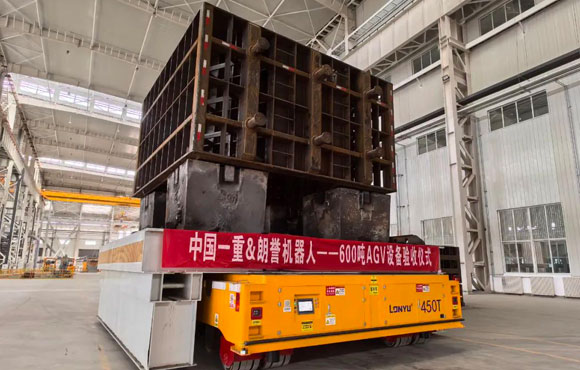
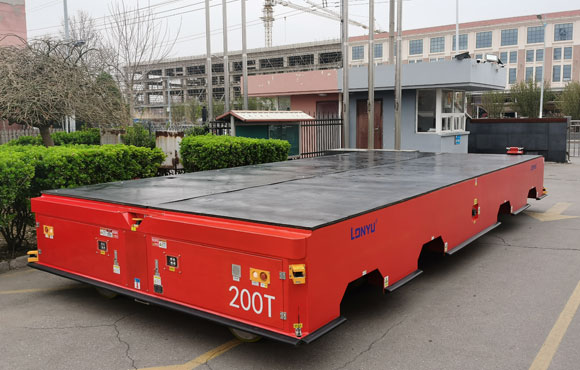
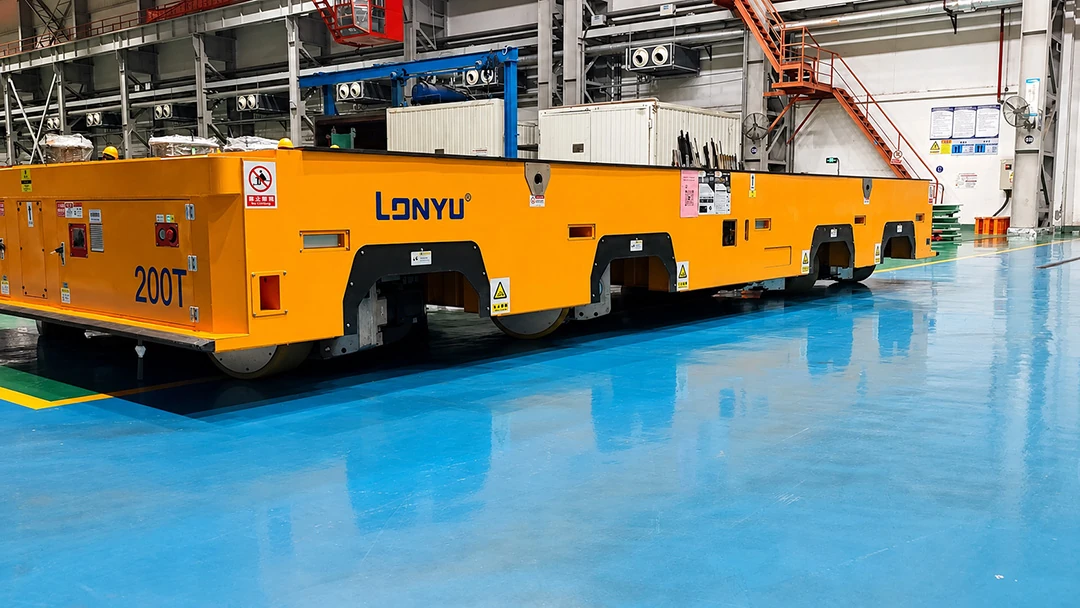
Lonyu Robot’s 400-ton heavy-duty AGV provides a practical example of how autonomous transport technology can be applied to ultra-heavy industrial loads. The vehicle is built around a self-propelled multi-axle platform that combines heavy-duty mechanical structures with advanced motion control systems for oversized cargo handling. Its key specifications demonstrate how the AGV addresses the main challenges involved in transporting ultra-heavy industrial equipment.
Key Performance & Design Highlights:
- Massive Payload Capability: The single-vehicle configuration is engineered to accept and transport loads up to 400 tons, making it suitable for large power transformers, generators, and heavy machinery that previously required extensive civil infrastructure.
- Multi-Axle Steering Coordination: The wheel assemblies use active multi-axle coordinated steering algorithms. By constantly calculating the optimal steering angle for each driven and idler wheel, the system virtually eliminates scrubbing and minimizes ground shear forces, which significantly reduces tire wear and prevents damage to the factory’s epoxy or concrete floors—a crucial factor often overlooked during facility planning.
- Comprehensive Safety Architecture: A multi-layered safety system is integrated. This includes 360-degree safety laser scanners for personnel and obstacle detection, heavy-duty mechanical bumpers, and a high-redundancy emergency braking system calibrated to bring a 400-ton load to a controlled stop without instability. The control system continuously monitors axle loads and motor temperatures to ensure operation within safe margins.
- Flexible Navigation & Power: Equipped with laser SLAM navigation and supplemented with multi-sensor fusion, the AGV can operate without magnetic tapes or reflectors. Its high-capacity battery system, combined with opportunity charging or automatic battery swap strategies, supports continuous operation with minimal downtime.
A concise technical overview of such a vehicle could appear as follows:
| Parameter | Typical Specification (Lonyu 400T AGV) |
| Rated Payload | Up to 400,000 kg (400 tons) |
| Navigation Method | Laser SLAM (LiDAR) with sensor fusion; no ground infrastructure required |
| Steering Technology | Independent multi-axle coordinated steering; omni-directional movement capable |
| Safety Sensors | Safety LiDAR scanners compliant with PL d / SIL 2 requirements, mechanical anti-collision bumpers, emergency stop buttons, acoustic/visual warnings |
| Chassis Construction | Heavy-duty welded steel frame with integrated hydraulic or mechanical suspension balancing |
| Operational Environment | Indoor assembly bays and outdoor hardened yards (depending on IP rating and wheel configuration) |
Heavy-duty AGVs are typically engineered according to each customer’s site conditions, including floor capacity, route layout, and integration requirements.
3. Specialized Transfer Solutions Beyond a Single Vehicle
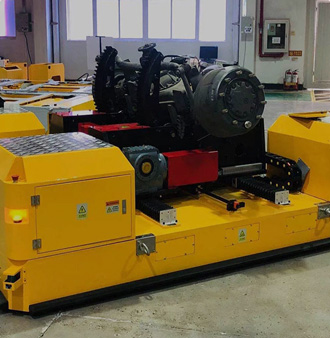
While the 400-ton transporter demonstrates peak capability, the broader product ecosystem for heavy manufacturing requires a range of flexible, automated handling systems. The term Industrial Transfer Trolley accurately captures a family of modular, wheeled platforms designed for specific movement tasks within a factory. Lonyu Robot’s portfolio, for instance, has been structured to serve several distinct application clusters, each tagged by its industrial domain:
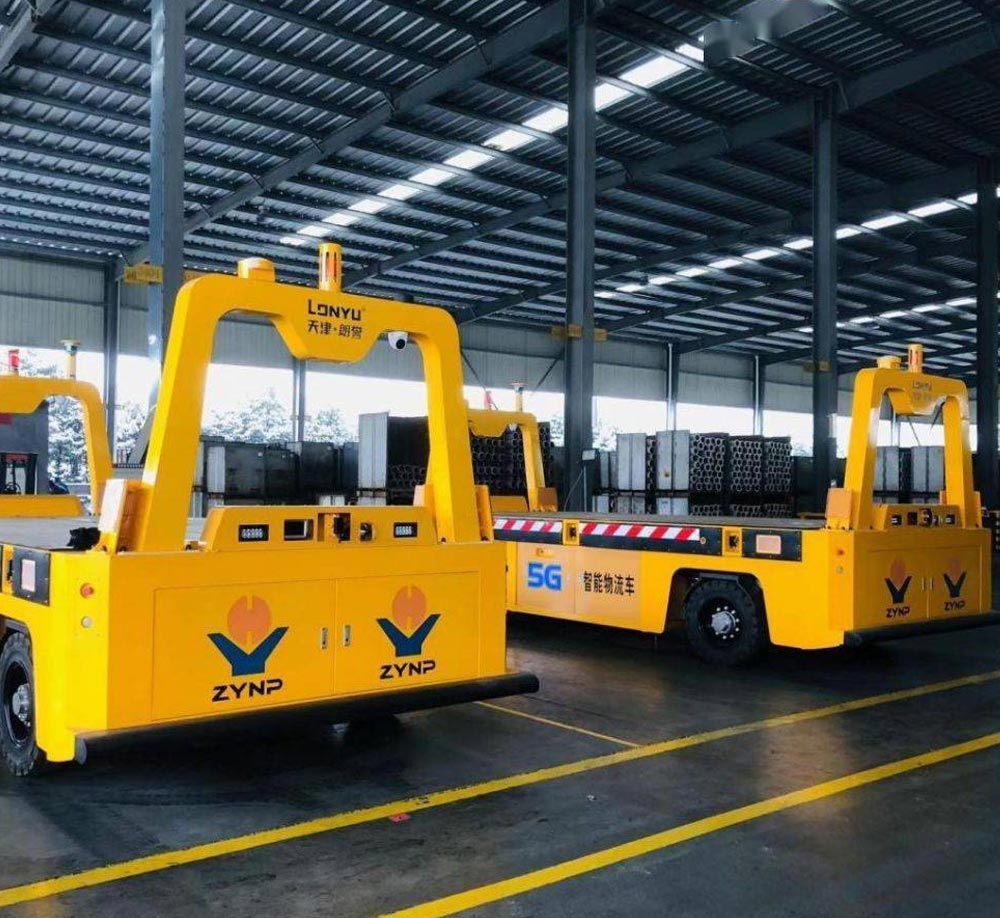
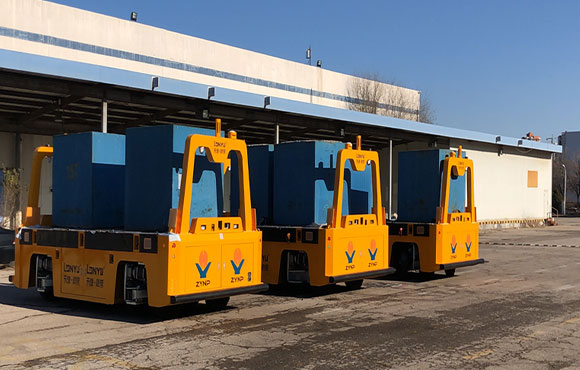
- Dual-Vehicle Linkage Heavy-Duty AGVs: When loads exceed the length limit of a single platform—such as wind turbine blades over 70 meters long or large structural beams—two or more AGVs synchronize via a master-slave control link. SLAM navigation and real-time communication allow them to act as a single rigid body, performing coordinated turns and straight transfers. This is particularly relevant for wind power, shipbuilding, and aerospace component logistics.
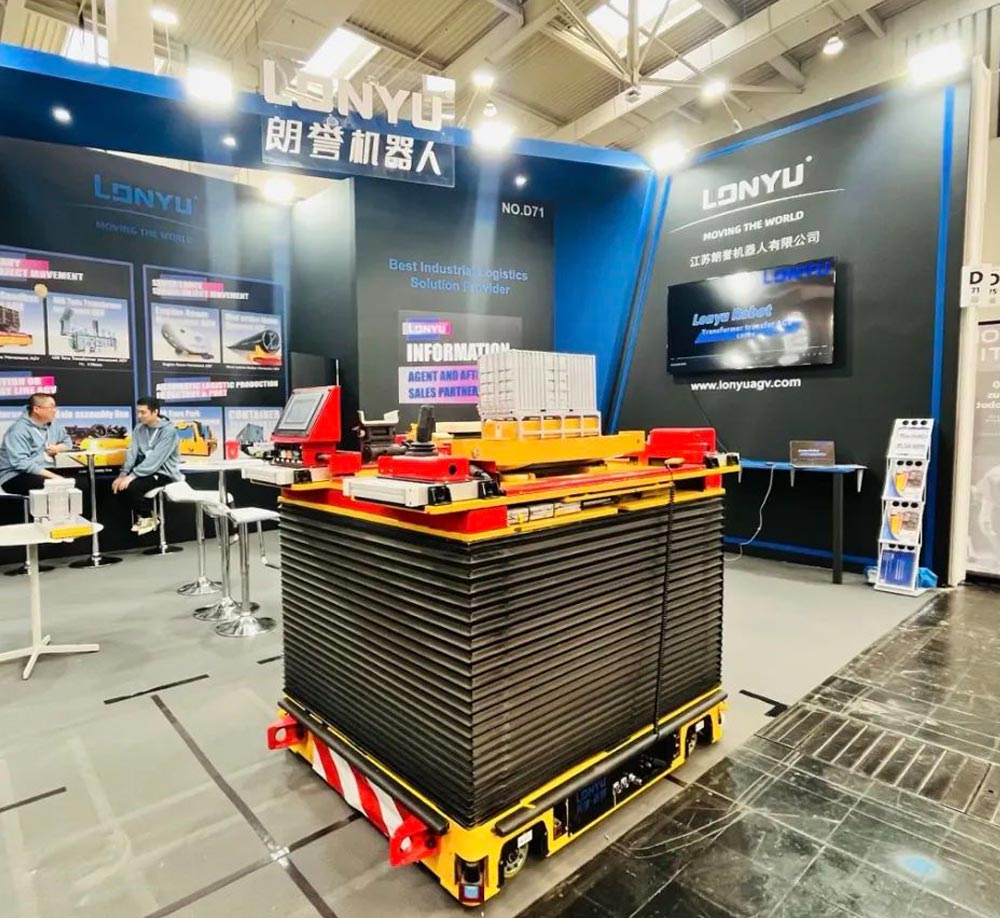
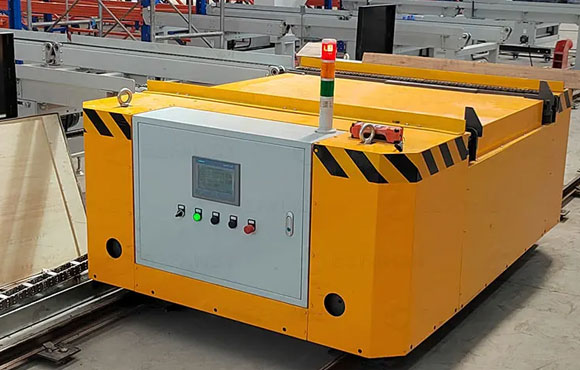
- Backpack Lifting Heavy-Duty AGVs: These vehicles incorporate an integrated lifting mechanism that raises a deck to engage with a load rack or fixture, carries it, and lowers it at the destination. They serve as a flexible replacement for conveyor or roller-bed systems, ideal for moving heavy dies, sub-assemblies, and fixture-mounted parts between work cells in metal forming or automotive plants.
- Automatic Mold Transfer Systems: In heavy stamping and die-casting shops, changing a 50-ton mold is a high-risk, time-sensitive operation. Purpose-built automated mold transfer vehicles with precise positioning (±5 mm) and high-capacity lifts enable quick die changeovers, reducing press downtime and manual intervention.
- Coil & Material-Handling Transfer Trolleys: For the metals industry, specialized coil transfer vehicles with cradles or V-decks move steel, aluminum, and copper coils from slitting lines to storage, integrated with MES for full traceability.
4. How to Select a Heavy-Duty AGV Manufacturer
Choosing an automated guided vehicle manufacturer involves more than comparing payload capacity and technical specifications. Buyers need to evaluate engineering capability, project experience, and after-sales support. Because high-payload AGVs directly influence production uptime and worker safety, the evaluation process should prioritize engineering depth, manufacturing pedigree, and project delivery capability.
First, prospective buyers should examine the manufacturer’s R&D-to-production ratio. A true AGV factory will maintain its own software development team for fleet management and control algorithms, rather than outsourcing navigation technology. Core components like steering controllers, drive modules, and the battery management system should be developed in-house or tightly integrated, ensuring that support is not fractured across multiple third-party vendors.
Second, seek evidence of domain-specific experience. Moving a 200-ton transformer with a low center of gravity imposes different demands than carrying a 30-meter-long, flexible wind blade. A manufacturer’s portfolio should document completed projects in your specific niche, with references to stability analyses, axle load calculations, and floor-loading assessments as part of the pre-sales engineering phase.
Third, evaluate post-installation support. A heavy-duty AGV is a long-term capital asset. The supplier should provide detailed service level agreements, local spare parts depots, and remote diagnostic capabilities. Reviewing the safety certification status of the entire system—such as compliance with EN ISO 3691-4 for driverless industrial trucks—is non-negotiable.
Finally, a thorough technical clarification process is standard. For a custom project, the manufacturer will conduct a joint scoping workshop, simulate the route and load distribution, and present a detailed design review before fabrication begins. This engineering process helps distinguish experienced auto guided vehicle manufacturers from suppliers that only provide standard industrial equipment.
5. Key Factors Affecting Heavy-Duty AGV Pricing
Obtaining a AGV automated guided vehicle price is not a simple online query; it is the outcome of a detailed analysis of operational requirements and site conditions. The final cost depends on both the equipment configuration and the engineering work required for each project. The primary cost drivers include:
- Payload Class and Structural Engineering: A 30-ton unit used for die transport will have a fundamentally different frame design, motor size, and wheel count compared to a 400-ton transformer transporter. Higher payloads require heavier steel structures, larger-diameter wheels, and more powerful drive units, all of which increase material and fabrication costs proportionally.
- Navigation and Control Complexity: Laser SLAM systems, which provide free-path navigation without floor markers, are more expensive than magnetic tape guidance, but they offer substantially greater route flexibility and are essential in environments where floor markings cannot be maintained. The quality and safety certification level of the LiDAR sensors (e.g., PLd vs. PLc) also affect the price.
- Battery Configuration and Charging Strategy: Continuous 24/7 duty cycles may require lithium batteries with rapid opportunity charging or automatic battery swap stations. The capacity (kWh) and the inclusion of a battery management system that integrates thermal management and fire suppression will be reflected in the cost.
- Safety and Redundancy Requirements: Comprehensive safety zones, dual-channel emergency stop circuits, and multi-layered collision avoidance systems are mandatory for heavy loads, not optional. The higher the safety performance level (SIL/PL), the greater the investment in certified sensors and controllers.
- Integration and Site Acceptance: The final price usually includes engineering services: floor survey, FEA simulation of load distribution, route design, software integration with existing MES/ERP, and on-site commissioning plus operator training. These services are critical to a safe start-up.
When requesting a quotation, a buyer should prepare a detailed brief: the weight and dimensions of the load, the nature of the ground (levelness, surface coating), travel path length and any slopes, required cycle time, and the ambient conditions (temperature, humidity, outdoor exposure). A capable supplier will then return a techno-commercial proposal rather than a simple list price. This is because the AGV automated guided vehicle price is ultimately a reflection of a complete, engineered logistics system.
Conclusion
Having examined the range of available solutions and the factors influencing procurement, it becomes clear that successful deployment of heavy-duty automated handling rests on engineering depth rather than equipment acquisition alone. From a single automated transfer cart to a synchronized fleet, these heavy-duty transport systems are reshaping intralogistics flexibility and safety. The choice of a auto guided vehicle manufacturer should be guided by a thorough assessment of domain experience, in-house software capabilities, and post-installation support, as these elements directly determine long-term reliability. While the price of a custom heavy-load AGV varies with payload, navigation complexity, and safety requirements, it is most usefully evaluated through the lens of total cost of ownership rather than initial capital outlay. A competent manufacturing partner with in-house engineering will provide the necessary consultation to right-size the system and integrate it safely into existing workflows. As industrial automation expands, selecting an experienced AGV partner will become increasingly important for achieving reliable and efficient material handling.
Frequently Asked Questions
Q 1: How do heavy-duty transporters differ from standard warehouse AGVs?
Standard warehouse AGVs, such as those that move pallets or racks, typically handle loads up to 1–2 tons and are designed for flat, clean indoor floors. Heavy-duty transporters, by contrast, are built with welded steel frames, multi-axle drive systems, and hydraulic or mechanical load-equalizing suspensions to handle payloads from 20 tons up to several hundred tons. Their safety systems are far more stringent, and their navigation must account for higher inertia and longer stopping distances. The design focus shifts from simple material movement to the controlled handling of high-risk heavy loads.
Q 2: What steering mechanisms prevent ground damage during a 400-ton transfer?
High-capacity AGVs utilize multi-axle coordinated steering to prevent floor damage. A central control computer calculates the ideal steering angle for each wheel based on the vehicle’s instantaneous radius of turn and speed. This ensures that all wheels roll purely without lateral scrubbing. By eliminating the shear forces that would otherwise grind the concrete surface, the system both preserves the factory floor and dramatically extends tire life. Some vehicles also employ softer polyurethane tire compounds and optimized wheel load distribution to further reduce contact pressure.
Q 3: How do I query the custom pricing for a heavy load transformer AGV?
The approach is to initiate a technical consultation with a specialized auto guided vehicle manufacturer. Rather than asking directly for a price, you should provide the transformer’s weight, dimensions, center of gravity height, the layout of the transfer route, floor flatness data, and the expected number of transfer cycles per day. The manufacturer will then perform a preliminary engineering analysis and prepare a configuration, which forms the basis of the quotation. Due to the bespoke nature of each system, published catalog prices do not exist for this class of machinery.