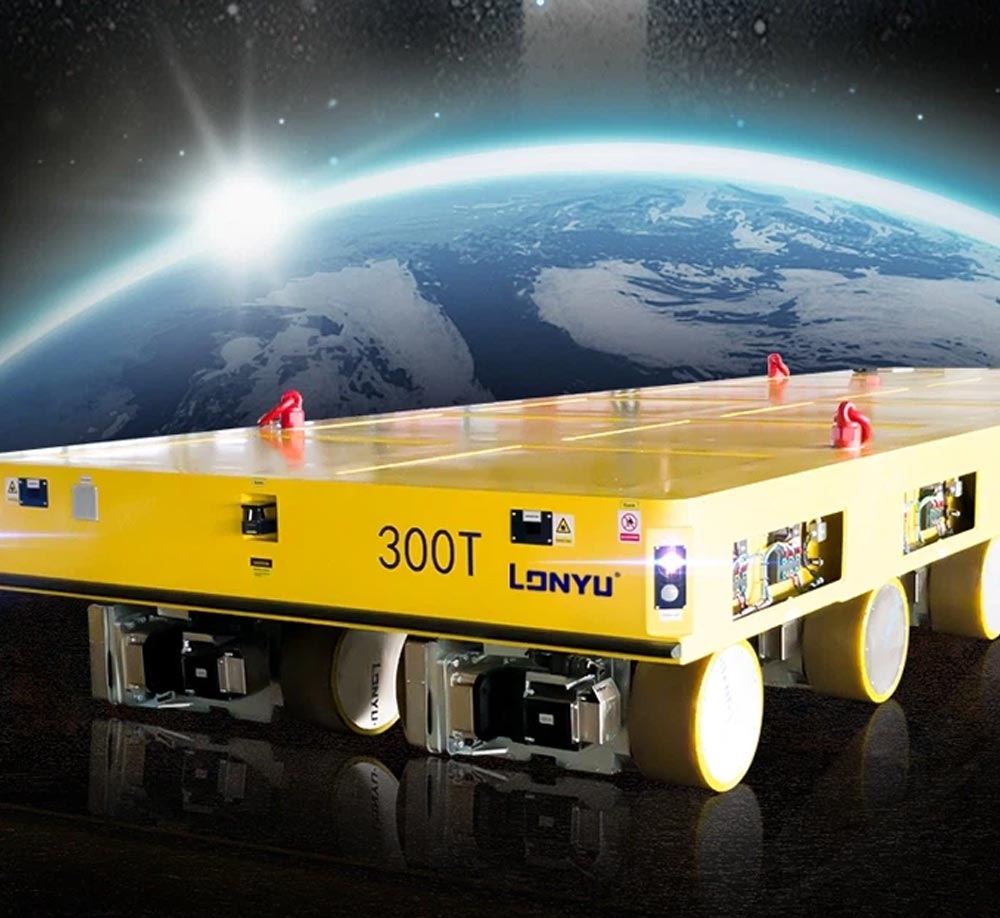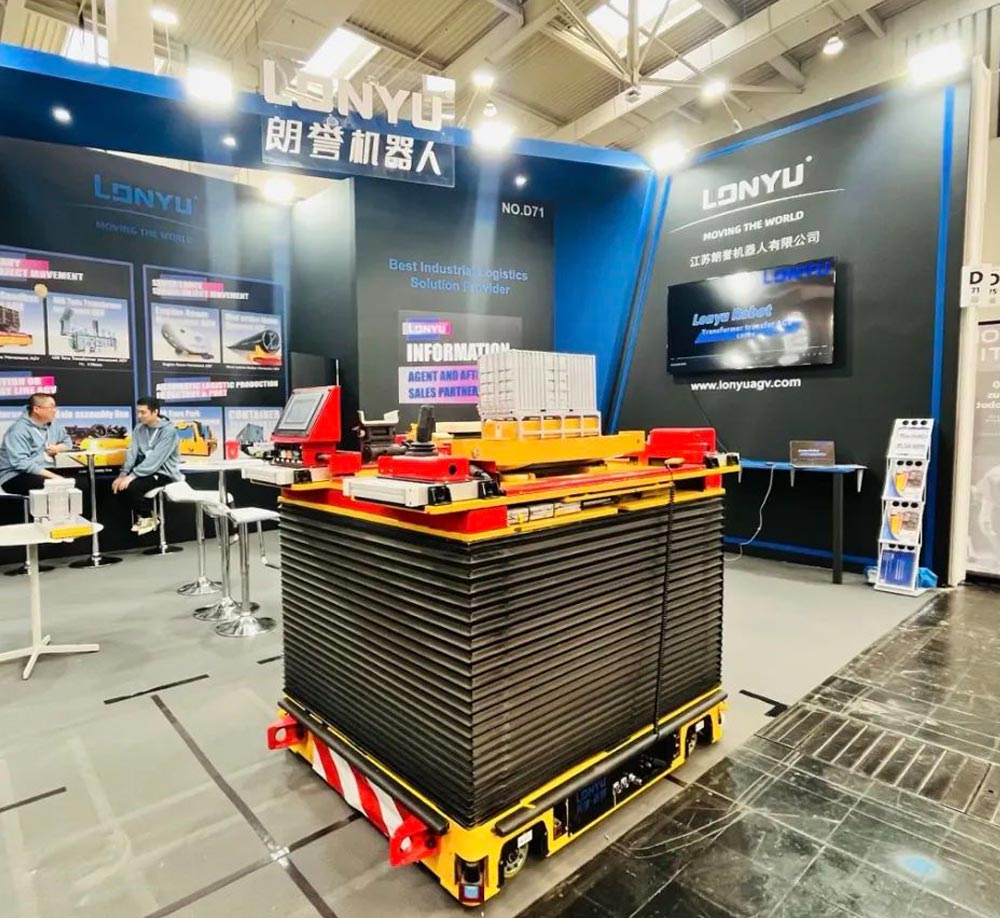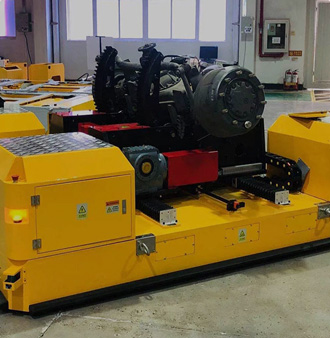


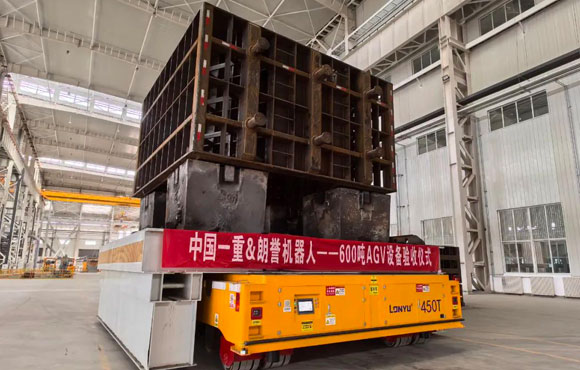
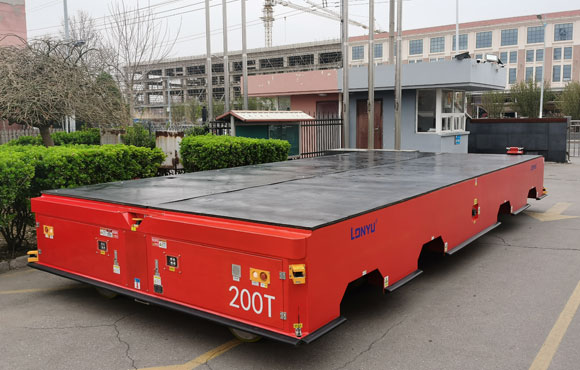
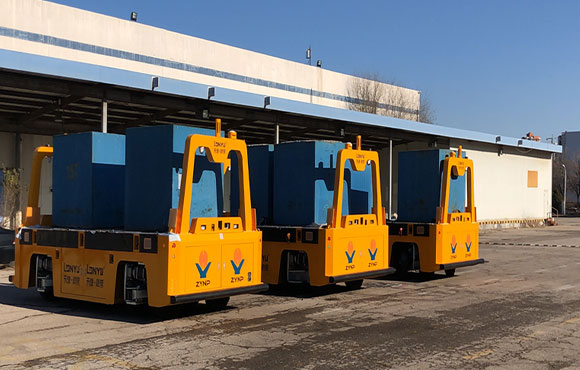
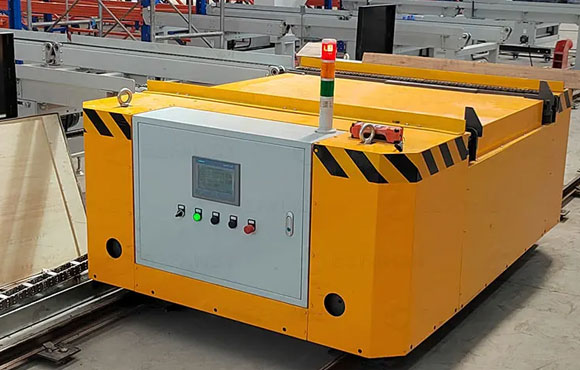
Transporting an ultra-high-voltage (UHV) transformer that weighs up to 300 tons is one of the most challenging material handling tasks in heavy electrical manufacturing. According to a report by the U.S. Department of Energy, large power transformers for transmission applications—including those in UHV class—can exceed 300 metric tons in transport configuration, with a center of gravity that sits exceptionally high relative to their footprint. This combination of extreme mass and top-heavy design creates a serious risk of tipping when traveling over even minor floor irregularities, a risk that conventional rail-bound carts or cranes often struggle to mitigate safely.
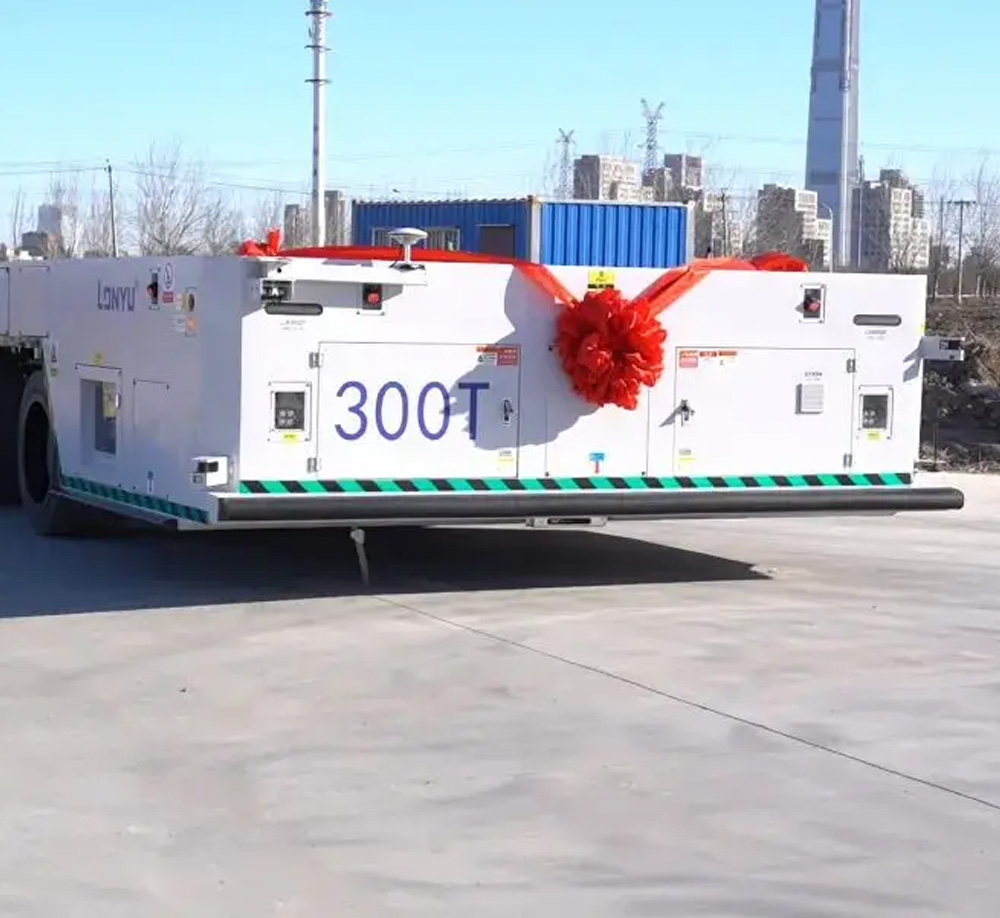
The answer lies in specially engineered 300-ton heavy-duty automated guided vehicles. These vehicles integrate advanced hydraulic suspension that self-levels the load, multi-layered redundant braking that secures the transformer in any emergency, omnidirectional drive for ultra-precise low-speed maneuvering, and real-time center-of-gravity monitoring to prevent unbalanced conditions. Unlike fixed-path transfer systems, today’s heavy load transport automated guided vehicles introduce a flexible, shock-free logistics layer directly on the factory floor, removing the single-point failure risks of overhead lifting and the infrastructure cost of dedicated rail tracks.
1. Balancing High Center-of-Gravity Loads: The Hydraulic Suspension Solution
1.1 Hydraulic Suspension & Damping
When a 300-ton transformer traverses a minor slope or an uneven expansion joint, rigid-wheeled carts suffer from dramatic wheel load redistribution: one wheel set takes too much weight while others lose contact. For a high-center-of-gravity payload, this imbalance can quickly initiate a tipping moment. Heavy-duty AGVs such as the Lonyu LYT-300 counter this through a hydraulically interconnected suspension system. Each wheel group is equipped with hydraulic cylinders that automatically equalize pressure across all ground contact points, actively compensating for floor height differences. This multi-wheel load self-balancing mechanism maintains even weight distribution, prevents localized overstress, and significantly dampens physical vibration transmitted to the transformer core and winding assembly during transit. Vibration control is critical here, as prolonged micro-oscillations could affect the long-term dielectric integrity of a UHV transformer.
1.2 Automatic Center-of-Gravity Weighing and Display
Beyond mechanical leveling, the AGV’s onboard weighing system continuously calculates the live center of gravity (CoG) of the combined vehicle and transformer load. The CoG coordinates are displayed on the operator’s HMI screen in real time. If the load’s mass center shifts beyond a predefined safety envelope due to incorrect fixture placement or oil filling stages, the system triggers a warning and prevents motion until the condition is rectified. This direct, data-driven feedback loop is why modern transformer production plants consider a heavy load transformer AGV an indispensable tool for guaranteeing the safe relocation of these valuable, high-precision electrical assets. It removes guesswork and allows engineers to confidently move a partially assembled transformer between assembly, drying, and testing bays.
2. Precision Maneuvering: Omnidirectional Steerability on Factory Floors
2.1 8-Drive Omnidirectional Steering System
The LYT-300 heavy-load AGV is configured with eight independent omnidirectional drive units. Each unit combines a traction motor and a steering motor, enabling the complete vehicle to execute straight travel, sideways (crab) movement, zero-radius spin rotation, diagonal travel, and even coordinated drift modes. In the congested environment of a transformer assembly hall—where a 7500 mm-long AGV must navigate between assembly jigs, winding machines, and vapor-phase drying ovens—the ability to move fully sideways without swinging its tail is a fundamental safety and space-utilization advantage. It allows two large transformers to pass in a narrower aisle and simplifies the fine-alignment task of positioning transformer bell housings during tanking operations.
2.2 Differential Steering and Optimized Chassis Structure
Carrying 300 tons on a 360 mm-low-profile chassis requires significant structural rigidity without excess weight. Finite element analysis (FEA) is used to optimize the welded frame, distributing stress paths so that the 12-ton self-weight of the AGV remains minimal compared to its payload capacity. The differential steering control plays a further protective role: as the AGV turns, the electronic control calculates the exact rotational speed for each drive unit’s wheels, minimizing tire scrubbing. This reduces torsional shear force transmitted to the factory floor, protecting epoxy-sealed concrete surfaces from delamination—a maintenance concern commonly overlooked when handling super-heavy loads.
3. Redundant Braking and Multi-Layered Safety Systems
3.1 Enhanced Redundant Brake Systems
Safety in 300-ton transport demands that a failure in any single brake component never compromises the ability to hold the load. The AGV is therefore built with a multi-tier redundant braking architecture. Each drive unit houses a spring-applied, power-off brake. During normal operation, these brakes release electrically; in an emergency stop or total power loss, all brakes instantly engage by spring force. Additionally, the system often includes a secondary braking circuit that acts on a separate set of discs or utilizes the hydraulic system’s lock valves to prevent creep. This design ensures that even on a permissible factory slope, the full 300-ton load is immobilized without drifting.
3.2 Multi-Sensor Safety Obstacle Avoidance
A 300-ton moving platform cannot rely on a single safety field. A combination of non-contact and contact protective devices is deployed. Industrial-grade safety laser scanners are installed at the front and rear, creating configurable protective fields that trigger a deceleration or emergency stop if personnel or equipment enter the AGV’s path. As a secondary contact line of defense, sensitive safety edges and anti-pinch mechanisms around the vehicle perimeter immediately halt motion upon physical contact. Audible and visual warning devices—including high-decibel beacons and tricolor stack lights—provide clear status indication across the noisy factory environment, alerting floor personnel well before the AGV approaches.
4. Technical Specifications of Lonyu LYT-300 Heavy Load AGV
| Parameter | Specification |
| Rated Load | 300 Tons |
| Equipment Weight | Approximately 12 Tons |
| Dimensions (L × W × H) | 7500 mm × 2300 mm × 360 mm (Low-profile) |
| Drive System | 8-Drive Omnidirectional Differential Steering |
| Suspension | Advanced Hydraulic Suspension Damping System |
| Battery Type | Lithium Iron Phosphate (LiFePO4) |
| Charging Mode | Automatic Laser-guided Charging Dock Alignment |
The energy system is just as critical as the mechanical drivetrain. As an industrial Battery Transfer Cart, the LYT-300 uses a high-capacity lithium iron phosphate battery pack, matched with a battery management system that monitors cell voltage, temperature, and state of charge continuously. Automatic laser-guided docking allows the vehicle to align itself precisely with charging contacts without manual intervention, enabling opportunity charging during idle periods. In standard operation, a fully charged battery supports over eight hours of combined loaded and empty travel, sufficient for an entire shift of transformer logistics without range anxiety.
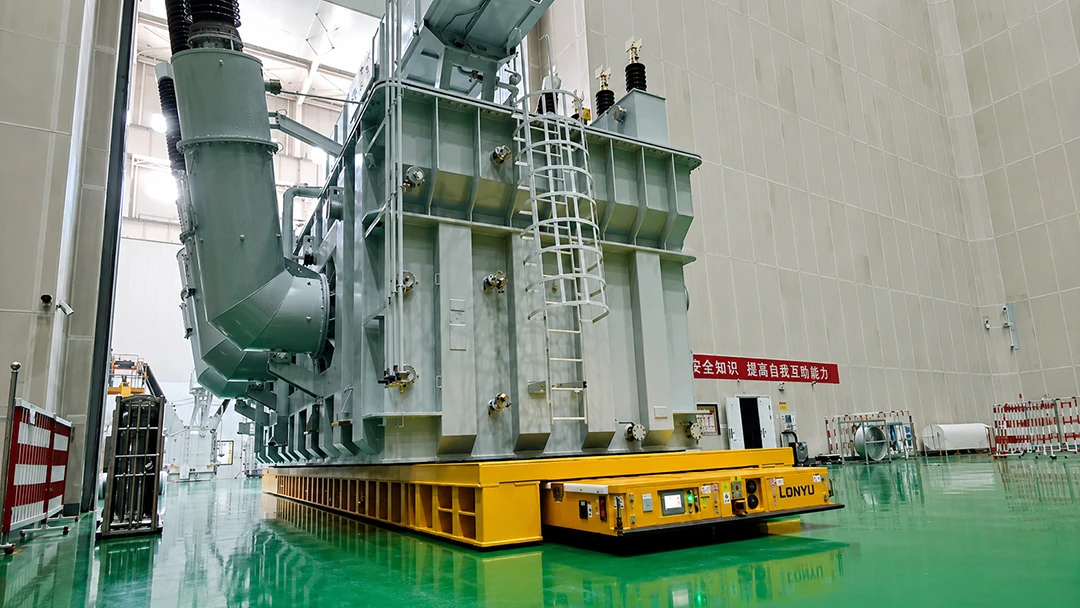
5. Why Partner with a Dedicated Heavy-Duty AGV Manufacturer?
5.1 Mechanical Redundancy and Customized Design
Scaling up an AGV from a 5-ton to a 300-ton capacity is not a linear engineering exercise. The chassis must withstand concentrated compressive loads, the multi-axis drive coordination requires sophisticated kinematic models, and the hydraulic synchronization must hold tight tolerances across all wheel groups. An experienced partner performs dynamic fatigue testing on structural welds, validates brake holding torque under full payload, and designs the mechanical redundancy into the steering and lifting systems from the start. For end users, this translates into equipment that is certified to handle rated loads without progressive structural fatigue.
5.2 Integration with Intelligent Control Systems
An isolated AGV provides limited value; the real benefit emerges when it communicates with the factory’s digital backbone. The AGV’s on-board controller interfaces with the manufacturing execution system (MES) and warehouse management system (WMS) through standardized protocols, receiving transport orders and reporting job status automatically. Traffic management software allows multiple heavy-duty AGVs, manned forklifts, and pedestrian zones to coexist safely. When procuring such large-tonnage logistics equipment, selecting an experienced heavy-duty transfer cart AGV supplier is pivotal to ensuring one-time project delivery, compliance with local machinery safety directives, and reduced long-term maintenance costs through proper localized support.
6. Frequently Asked Questions
Q1: Can a 300-ton AGV travel on uneven factory floors or slopes?
A: Yes. The LYT-300 utilizes an advanced hydraulic suspension system that automatically equalizes wheel loads. This compensates for slight slopes and uneven factory floors, keeping the high-center-of-gravity load stable and preventing tip-overs.
Q2: What happens if there is a power failure or emergency during 300-ton transport?
A: The AGV is engineered with multiple redundant braking mechanisms. In case of an emergency stop trigger or power loss, these heavy-duty brakes engage immediately and securely halt the 300-ton load without causing shifting or slippage.
Q3: How does a heavy-duty AGV protect factory flooring from being crushed by 300 tons?
A: Through the use of customized polyurethane tires and a multi-wheel arrangement (typically 8 drive units with multiple wheels), the massive weight is evenly distributed over a larger surface area. Combined with the hydraulic suspension, it reduces ground pressure, protecting common factory concrete floors from damage.
7. Conclusion
Moving a 300-ton UHV transformer safely through a manufacturing plant demands far more than brute motor power. It requires a carefully integrated set of technologies: a hydraulically compensated chassis that neutralizes floor unevenness, an omnidirectional drivetrain that achieves millimeter-accurate positioning, a redundant brake architecture that never drops the load, and a sensor suite that provides comprehensive human-machine safety. The Lonyu LYT-300 AGV exemplifies how high-strength structure design, adaptive suspension stability, and intelligent fleet control are successfully breaking the logistics bottleneck of UHV transformer production. By replacing rigid rail carts and risky crane lifts, these heavy-duty AGVs enable a genuinely safe, flexible, and unmanned material flow upgrade for heavy manufacturing workshops.