

In the era of global logistics intelligence, as the core hubs of international trade, ports and docks are facing the dual challenges of increasing cargo throughput and unmanned upgrading demand. Among the numerous intelligent equipment driving the transformation of ports, the heavy duty AGV (Automated Guided Vehicle) has emerged as a key force in realizing the closed-loop unmanned logistics chain. This paper will comprehensively discuss the application of heavy AGV in port terminals, including its definition, core technologies, unique advantages, product specifications, application scenarios, technical requirements and development trends, in order to answer how AGV robot systems reshapes port operations.
1. What is Heavy Duty AGV in Port Terminal Scenarios?
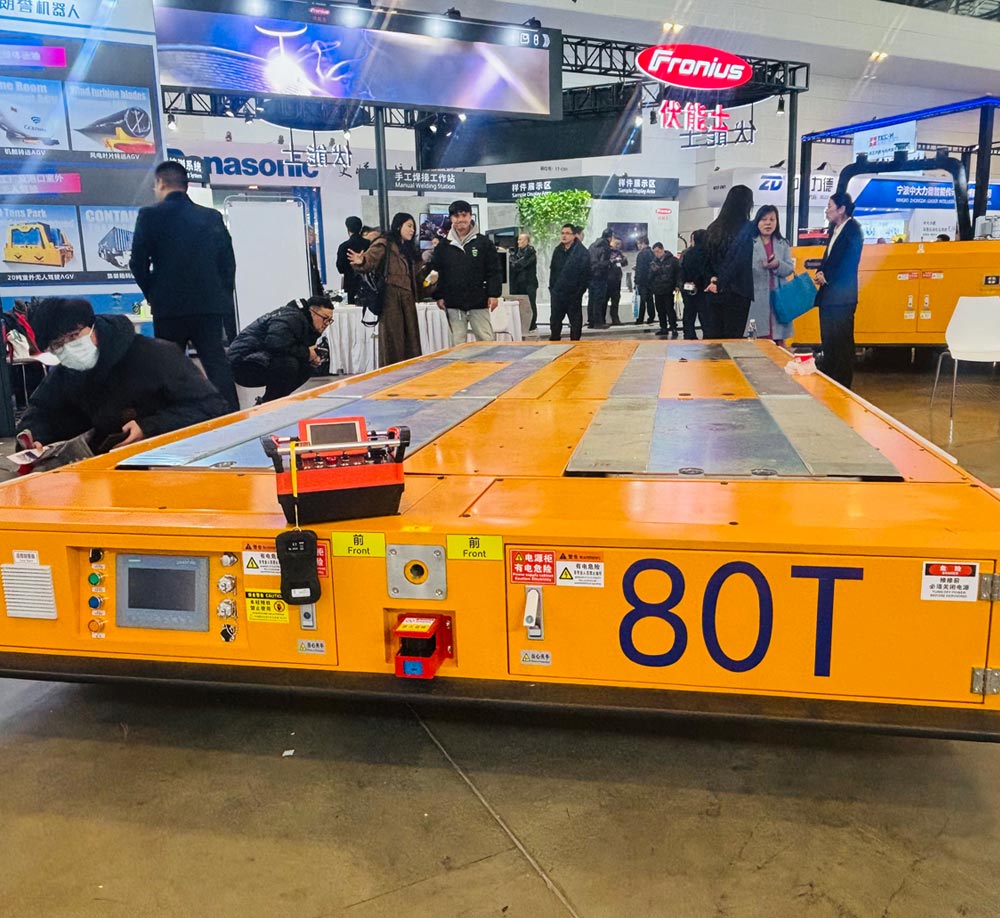
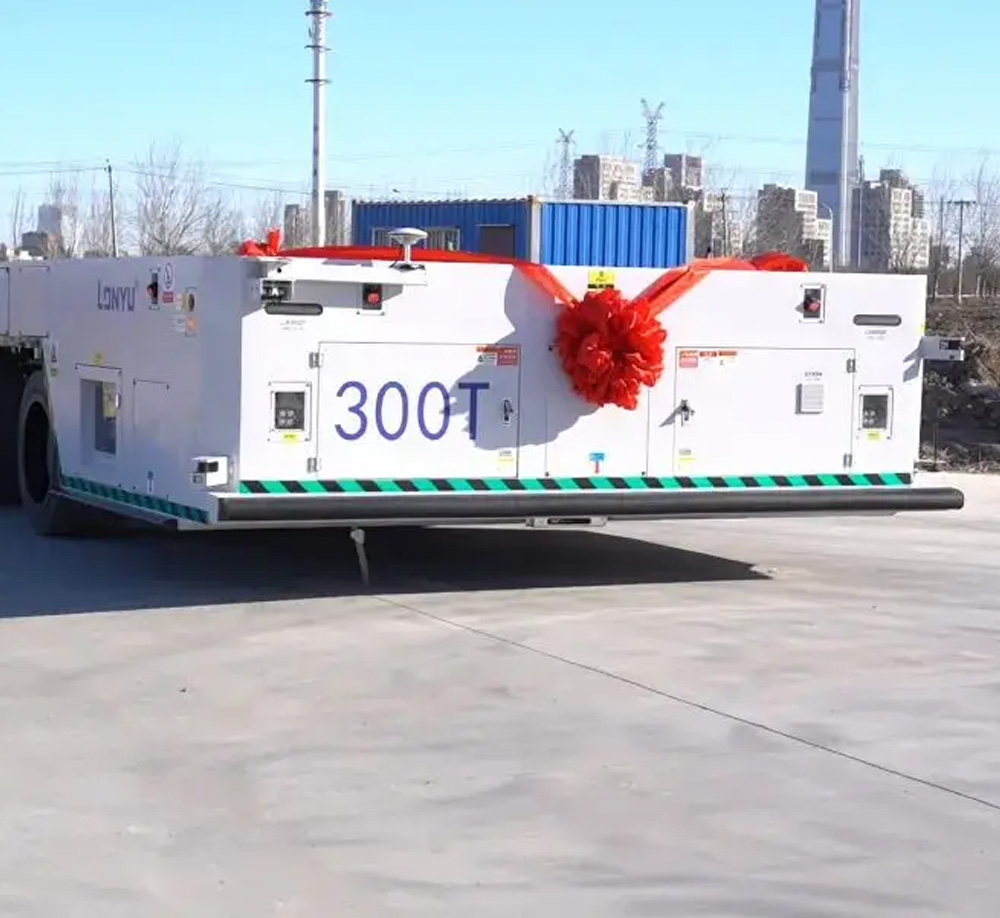
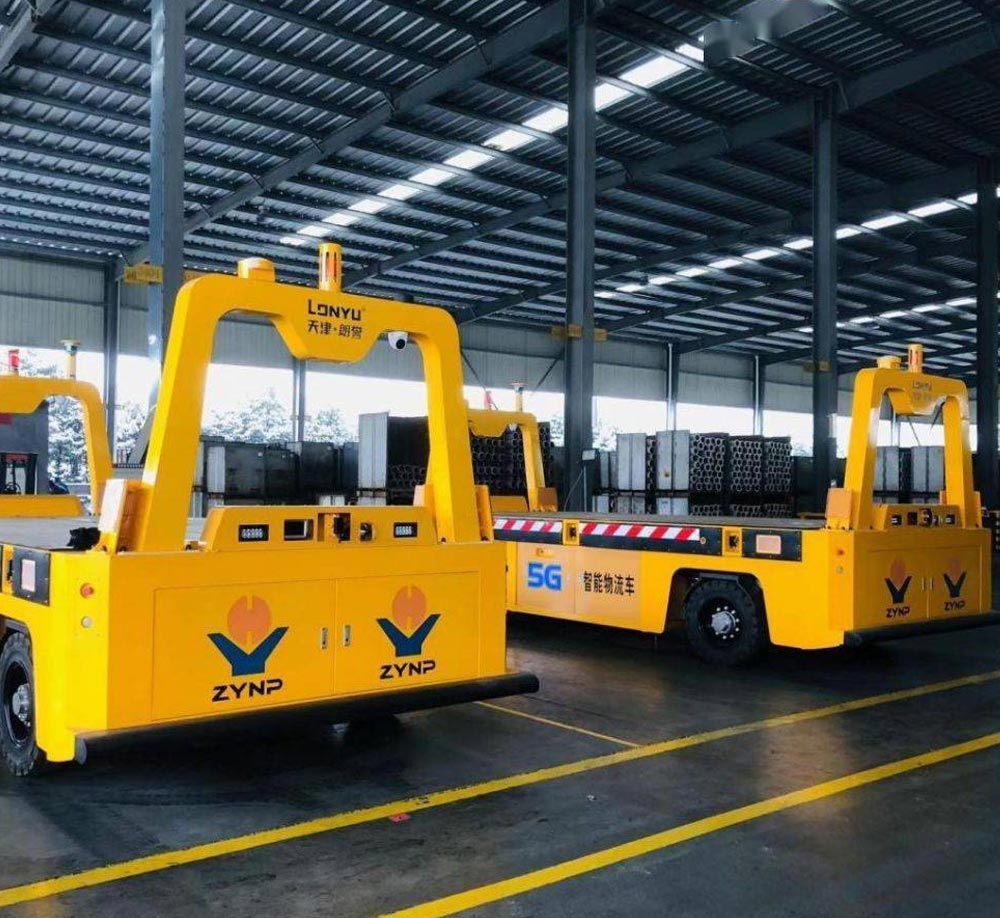
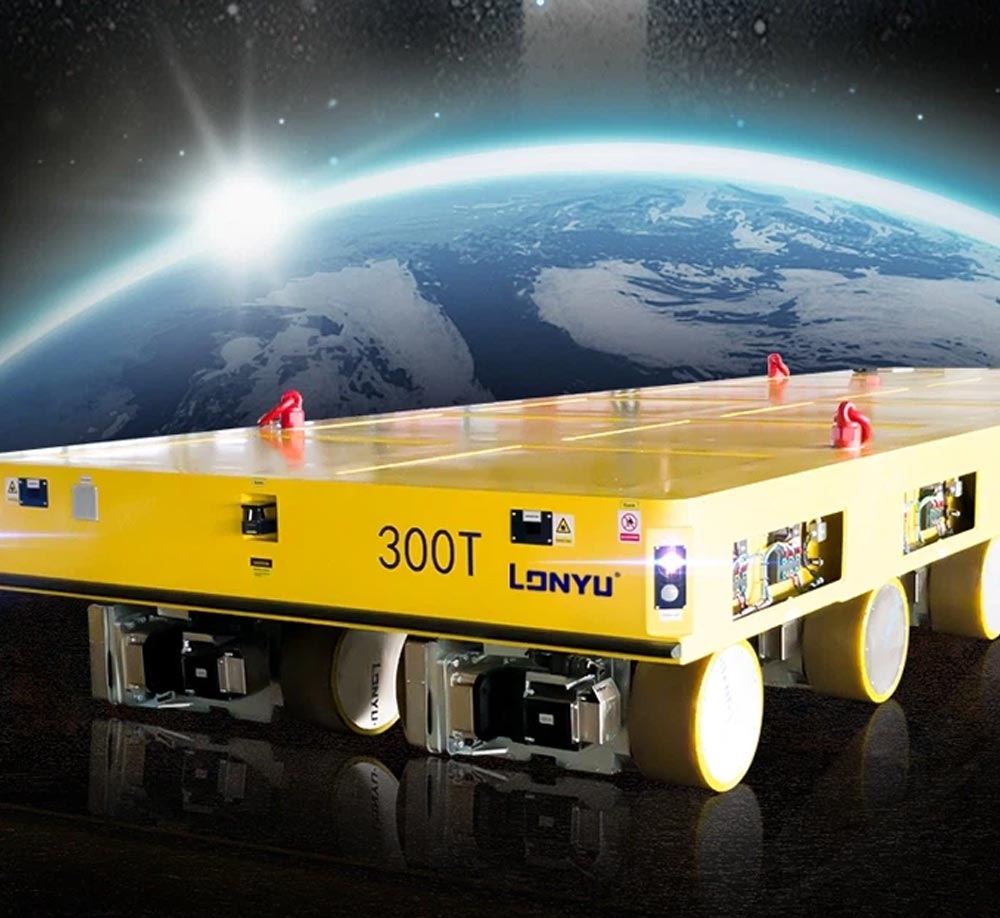
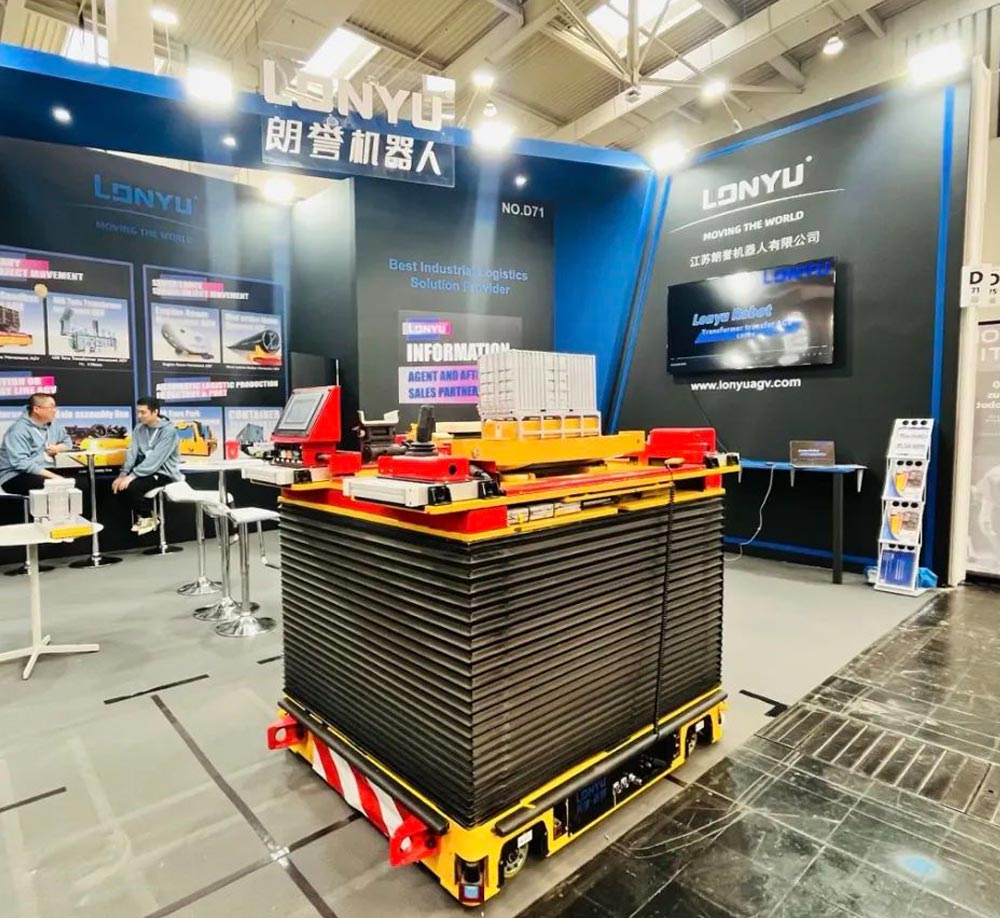
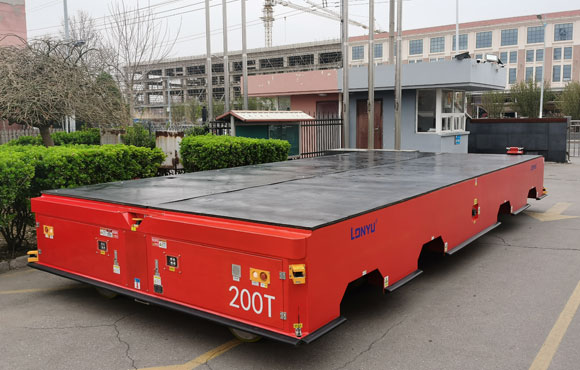
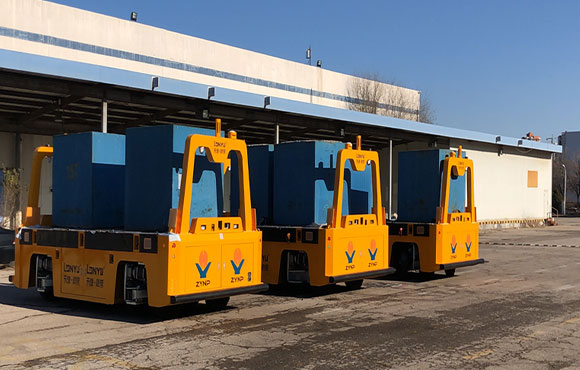
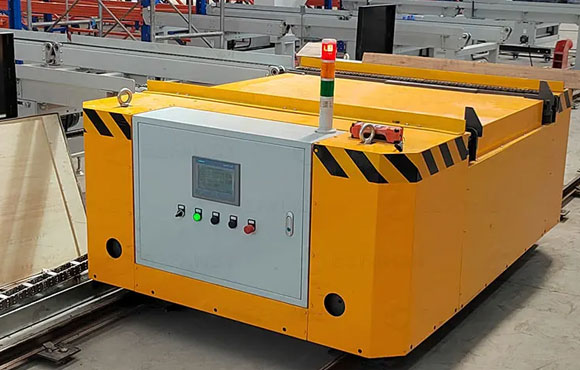
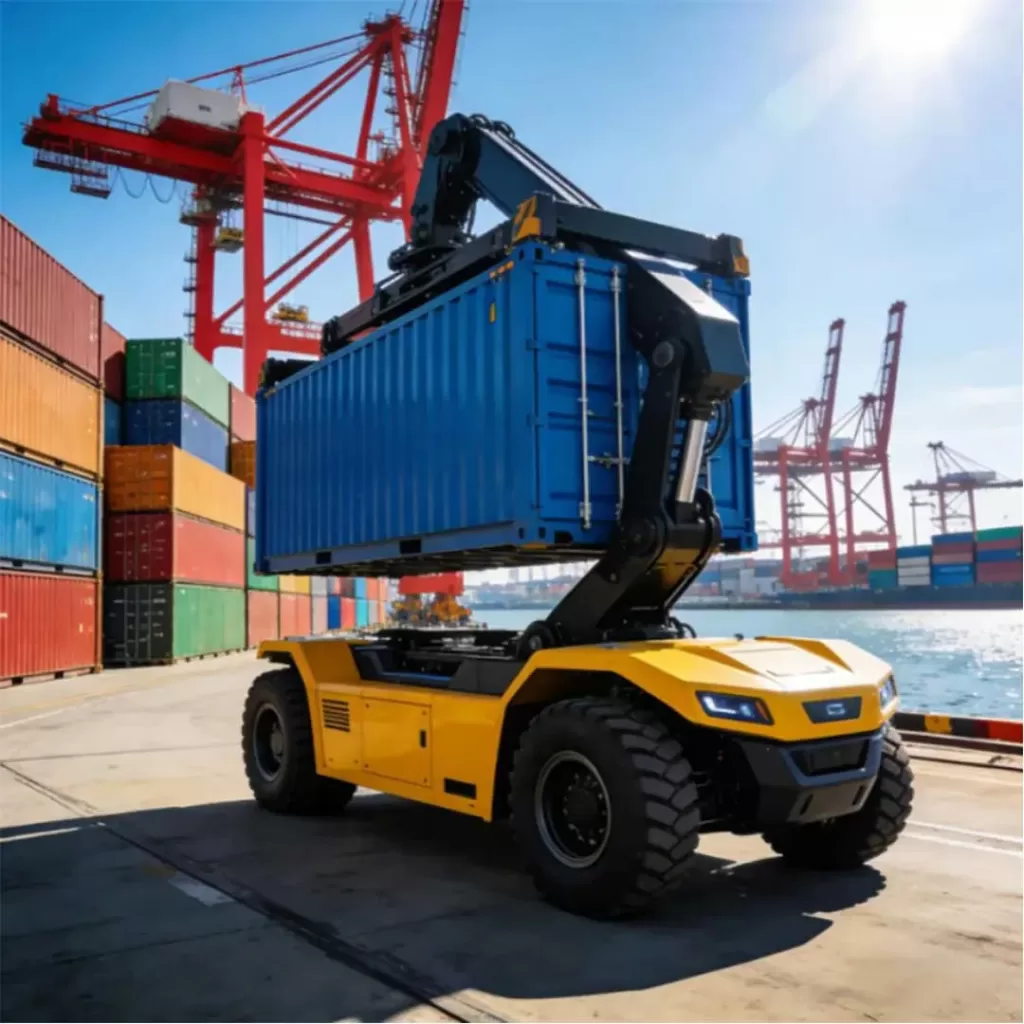
Heavy AGV refers to intelligent logistics equipment for automatic loading and unloading of heavy goods (load ≥ 10 tons), and it is the core of unmanned upgrading of ports. Different from light-load AGVs, it adapts to complex port terrain, harsh climates and ultra-heavy cargo (containers, heavy general cargo) transfer, featuring high-strength structure, high-power drive, high-precision navigation and all-weather adaptability. The load range is from 10 tons to several hundred tons (forklift, flatbed truck, omni-directional types), replacing the traditional gantry crane and forklift truck, and constructing the “ship-yard-car” unmanned logistics loop.
2. Core technical support for port applications
The stable operation of heavy duty AGV in port environment depends on the collaborative authorization of various technologies. The core technology system is divided into four modules to jointly ensure the efficient and safe operation of the equipment in complex port environment.
2.1 Drive and bearing systems
It adopts multi-servo motor cooperative drive, industrial heavy-duty tire/steering wheel and reinforced frame with buffer devices to ensure stable operation under heavy loads, adapt to undulating port terrain, and have the ability to climb hills and cross obstacles.
2.2 Navigation and positioning systems
Integrating laser SLAM, magnetic navigation, QR code navigation and satellite-assisted positioning, it resists metal interference, strong light and wind-rain. With the positioning accuracy of 20 mm, this multi-sensor fusion solves single navigation fault in complex port environment.
2.3 Intelligent Scheduling and Control System
Based on 5 edge computing technology, cluster scheduling, dynamic path optimization and real-time task allocation of multiple AGV robot systems are realized. It can seamlessly connect with the port’s TOS (Terminal Operating System) and WMS (Warehouse Management System), realizing the informatization and visualization of the entire logistics process.
2.4 Security protection system
It is equipped with 360 ° laser radar, mechanical anti-collision railings, acousto-optic alarm devices and emergency braking modules, supporting collaborative obstacle avoidance of multiple devices and complying with the safety specifications for high-risk operations in ports. The system provides a powerful guarantee for the safe operation of heavy AGV in the busy port environment.
3. Unique Advantages of heavy AGV in port applications
Compared with traditional port transport equipment, heavy AGV has obvious unique advantages, which promote its large-scale application in port terminals. According to a report from the global port technology survey in 2025 (https://www.porttechnology.org/). The application of AGV robot systems can reduce port operation costs by 28% on average.
3.1 Improve safety and efficiency
Instead of manual driving and heavy machinery, it puts an end to safety accidents such as falling and collision of heavy objects, and is suitable for night and bad weather. The 360 safety protection and intelligent scheduling further ensure the safety of operation.
3.2 Improvement of operation efficiency
Realizing 7×24 continuous operation, optimize the transit paths through cluster scheduling, reduce the waiting time of goods, and greatly improve the port throughput and transit efficiency. No need for rest, to maximize the utilization of equipment.
3.3 Optimization of Operation Costs
Reduce labor, maintenance and energy costs, promote the digitalization and visualization of port logistics, and provides data support for the construction of smart port. Stable operation and reduced human intervention reduce the maintenance frequency and cost.
4. Product Specifications of Heavy Duty AGV for Ports
| Product Type | Load Capacity | Driving Speed | Navigation Accuracy | Protection Level | Power Supply Mode |
| Forklift Type Heavy Duty AGV | 10-50 tons | 0-20m/min | ±20mm | IP65 | High-capacity lithium battery (fast charging) |
| Flatbed Carrying Type Heavy Duty AGV | 50-200 tons | 0-30m/min | ±20mm | IP65 | High-capacity lithium battery / swap battery |
| Omni-directional Steering Wheel Type Heavy Duty AGV | 10-100 tons | 0-25m/min | ±15mm | IP65 | High-capacity lithium battery (fast charging) |
5. Main Application Scenarios and Operation Processes of Heavy Duty AGV in Ports
The application scenarios of heavy AGV in port terminals focuses on the whole process of heavy cargo transshipment, covering three core scenarios: container transshipment, commercial vehicle transshipment in Ro-Ro terminal and heavy general cargo transshipment. Each scene has formed a standardized operation flow to adapt to different cargo types and terminal operation requirements.
5.1 Container Terminal Transfer Scenario
This is the core application field of heavy duty AGV, which mainly undertaking the task of automatic transfer of containers from “shore crane-yard”, “yard-freight station” and “yard-railway loading and unloading point”, forming a closed-loop operation link. The specific operation flow is as follows.
1. Unloading and transshipment: the quayside crane places containers on AGV, and the AGV receives TOS instructions, navigates to target storage yard through the preset paths, and adjusts trajectory in real time through laser radar to avoid obstacle.
2. Docking in the yard: AGV cooperates with yard bridge to realize high-precision docking. After the container is unloaded by the freight yard bridge, AGV will feed back the status and wait for next dispatch.
3. Ship/truck loading transfer: AGV transfers containers from yard bridge to the dock crane (ship loading) or freight/railway vehicle (land transportation), and then automatically charges or receives new tasks after the transfer.
For special types such as refrigerated containers and dangerous goods containers, the heavy duty AGV can be customized with thermal insulation and explosion-proof protection devices, and supporting special positioning and monitoring modules to ensure the safety of transfer.
5.2 Ro-Ro Terminal Commercial Vehicle Transfer Scenario
Ro-Ro terminals is mainly responsible for the loading, unloading and transit of commercial vehicles and engineering vehicles. In this scenario, heavy duty AGV can realize the unmanned transfer of “cargo hold-dock yard” and “yard-loading and unloading area”, which solves the problems of low efficiency, high risk and difficult vehicle adaptation of traditional manual transfer. The operating process is as follows.
1. Vehicle loading: AGV connects with commercial vehicle tires in the cargo hold of the ship through vehicle identification matching clamping device to fix the vehicle and avoid shaking during transshipment.
2. On-site transfer: AGV drives the vehicles along preset paths, adjusts power to drive on a smooth slope, and avoids pedestrians/equipment through multi-radar fusion.
3. Vehicle unloading: The AGV releases clamping devices, pushes vehicles to designated positions through the traction modules, and then carries out the next loading after resetting.
5.3 Heavy general cargo transfer scenario
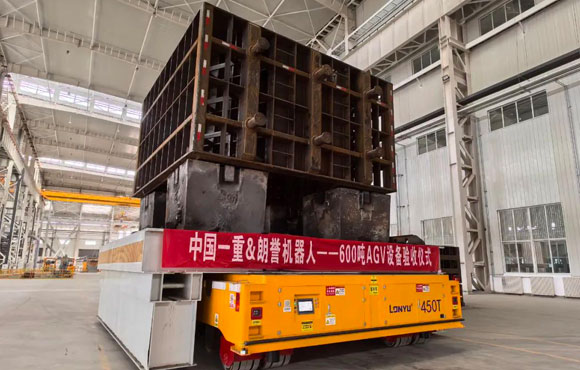
For heavy general cargo such as steel, large equipment components and container plates, heavy duty AGVs can be customized with special carrying platforms (such as anti-skid platforms, fixed fixtures) to realize automatic transfer of “quay crane – general cargo yard” and “yard – processing area”. The operation process is as follows.
1. Cargo lifting and docking: the wharf crane places heavy ordinary cargo on the platform customized by AGV, which locks cargo through hydraulic/mechanical fixing devices to prevent displacement.
2. On-site transfer: AGV plans the best paths to avoid busy areas, and adjusts the height of the vehicle through adaptive suspension, so as to transfer goods stably on uneven terrain.
3. Cargo Handover: AGV cooperates with gantry cranes/forklifts for unloading, uploading transfer data to TOS for full-process traceability.
6. Technical adaptation and performance requirements of heavy AGV in port
The environment of ports and docks is complex and changeable, involving multiple challenges such as terrain fluctuation, climate differences, signal interference, high-intensity operations, etc., which put strict requirements on the technical performance of heavy duty AGV, mainly focusing on four core dimensions: navigation and positioning, power and endurance, structural protection and system compatibility.
6.1 Navigation and Positioning Technology Adaptation Requirements
The metal containers in ports are dense and the electromagnetic signals are complex, which requires multi-sensor fusion navigation. Laser SLAM can resist metal interference; Magnetic navigation improves docking precision; Satellite navigation realizes large-scale positioning; Visual navigation is helpful for goods identification. Overall positioning accuracy of 20 mm ensures the cooperation with port equipment and the rapid repositioning ability.
6.2 Power supply and endurance performance requirements
To meet the requirements of all-weather continuous operation, a high-power servo motors (≥ 5 kW) is adopted, the climbing ability is ≥ 5, and the stepless speed change is 0-30 m/min. High-capacity lithium batteries provides endurance of ≥ 8 hours, fast charging of ≤ 3 hours, automatic docking. Zero-carbon terminals can reduce carbon emissions by photovoltaic charging and battery exchange.
6.3 Structure and protection performance requirements
High strength steel frame can withstand long-term heavy loads. The platform is equipped with anti-skid and cushioning devices, and can be lifted by hydraulic pressure. IP 65+protection ensures waterproof, dustproof and anti-corrosion performance, adapting to -10℃ ~ 50℃ and salt spray environments. Anti-collision structures can reduce the risks of collision.
6.4 System compatibility and scheduling performance requirements
It is deeply compatible with port TOS and WMS systems, realizes real-time task transmission and data sharing, and is connected with digital dual platforms for visual monitoring. The cluster dispatching system supports 50+ AGVs, and has the functions of priority allocation and fault emergency treatment. 5G+WiFi 6 dual-mode communication ensures the stability of data transmission.
7. Technical Development Trends of Heavy Duty AGV in Ports
7.1 Continuous Upgrade of Intelligence Level
Future heavy duty AGV will integrate artificial intelligence, big data and digital twin technologies. AI implements adaptive loading/unloading; Optimized scheduling of big data; Digital twinning realizes simulation, fault early warning and remote debugging, reducing maintenance costs.
7.2 Integration of greening and high efficiency
Under the guidance of the goal of “double carbon”, it will develop towards green and efficient. Iteration of battery technology, improving energy density; Fast charging, battery exchange and photovoltaic charging have realized zero-carbon operation. Energy-saving motors and light-weight design reduce energy consumption and improve battery life.
7.3 Cross-scenario collaboration and modular development
It will cooperate with unmanned trucks and intelligent dock cranes to establish a full-process unmanned systems. Modular design (standardized chassis, driving/navigation/carrying modules) can quickly adapt to various scenarios, shorten the customization cycles and reduce the research and development costs.
7.4 Globalization and standardization promotion
With the smart port technology in China going to the world, it will be applied globally by optimizing technical schemes for different ports. Industry standards will be improved to form global technical specifications and safety guide, and promote compatibility and industrialization.
8. Common problems of heavy AGV in port applications
Q 1: What is the difference between heavy-duty AGV and ordinary light-load AGV?
A 1: The core difference is load capacity (≥ 10 tons versus < 5 tons). Port-dedicated heavy duty AGVs have higher requirements for structure, power, navigation accuracy and environmental adaptability.
Q 2: How to guarantee stability in bad weather?
A 2: IP 65+ protection to ensure waterproof and dustproof performance; Anti-environmental interference of multi-sensor fusion navigation; Reinforced structure guarantees the stability. The dispatching system will adjust the plans according to real-time weather.
Q3: Can heavy AGV be compatible with the existing operating system of the port?
A 3: That’s right. The design of AGV robot systems is highly compatible. Their control systems can seamlessly interface with the existing operating systems such as TOS and WMS in the port, and realize real-time transmission of task instructions and synchronous sharing of data. They can also be connected to the digital twin platform of the port, and unified monitoring and management are realized.
Q 4: What is the maintenance interval?
A 4: It depends on the intensity of use: daily inspection, 3-month regular maintenance and 1-year overall maintenance. For more information, please refer to the product manual.
Q 5: How to solve the operation failures?
A 5: Equipped with a fault diagnosis system, which can automatically detect and alarm. The scheduling system schedules the standby AGV to ensure continuity. Maintenance personnel locate faults through remote monitoring, so as to maintain them in time.
9. Summary
As a core intelligent equipment of intelligent port construction, heavy AGV fundamentally reshapes the operation mode of port terminals with its advanced technical system and diverse application scenarios. It not only improves the safety, efficiency and cost-effectiveness of operation, but also lays a solid foundation for the unmanned and digital transformation of ports. With the continuous integration of AI, big data and green energy technologies, and the advancement of globalization and standardization, heavy duty AGV will play a more critical role in the global port logistics network, promoting the high-quality development of international trade and logistics with more intelligent, efficient and low-carbon solutions.