

The Evolution of Intralogistics in Heavy-Duty Manufacturing
For decades, moving ultra-heavy and oversized components—power transformers exceeding 100 tons, wind turbine hubs, generator stators, and massive steel molds—has presented one of the most persistent logistical challenges in industrial manufacturing. Traditional approaches have long relied on two primary methods: fixed rail systems and overhead cranes. Both come with significant limitations.
Fixed rail systems, while capable of supporting extreme weights, confine material flow to predetermined paths. Any change in production layout requires costly and disruptive construction to relocate or extend the tracks. Overhead cranes, on the other hand, introduce safety concerns when suspending hundreds of tons above workshop floors and personnel. The risk of load swinging, cable failure, or misalignment during precision positioning makes crane-dependent workflows inherently hazardous for both equipment and workers.
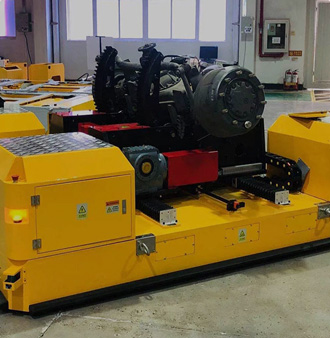
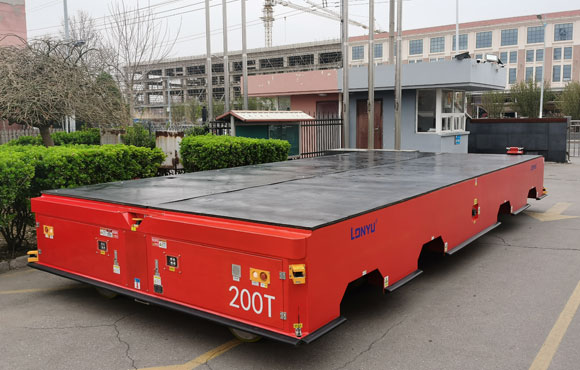
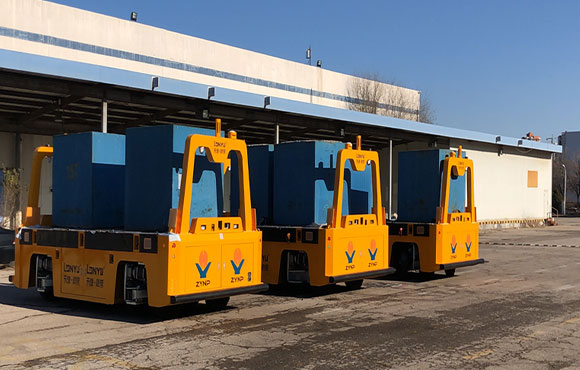
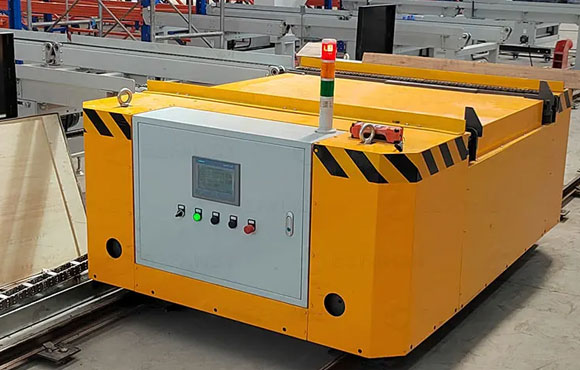
The industry has gradually transitioned from manual or semi-automatic industrial transfer trolley systems toward intelligent, trackless automated solutions. Early transfer trolleys required physical rails or manual steering, limiting flexibility and scalability. Today, leading AGV manufacturers have developed sophisticated heavy-duty AGV platforms that operate without rails, navigate autonomously, and adapt to changing production demands through software rather than construction.
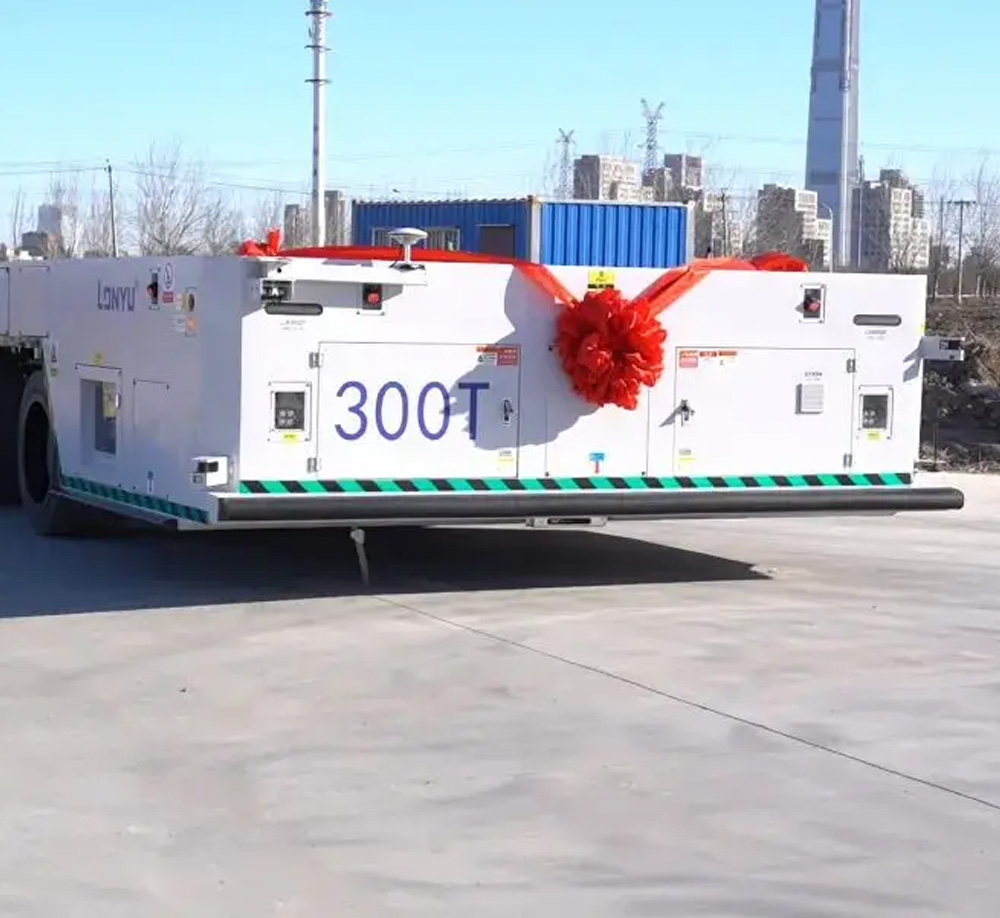
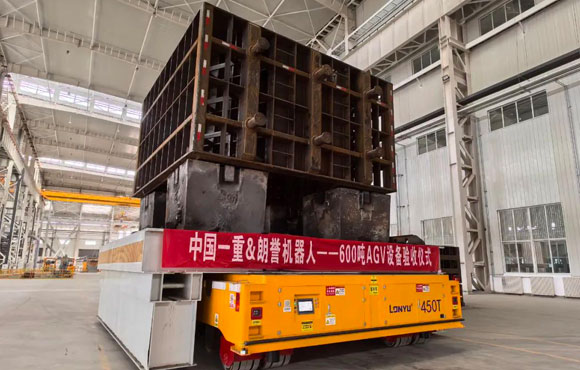
Tianjin Lonyu Robot Co., Ltd. exemplifies this shift. As a global leader in unmanned heavy-duty transport vehicles, Lonyu has evolved from lightweight AGV production to become the exclusive lead drafter of China’s heavy-duty AGV industry standard, Technical Specification for Heavy-Duty Industrial Mobile Robots. The company holds over 200 patents, including 17 invention patents, and maintains the world record for single-vehicle heavy-duty AGV load capacity at 600 tons. Through customized engineering, Lonyu has pushed beyond conventional limits of ground bearing capacity and transport dimensions, delivering solutions that address the most demanding industrial logistics scenarios.
Deep Dive: The 200-Ton Heavy Load Transformer AGV
One of the most critical applications for heavy-duty AGV technology is power transformer logistics. Transformers—often weighing 200 tons or more—must be moved from assembly halls to test bays with extreme precision. Even minor vibrations or misalignment during transport can damage internal windings, leading to costly rework or complete failure.
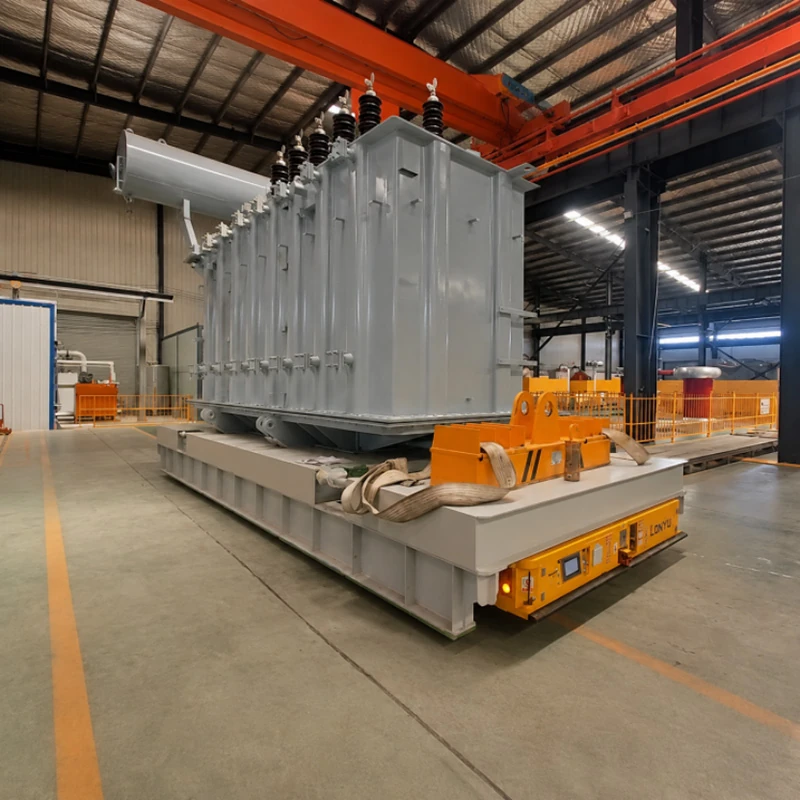
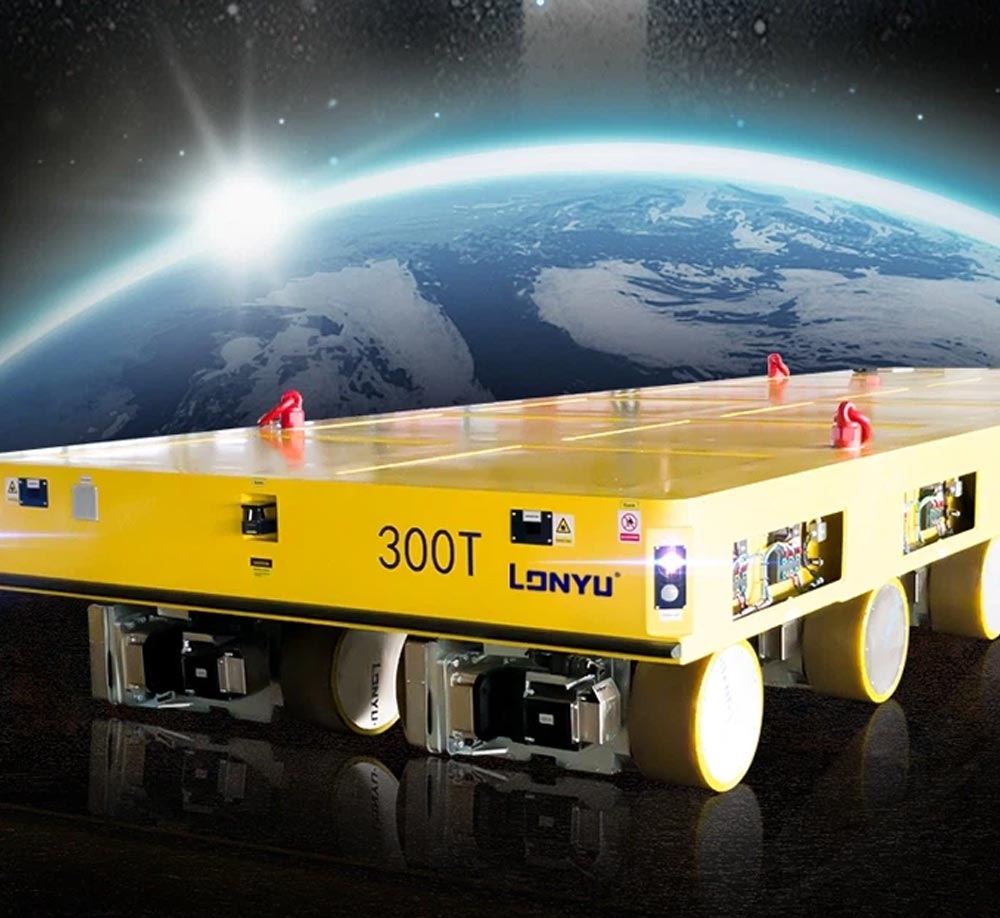
The 200-ton heavy load transformer agv (model LY-1-200T-816-A) is specifically engineered for this purpose . Unlike standard AGVs with maximum loads of 50 to 100 tons, this specialized vehicle safely handles the full weight of industrial transformers. Its design incorporates several critical engineering features:
- Ground Pressure Optimization: The vehicle utilizes a multi-axle steering system combined with a 16-wheel configuration (8-wheel drive) featuring double suspension—hydraulic and passive. This distributed architecture spreads the combined weight of the 35-ton vehicle and its 200-ton payload across multiple support points. By minimizing localized ground pressure, the system protects expensive industrial flooring from stress fractures and indentation—a common problem when moving extreme loads with fewer, more concentrated contact points.
- High-Precision Path Tracking: Transporting a 200-ton transformer into a test bay requires millimeter-level positioning accuracy. The heavy load transformer agv achieves ±3 mm inching accuracy through magnetic stripe navigation, significantly outperforming manual methods or standard AGVs with ±10 mm tolerance. This precision eliminates the risk of collision with test terminals or storage racking during final positioning.
- Flexible Software-Based Path Adjustment: By eliminating steel rails, the system enables path modifications through control software updates rather than physical construction. Factory layouts can be reconfigured in response to production changes without the downtime and expense associated with track relocation. This flexibility is particularly valuable in transformer manufacturing, where production volumes and product dimensions frequently vary.
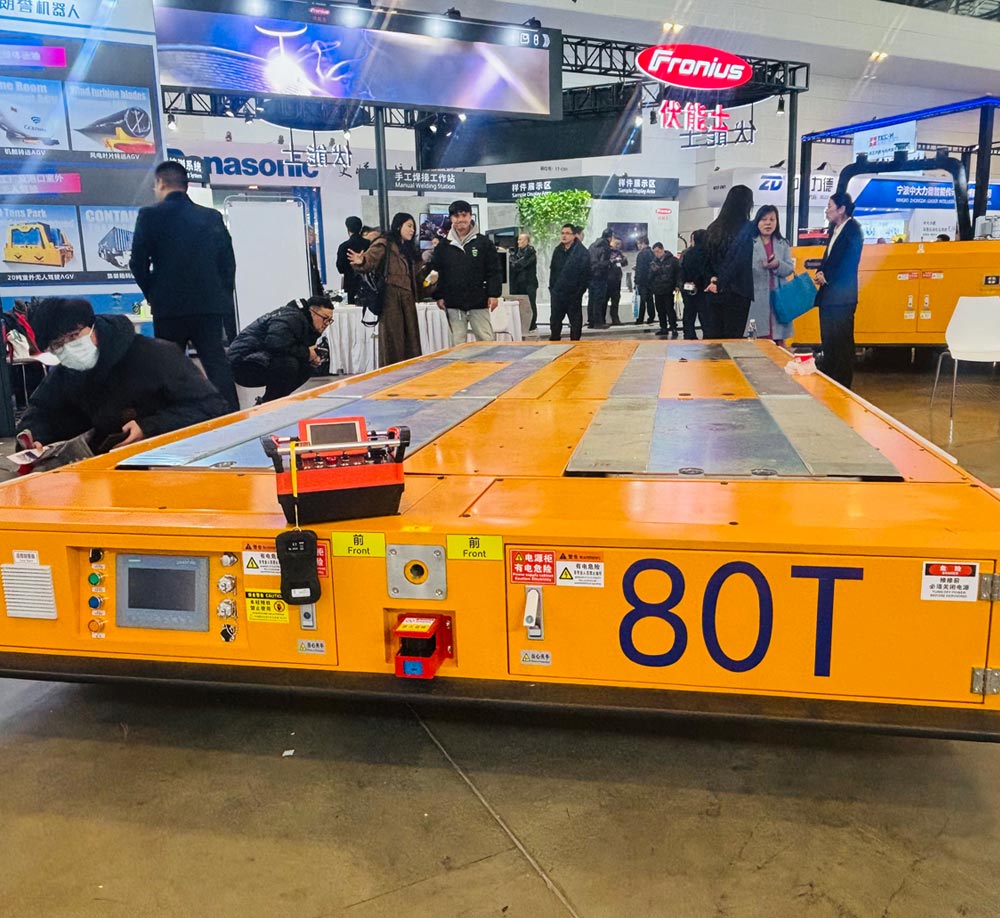
Transitioning from Manual Trolleys to Smart Battery-Powered Systems
The limitations of traditional industrial transfer trolley systems become increasingly apparent when handling loads of 100 tons or more. Rail-guided trolleys, while stable, restrict movement to fixed paths and cannot navigate around obstacles or adapt to changing workflows. Manual or semi-automatic operation introduces human error and limits scheduling coordination across multiple production zones.
The shift toward autonomous, battery-powered systems addresses these constraints directly. A Battery Transfer Cart powered by lithium-ion phosphate batteries offers several distinct operational advantages:
- Untethered Operation: Unlike cable-powered carts that require trailing cables or low-voltage power rails, a Battery Transfer Cart operates completely wirelessly. This eliminates trip hazards, reduces cable maintenance costs, and enables operation across unlimited distances without infrastructure constraints.
- Continuous Operation: Lithium-ion battery systems support automatic charging and extended runtime. For example, Lonyu’s 600-ton heavy-duty AGV achieves over 8 hours of continuous operation on a single charge, with a charging time of just 3 hours. This enables round-the-clock production schedules without the downtime associated with battery replacement or cable reconnection.
- Indoor-Outdoor Transitions: Trackless, battery-powered designs allow seamless movement between indoor workshops and outdoor staging areas. This capability is essential for manufacturers that need to transfer finished transformers from assembly buildings to outdoor test facilities or shipping zones.
Exploring Lonyu Robot’s Specialized Heavy-Duty Fleet
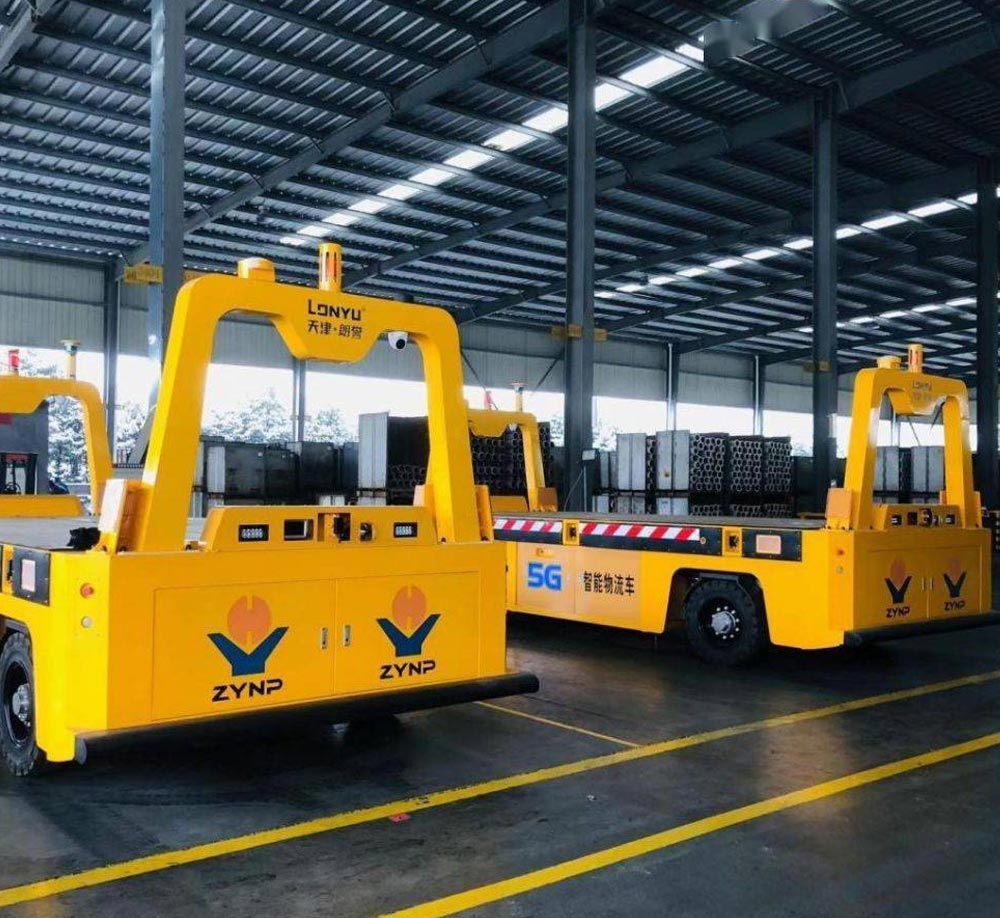
Lonyu Robot offers a comprehensive portfolio of heavy-duty AGV solutions tailored to specific industrial applications. Key product families include:
| Product Family | Load Capacity | Primary Applications | Key Features |
| Backpack Heavy Load AGV | 150–600 tons | Ultra-heavy transformers, wind power modules, shipbuilding components | Hydraulic lifting, autonomous load positioning, eliminates overhead crane hazards |
| Dual-Vehicle Linkage AGV | 30–600 tons (synchronized) | Wind turbine blades (100m+), extra-long steel structures | Wireless synchronized control, front-rear digital coordination |
| Outdoor Unmanned AGV/IGV | 20–80 tons | Cross-building campus transport, outdoor short-haul logistics | IP54–IP65 protection ratings, GNSS + laser + visual + inertial navigation |
| Automatic Mold & Coil Transfer System | Customized | Stamping, casting, injection molding facilities | Automated die-changing, high-temperature environment adaptation |
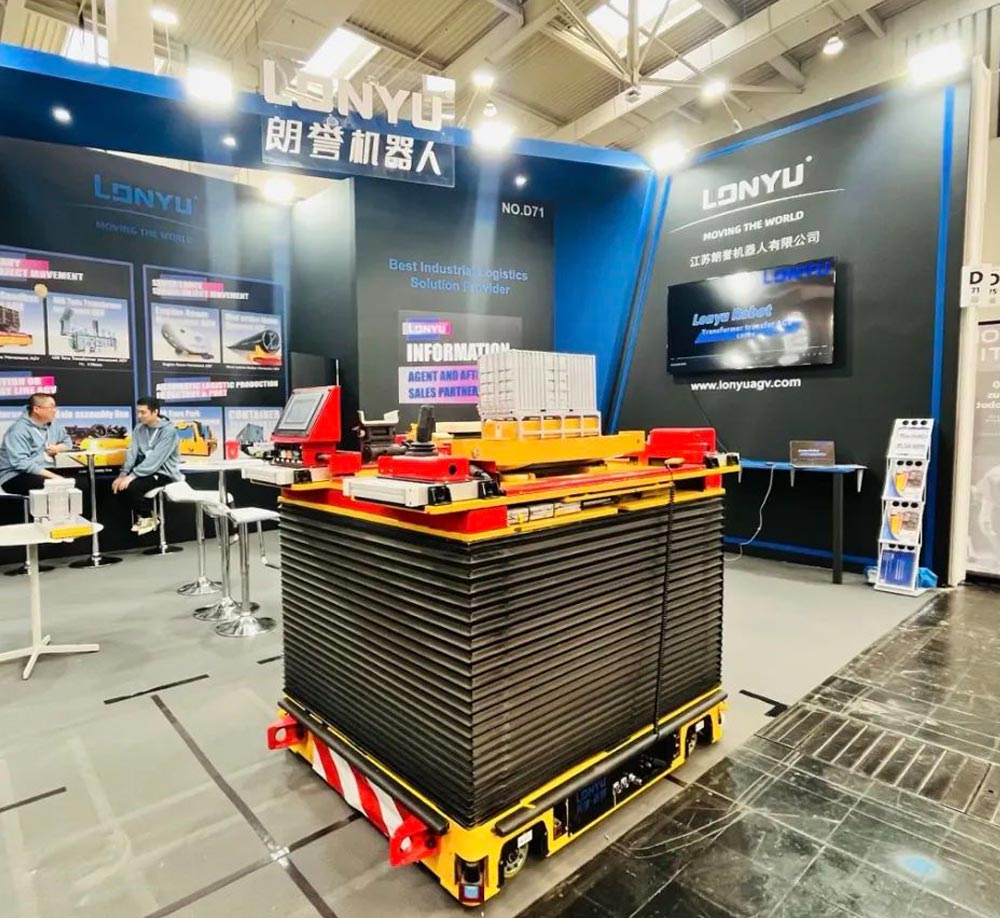
The Backpack Heavy Load AGV is particularly noteworthy for transformer logistics. Designed to slide under cargo and lift it hydraulically onto the vehicle platform, these units eliminate the safety risks associated with overhead cranes. The 200-ton model features tailored support structures that balance the load perfectly and prevent shifting during transit.
The Dual-Vehicle Linkage AGV addresses the challenge of transporting extra-long components that exceed the dimensions of a single vehicle. Through advanced wireless modules, two independent AGVs operate as a synchronized unit, distributing the load across both platforms. This system can also be separated to operate independently for smaller loads, eliminating the need to purchase multiple specialized vehicles.
For outdoor applications, Lonyu’s Outdoor Unmanned AGV achieves navigation accuracy of ±20–30 mm using satellite positioning combined with laser navigation. These vehicles operate at speeds of 5–8 km/h and are designed for all-weather performance.
Key Procurement Considerations for Heavy Load AGVs
When evaluating heavy-duty AGV solutions, logistics planners and procurement managers should assess several critical factors:
- Floor Load Capacity Assessment: The distribution of wheel loads must be carefully calculated against existing floor specifications. Multi-wheel configurations with hydraulic suspension systems distribute weight more evenly than fewer, larger wheels. Procurement teams should request finite element force analysis from manufacturers to verify that frame designs provide redundancy beyond standard load requirements.
- Navigation Technology Selection: Modern heavy-duty AGV systems typically combine multiple navigation methods. Laser SLAM (Simultaneous Localization and Mapping) enables natural feature navigation without magnetic tracks, supporting millimeter-level indoor positioning. For applications requiring the highest precision, magnetic stripe navigation can achieve ±3 mm accuracy. Hybrid approaches—combining laser, visual, GNSS, and inertial navigation—are recommended for facilities with both indoor and outdoor transport requirements.
- Safety System Integration: Transporting hundreds of tons demands comprehensive safety redundancy. Essential systems include:
- LiDAR obstacle detection for 360-degree collision avoidance
- Contact-type safety bumpers
- Audible and visual warning systems
- Emergency stop buttons with full-vehicle cut-off capability
- Battery and Charging Infrastructure: Lithium iron phosphate battery systems offer the best combination of safety, longevity, and energy density. Procurement plans should account for charging station placement and automatic charging integration to support continuous operation.
Frequently Asked Questions
Q1: How does a heavy load transformer agv prevent concrete floor damage?
A: It uses multi axle steering and multiple wheels to distribute the combined vehicle and payload weight evenly, reducing ground pressure to safe levels and protecting factory floors.
Q2: What is the main advantage of a Battery Transfer Cart over cable powered carts?
A: It operates wirelessly without trailing cables or rails, enabling flexible navigation across complex layouts. Lithium ion batteries support automatic charging for extended continuous operation.
Q3: Why are automated guided vehicle manufacturers moving away from fixed rail logistics?
A: Trackless systems offer software adjustable routing, avoiding costly rail construction and allowing quick adaptation to changing production workflows without facility downtime.
Conclusion
The transition from fixed-rail and crane-dependent logistics to intelligent, trackless heavy-duty AGV systems represents a fundamental shift in how heavy manufacturing handles its most demanding transport challenges. For power transformer producers, wind energy manufacturers, and heavy machinery fabricators, the 200-ton heavy load transformer agv demonstrates how advanced engineering—multi-wheel ground pressure distribution, millimeter-precision navigation, and software-driven path flexibility—can solve problems that traditional methods could not address.
Leading automated guided vehicle manufacturers like Lonyu Robot have moved beyond custom one-off solutions to offer standardized, scalable platforms backed by industry-wide technical specifications. The company’s 600-ton world record and its role as the exclusive lead drafter of China’s heavy-duty AGV standard underscore the maturity and reliability of this technology.
For logistics planners and operations directors, the economic case is clear: heavy-duty AGV systems reduce labor risks, eliminate infrastructure constraints, enable continuous operation through Battery Transfer Cart technology, and provide the flexibility to adapt to evolving production requirements. As industrial facilities increasingly demand higher throughput, greater precision, and safer working environments, the adoption of heavy-load automated guided vehicles will continue to accelerate—transforming not just how heavy machinery is moved, but how heavy industry operates.