

Introduction
Heavy manufacturing industries, including power transformer production, new energy equipment manufacturing, and large-scale steel parts assembly, generally have in-plant logistics bottlenecks. Traditional means of transportation, such as overhead cranes and forklifts, have obvious defects: limited bearing capacity, poor transportation stability, high dependence on labor, and high-precision workpieces are often in danger of collision. For high-value assets, such as power transformers, slight vibration or position deviation during transportation can damage internal windings and insulation, resulting in costly rework. In addition, global manufacturers are faced with rising labor costs and stricter compliance requirements for workplace safety and emissions.
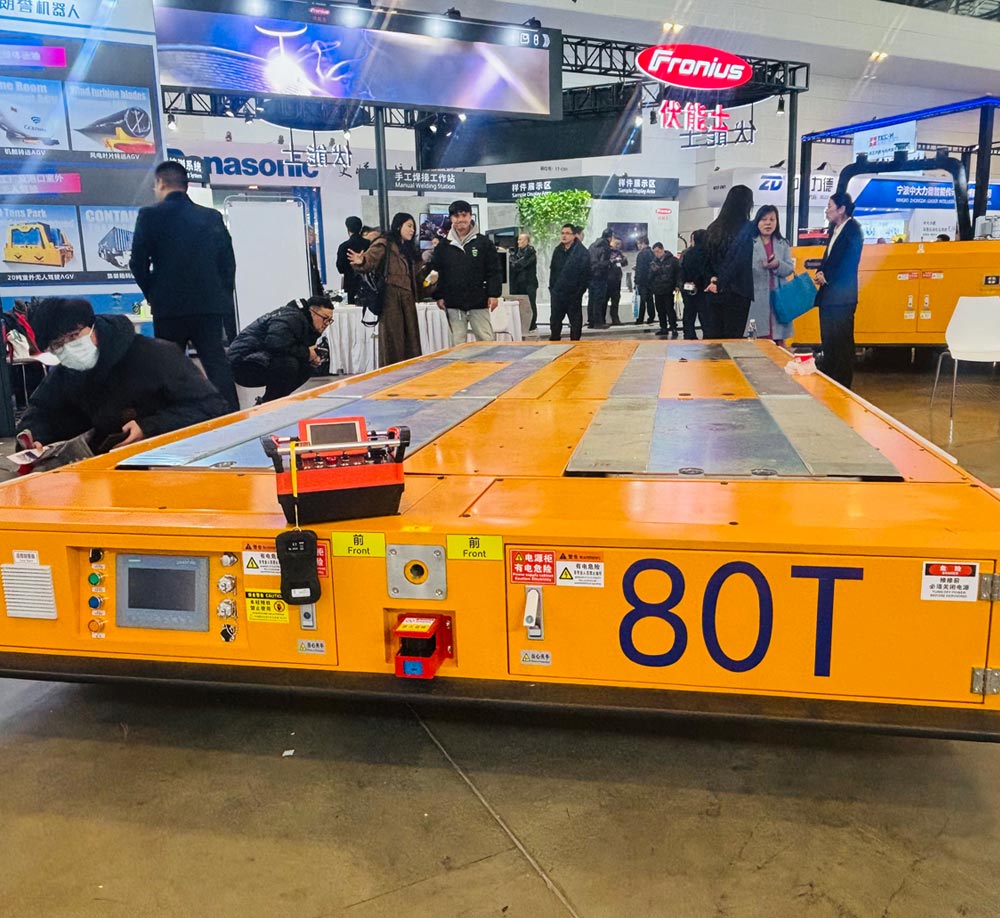
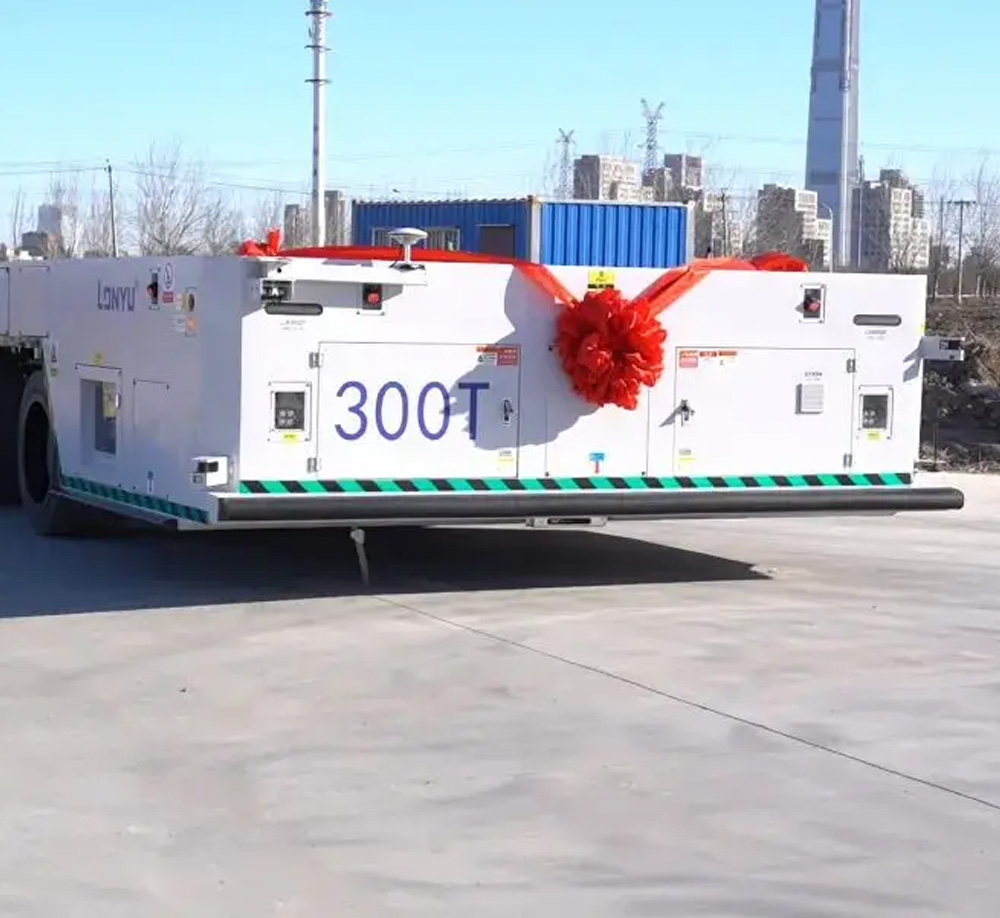
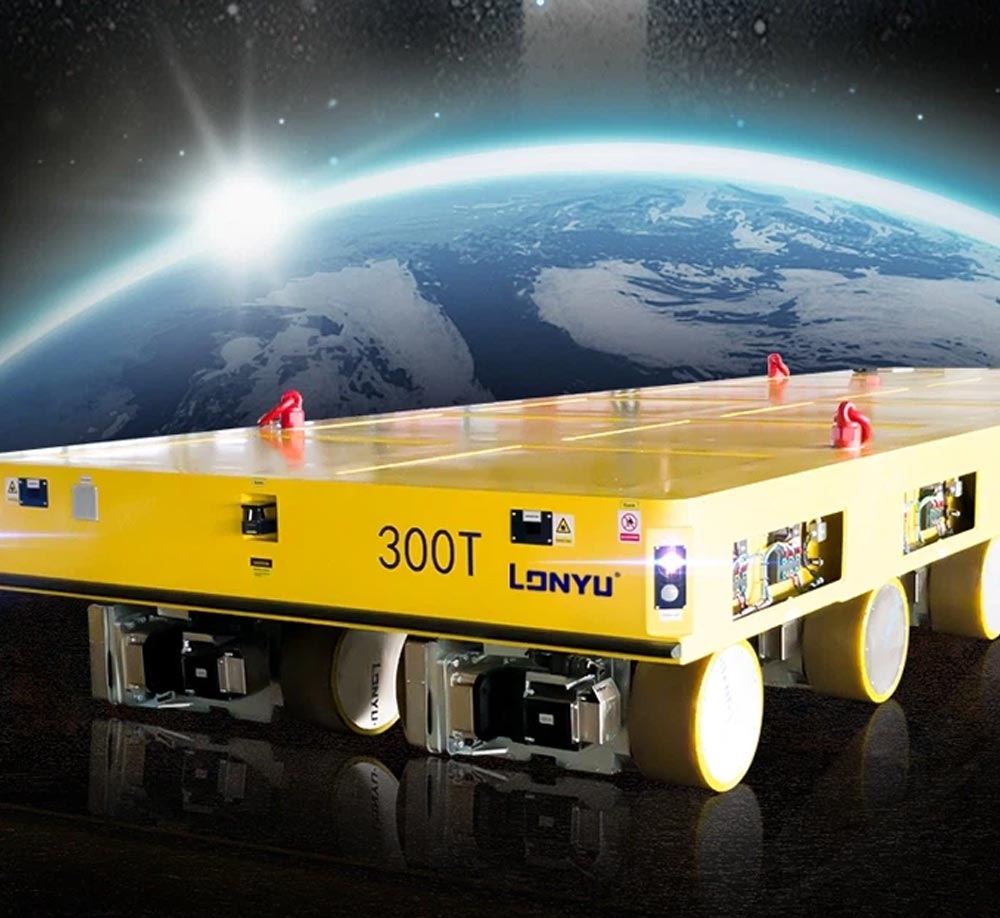
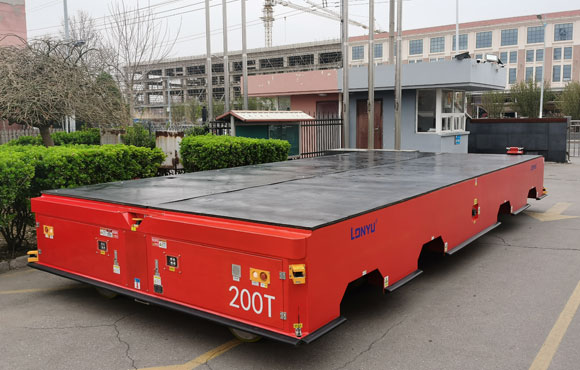
In order to solve these pain points, Lonyu Robot’s 100-ton heavy-duty AGV provides targeted heavy-duty automation solutions. As a mature automated guided vehicle system, it stands out from ordinary warehousing and logistics robots and becomes core material handling equipment for heavy factories. Customized for oversize goods, it supports stable and unattended cross-station transportation while maintaining both operational efficiency and workpiece safety.
1. How Can a 100-Ton AGV Transform Your Factory Logistics?
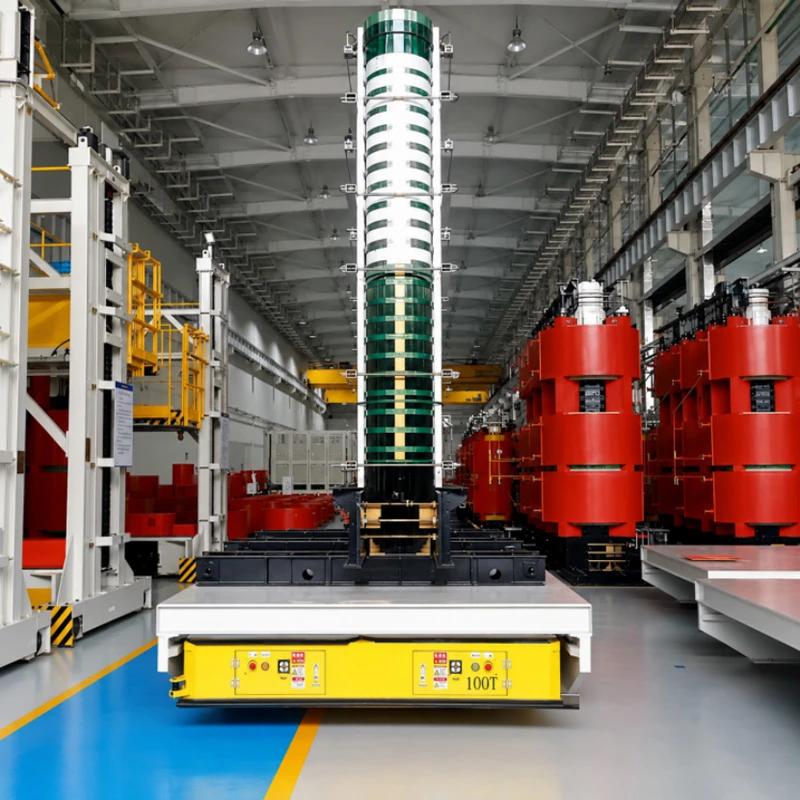
In the workflow of transformer manufacturing, production follows a linear sequence: coil winding, iron core stacking, oil tank assembly, insulation assembly, oil filling, and final electrical test. Historically, transferring semi-finished transformer units between these stations required coordinated crane lifting and slow supervised trolley movement, resulting in 20–40 minutes of idle time between each processing step. Over a shift, these gaps will reduce the total output by about 12%. Lonyu’s 100-ton heavy-duty transformer transfer AGV has created a completely seamless end-to-end process linkage, which is the core advantage of the application of mature automated guided vehicles in power equipment plants. The AGV autonomously follows pre-programmed routes throughout the facility, precisely stops at the winding station to pick up finished coils, transformer cores, and directly transports the complete semi-finished transformers to the test bench without manual operation or continuous monitoring. It can also be synchronized with factory production timers to automatically give priority to emergency work.
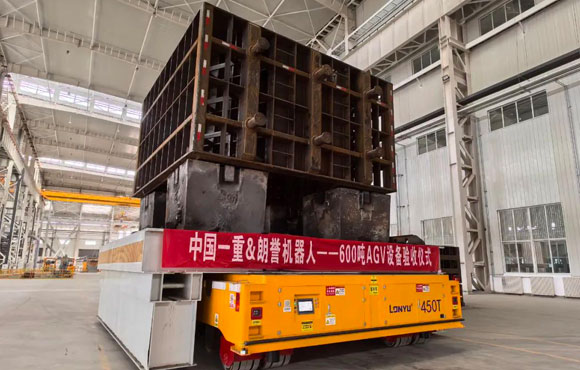
Two core designs ensure the safe transportation of fragile transformer parts: a reinforced welded steel chassis and multi-stage hydraulic damping. The thickened steel chassis adopts finite element structural optimization to evenly disperse 100-ton loads, avoiding chassis deformation and workpiece tilting. The built-in damping system suppresses vertical and horizontal vibration caused by acceleration or uneven ground and protects the fragile copper windings and insulation materials in the transformers from structural damage.
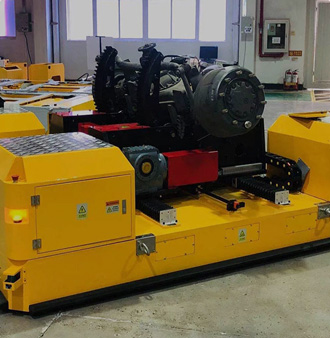
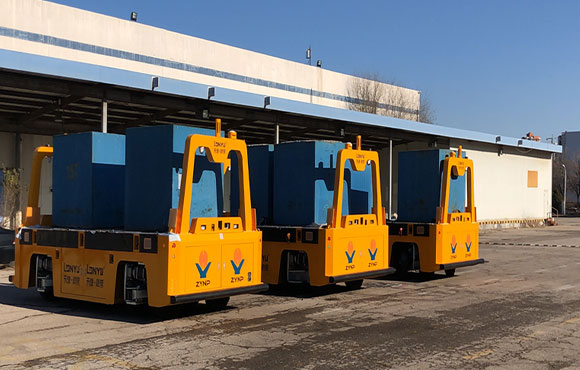
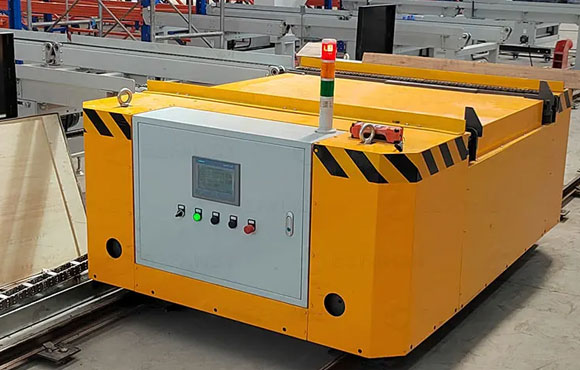
In addition to transformer production, this equipment can also be used as a powerful industrial transfer cart for wind turbine parts and pressure vessels. It supports three mainstream navigation modes: laser SLAM, magnetic tape, and QR code, enabling flexible route adjustment without factory floor reconstruction. Laser SLAM is suitable for production lines that are frequently rearranged, while magnetic navigation is more cost-effective for indoor workshops with fixed routes. Operators can monitor real-time operation data through a centralized HMI, which has the functions of automatic obstacle avoidance and emergency stop to ensure site safety. The car also meets the outdoor dust and rain standards and supports cross-building material handling for semi-outdoor factory areas.
2. Versatile Solutions for Every Heavy-Duty Need
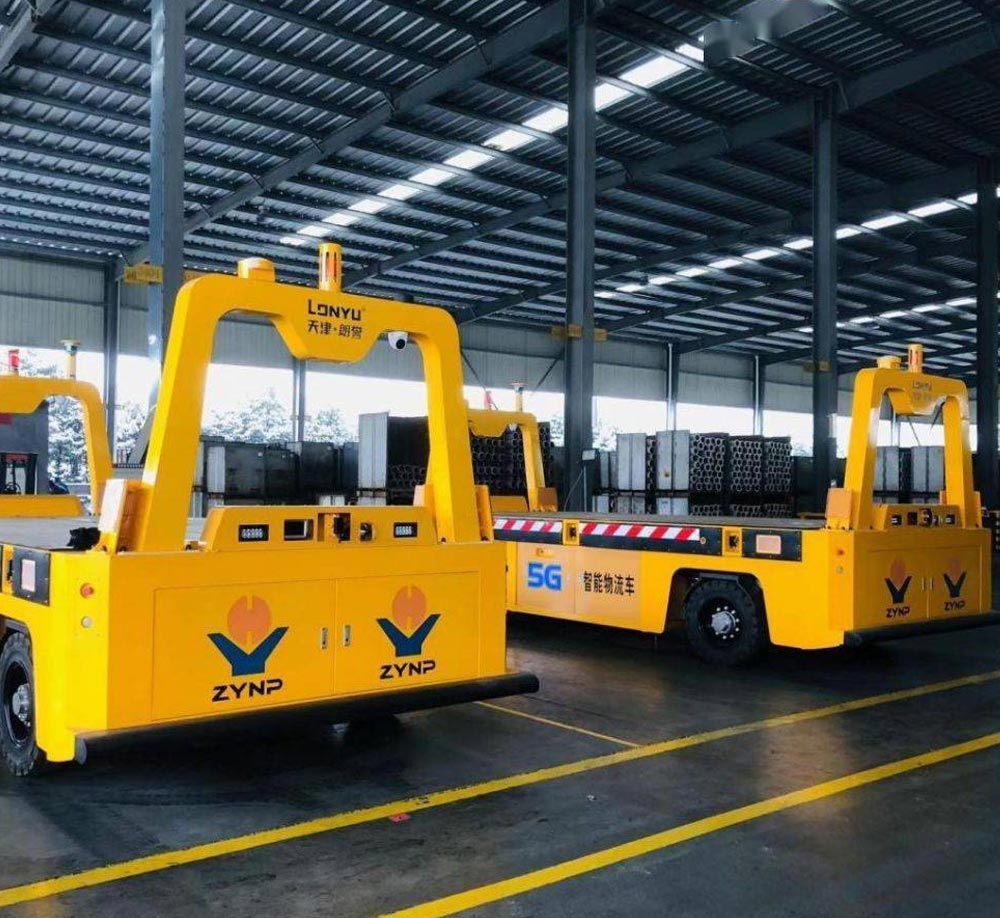
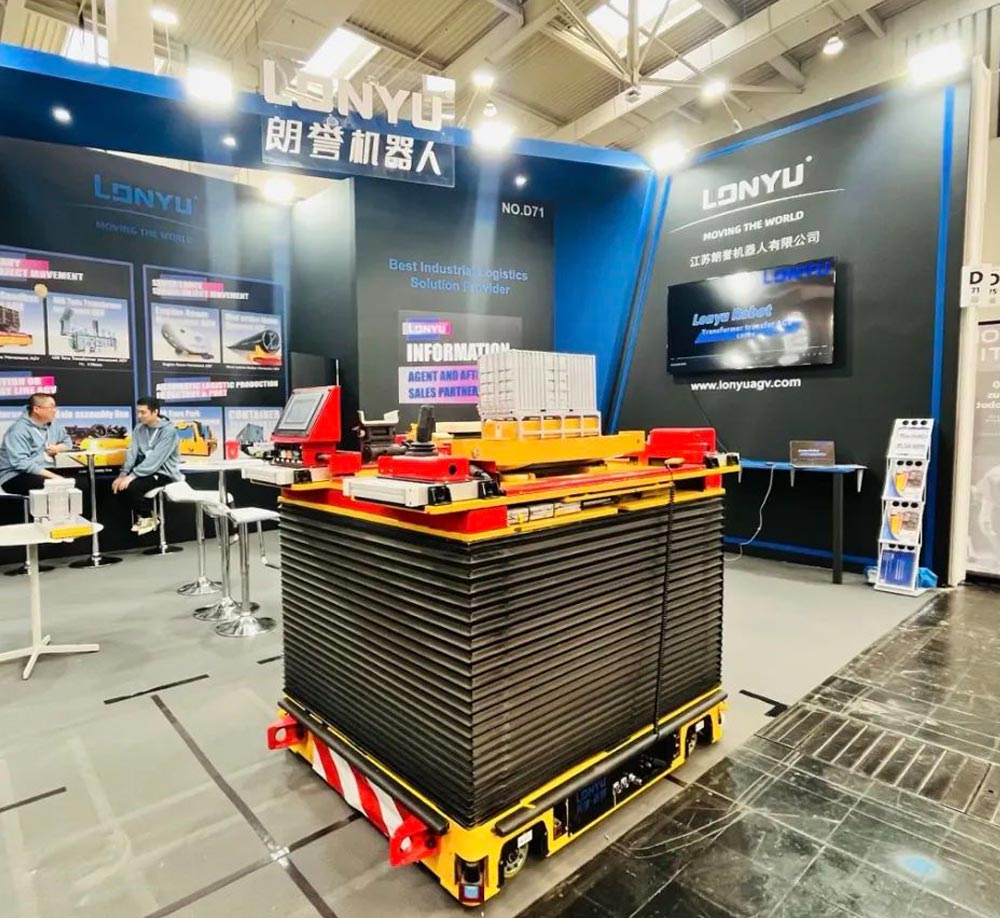
Although the 100-ton transformer transport variant is one of the flagship products of Lonyu Robot, the engineering product portfolio of this brand provides adaptable heavy-duty transporters, covering several vertical industries of heavy manufacturing, and tailor-made industrial transfer vehicles for different load conditions. No two heavy industrial workpieces have the same size, weight distribution, or sensitivity requirements, so standardized single-size transportation equipment can rarely provide the best performance. Lonyu’s modular design framework allows engineers to adjust frame width, wheel number, power output, and lifting mechanisms to match unique factory goods. Unlike third-party integrators that only modify surface structures, Lonyu adjusts internal torque distribution to avoid unilateral wheel overload during off-center cargo transportation, a common failure point for generic heavy transfer carts.
Key Customized Transfer Vehicle Lines from Lonyu Robot
| AGV Model | Primary Load Application | Standard Load Capacity Range | Core Customization Features |
| 100-Ton Transformer heavy-duty agv | Transformer Coils, Full Transformer Assemblies | 80–100 tons | High-damping suspension, flat reinforced loading deck, low-vibration drive motors |
| Mold Transfer Cart | Large injection molding dies, stamping tool sets | 30–120 tons | Height-adjustable lifting jacks, anti-slip die mounting plates |
| Coil Transfer Car | Steel, aluminum, copper industrial coils | 25–90 tons | Central V-block positioning frames, side load stabilizers |
| Battery-Powered Transfer Cart | Energy storage battery packs, large battery module frames | 15–60 tons | Low-noise battery drive, sealed dust-resistant electronics, fire safety sensor integration |
All customized trolleys of Lonyu are powered by zero-emission batteries, which eliminates indoor exhaust pollution compared with diesel transfer equipment. With a modular chassis design, the fleet can adapt to irregular and wide goods and match the multi-shift work cycles through the fast charging modules. Manufacturers with mixed heavy goods demands can rely on a unified fleet of equipment instead of multiple scattered means of transportation.
3. The Lonyu Advantage: Engineering Excellence
It is very important to choose a reliable automated guided vehicle manufacturer for long-term return on investment in factory automation, because the heavy-duty automatic guided vehicles manufactured at low prices are faced with premature frame fatigue, frequent motor failure, and limited technical support after installation. Most AGV manufacturers outsource the production of mechanical chassis and only assemble software modules, which leads to a mismatch between mechanical and software logic under heavy loads. Lonyu Robot is a fully integrated AGV manufacturer, which controls every stage of product delivery: internal mechanical design, CNC parts processing, electrical control system assembly, software navigation programming, field system integration, and global after-sales maintenance for many years. This vertically integrated manufacturing model ensures consistent quality and system reliability, which is an important difference in equipment that undertakes the task of heavy industry components worth a million dollars.
Before production, Lonyu’s team conducts on-site surveys to match AGV parameters with existing MES and WMS systems, supporting seamless digital docking without third-party integration. The built-in open API interface allows seamless integration with mainstream industrial management systems without secondary code development. Remote firmware updates based on the cloud also reduce the daily after-sales maintenance costs of customers around the world.
As an internal AGV factory, Lonyu Robot independently purchases industrial-grade structural steel and lithium batteries with safety certification and has complete spare part inventory, which can provide global after-sales support. Every order includes standardized operator and maintenance training with multilingual documents, reducing long-term equipment operation risks for overseas buyers.
4. Frequently Asked Questions
Q 1: What is a Heavy-Duty Automated Guided Vehicle (AGV), and how does it work?
A: A heavy-duty AGV is a battery-powered automated vehicle system designed to transport oversized loads autonomously. Simply put, an automated guided vehicle (AGV) is a sensor-guided wheeled logistics robot. Different from the standard warehouse AGV (less than 10 tons), Lonyu’s 100-ton model has upgraded its chassis, axles, and suspension to achieve a 100-ton load capacity. It relies on environmental sensors, an onboard PLC controller, and drive modules to execute the designated transportation routes, avoid obstacles, and automatically trigger an emergency stop through the central factory control instrument panel.
Q 2: What is the cost of an automatic guided vehicle?
A: There is no fixed price for a heavy-duty AGV, and the total cost of AGV depends on load capacity, navigation mode, customized structural upgrades, and factory system integration requirements. Compared with the basic magnetic navigation model, laser SLAM navigation and a heavy-duty reinforced frame increase the upfront costs. Due to the demand for customized factories, Lonyu Robot does not issue public unified pricing. Buyers can submit the parameters of the site and goods through the official website to get a completely transparent quotation covering equipment, training, and warranty.
Q 3: Are these heavy-load AGVs suitable for different factory floors?
A: Lonyu’s industrial AGV robot and AGV robot warehouse variants are adapted to most mainstream factory workshops. Its wide load-sharing wheels prevent damage to concrete and epoxy floors, while the built-in hydraulic self-leveling suspension system can offset slight ground unevenness and gentle slopes. Optional dust-proof and low-temperature component upgrades can also operate stably in harsh workshops such as metallurgical plants.
Conclusion
The global heavy manufacturing industry is facing great pressure to improve the consistency of output, reduce operational safety accidents, and simplify long-term logistics expenditure. These pressures make the automation upgrade insufficient to meet the needs of facilities that move 50 tons to 100 tons of workpieces. The 100-ton heavy-duty AGV from Lonyu Robot proves that purpose-built AGV technology provides measurable and sustainable improvements in the crane-trolley mixed workflow and manual heavy transport fleets. As a multifunctional AGV robot platform, it provides services for transformer, molds, coil, and energy storage production lines and is supported by complete internal manufacturing and global after-sales support provided by general equipment dealers.