

Introduction
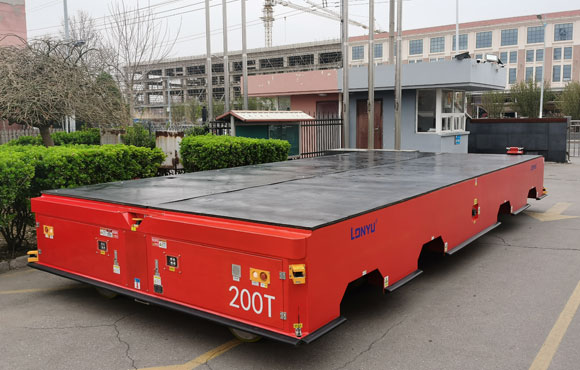
Moving ultra-heavy components like power transformers exceeding 100 tons, wind turbine hubs, and massive steel molds has long challenged industrial logistics. Traditional methods—such as fixed rail systems and overhead cranes—suffer from inflexible routing, costly layout modifications, and safety risks associated with suspended loads. These issues are especially critical in transformer production, where a heavy-load transformer AGV requires precise, vibration-free transport that conventional approaches cannot reliably provide. The Lonyu 200-Ton Omnidirectional Lifting AGV overcomes these limitations with trackless navigation, multi-wheel coordination, and intelligent algorithms, enabling safe and flexible movement through even the most confined workshop spaces.
Deep Dive into the 200-Ton AGV: In-Situ Rotation and Omnidirectional Maneuverability
The 200-Ton Omnidirectional Lifting AGV distinguishes itself through three core engineering capabilities that redefine what is possible in heavy-load factory logistics.
- 360° Zero-Radius Turn (In-Situ Spinning): The vehicle can perform a complete rotation around its own geometric center without requiring any additional turning radius. This capability eliminates the turning arc traditionally required for heavy-vehicle maneuvering, allowing the AGV to operate efficiently in narrow aisles and confined workshop layouts where conventional transporters cannot maneuver effectively.
- Omnidirectional Steerable Drive: Beyond simple forward and backward movement, the AGV supports diagonal traversal, transverse (sideways) movement, and crab-walk steering modes. This multi-modal mobility enables the vehicle to position itself precisely against loading docks, assembly stations, and test bays from virtually any approach angle—a critical advantage when maneuvering around fixed equipment or through congested production areas.
- Integrated Lifting Deck & Millimeter-Level Precision: The vehicle combines a powerful lifting mechanism with its omnidirectional drive chassis, enabling it to pick up, transport, and precisely position payloads without auxiliary lifting equipment. Through magnetic stripe navigation, the heavy-load transformer AGV achieves ±3 mm inching accuracy—a level of precision that significantly outperforms manual methods or standard AGVs with ±10 mm tolerance. This accuracy eliminates the risk of collision with test terminals or storage racking during final positioning.
Overcoming Rigid Spatial Limits: The Role of a Heavy-Load Transformer AGV
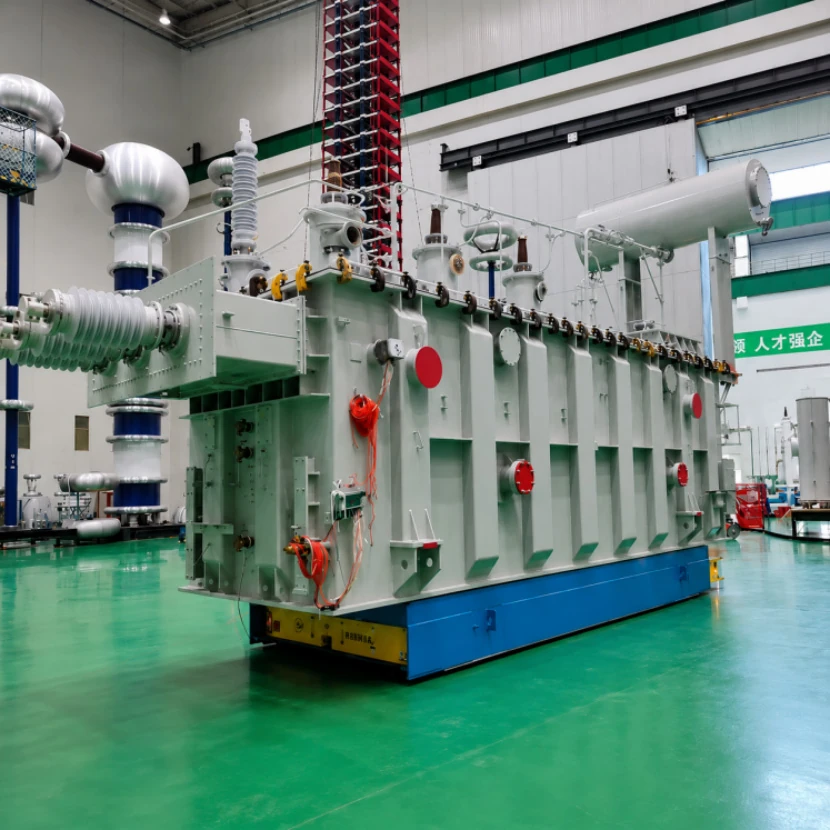
Transformer production exemplifies the most demanding logistics scenarios in heavy manufacturing. Power transformers—often weighing 200 tons or more—must be moved from assembly halls to test bays with extreme precision. Even minor vibrations or misalignment during transport can damage internal windings, leading to costly rework or complete failure.
The heavy-load transformer AGV is specifically engineered for this purpose. Unlike standard AGVs with maximum loads of 50 to 100 tons, this specialized vehicle safely handles the full weight of industrial transformers. Its design incorporates several critical engineering features that address the unique challenges of transformer logistics:
- Ground Pressure Optimization: The vehicle utilizes a multi-axle steering system combined with a 16-wheel configuration (8-wheel drive) featuring double suspension—hydraulic and passive. This distributed architecture spreads the combined weight of the 35-ton vehicle and its 200-ton payload across multiple support points, protecting expensive industrial flooring from stress fractures and indentation.
- Vibration Damping: A reinforced welded steel chassis with multi-stage hydraulic damping suppresses vertical and horizontal vibration caused by acceleration or uneven ground. This protects fragile copper windings and insulation materials from structural damage during transport.
- Flexible Software-Based Path Adjustment: By eliminating steel rails, the system enables path modifications through software rather than construction. This allows production layouts to evolve without the capital expenditure and downtime associated with track relocation.
The transition from rigid crane-and-rail workflows to flexible AGV-based transport represents a fundamental shift in how heavy manufacturers approach factory floor logistics—one that prioritizes adaptability, safety, and precision over brute-force handling.
Technical Evaluation: Heavy–Duty Transporters vs. Traditional Material Handling
To understand the value proposition of modern heavy–duty transporters, it is useful to compare them directly against the conventional alternatives that have dominated heavy industry for generations.
| Evaluation Metric | Heavy-Duty Transporters (AGVs) | Overhead Cranes | Rail Transfer Cars |
| Path Flexibility | High (Trackless & Obstacle Avoidance) | Limited to crane spans | Rigid (Fixed rails only) |
| Safety Risks | Minimized (Multi-layered LiDAR sensors) | Moderate (Suspended loads) | Low-moderate (Fixed line) |
| Floor Space Efficiency | Maximum (Allows 360° spin in tight aisles) | High overhead, but restricts floor buffers | Poor (Permanently segments floor) |
| Scalability | High (Supports fleet management software) | Poor (Difficult to structurally alter) | Poor (Requires civil engineering) |
| Precision Positioning | ±3 mm (Magnetic/Laser guidance) | Operator-dependent | Track-limited |
According to the World Robotics 2025 Report published by the International Federation of Robotics (IFR), mobile heavy-load automated guided vehicles rank among the fastest-growing segments of industrial robot products, with annual global installation volume rising 11.3% year-on-year in 2024. This growth reflects an industry-wide consensus toward replacing outdated crane-based handling solutions with more flexible, safer, and more efficient automated alternatives.
Portfolio Solutions: From Industrial Transfer Trolleys to High-Capacity AGVs
While the 200-ton omnidirectional model represents a flagship solution, Lonyu offers a comprehensive product portfolio designed to address material handling needs across various weight classes and industry verticals. As a professional AGV robot manufacturer, the company provides tailored solutions that span from medium-duty applications to ultra-heavy transport.
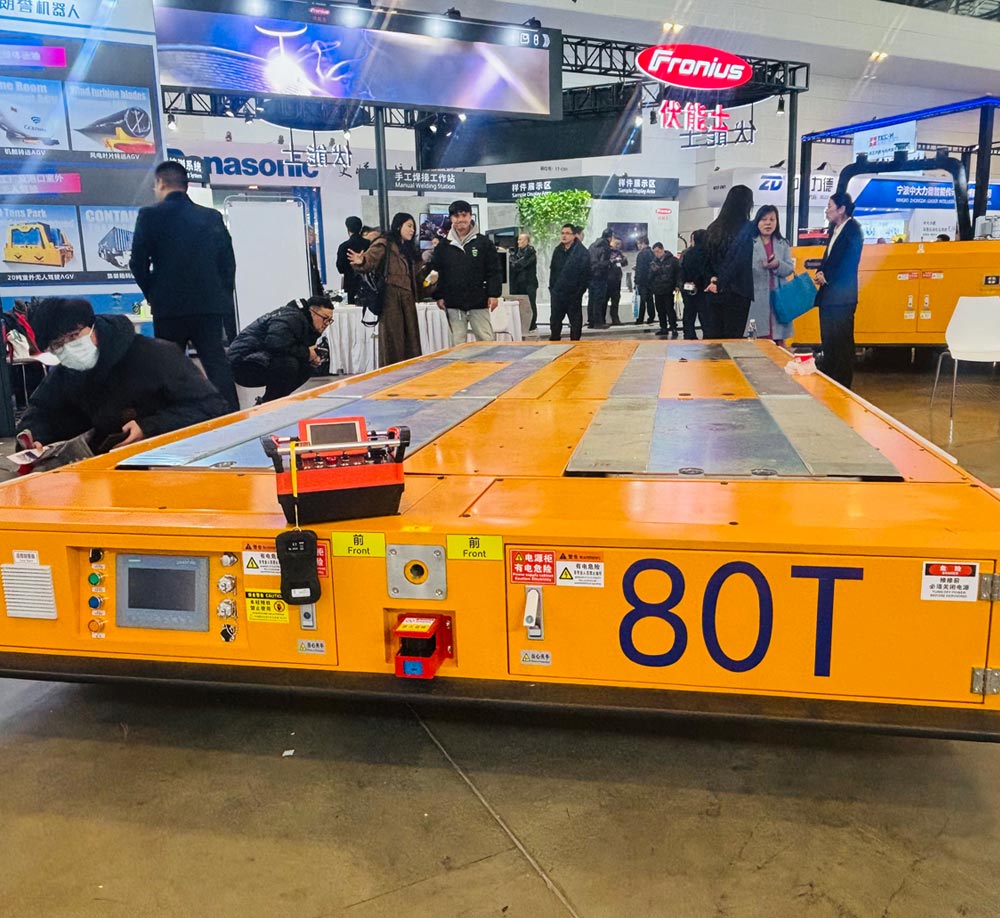
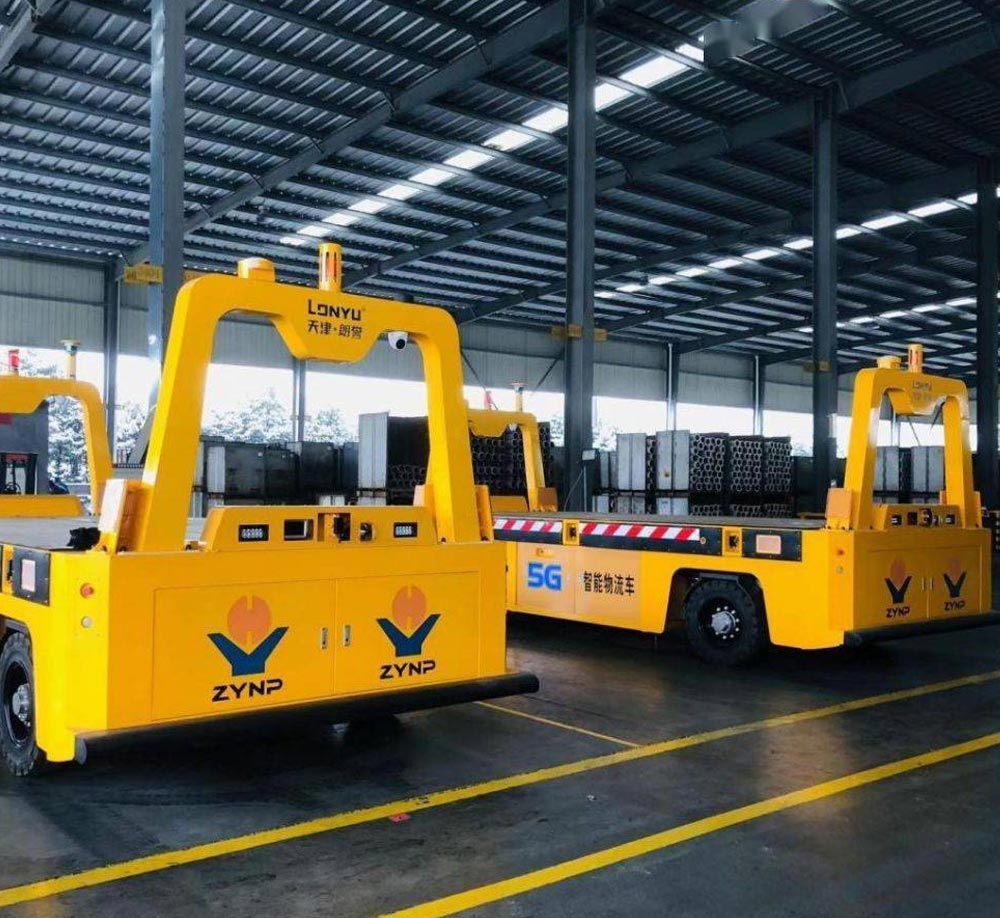
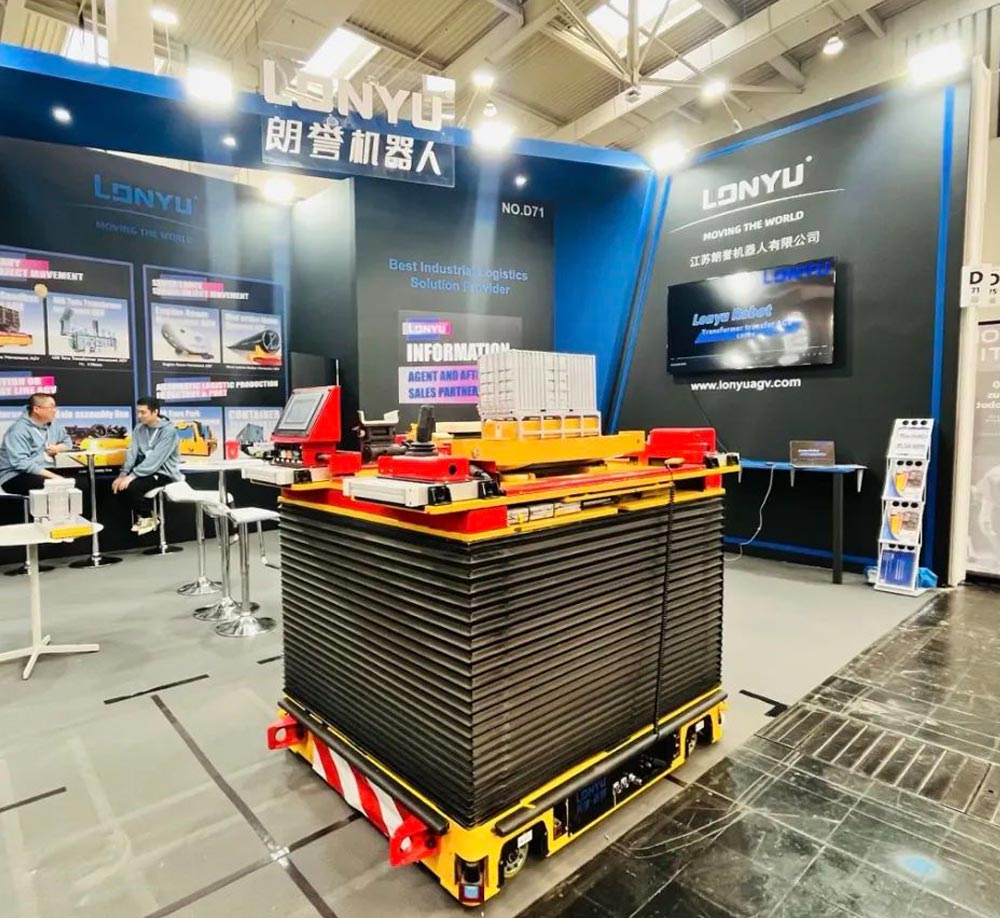
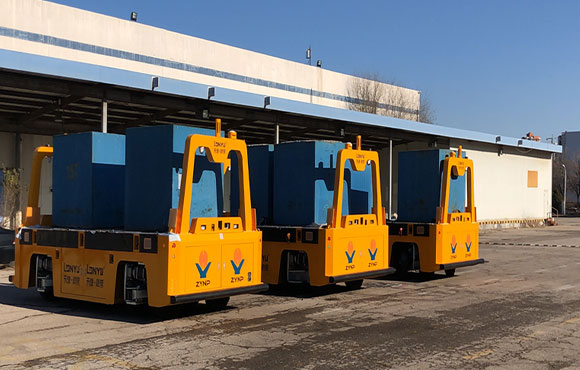
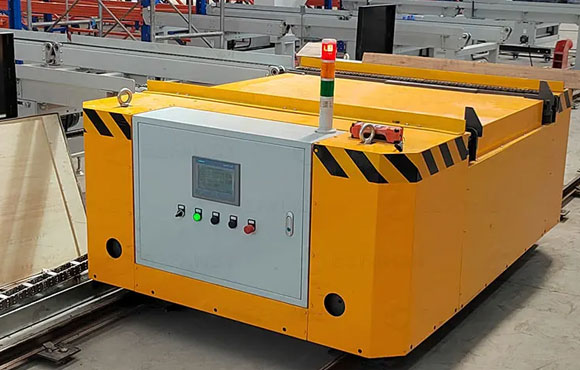
- Industrial Transfer Trolley & Trackless Transfer Carts: These solutions are suitable for medium to heavy tonnage applications (typically below 60 tons), offering flexible intra-factory circulation without the constraints of fixed rail systems. They serve as an entry point for manufacturers seeking to transition from manual or rail-bound transport to trackless automation.
- Battery Transfer Cart: Designed specifically for new energy and battery pack assembly lines, these carts feature impact-resistant construction and highly automated docking capabilities. They are engineered to handle the unique material flow requirements of battery manufacturing environments, where cleanliness, precision, and automation are paramount.
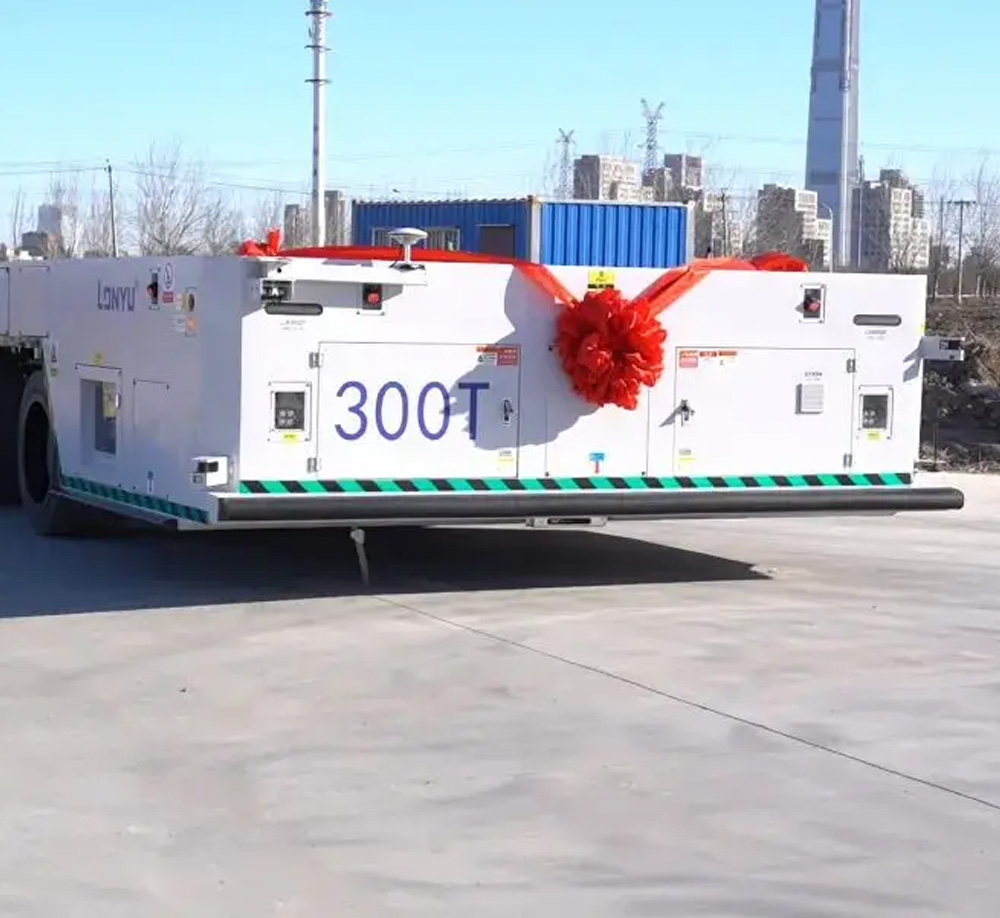
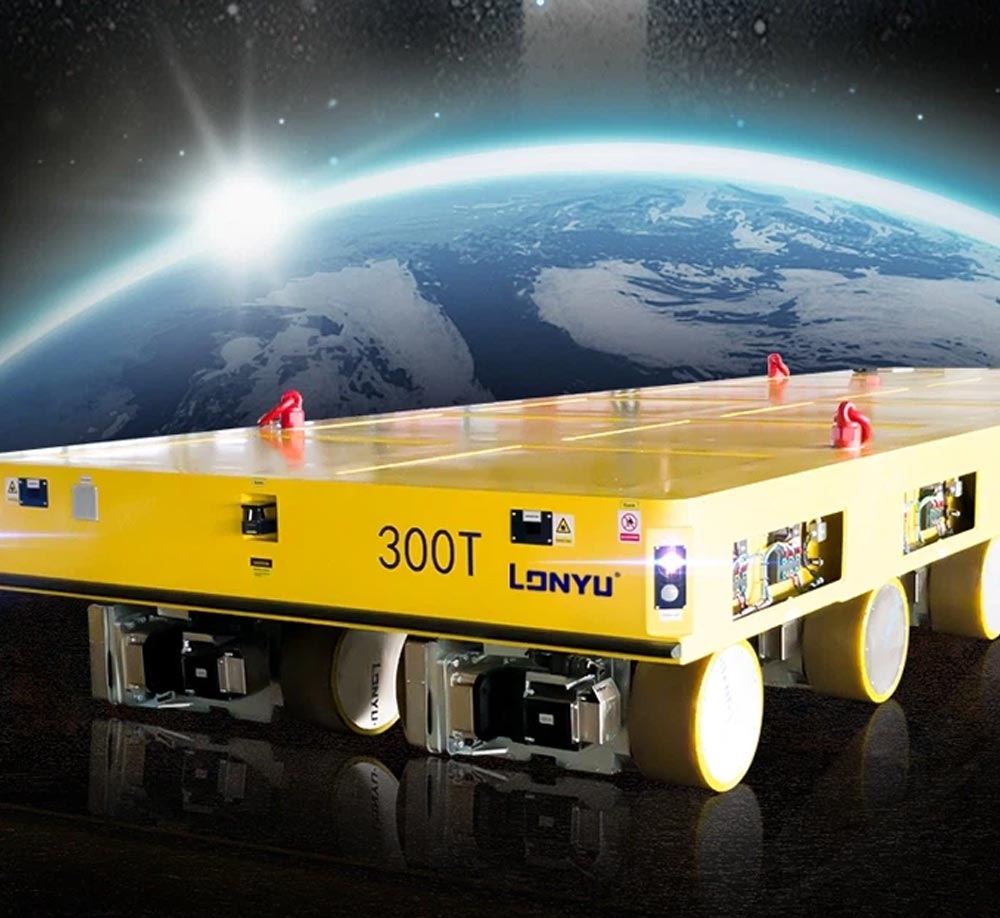
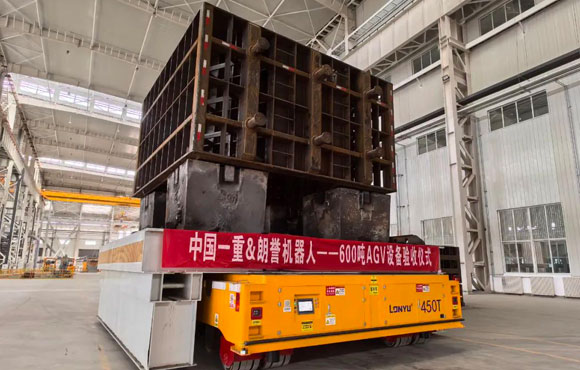
- Ultra-Heavy Load AGVs (Up to 600 Tons): For the most demanding applications, Lonyu offers higher-capacity solutions including dual-vehicle synchronized systems. Two 300-ton AGV units can operate as a synchronous machine through master-slave control architecture, breaking the payload barriers of single-vehicle transport while preserving unmatched flexibility. The company holds the world record for single-vehicle heavy-duty AGV load capacity at 600 tons.
This layered product strategy ensures that manufacturers can select solutions precisely matched to their operational requirements, whether they need a Battery Transfer Cart for assembly line integration or a 600-ton synchronized system for ultra-high voltage transformer logistics.
Why Engineering Buyers Partner with a Professional AGV Robot Manufacturer
Designing and manufacturing heavy-load transport equipment—particularly in the 10-ton to 600-ton range—requires rigorous engineering standards, extensive safety certifications, and deep R&D capabilities. As a globally recognized AGV robot manufacturer, Lonyu brings several critical advantages to the partnership.
R&D Depth and Technical Expertise: The company was established in 2008 and currently employs more than 300 people, with R&D personnel accounting for over 55% of the workforce. It is one of the few companies in China that integrates mechanical, electrical, software, and system R&D under one roof. This integrated approach ensures that every component—from the multi-wheel steering system to the fleet management software—is optimized for seamless operation.
Industry Standards and Patents: Lonyu participated in drafting China’s heavy-duty AGV industry standard, Technical Specification for Heavy-Duty Industrial Mobile Robots . The company holds over 200 patents, including 17 invention patents, demonstrating a sustained commitment to innovation in heavy-load automation.
Safety and Reliability: Heavy-duty AGVs incorporate multi-layered safety systems including long-range LiDAR, 3D vision, and emergency braking to protect both personnel and high-value cargo. The vehicles are designed with fail-safe redundancies that ensure continued operation even in the event of subsystem faults—a critical requirement when transporting million-dollar transformers.
Global Service Infrastructure: The company provides a 1-hour response time, 3-hour on-site service, and 24-hour solution delivery. A 12-month warranty period is standard, with regular monthly telephone follow-ups and quarterly on-site visits. Post-warranty support includes parts at base pricing, free maintenance service, and free software upgrades.
For engineering buyers evaluating automation investments, partnering with an established AGV robot manufacturer with proven export experience and a track record of successful heavy-load deployments provides the confidence needed to commit to large-scale factory floor transformation.
Frequently Asked Questions (FAQ) for Industrial Logistics Managers
Q1: How does an omnidirectional AGV achieve millimeter-level accuracy?
A: The vehicle achieves ±3 mm positioning accuracy through a combination of magnetic stripe or laser SLAM navigation, wheel odometry, and intelligent micro-adjustment drive algorithms that continuously correct travel deviations in real time. This multi-sensor fusion approach ensures consistent precision even under heavy-load conditions.
Q2: Can a Battery Transfer Cart operate reliably on uneven workshop floors?
A: Yes. Battery Transfer Carts and heavy-duty AGVs are typically equipped with hydraulic and passive suspension systems that absorb shocks and maintain stability when traversing slopes or uneven surfaces. This suspension architecture protects sensitive payloads from vibration damage and ensures stable transport across typical factory floor conditions.
Q3: What are the primary space advantages of using a 360-degree zero-radius turn?
A: Zero-radius turning allows heavy vehicles to rotate around their own geometric center, eliminating the semicircular arc clearance traditionally required for vehicle turning maneuvers. This enables factories to narrow material handling aisles and recover valuable floor space that would otherwise be reserved for turning radii—a significant advantage in space-constrained facilities.
Q4: How does the 200-ton AGV compare to traditional overhead cranes in terms of operational safety?
A: Unlike overhead cranes that suspend heavy-loads above personnel and equipment—introducing risks of load swinging, cable failure, and misalignment—the AGV operates at floor level with multi-layered LiDAR and 3D vision safety systems. This ground-based operation significantly reduces the consequences of potential failures and eliminates the need for safety buffer zones that consume valuable floor space.
Q5: What maintenance is required for a heavy-duty AGV system?
A: Routine maintenance includes periodic inspection of wheel assemblies, suspension components, and LiDAR sensors, along with software updates for the fleet management system. Lonyu provides comprehensive after-sales support including operator training, maintenance training, and upgrade training, with a 12-month warranty period and regular quarterly service visits.
Conclusion
The 200-Ton Omnidirectional Lifting AGV represents a paradigm shift in heavy-load factory logistics. By combining zero-radius turning, omnidirectional maneuverability, and millimeter-level precision within a trackless, software-defined platform, this technology addresses the persistent limitations of traditional crane and rail systems that have constrained heavy manufacturing for generations.
For transformer manufacturers, heavy machinery producers, and other industries moving extreme payloads through confined spaces, the benefits are clear: enhanced safety through ground-level operation and multi-layered sensors, improved space utilization through tight maneuvering capabilities, and greater operational flexibility through software-defined path planning. As the International Federation of Robotics data confirms, the industry is rapidly moving toward automated heavy-load solutions—not as a futuristic aspiration, but as a practical necessity for maintaining competitiveness in an increasingly demanding manufacturing environment.
The evolution from manual industrial transfer trolleys to intelligent, autonomous heavy-duty transporters reflects a broader industrial trend toward automation, safety, and efficiency. For engineering buyers and logistics managers evaluating their next material handling investment, the question is no longer whether to adopt AGV technology, but which configuration best serves their specific operational needs—from Battery Transfer Cart solutions for assembly lines to 600-ton synchronized systems for the most demanding ultra-heavy transport applications.