

Introduction: The Automation Revolution of Heavy-Duty Logistics
In modern industrial manufacturing and heavy logistics, efficient handling of large tonnage materials has become the core pillar of stable production and cost control. With the expansion of global industrial operations, traditional manual handling, crane transportation, and semi-automatic equipment can no longer meet modern standards of safety, continuity, and efficiency. This gap has driven the widespread adoption of Automated Guided Vehicles (AGVs), triggering a full-scale automation transformation for heavy-duty industrial logistics worldwide.
AGV (Automated Guided Vehicle) is an unmanned carrier equipped with intelligent navigation, precise sensing, and autonomous control systems, which can complete fixed or dynamic route handling without manual operation. As a core of intelligent equipment in modern workshops, factory AGV seamlessly connects raw material warehousing, production line feeding, semi-finished product transfer, and finished product warehousing. The AGV Automated Guided Vehicle System (AGVS) integrates multiple AGV mobile robots, central control platforms, and communication modules, unlocking efficient multi-vehicle synergy and drastically optimizing overall internal logistics efficiency.
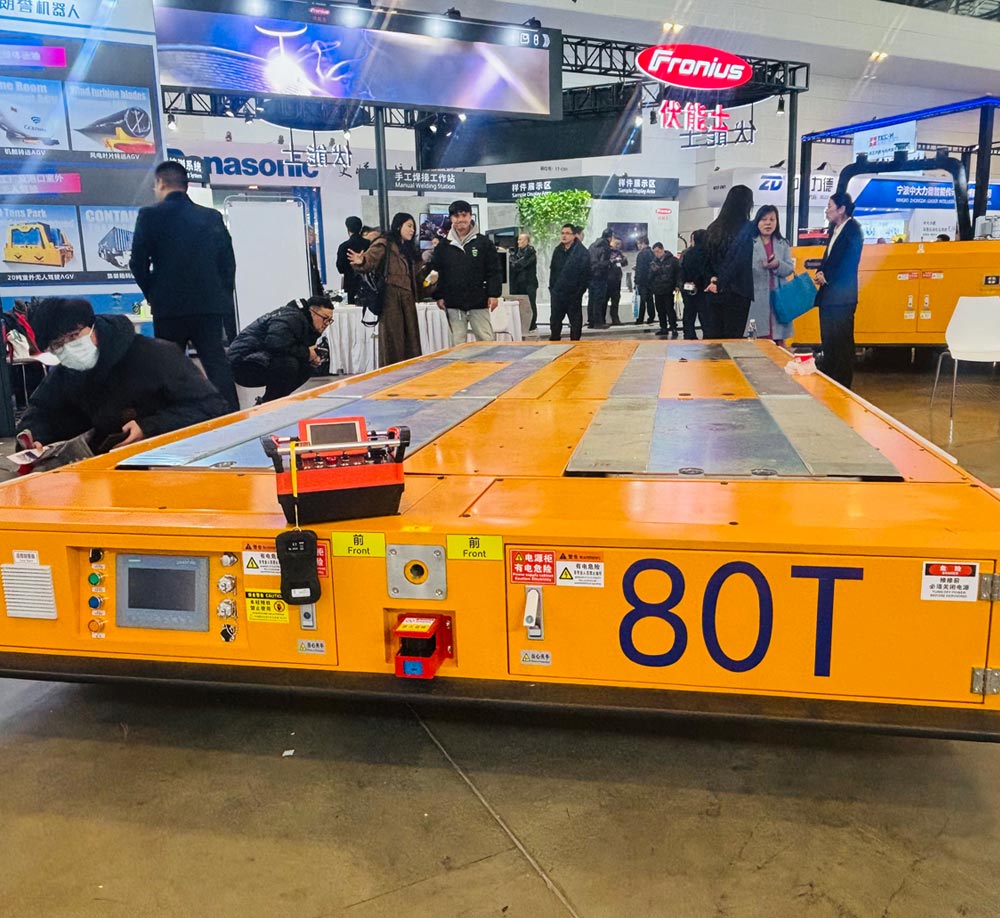
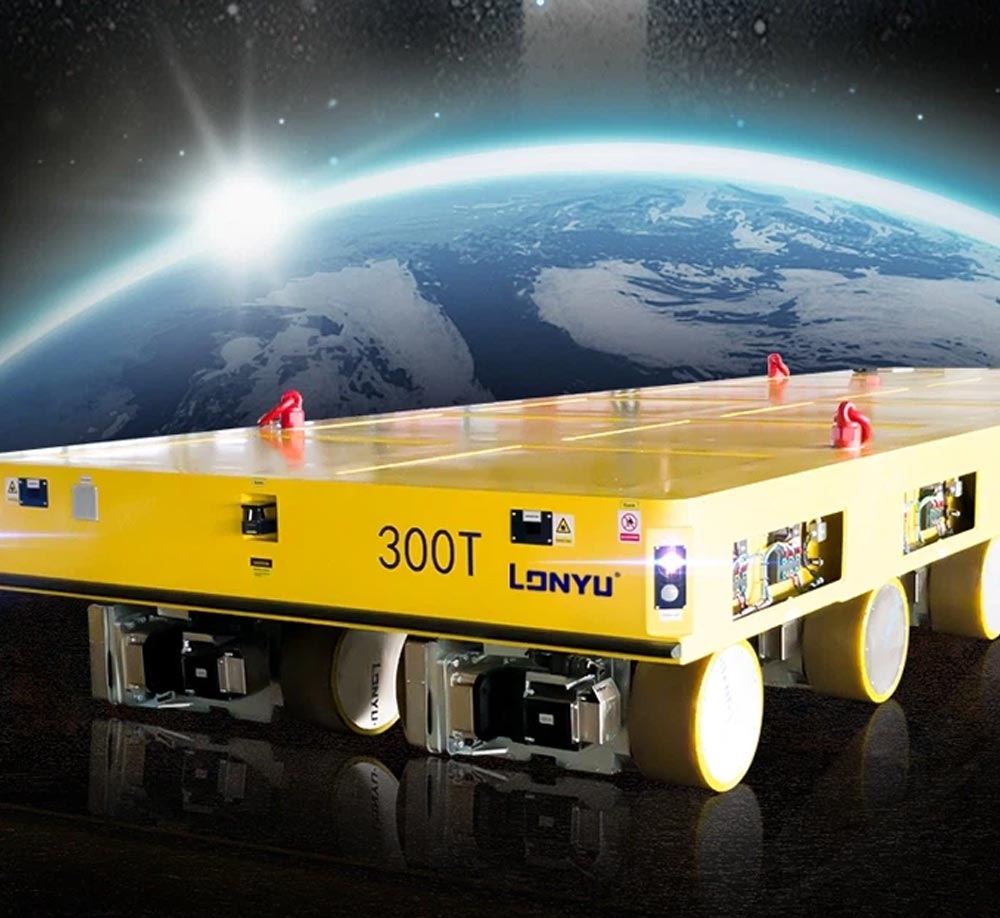
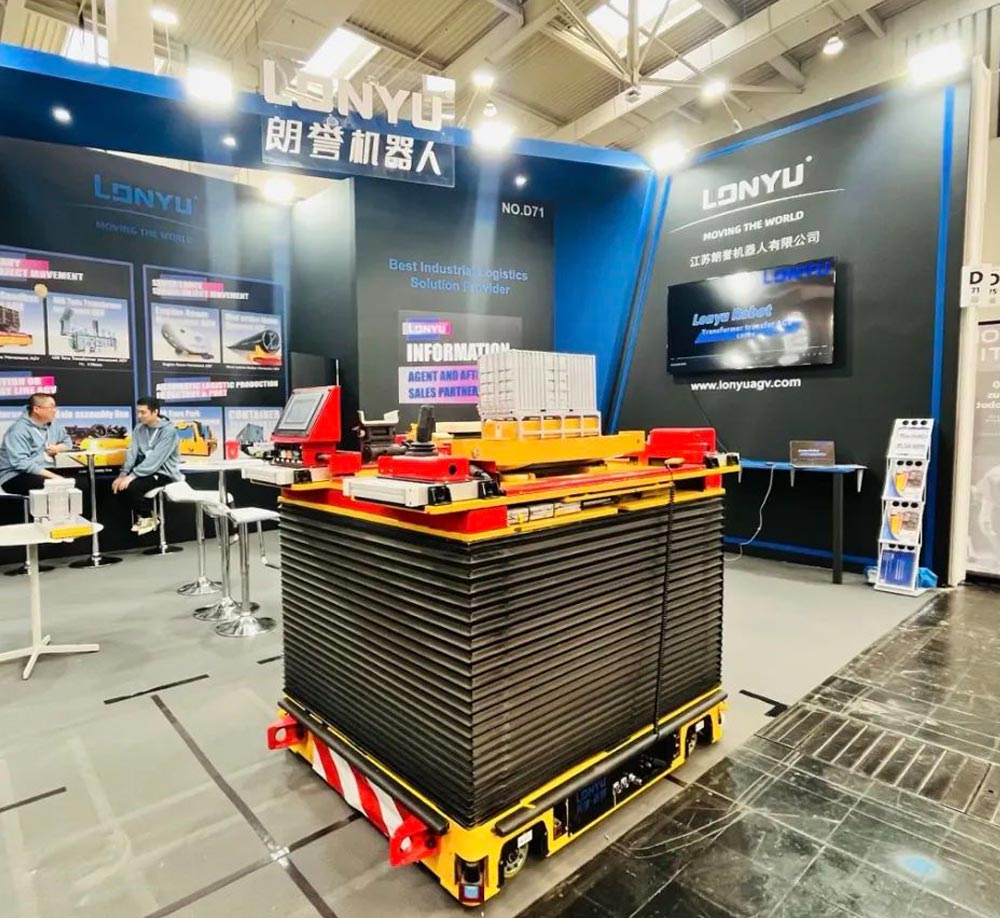
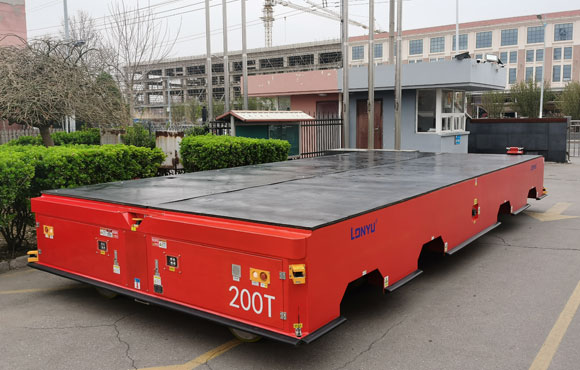
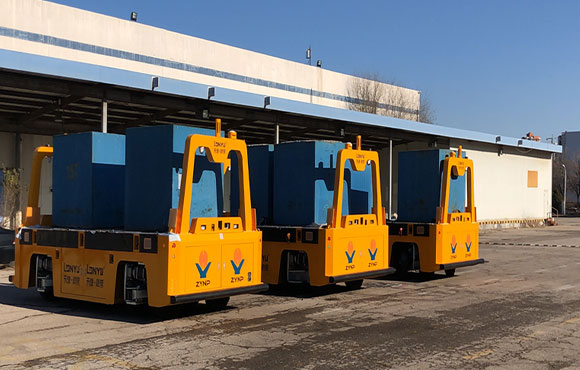
In the high-threshold heavy load transport sector, professional AGV robot manufacturers have broken through load and stability technical barriers, launching heavy-duty AGVs for industrial Heavy-duty handling. As a global leading AGV manufacturer, Lonyu Robot has accumulated years of proprietary R&D and project experience in heavy load transport, developing heavy-duty AGV products with 10-ton to 600-ton load capacity, solving long-standing pain points of oversized and overweight cargo handling. Its mature AGV systems are widely applied in heavy machinery, new energy, power equipment, and metal processing, verifying the irreplaceable value of intelligent AGV solutions for heavy-duty industrial scenarios.
Core Mechanism of the Fleet Management System
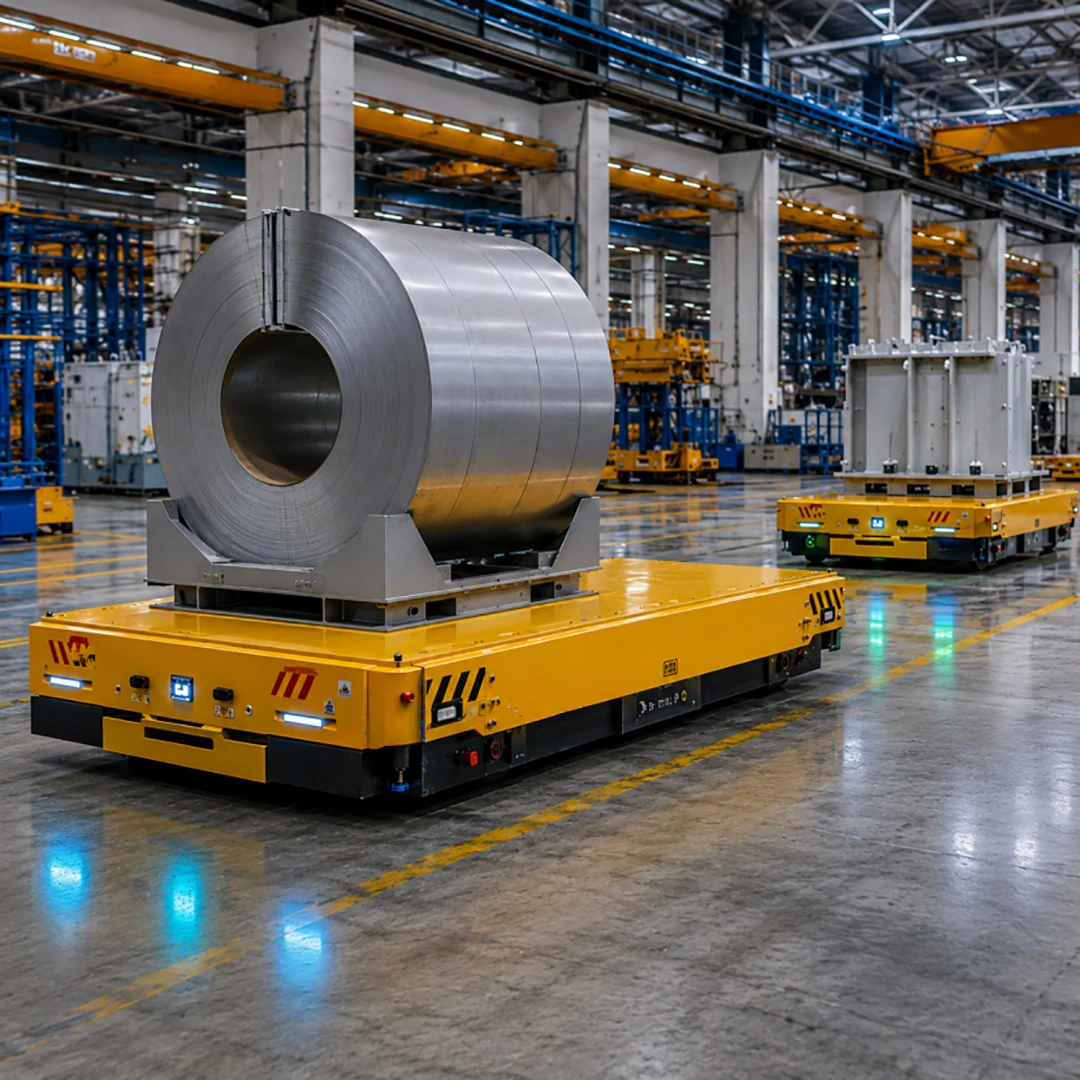
As the central control brain for a multi-AGV mobile robot, the fleet management system is dedicated to real-time path planning, intelligent dynamic obstacle avoidance, and balanced task assignment of all industrial AGV robots in the system. Its core mission is to eliminate path conflicts, operational deadlocks, and resource idling, maximizing the operational efficiency and service life of the entire heavy-duty AGV fleet.
Technical Principles: Real-Time Scheduling and Collaborative Control
Automatic guided vehicle technology relies on wireless industrial communication, multi-sensor fusion, and intelligent scheduling algorithms to complete unified traffic control and priority task allocation of the whole multi-vehicle fleet. Heavy-duty AGV control systems are divided into two mature structures: centralized control and distributed control. Centralized control uses a core server to collect real-time status of all AGVs, plan global paths, issue unified instructions, and has high coordination stability, which is very suitable for small and medium-sized AGV fleets in standardized workshops.
Distributed architecture gives a single AGV mobile robot independent computing and decision-making ability, supporting real-time data interaction between adjacent vehicles, and avoiding conflicts autonomously. This structure has stronger fault tolerance and flexibility, and is suitable for large-scale AGV fleets in complex, narrow channel workshops. Lonyu Robot’s AGV Robot Systems support dual architecture switching, flexibly adapting to diverse workshop layouts and operational demands for stable, efficient multi-vehicle synergy.
Core Functions: Conflict Resolution and Efficient Collaboration
Industrial AGV robots are often placed in narrow passages, intersections, and dense loading and unloading areas in on-site industrial operations, where path collisions and task congestion often occur. The intelligent fleet management system solves these hidden dangers and bottlenecks through four core function modules.
- Real-time path planning: Combining with the topology of the automatic guided vehicle map system, the system matches real-time vehicle positioning, task urgency, and site obstacles, and generates exclusive optimal paths for each AGV to bypass static and dynamic obstacles.
- Intelligent obstacle avoidance: Equipped with 360° laser and millimeter-wave radars, the heavy-duty AGV can instantly perceive the surrounding dangers and perform automatic deceleration, emergency stop, or path diversion to ensure the safety of the whole operation.
- Task allocation optimization: the system allocates handling tasks according to the load capacity, remaining power, and current position of a single AGV, so as to avoid uneven workload and waste of fleet resources.
- Traffic Management: Apply time-limited traffic rules at key nodes, control AGV traffic in an orderly way, and completely eliminate congestion and cross-vehicle conflicts.
Diverse Application Scenarios of Heavy-Duty AGVs
With continuous iteration of AGV Technology, heavy-duty AGVs have expanded from single fixed handling to full-scenario heavy-duty logistics, becoming the core intelligent equipment for industrial automation upgrading across manufacturing, warehousing, and special heavy-duty industries.
Scenario 1: Production and Warehouse
Warehouse AGV automation has become an irreversible trend for modern intelligent warehouses, which greatly improves the utilization rate of vertical and horizontal space and reduces the cost of manual logistics. AGV robot warehouse can realize uninterrupted and high-precision docking through unified dispatching of multiple automated guided vehicles in the warehouse, covering the whole process of warehousing, storage, transshipment, and outbound handling.
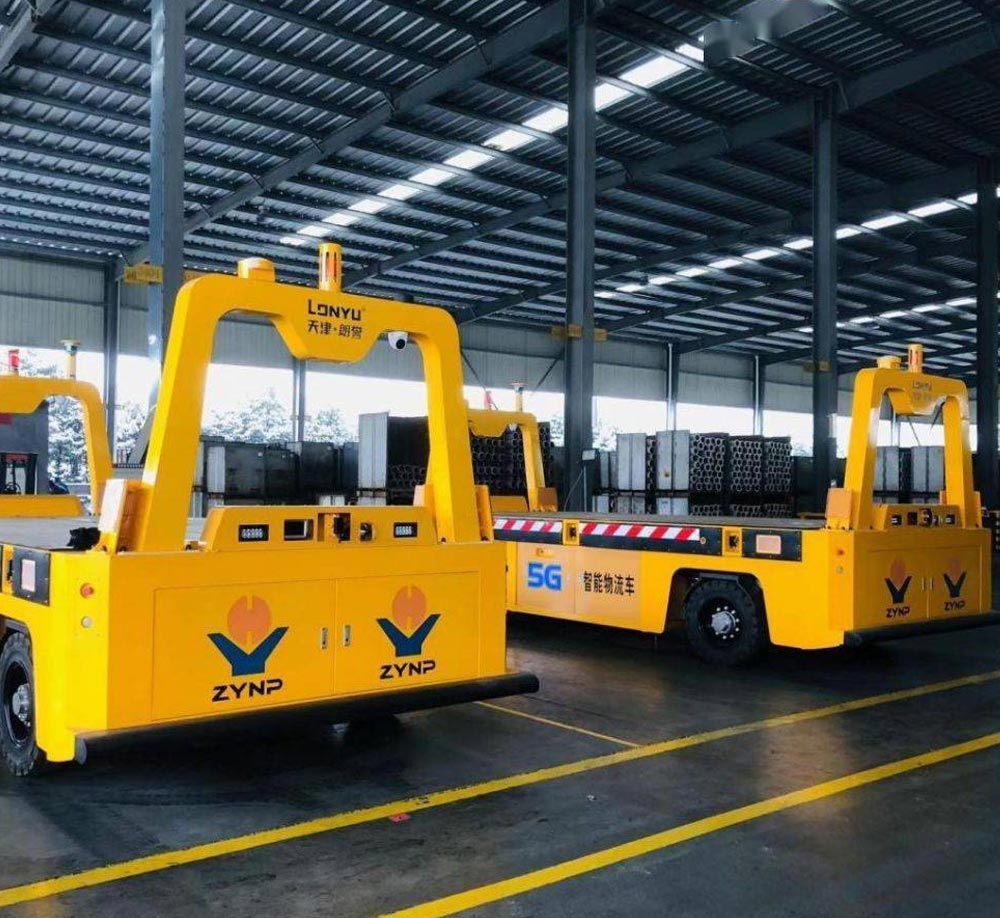
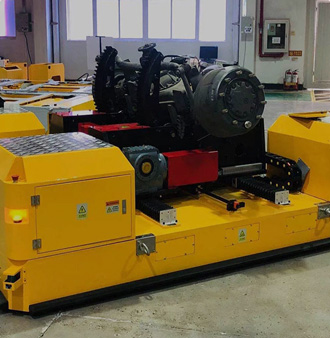
Lonyu’s heavy-duty AGV is widely used in the fields of automobiles and precision manufacturing, replacing traditional fixed conveying lines and realizing flexible line-side conveying. In standardized warehouse scenarios, Automated Guided Vehicles in the warehouse boost space utilization by 30%-50% and cut manual handling input by over 40%, with stable, continuous operation and zero manual error risks.
Scenario 2: Extra Heavy-Duty Handling
Wind power, power grid, and heavy machinery industries face long-standing difficulties in oversized, overweight cargo handling, which poses high safety risks and low efficiency via traditional cranes and trailers. Heavy-duty transport vehicles, such as heavy-duty AGVs, have completely optimized this traditional handling mode.
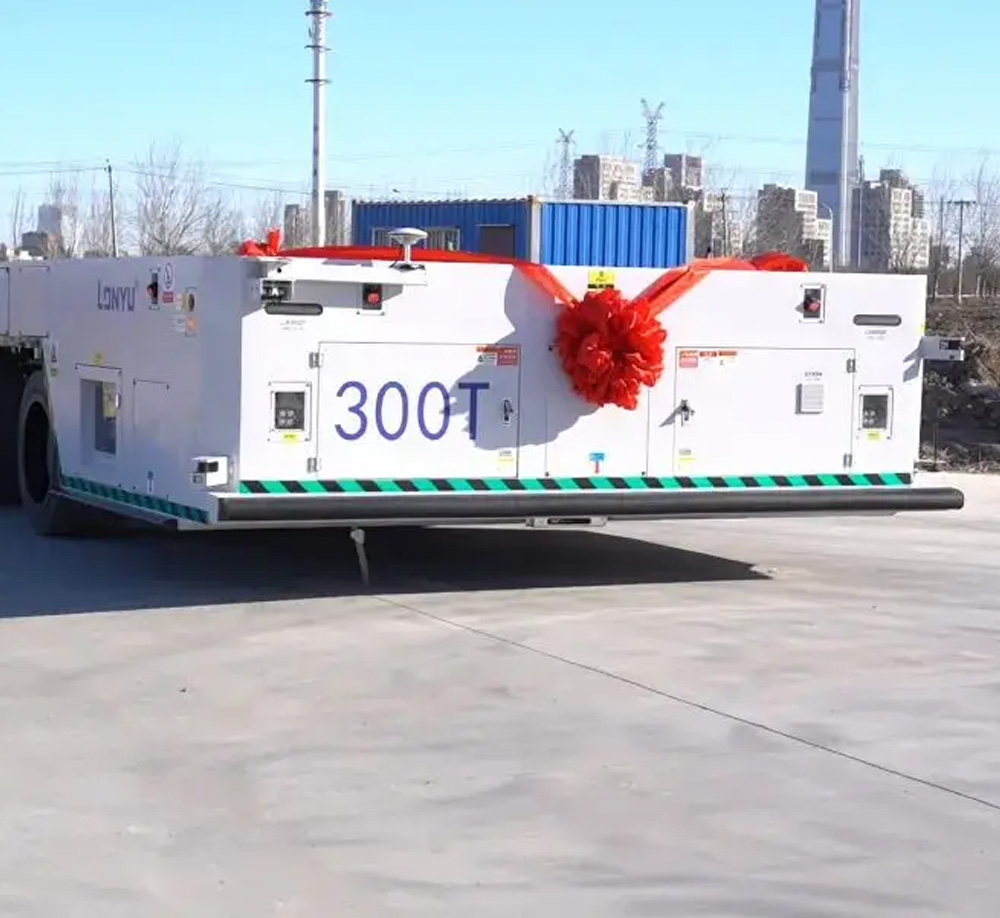
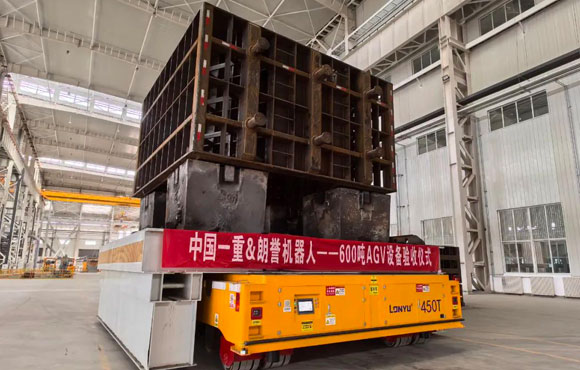
Lonyu robot provides full-chain heavy-duty transfer solutions for 100-600 tons of ultra-heavy goods, including safe and accurate handling of heavy-duty transformers in power engineering. The improved heavy tractor-trailers integrated with AGV intelligent technology are also applied to the ports and outdoor heavy freight yards, realizing unmanned operation for ultra-Heavy-duty transshipment.
Scenario 3: Specialized Industrial Logistics
Heavy-duty AGV also provides stable performance in customized industrial handling scenarios, including the target customization models of special cargo handling.
- Steel coil transfer car: used for heavy-duty transportation of steel coils, with stable bearings and accurate positioning to prevent damage to goods.
- Mold Transfer Cart: For large stamping and manufacturing mold transfer, replacing manual operation to reduce mold collision risks.
- Battery Transfer Cart: For new energy battery pack production line handling, meeting shockproof and safety operation standards.
Hardware Support: From Traditional Transfer Carts to Intelligent AGVs
Heavy-duty handling equipment has evolved from manual mechanical carts to intelligent automated carriers, with hardware upgrades laying a solid foundation for stable Automated Guided Vehicle Systems operation. Lonyu Robot has built a full line of heavy-duty handling products, covering traditional transfer vehicles, fully intelligent heavy-duty AGV, and so on.
Product Line Classification and Features
1. Traditional Heavy-Duty Transfer Equipment
- Motor transfer trolley/industrial transfer trolley: Basic heavy-duty loading and unloading tool with simple structure and low investment. It is suitable for loading and unloading heavy goods over short distances and fixed paths, and requires manual operation.
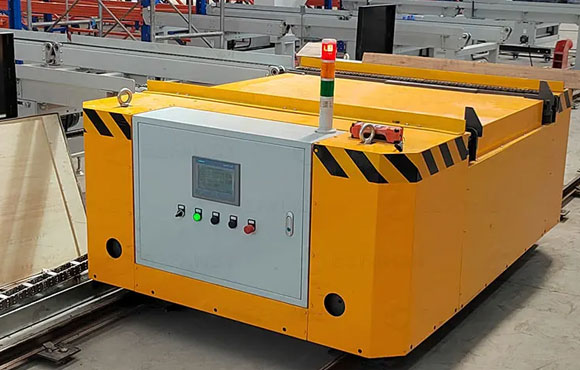
- Rail Transfer Cart: Dedicated track carrier with ultra-high load bearing, limited to fixed routes and poor scenario adaptability.
2. Intelligent Upgraded Heavy-Duty AGVs
- Trackless Transfer Cart: Track-free intelligent carrier with dynamic path planning, flexible steering, and strong complex scenario adaptability, mainstream high-efficiency model.
- Electric Transfer Carts/Battery Powered Transfer Cart: Clean lithium battery power, zero emission, long endurance, matching 24-hour shift operation, with outstanding energy efficiency.
Core Hardware Advantages
As a top AGV robot manufacturer, Lonyu heavy-duty AGVs feature high-strength alloy car bodies, multi-sensor precision positioning, high-torque power systems, and a modular, durable design, supporting long-term stable operation in harsh industrial sites, with uniform compatibility with Heavy Duty Transport Cart, Heavy-Duty Transfer Carts, and Industrial Transfer Carts product advantages.
Why Choose an Efficient Heavy-Duty Scheduling System?
The deployment of a targeted heavy-duty AGV dispatching system will bring tangible benefits in cost control, operational efficiency, workplace safety, refined management, and other aspects, and help industrial enterprises to efficiently complete the transformation of intelligent logistics.
Core Automated Guided Vehicle Advantages
- Long-term cost Reduction: reduce the investment of full-time handling labor and continuous management costs, and reduce the overall cost of automatic guided vehicles. Reasonable AGV automatic guided vehicle price can bring 1-3 year investment return for most industrial customers.
- Stable Efficiency Improvement: Heavy-duty AGVs support 24/7 uninterrupted operation, free from manual fatigue and shift limits. Optimized fleet scheduling has reduced the waiting time for handling by more than 50% and significantly improved the overall production logistics efficiency.
- Enhanced operational safety: Multi-level safety protection systems avoid the risks of manual misoperation, collision, and cargo damage, and protect the field staff and valuable heavy goods.
- Fine digital management: Real-time fleet data monitoring, operation records, and fault alarms can realize the whole process of visual logistics management and simplify daily operation and maintenance.
Synergistic Warehouse Performance
In complete AGV warehouse systems, Automated Guided Carts and Automated Trolleys cooperate with heavy-duty AGVs to form a hierarchical handling system. Small conventional transport ships handle light materials, and heavy models undertake the transshipment of large-tonnage goods, forming a fully closed-loop and efficient warehousing and logistics system.
Global Perspective: Choosing the right AGV manufacturer
With the transformation of industrial intelligence, the global heavy-duty AGV market maintains steady growth. According to authoritative data from Research (2026), from 2026 to 2032, the global heavy-duty AGV market will maintain a 10.0% CAGR, and the demand across Asia, Europe, and North America will continue to expand. Choosing a qualified AGV robot manufacturer directly determines the success of the project and the stability of long-term operation.
Lonyu’s Global Service Capability for Robots
Lonyu Robotics has a complete global supply and service network, covering overseas markets including AGV Robotics Singapore, AGV Robotics Malaysia, and AGV Robotics India, providing localized technical support, quick after-sales response, and full project life-cycle services to customers around the world.
Supplier Selection Criteria
When screening reliable Automated Guided Vehicle Manufacturers, enterprises should focus on four core dimensions.
- AGV’s independent research and development and core patent strength prove its professional AGV manufacturing capability;
- Product load stability, safety certification, and verification of actual industrial project;
- The ability to customize the solution for non-standard heavy handling needs;
- Perfect global after-sales service and technical support system.
Customized Industry Solutions
Lonyu Robot provides fully customized automatic guided vehicle projects for various industries, ranging from standard CPM AGVs to large heavy trucks and super-heavy transport vehicles, and provides customized solutions that meet the unique handling requirements of enterprises.
Key Parameters of Lonyu Heavy-Duty AGVs
| Core Parameter | 10-50 Ton Series | 100-300 Ton Series | 400-600 Ton Series |
| Load Capacity | 10-50 tons | 100-300 tons | 400-600 tons |
| Navigation Method | Laser/Magnetic Stripe | Laser/GNSS | Laser/GNSS/Visual |
| Positioning Accuracy | ±10mm | ±8mm | ±5mm |
| Driving Speed | 0-20m/min | 0-15m/min | 0-10m/min |
| Battery Endurance | 8-12 hours | 8-10 hours | 6-8 hours |
| Gradeability | 5% | 5% | 3% |
| Typical Scenarios | Warehousing, Auto Parts | Wind Power, Transformers | Super-Heavy Machinery, Shipbuilding |
Frequently Asked Questions
Q 1: What is the standard delivery cycle for Lonyu heavy-duty AGVs?
A: Standard 10-50 ton vehicle: 30-45 days; 100-300 ton of medium and heavy vehicles: 60-90 days; 400-600 ton super heavy customized models: 90-120 days, adjusted according to customized configuration.
Q 2: Can heavy-duty AGVs operate in dusty, high, or low temperature environments?
A: Yes. Lonyu heavy-duty AGV adopts IP 54 industrial protection, which is compatible with the working temperature of-20°C to 60°C, and is suitable for steel mills, workshops, and outdoor heavy goods yards.
Q 3: What safety protections are built into heavy-duty AGV fleets?
A: 360° obstacle detection radar, emergency stop buttons, acousto-optic alarms, safety zone locking, and redundant anti-collision systems, fully protecting on-site personnel and assets.
Q 4: What kind of warranty and after-sales support are provided?
A: 2-year machine warranty, lifetime maintenance, 24-hour global technical response, and localized on-site support.
Q 5: Is the fleet system integrated with the existing MES/ERP system in the factory?
A: Yes, the system supports TCP/IP and OPC UA standard protocols to realize seamless data docking with mainstream factory management platforms.
Conclusion
With the support of artificial intelligence, 5G industrial communication and Internet of Things technologies, the automatic guided vehicle technology will continue to iterate, making heavy-duty AGV dispatching systems more intelligent, flexible, and adaptive, and further reshaping and optimizing the application form and operation logic of the factory AGV.
Future heavy-duty AGV fleets will realize self-optimized dispatching, multi-vehicle cooperation with lower delay, modular standardized production, and green low-carbon operation, which will further reduce the investment and operating costs of enterprises while improving the loading and unloading efficiency. For industrial enterprises pursuing long-term cost reduction and efficiency improvement, it is the core layout of sustainable and intelligent development to build a mature heavy-duty AGV fleet management system.
As a global pioneer in R&D and manufacturing of heavy-duty AGV, Lonyu Robot provides full-scenario, customized solutions, covering heavy transport vehicles, heavy trucks, and integrated fleet dispatching systems. For more professional heavy-duty unmanned handling solutions, global project cases, and customized product quotation details, please visit the official website of Longyu Robot and connect with professional technical teams.