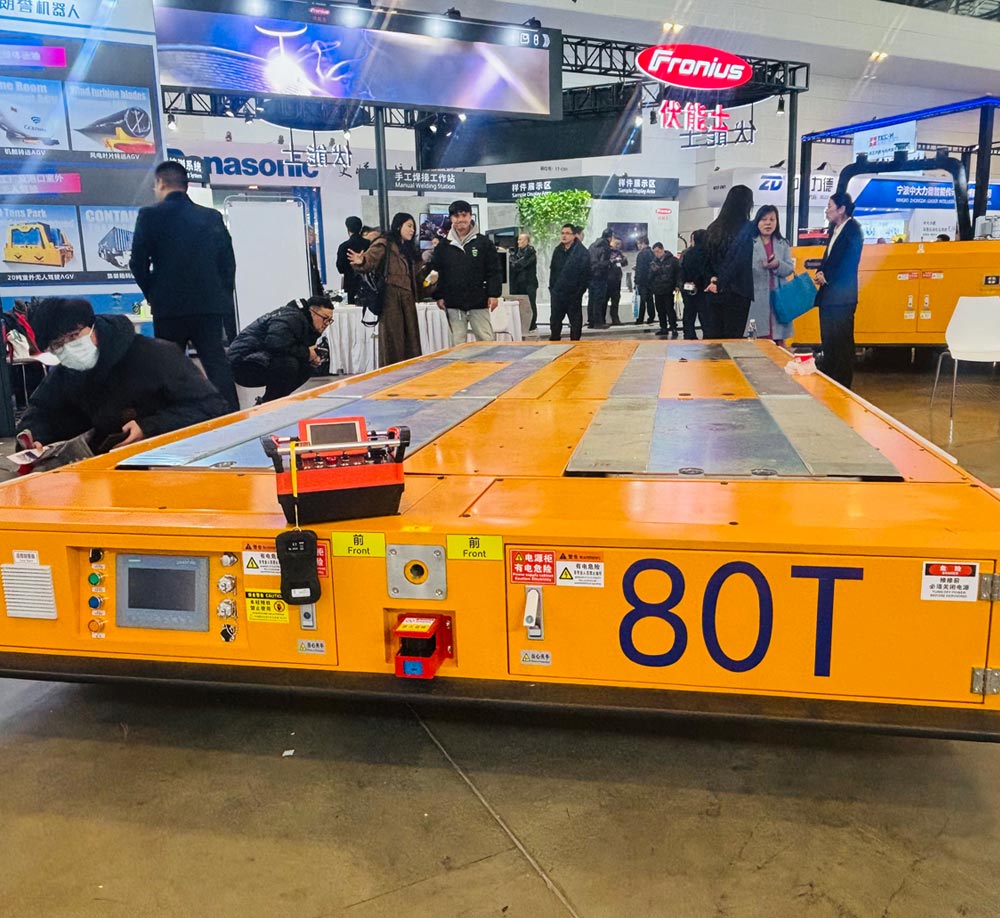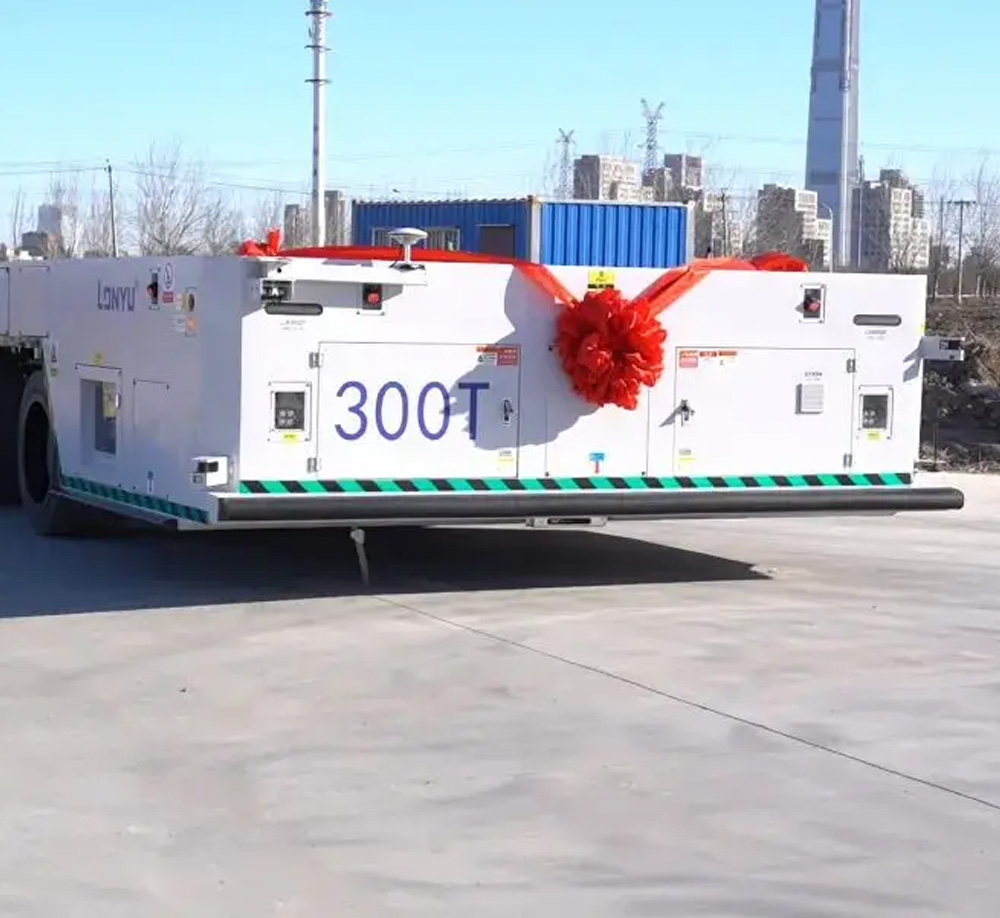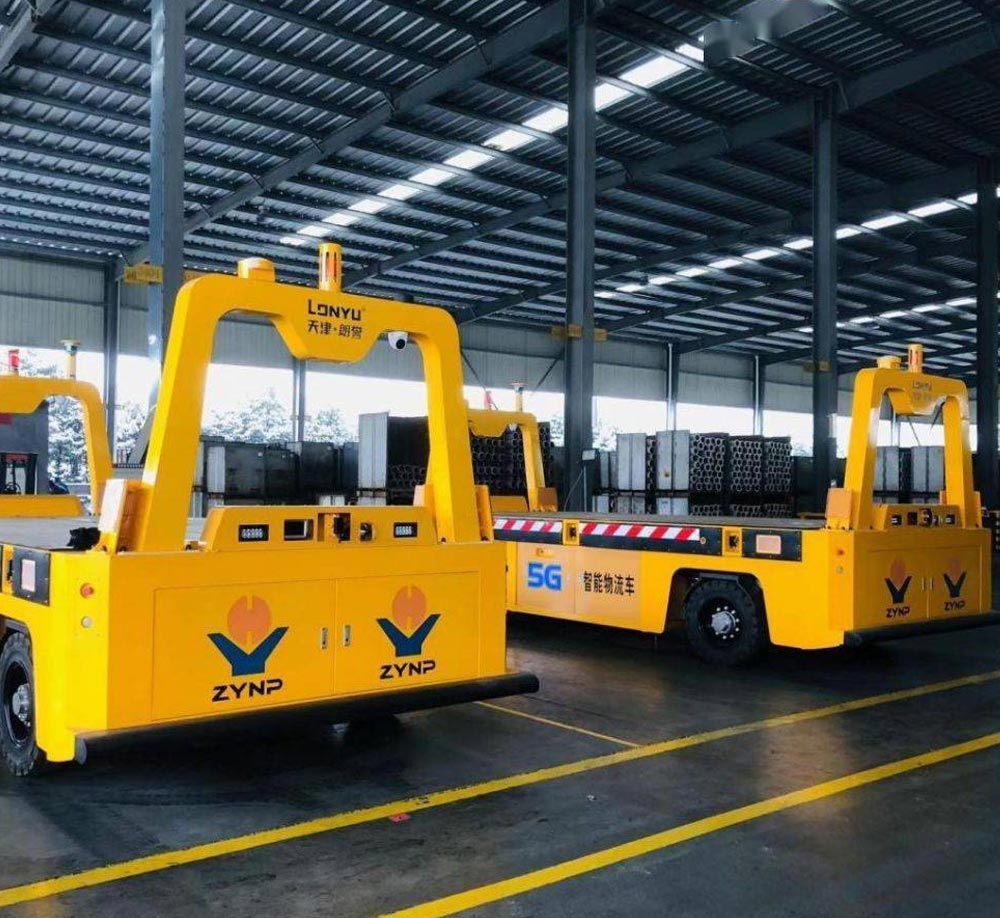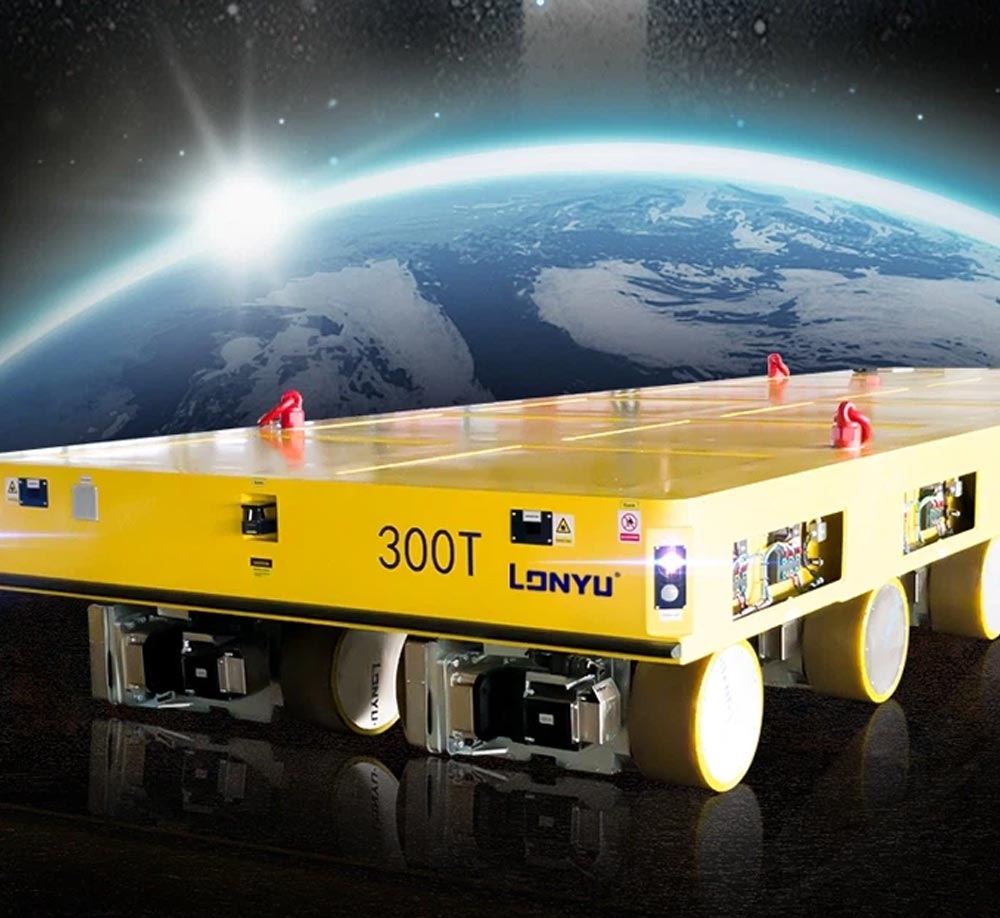


Introduction: A Paradigm Shift in Heavy Industrial Logistics
In the era of Industry 4.0, manufacturing, energy, aerospace and other heavy industries are experiencing profound changes driven by intelligence and automation. Traditional logistics equipment, including cranes, forklifts and manual transfer vehicles, can no longer meet the strict requirements for handling ultra-heavy workpieces (weighing hundreds of tons) efficiently, accurately and safely. This gap has paved the way for the emergence of automated guided vehicle (AGV) technology, particularly heavy load transport automated guided vehicles (AGVs) designed for extreme payloads.
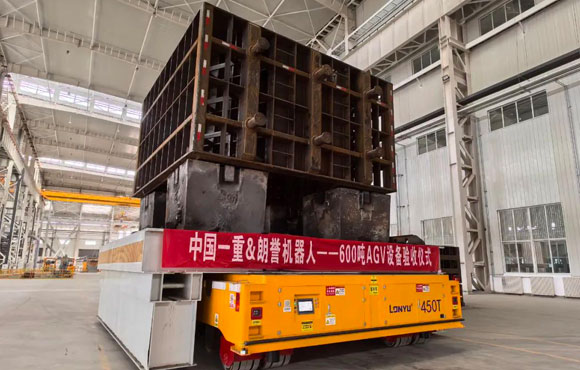
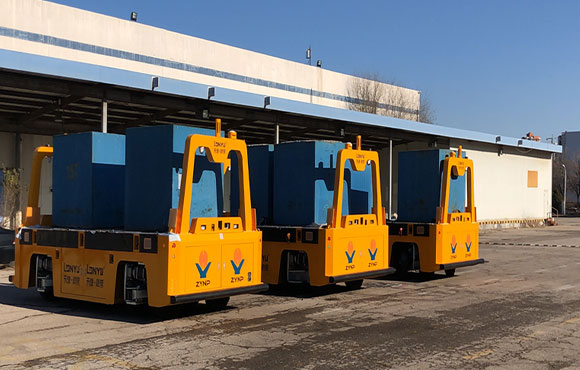
Heavy industries face continuous bottlenecks when transporting large molds, coils, transformers and other oversized parts. Manual dependence leads to slow speeds, high labor costs, great security risks and potential damage to high-value goods due to imprecise handling. Enter the 600-ton heavy AGV—a groundbreaking AGV robot aimed at redefining industrial workflow. By integrating cutting-edge automation, power and control systems, this industrial AGV robot has become a core driving force of “new productivity”, realizing unmanned, intelligent and efficient heavy-haul transportation.
Technology Deep Dive: The Core Strength of the 600-Ton Heavy-Load AGV
The 600-ton AGV (model: LY-1-450 (600) T-416-A) represents the peak of automatic guided vehicle technology, which is tailored for extreme payloads and harsh industrial environments. As a robust heavy load transport vehicle, its design prioritizes stability, flexibility, and reliability, addressing the unique challenges of heavy-duty material handling.
Core Technical Parameters
The following table lists the main parameters of the LonYu 600-ton heavy transport vehicle, which proves its engineering accuracy.
| Parameter | Details |
| Rated Load | 600,000 kg (600 tons) |
| Equipment Weight | 50,000 kg |
| Body Dimensions (L×W×H) | 8,500mm × 4,540mm × 1,200mm |
| Lifting Stroke | 0 mm |
| Climbing Ability | ≤5° |
| Working Environment | Indoor and outdoor |
| Drive Structure | Differential drive; four-wheel drive (16 wheels total) |
| Travel Speed | 0–25 m/min |
| Battery | 96V/600AH Lithium Iron Phosphate Battery |
| Navigation & Control | Wireless remote control |
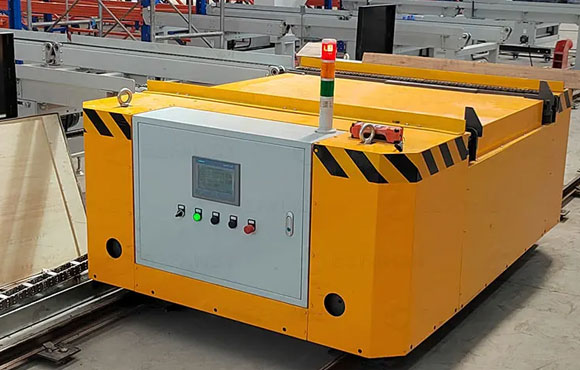
| Safety Features | Laser obstacle avoidance, contact collision avoidance, sound/light warning, emergency stop |
| Braking Distance | Full load ≤500mm; No-load ≤300mm |
| Protection Level | IP44/IP65 |
Key Technological Advantages
- Ultra-High Load-Bearing & Stability: The AGV’s 16-wheel differential drive and robust chassis distribute the 600-ton load evenly, while its dual suspension system—hydraulic suspension plus a reliable passive suspension—ensures uniform stress across wheels, even on uneven terrain. This design eliminates the risk of cargo vibration, which is very important for sensitive and heavy equipment such as large transformers.
- Unparalleled mobility: Unlike rigid cranes or fixed-path transfer vehicles, this kind of mobile transfer vehicle provides all-around flexibility. Under the condition of full load or no load, it can move forward/backward, left/right, rotate in situ and turn in a narrow space, which is very important for navigation or accurate positioning in a narrow factory aisle.
- Intelligent power supply and control: Powered by a 96V/600AH lithium iron phosphate battery, with long battery life (more than 8 hours) and fast charging speed (3 hours). The low-voltage servo motors are equipped with independent controllers to ensure accurate speed and motion control. Wireless remote navigation simplifies operation, while multi-layered safety systems (laser sensors, collision avoidance, emergency stops) mitigate risks in dynamic industrial settings.
Traditional vs. AGV-Enabled Workflows
Manual heavy-load handling depends on the crane, multiple operators and slow and cautious movement, which has high accident risks and limited accuracy. In contrast, the automated guided vehicle system minimizes human intervention, improves the speed (up to 25m/min) and ensures consistent accuracy. For example, it may take 4-6 hours for more than 5 workers to manually transport a 500-ton transformer; The 600-ton AGV can be completed by one operator within 1-2 hours, with zero accidents and accurate positioning.
Lonyu’s product portfolio has surpassed this flagship AGV, including special AGV industrial robots with hydraulic steering and multi-axis synchronous control. These technical barriers have consolidated their leading position in the field of heavy automation.
Lonyu’s Comprehensive Handling Solutions: From Industrial Trolleys to Heavy-Load AGVs
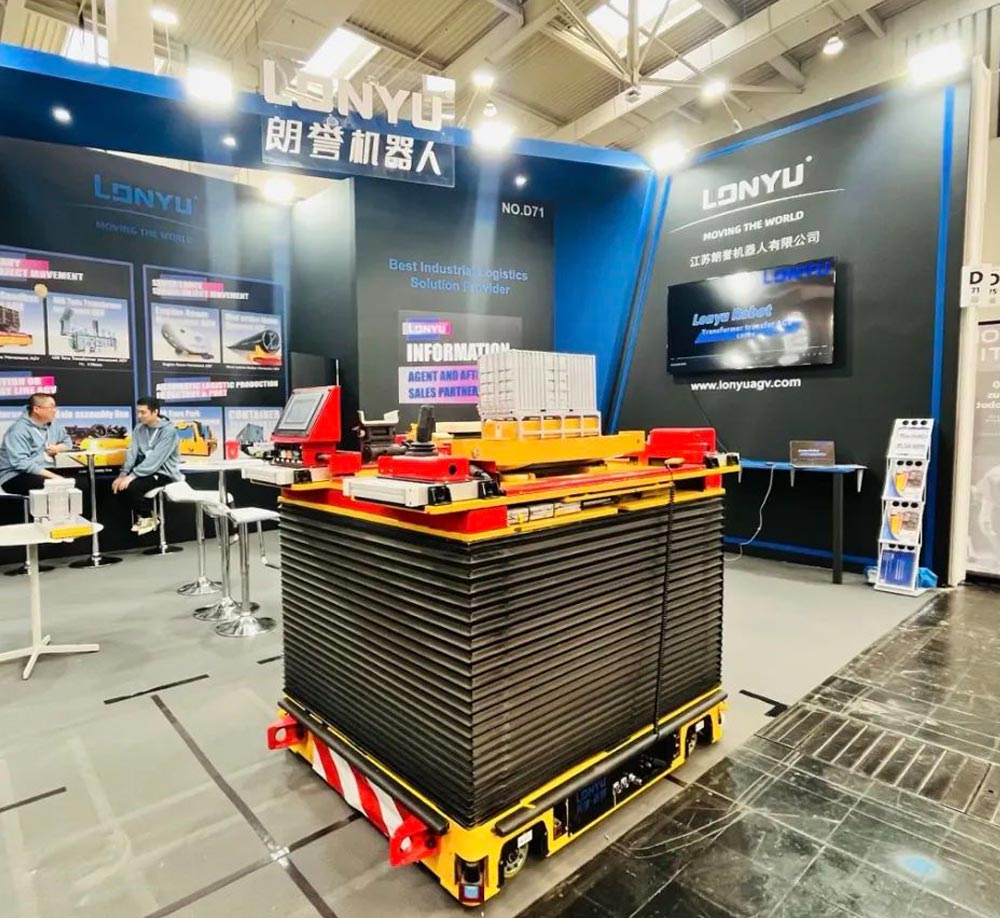
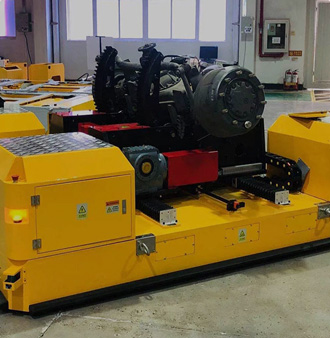
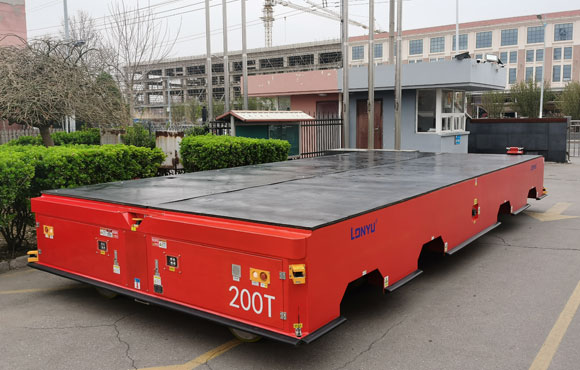
Lonyu robots are more than just an AGV manufacturer; It is an end-to-end intelligent logistics solutions provider, providing all kinds of equipment except heavy AGV. Its product lineup includes Industrial Transfer Trolley, battery transfer cart, motorized transfer trolley, rail transfer cart, and trackless transfer cart, catering to varied load weights, site layouts, and industry needs.
Professional Solutions for Key Applications
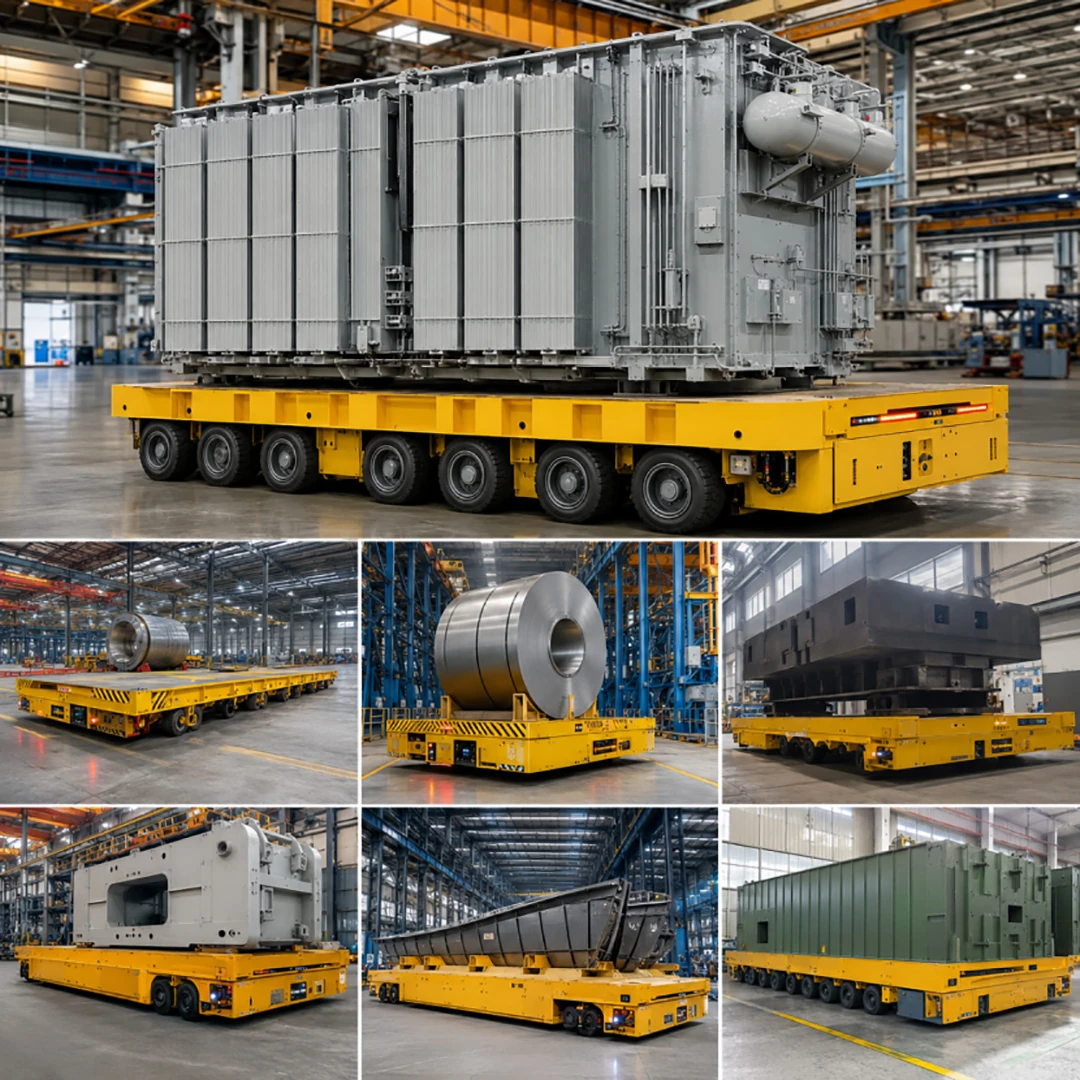
- Mold & Coil Handling: For heavy mold (50–300 tons) and coil transportation in the automotive and steel industries, Lonyu’s mold transfer cart and coil transfer car deliver automated, precision movement. These trackless or rail-guided carts integrate AGV-like control systems, reducing reliance on cranes and improving workflow continuity.
- Eco-Friendly Battery-Powered Transport: The battery transfer cart lineup leverages lithium battery technology, offering zero emissions, low noise, and low energy consumption. Unlike diesel-powered transfer carts, these units comply with strict environmental regulations, making them ideal for indoor factories and eco-conscious facilities.
- Custom manufacturing and Factory Ages: Lonyu designs and manufactures AGV and factory AGV solutions, which are tailored to specific production lines. Whether used in aviation parts assembly, power equipment manufacturing or shipbuilding, its AGV and transfer vehicle can adapt to narrow spaces, heavy loads and mixed indoor/outdoor environments.
This diversification ensures that Lonyu has solved every challenge of heavy transportation, from small-scale material to the handling of 600 tons of super-heavy payload, all under an integrated automation ecosystem.
Economic Benefits & Value Chain Analysis: ROI of Heavy-Load AGVs
When adopting industrial automation, enterprises give priority to the improvement of cost efficiency and productivity. The advantages of automated guided vehicle technology, especially the 600-ton automatic guided vehicle, provide a remarkable return on investment by reducing costs, minimizing downtime and improving safety.
Core Economic Advantage
- Labor Cost Reduction: Manual heavy-load handling requires 3–8 workers per shift (operators, supervisors, safety personnel). A 600-ton AGV can replace 5-7 workers, saving 150,000-300,000 US dollars in labor costs every year.
- Minimize downtime: Traditional processing is slow and easy to delay (e.g. Crane scheduling conflicts and safety inspection). AGV operates around the clock with minimal maintenance, reducing workflow downtime by 40-60% and improving production capacity.
- Safety and asset protection: Workplace accidents caused by manual handling lead to medical expenses, compensation and production stoppage. AGV eliminates human error, reducing accident risks by more than 90%, and protecting high-value goods from damage.
- Long-Term Cost Stability: While the automated guided vehicle price (initial investment) is significant, the automated guided vehicle cost over its 10–15 year lifespan is far lower than manual labor and traditional equipment maintenance. The price of the AGV robot is offset by continuous savings and productivity improvement.
The Growth Trend of Global Markets
The demand for heavy-load AGVs is surging globally, driven by industrialization and automation in emerging economies. Market data from Verified Market Reports (a leading authoritative market research platform) shows the global heavy-load AGV market was valued at USD 2.5 billion in 2025 and is projected to reach USD 6.1 billion by 2032, growing at a CAGR of 10.5%. The main growth areas include AGV robot Singapore, AGV robot Malaysia and AGV robot India. The development of manufacturing and infrastructure in these areas has promoted the demand for efficient heavy transport solutions.
Why Choose the Lonyu robot? Core Competitive Advantages of Professional Manufacturers
As a leading auto-guided vehicle manufacturer, Lonyu Robot stands out among automated guided vehicle suppliers due to its technical expertise, industry experience, and customer-centric services.
Unparalleled R&D and Manufacturing Capability
Lonyu is the world record holder for heavy-load AGV payload capacity, with its 600-ton model redefining industry standards. As the lead drafter of the Technical Specifications for Heavy-Duty Mobile Robots for Industrial Applications, it brings unparalleled engineering rigor to every product. Its AGV industrial robot series has passed strict load capacity, durability and safety tests, ensuring reliability in extreme conditions.
One-Stop Comprehensive Services
In addition to manufacturing, Lonyu also provides end-to-end support for the planning, customization, installation, training and after-sales maintenance of autonomous vehicle projects. This solves customers ‘general concerns about AGV warehouse systems integration, technical support and long-term reliability. Its team of engineers designs tailored solutions to meet unique plant layouts, load requirements and budget constraints.
Proven Industry Track Record
Lonyu’s heavy-load AGVs and transfer carts are widely deployed in aerospace, energy, shipbuilding, and heavy machinery industries worldwide. Its products have been used to transport large transformers, aircraft parts and ship parts, winning recognition for their reliability and performance. As a trustworthy partner for enterprises across China, Southeast Asia and other places, Lonyu combines global expertise with local support.
FAQ
Q 1: What is the maximum load capacity of Lonyu’s heavy-load AGV?
A 1: the flagship model LY-1-450 (600) T-416-A has a rated load capacity of 600 tons, making it the world’s highest-capacity commercial AGV.
Q 2: Can the AGV operate outdoors?
A 2: Yes. It is designed for indoor and outdoor use and has the protection level of IP 44/IP 65, which can resist dust, rain and other environmental factors.
Q 3: How long is the battery life and charging time?
A 3: It is equipped with a 96 v/600 AH lithium iron phosphate battery, which can work continuously for more than 8 hours. The charging time is approximately 3 hours.
Q 4: How is the AGV controlled?
A 4: It uses a wireless remote control for navigation and operation, allowing an operator to safely manage the vehicle from a distance.
Q 5: What safety features does the AGV have?
A 5: It includes laser obstacle avoidance sensors, collision avoidance, acousto-optic warnings and an emergency stop button to ensure safe operation in a dynamic industrial environment.
Conclusion
The 600-ton heavy-duty AGV represents a transformative force in heavy industry, driving the shift toward unmanned, intelligent, and efficient logistics. As a cornerstone of “new productive force,” it addresses longstanding bottlenecks in ultra-heavy workpiece handling, enabling enterprises to boost productivity, reduce costs, and enhance safety.
With the global promotion of intelligent manufacturing and Industry 4.0, heavy-duty AGV technology will continue to develop, making progress in artificial intelligence-driven navigation, multi-robot cooperation and energy efficiency. For heavy industries aiming at maintaining competitiveness, it is no longer optional to adopt 600 tons AGV and integrated automation solutions, but essential.