

Key Takeaways
- Match the vehicle’s rated capacity to the combined weight of the rack and its load.
- Check rack dimensions, lifting clearance, aisle width, and turning space before selecting a vehicle.
- Choose navigation and battery configurations according to the factory layout and operating schedule.
- Evaluate safety, maintenance, integration, and long-term operating costs alongside the purchase price.
- Prepare rack drawings, load details, and route plans before requesting a technical quotation.
Introduction
A heavy duty AGV can help factories move materials between storage, assembly, and production areas while reducing manual handling. However, choosing the right vehicle involves more than checking its maximum load capacity. Rack dimensions, lifting requirements, route conditions, and operating cycles all affect whether a vehicle can perform the task reliably.
For rack handling, the vehicle must also fit the rack’s structure, align with its lifting points, and move through the facility without interfering with nearby equipment. Understanding these requirements before comparing suppliers can help buyers avoid costly changes after installation.
What Should You Check Before Selecting an AGV for Rack Handling?
Several technical details determine whether a vehicle can handle a rack safely and consistently. Start with the load and rack structure, then check how the lifting and transfer process will work in the intended application.
Load Capacity and Rack Dimensions
Start by calculating the total weight of the rack, its contents, and any fixtures used during transport. The selected rated capacity should cover the expected load, with an appropriate margin confirmed during technical evaluation.
Next, check the rack’s length, width, height, support-leg positions, and bottom clearance. A vehicle may have enough capacity on paper but still be unsuitable if it cannot enter beneath the rack or align correctly with its lifting points.
Provide drawings that show the rack’s dimensions and load distribution. These details help the supplier assess whether the vehicle can approach, lift, and transport the rack without collision or unstable contact.
Lifting and Transfer Requirements
The lifting arrangement should match the rack’s structure and the way materials move through the facility. Confirm the required lifting height, contact points, and available clearance. Also determine whether the rack only needs to be raised enough for transportation or must reach a specific height at the delivery point.
Consider the entire transfer process, from pickup to final placement. The vehicle may need to enter beneath a rack, lift it, follow a defined route, and lower it at a workstation. Check each stage for potential interference with fixtures, conveyors, machinery, and other equipment.
Rated capacity alone does not guarantee that every load arrangement is suitable. Load distribution, center of gravity, rack strength, and floor conditions should also be reviewed before the system is approved for operation.
How Do Factory Layout and Operating Requirements Affect AGV Selection?
Even a vehicle with sufficient capacity may not suit a particular facility if its route, navigation method, or operating cycle does not match the site. Reviewing these conditions early helps narrow down the appropriate configuration.
Aisle Width, Turning Space, and Transfer Points
Measure the narrowest aisle and the available turning space along the complete route. The assessment should include the room needed to approach the rack, align with it, turn, and leave the pickup or delivery area.
A route that looks clear on a floor plan may be restricted by columns, machine guards, workstations, or temporary storage. Reviewing the full route helps identify these issues before installation.
Transfer points need similar attention. Define where the vehicle will collect and deliver each rack, and check whether workers or other vehicles use the same areas. Clearly marked pickup and drop-off positions can make material flow more predictable and reduce unnecessary movements.
Navigation, Positioning, and Safety
Navigation should suit the layout and stability of the operating environment. Magnetic guidance may be appropriate for relatively fixed routes, while QR-code navigation can support positioning at designated points. Laser SLAM may be worth considering when the application requires a different approach to route navigation. The final choice should reflect site conditions and positioning requirements.
According to the International Organization for Standardization (ISO), ISO 3691-4:2023 specifies safety requirements and verification methods for driverless industrial trucks and their systems, including applicable AGVs. It provides a reference for reviewing safety requirements.
A site assessment should also consider pedestrian crossings, blind corners, shared traffic lanes, emergency stops, warning signals, and procedures for stopping or restarting the vehicle. These factors should be addressed as part of the complete handling system rather than treated as separate checks.
Operating Cycle and Battery Planning
Estimate the number of trips per shift, the distance of each trip, the load carried, and the time spent waiting, lifting, and unloading. This information helps establish the required operating time and charging schedule.
Battery capacity should be evaluated against the actual duty cycle. Runtime also depends on travel distance, load, acceleration, stops, and working conditions, so the battery rating alone cannot guarantee a specific operating duration.
Plan charging locations and check whether charging can take place during breaks or shift changes. For continuous operations, make sure the charging arrangement can support the required throughput without creating delays.
How Can You Evaluate AGV Suppliers and Project Costs?
A reliable purchasing decision requires more than comparing vehicle specifications and initial prices. Buyers should examine the supplier’s technical proposal, support arrangements, and the costs involved in putting the complete handling system into operation.
When comparing automated guided vehicle manufacturers, look beyond the initial quotation. Review technical drawings, operating limits, maintenance recommendations, battery details, and documentation for the proposed safety functions. Ask how installation, commissioning, and integration with existing equipment will be managed.
An effective proposal should identify which requirements have been confirmed and which still need site verification. It should also explain how the proposed configuration will handle the intended load and fit into the planned workflow.
Long-term costs matter as well. Consider route preparation, operator training, maintenance, battery replacement, and possible production interruptions during installation. A lower purchase price may not deliver better value if the system requires major changes to racks, aisles, or operating procedures.
Likewise, extensive customization may be unnecessary for a straightforward application. The aim is to select a system that meets current handling requirements while allowing for reasonable future changes.
Why Choose Lonyu Robot’s Heavy Duty AGV for Rack Handling?
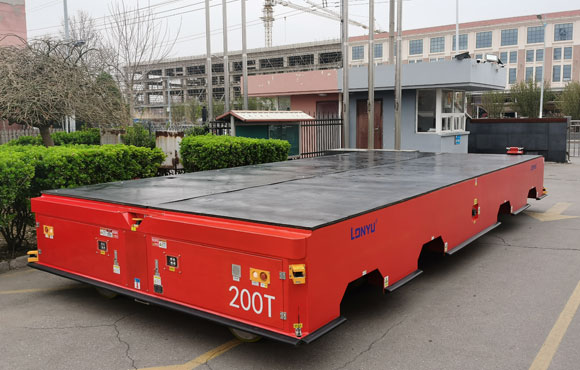
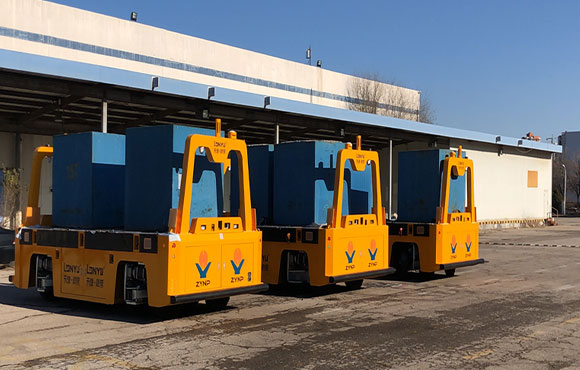
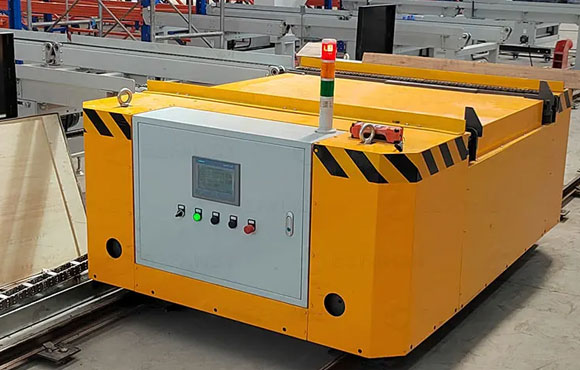
After establishing the site’s requirements, buyers can compare a specific vehicle’s published configuration with the intended application. Lonyu Robot provides industrial material-handling and automation solutions, and its 8-ton backpack AGV is designed for transporting heavy materials and compatible racks.
Main Technical Specifications
| Parameter | Published specification |
| Model | LY-AU-8T-4-0B |
| Rated load capacity | 8,000 kg |
| Vehicle weight | 4,000 kg |
| Overall dimensions | 4,500 × 2,590 × 500 mm |
| Drive configuration | Four-drive |
| Navigation options | Magnetic stripe, laser SLAM, or QR code |
| Battery | 48 V / 180 Ah; customization available |
| Turning radius | 784 mm |
| Operation | Manual remote control and automatic operation |
| Lifting function | Available |
These specifications provide a starting point for technical evaluation. Before ordering, buyers should confirm the rack interface, required lifting movement, load distribution, available clearance, route geometry, and operating schedule with the supplier.
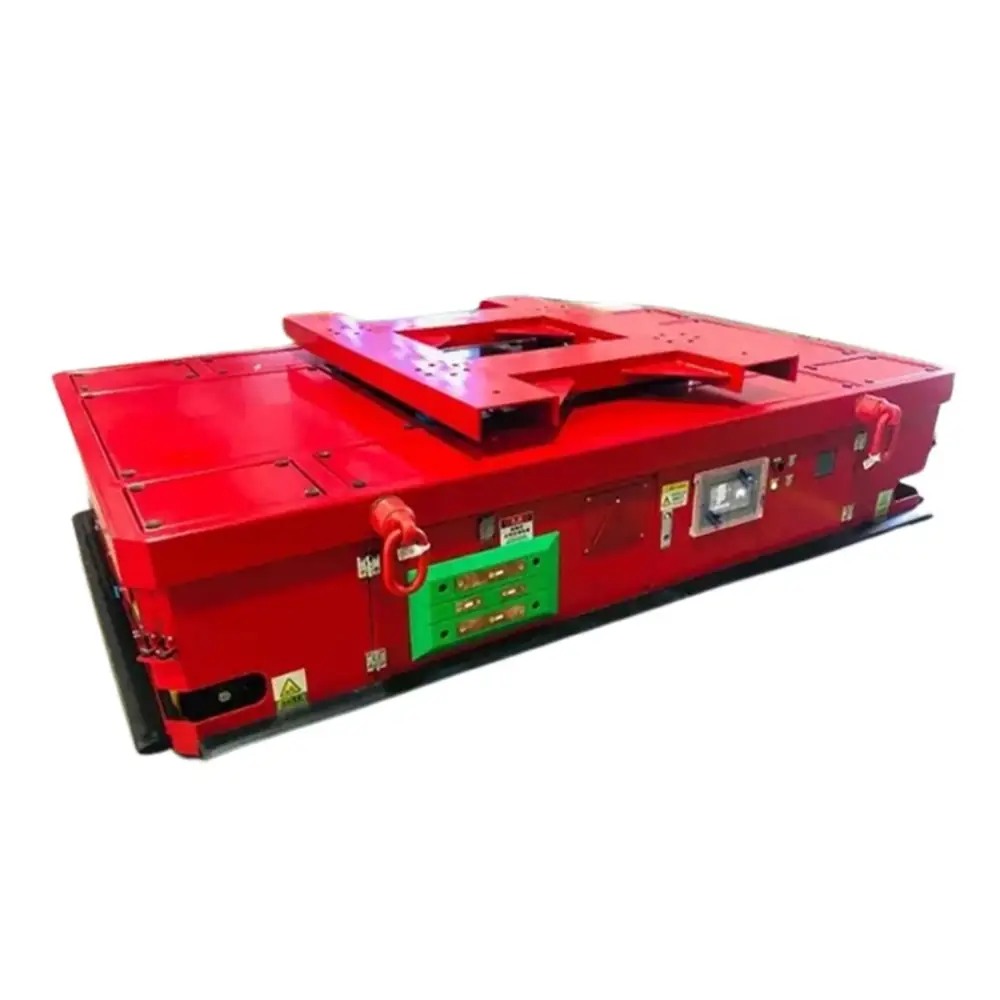
Low-Profile Design for Under-Rack Access
The published vehicle height is 500 mm. Whether it can enter beneath a rack depends on the rack’s bottom structure, support-leg arrangement, floor condition, and required lifting movement. Compare the vehicle and rack drawings to confirm sufficient clearance.
Hydraulic Lifting for Rack Transfer
The vehicle is listed with a lifting function and hydraulic suspension. The lifting arrangement should match the rack’s intended contact points and the space available during pickup and delivery. Confirm the required lift height and tooling for the specific application rather than assuming that one configuration suits every rack.
Four-Drive Configuration and Navigation Options
The published configuration uses four-drive and offers magnetic-stripe, laser-SLAM, and QR-code navigation. The most suitable option depends on the route layout, positioning needs, floor conditions, and likelihood of changes to the working area.
Customizable Battery Configuration
The published battery configuration is 48 V / 180 Ah, with customization available. The final choice should reflect travel distance, load, trip frequency, daily operating hours, and charging opportunities. Confirm the battery arrangement and expected duty cycle during project planning.
Frequently Asked Questions
What load capacity should I choose for a rack-handling AGV?
Calculate the combined weight of the rack, its contents, and any transport fixtures. Then confirm the required rated capacity with the supplier, taking load distribution and the center of gravity into account.
What information should I provide before requesting a quotation?
Provide the rack’s dimensions, support-leg positions, bottom clearance, maximum loaded weight, and load distribution. A drawing or clear dimensional sketch helps the supplier assess vehicle access and lifting compatibility.
Which navigation method is best for rack handling?
No single method suits every facility. Compare magnetic guidance, QR-code navigation, and laser SLAM according to the route layout, positioning requirements, floor conditions, and expected layout changes.
Does a safety standard prove that an AGV is certified?
No. A standard defines requirements or verification methods within its scope. To confirm product-specific certification or conformity, request documentation that identifies the model, applicable standard, and relevant certification or test details.
What affects the total cost of an AGV project?
In addition to the vehicle price, consider installation, route preparation, system integration, operator training, maintenance, battery replacement, and any production downtime. The final cost depends on the application and the amount of site modification required.
Conclusion
A well-planned rack-handling system should do more than move a load from one point to another. It should help create a more predictable flow of materials between storage and production, reduce unnecessary handling steps, and fit the way the facility operates each day.
An industrial AGV robot can be evaluated as part of this wider workflow rather than as a standalone vehicle. For applications that require heavy load transport, the value of a suitable solution lies in matching the handling process, operating schedule, and site constraints with a practical configuration. The available battery customization also gives buyers an option to discuss how the vehicle can be adapted to their operating needs.
To assess the application, share your rack and load drawings, transfer route, required lifting arrangement, daily operating schedule, and navigation preferences. Lonyu Robot can use these details to review the project requirements and discuss a configuration suited to your material-handling process.