

Key Takeaways
- A trackless transfer cart works well when heavy materials need to move between different areas and the route changes from one job to another.
- Base capacity selection on the heaviest regular load. Leave enough margin for normal changes in load weight and working conditions.
- The platform should fit the load size and support points. Vehicle width should also fit the narrowest part of the route.
- Floor strength, surface condition, and slope can affect whether a cart is suitable for a specific route.
- Travel speed, battery capacity, and control method should fit the factory’s work schedule and transport pattern.
Introduction
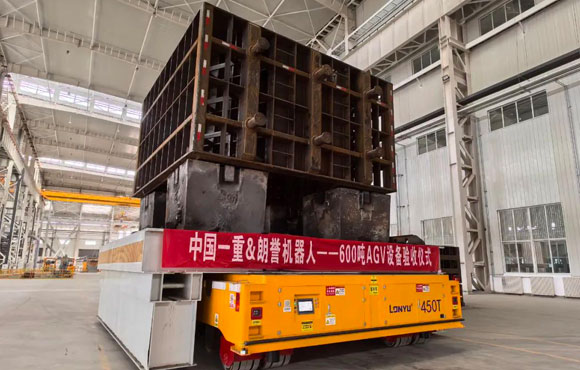
Factories often move heavy materials between workshops, storage areas, production lines, and assembly zones. Typical loads include molds, steel structures, machine bases, transformers, and other large components.
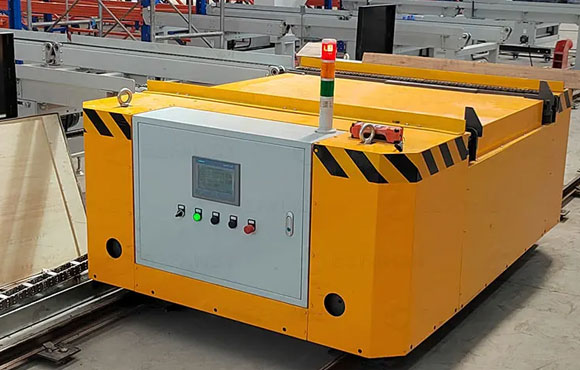
The right transport method depends on the factory layout. A rail transfer cart can work well when materials follow the same route every day. A fixed rail becomes less flexible when destinations change between jobs.
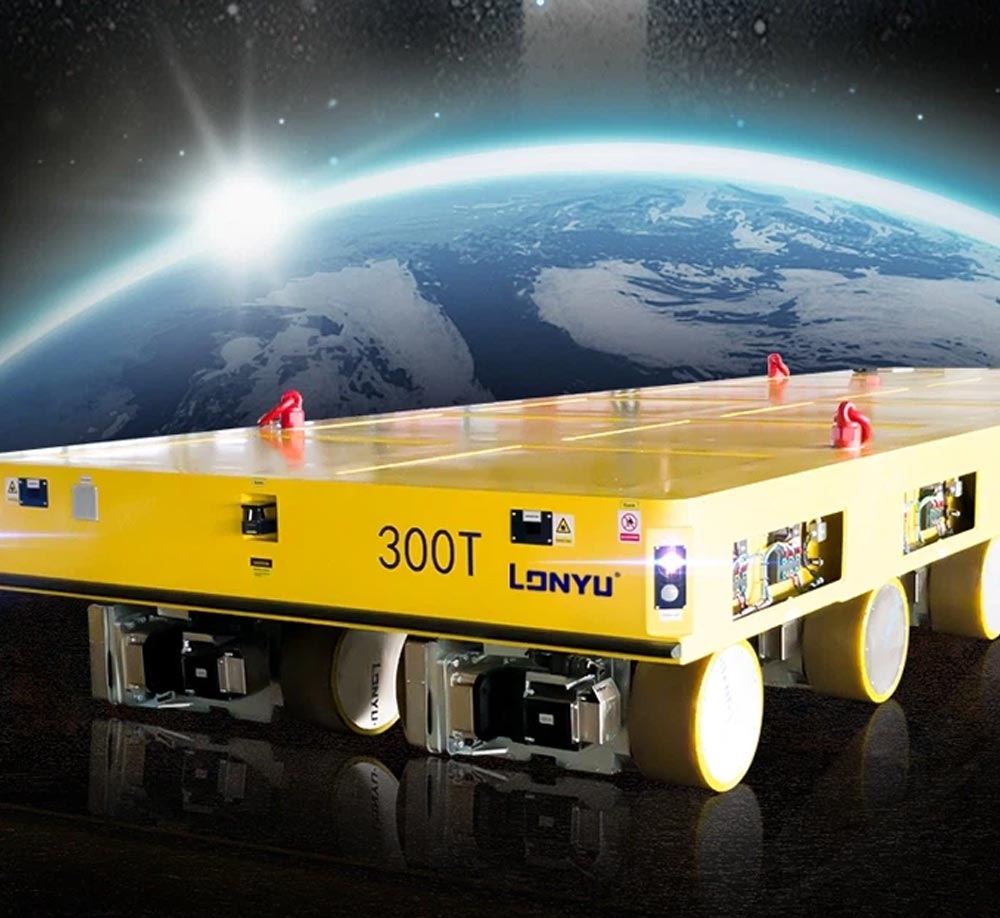
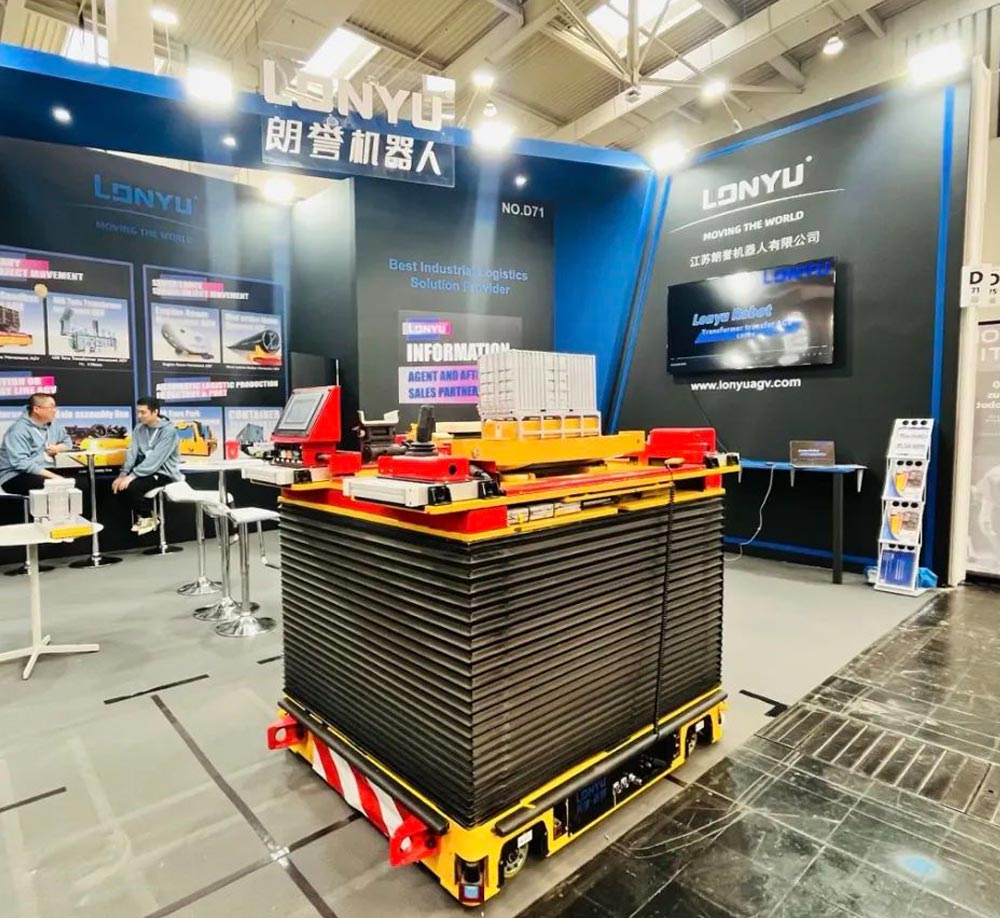
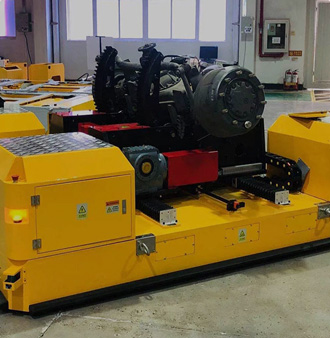
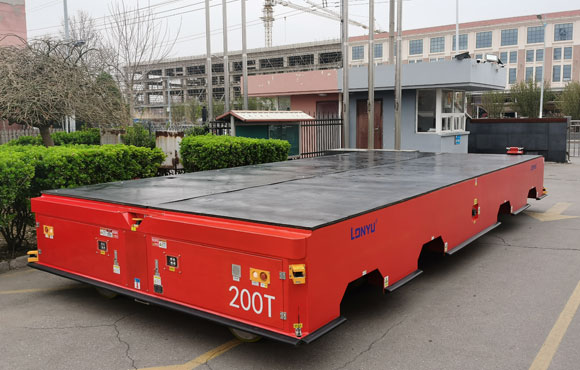
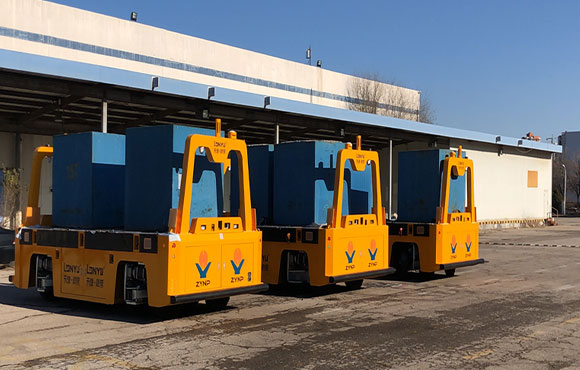
A trackless transfer cart does not depend on a fixed rail. It can travel between different work areas on a suitable factory floor. This makes it useful when one vehicle needs to serve several locations.
For a buyer, carrying capacity is only the starting point. The load, route, floor, working schedule, and control method all need to fit the actual operation.
When Is a Trackless Transfer Cart Suitable?
The first question is how materials move inside the factory. A changing route may favor a trackless design. Load shape and support points can also determine the platform size.
Choose a Trackless Design When Routes Change
Look at the normal movement of materials through the factory.
When materials travel between the same two points every day, a rail transfer cart can provide a clear and fixed route. This arrangement is practical when the production layout stays stable.
A different approach is needed when materials move between several workshops or storage areas. One trackless cart can serve different destinations without requiring a separate rail for each route.
For example, a mold may move from storage to a machining workshop and later to an assembly area. A machine base may also move between production zones as the manufacturing process changes.
When route flexibility matters more than repeated movement along one fixed path, a heavy duty transport cart can be a practical option.
Match the Platform to the Load Shape
Weight is only one part of the platform decision.
Two loads can both weigh 10 tons but need very different platforms. A compact machine base may fit on a smaller deck. A long steel structure may need more platform length even though the weight is the same.
Three measurements are especially useful:
- Load length and width
- Load height
- Distance between the main support points
The load should sit securely within the usable platform area. Long loads should not extend too far beyond the deck.
Weight distribution also affects the loading condition. A machine with most of its weight at one end puts a different load on the platform from a machine with a more even weight distribution.
For a heavy-duty transfer cart, the platform should match both the physical size of the load and the way it is supported.
How Should Load Capacity and Cart Dimensions Be Selected?
Once the transport method is clear, the next step is to match the vehicle to the load and route. Capacity determines the working load. Overall dimensions determine whether the vehicle can reach the required area.
Base Capacity on the Heaviest Regular Load
Use the heaviest load expected during normal operation as the starting point for capacity selection.
Suppose a factory usually handles 20–25 tons but also needs to move 30 tons as part of its regular work. The 30-ton requirement should guide the capacity decision because the cart needs to handle that load without operating beyond its rated limit.
The same principle applies when several types of loads are involved. Look at the highest normal working load rather than the average weight.
It is also better to avoid running at the rated limit on every trip. A practical margin can cover normal differences in load weight and working conditions.
The table below gives a simple reference for initial selection:
| Maximum Regular Load | Capacity Direction |
| Up to 10 T | Consider a 10 T class or higher cart based on the actual load and required margin |
| Around 20 T | Consider capacity above the normal 20 T working load |
| Around 30 T | Evaluate a 30 T class or higher model for the actual application |
| Around 60 T | Consider a 60 T class model when 60 T is the required working load |
Capacity should then be checked against the load distribution and support arrangement.
Size the Cart Around the Narrowest Part of the Route
A high-capacity cart is of little use if it cannot reach the loading or unloading area.
The narrowest doorway or passage is a good starting point. After that, check turning areas, loading positions, unloading points, and fixed equipment near the route.
Different site conditions create different priorities:
- Narrow doorway: Check vehicle width and the available side clearance.
- Tight turning area: Check the turning requirement before choosing a long platform.
- Restricted loading area: Make sure the cart can reach the loading point without interfering with nearby equipment.
- Loaded dimensions also matter. A cart may pass through a doorway when empty, while the load leaves too little clearance during actual operation.
How Do Floor Conditions and Slopes Affect Selection?
Route space is only part of the site assessment. The floor must support the total transport weight and provide a suitable surface for the vehicle.
Match the Cart to the Floor Capacity
The floor carries both the cart and its load.
For example, a cart carrying 30 tons does not place only 30 tons on the floor. The vehicle’s own weight must also be included when assessing the total load.
A sound concrete floor is generally more suitable for heavy internal transport. Cracks, damaged areas, large joints, and uneven sections can make operation more difficult.
The UK Health and Safety Executive (HSE) states that workplace traffic routes should be suitable for the vehicles using them. The surface should also be appropriate for the type of traffic.
A site inspection should focus on:
- Cracked or damaged concrete
- Large floor joints or height differences
- Areas with concentrated loads
- Uneven sections along the route
- Ramps and sloped areas
When the floor cannot support the total transport weight, a higher-capacity cart will not solve the problem. The floor condition must be addressed first.
Check Climbing Ability on Sloped Routes
A flat workshop floor and a sloped route create different operating conditions.
For mainly flat routes, climbing ability may have little effect on the final choice. A ramp changes the situation because the vehicle must maintain traction and control while carrying the load.
The actual slope should be considered together with the loaded condition. An unloaded climbing figure alone does not provide enough information for a heavy-load application.
For example, a short ramp may seem easy when the cart is empty. A heavy load can place much greater demands on traction and braking on the same slope.
How Should Speed, Battery, and Control Be Selected?
The vehicle also needs to fit the factory’s daily work cycle. Transport frequency affects the value of travel speed. Working hours affect battery demand. Route stability affects the control method.
Match Travel Speed to Transport Frequency
Travel speed matters more when the cart makes many trips each day.
For a short route with only a few trips per hour, top speed may have little effect on total output. Loading and unloading can take a large part of the cycle.
Frequent transport creates a different requirement. Travel time becomes a larger part of the daily workload, so even small time savings can become useful over many cycles.
Look at the complete cycle:
Loading → Travel → Unloading → Return
For example, saving a small amount of travel time has limited value when the cart makes only a few trips per day. The same saving becomes more meaningful when the cart completes dozens of cycles during a shift.
The practical target is a travel speed that fits the transport frequency and work area. The fastest available model is not always necessary.
Match Battery Capacity to Working Hours and Charging Time
Battery demand depends on the actual work pattern.
A cart that runs for two or three hours with regular charging opportunities has different requirements from one that operates continuously for several hours. Travel distance, transport frequency, and repeated starts and stops also affect energy use.
Four factors are useful when estimating battery needs:
- Daily operating hours
- Number of transport cycles
- Travel distance
- Available charging time
With regular charging periods, battery capacity can be considered together with the charging schedule.
For long or continuous operation, battery capacity becomes more important. The charging arrangement must also support the planned work cycle.
A battery powered transfer cart should have enough operating time for the actual transport schedule. A larger battery is not automatically necessary when the cart works for only a short period each day.
Use Manual Remote Control When Destinations Change
Control method should follow the transport pattern.
Manual remote control can be useful when destinations change from one job to another. The operator can control the vehicle according to the current loading or unloading point.
For example, one cart may move steel components to different workshops during the same shift. Later, it may carry machine parts to an assembly area. Manual control allows the operator to adjust the route for each task.
Automatic navigation serves a different purpose. It can be useful when pickup points, delivery points, and travel paths remain stable. The same transport cycle should also be repeated often enough to justify the automation.
ISO 3691-4:2023 distinguishes driverless industrial trucks from vehicles operated only by remote control. The control method should reflect the actual transport pattern rather than being selected simply because one technology appears more advanced.
Why Choose the Lonyu 60-Ton Trackless Transfer Cart?
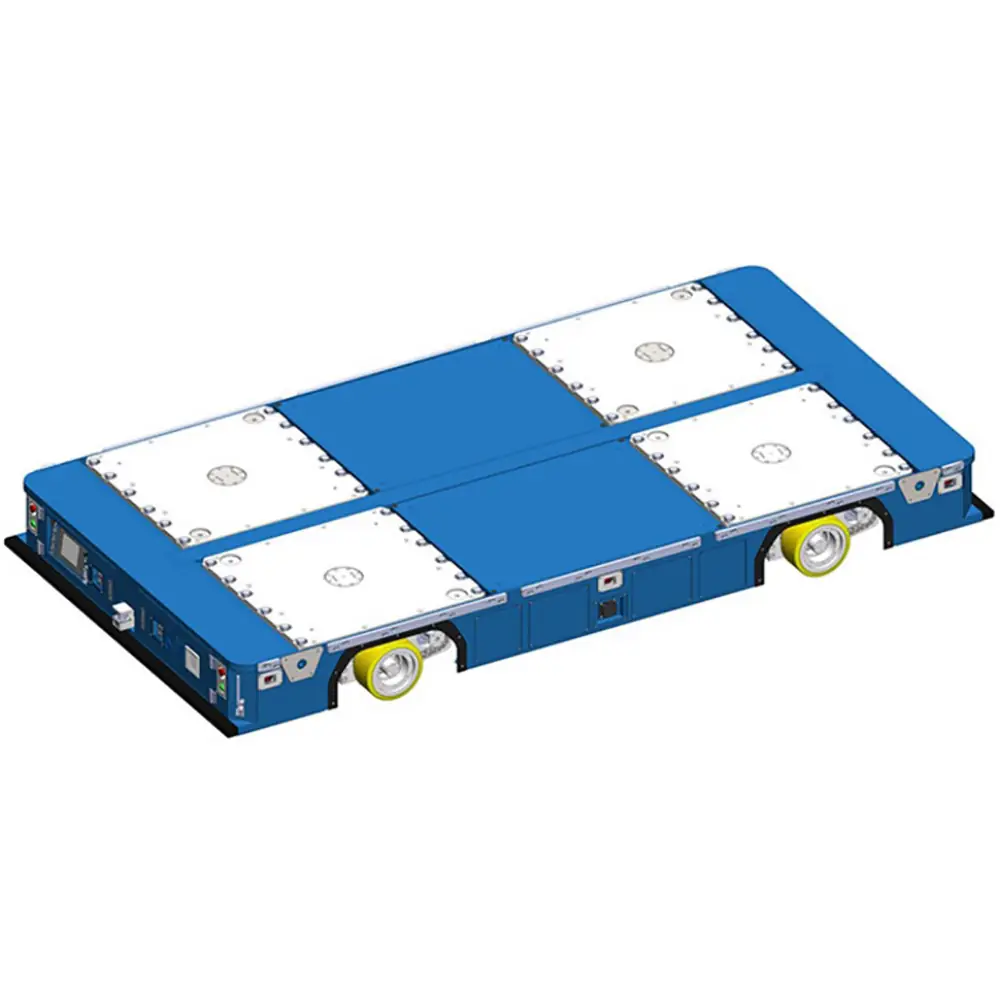
Once the load, route, floor, and work cycle are defined, these requirements can be compared with a specific model. The Lonyu 60-ton model combines several functions for heavy internal material transport.
Lonyu provides heavy-duty material handling equipment for industrial applications. The 60-ton model is designed to move large and heavy materials inside factories, storage areas, assembly zones, and heavy equipment manufacturing facilities.
| Parameter | Product Data |
| Rated Load | 60 T |
| Overall Size | 4100 × 2100 × 420 mm |
| Lifting Stroke | 100 mm |
| Travel Speed | 30 m/min |
| Battery | Lithium iron phosphate battery, 3 hours |
Hydraulic Suspension Supports Heavy Loads
The Lonyu cart uses hydraulic suspension with four-wheel drive and an eight-wheel configuration.
This combination supports heavy internal transport. It can be used for loads such as steel structures, machine bases, molds, and other large components.
Lifting Function Helps with Loading and Positioning
The cart has a hydraulic lifting function with a 100 mm lifting stroke.
During loading or positioning, the platform can make a small height adjustment. This can help align the cart with a loading position. It can also assist when the load needs to be positioned accurately.
The lifting function is intended to support transport and positioning. It does not replace an independent lifting machine.
Remote Control Supports Changing Work Locations
The Lonyu model uses manual remote control rather than automatic navigation.
This control method allows the operator to guide the vehicle during each transport task. It is useful when one cart serves several work areas.
The cart also includes laser obstacle detection, contact anti-collision, sound and light alarms, and an emergency stop function. These features provide additional control during internal transport.
Designed for Cross-Workshop Material Movement
The cart can be used to move large components between different areas of an industrial facility.
Typical routes may connect workshops, production lines, storage areas, and assembly zones. This makes the model suitable for factories where transport destinations change according to production tasks.
Instead of serving one fixed route, the same vehicle can support several internal transport jobs.
Frequently Asked Questions
The following questions cover the main product details. They also address common points that buyers may need to clarify when planning heavy internal material transport.
What is the rated capacity of the Lonyu trackless transfer cart?
The Lonyu model discussed in this article has a rated load of 60 tons. The actual application should also consider load dimensions, weight distribution, support points, and route conditions.
Does the Lonyu transfer cart use automatic navigation?
No. This model uses manual remote control rather than automatic navigation. The operator controls the vehicle during transport.
What safety features are included on the Lonyu transfer cart?
The cart includes laser obstacle detection, contact anti-collision, sound and light alarms, and an emergency stop function.
What is an industrial transfer cart used for?
An industrial transfer cart is used to move heavy materials between different areas inside a facility. Common applications include workshops, warehouses, production areas, assembly zones, and equipment manufacturing sites.
How should the capacity of a transfer cart be selected?
Start with the heaviest regular load rather than the average load. Then consider load dimensions, weight distribution, support points, floor capacity, and route conditions. Leave a practical margin for normal changes in working conditions.
Conclusion
Heavy material transport is closely linked to the way materials move through a factory. The vehicle needs enough capacity for the load. It must also reach the loading point and complete the planned transport cycle.
The Lonyu 60-ton model combines hydraulic suspension, lifting, four-wheel drive, and manual remote control in one transport platform. This configuration suits factories that move large components between different internal work areas.
Every factory has different transport conditions. A platform that works for one load may not suit another. Capacity, dimensions, and control method may all need to change with the application.
If you are looking for a reliable trackless transfer cart supplier, feel free to contact Lonyu for product options, specifications, and quotations based on your load capacity, transport routes, working conditions, and purchasing needs.