

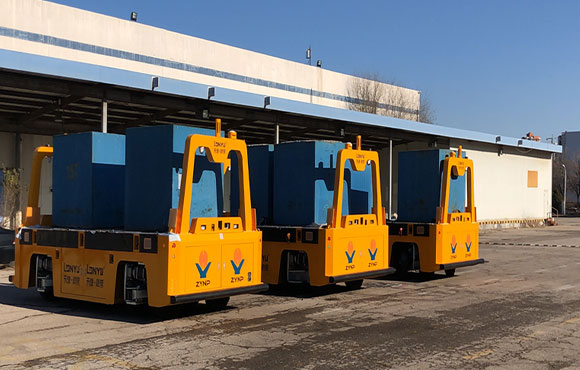
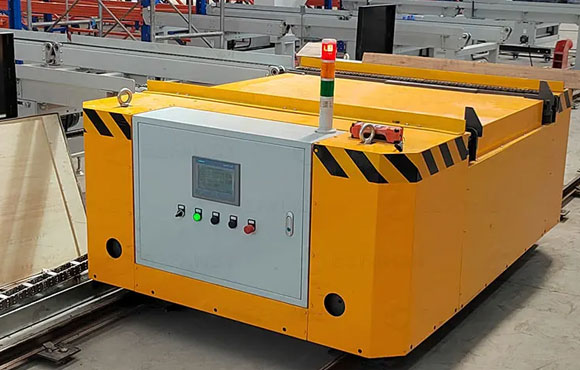
Warehouse operations across the globe are undergoing a seismic shift, with Automated Guided Vehicle (AGV) robots emerging as the cornerstone of intelligent logistics. From small-scale material handling to heavy industrial transportation, AGV robot systems redefine the efficiency, safety, and scalability of warehouse management. Behind this transformation lies the innovation of professional AGV manufacturers and the evolution of equipment like the industrial transfer cart, which together address the core pain points of traditional manual and semi-automated logistics. According to the data of Interact Analysis, a leading global industrial research firm, it is predicted that from 2025 to 2030, the global AGV market will increase by 18.2% CAGR, and warehouse applications will account for 65% of total demand. The average material handling time of warehouses using AGV robot systems will be reduced by 40-60%, and the labor cost will be reduced by 35%. This article delves into the reasons for AGV’s dominance in warehouse floors, unpacks the core value of AGV manufacturer and industrial transfer cart innovations, and provides a comprehensive guide to AGV application and selection.
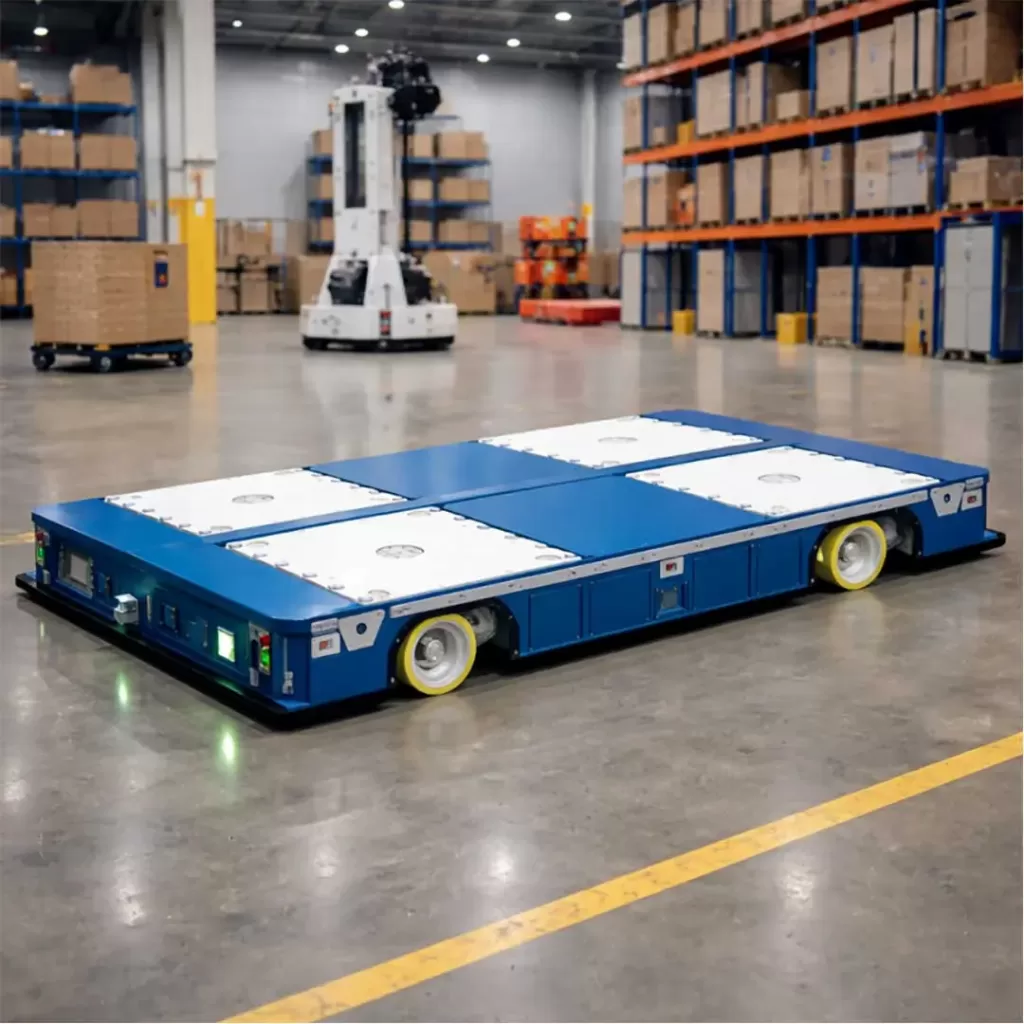
What Are AGV Robots and Their Core Components?
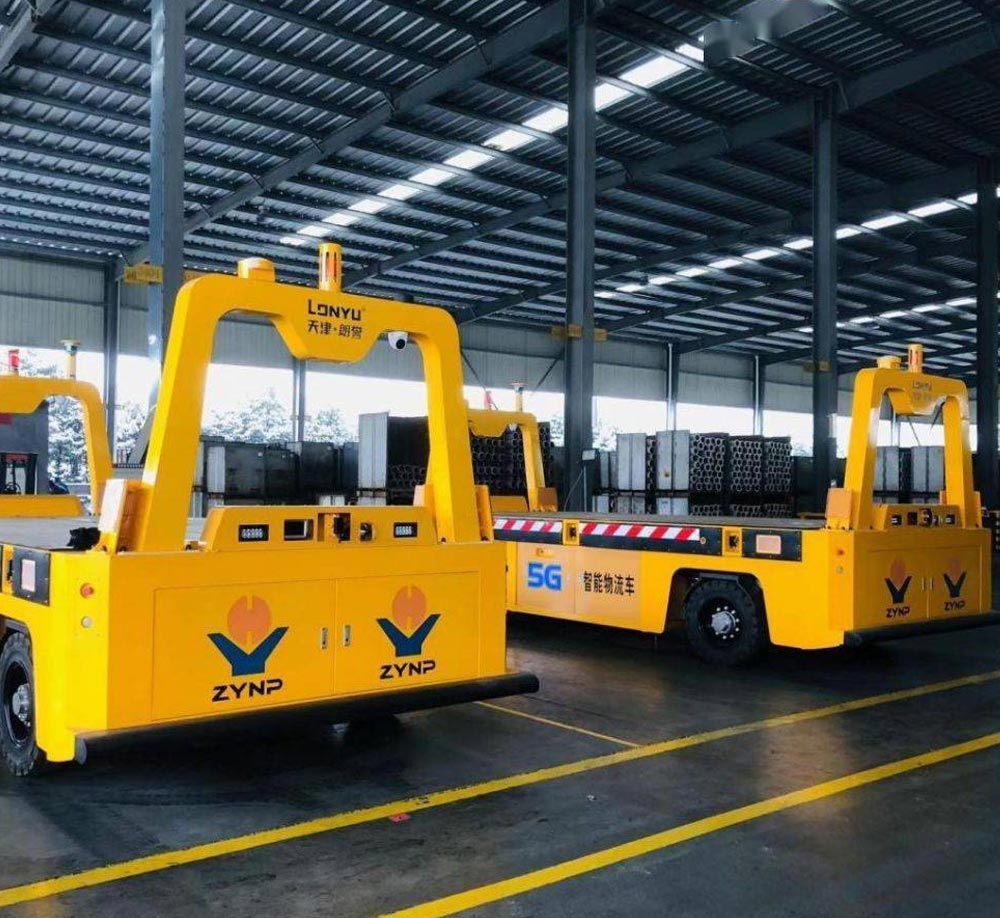
AGVs are autonomous, computer-controlled vehicles that navigate warehouses, distribution centers, and industrial facilities without human intervention, using navigation technologies such as laser SLAM, QR code, magnetic stripe, and GNSS. A complete AGV system is not a single device, but a whole solution, which consists of three core parts: the hardware main body (including industrial transport vehicle, driving modules and sensors), the control system (navigation, dispatching and safety modules) and the management platform (AGVS intelligent operation and maintenance system).
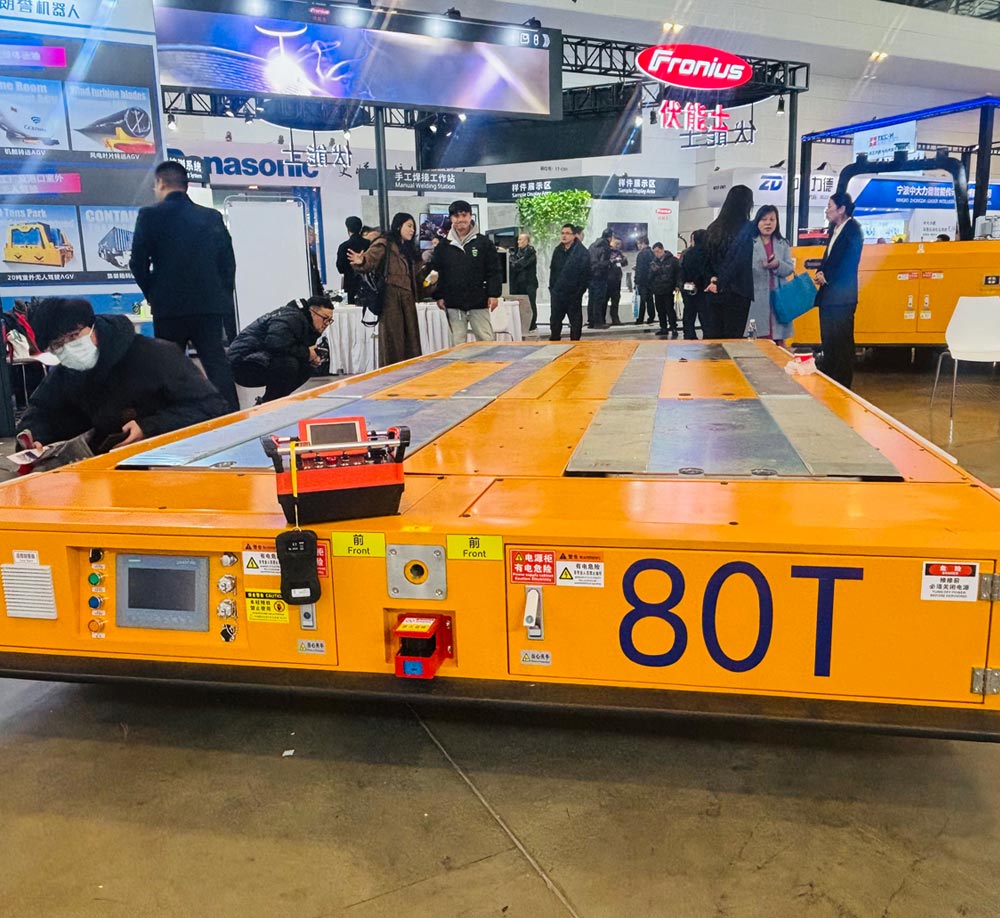
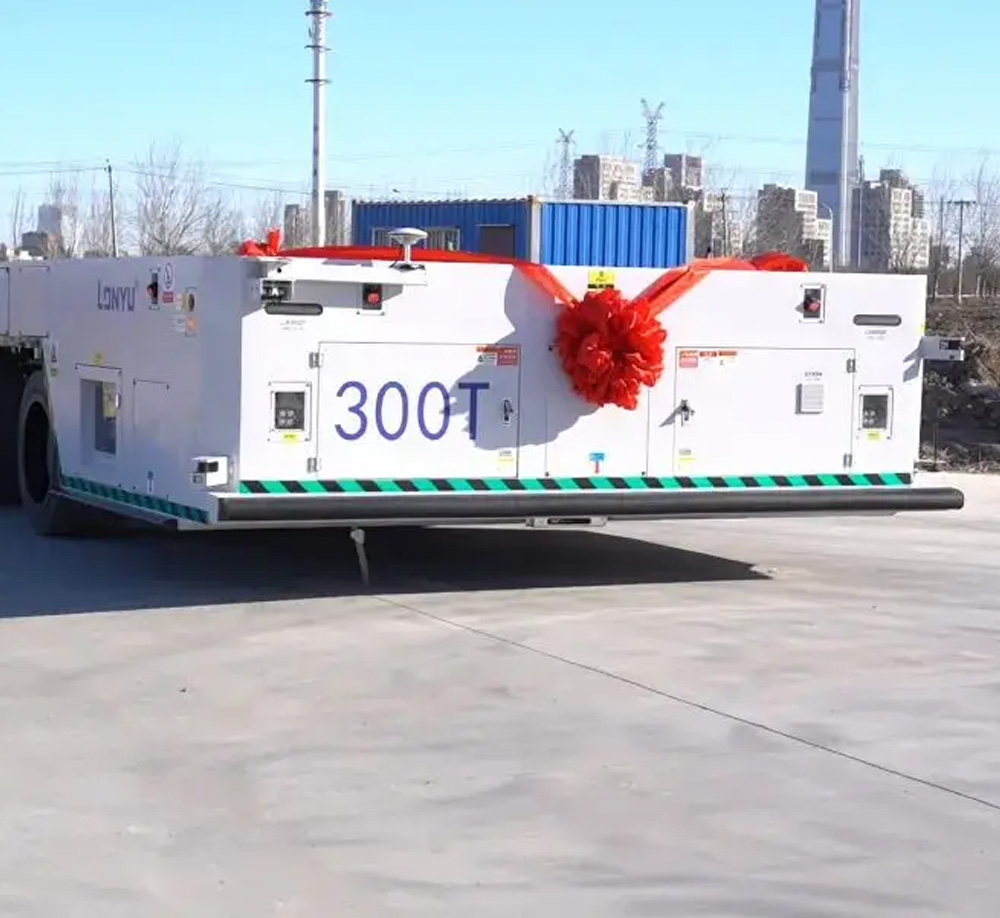
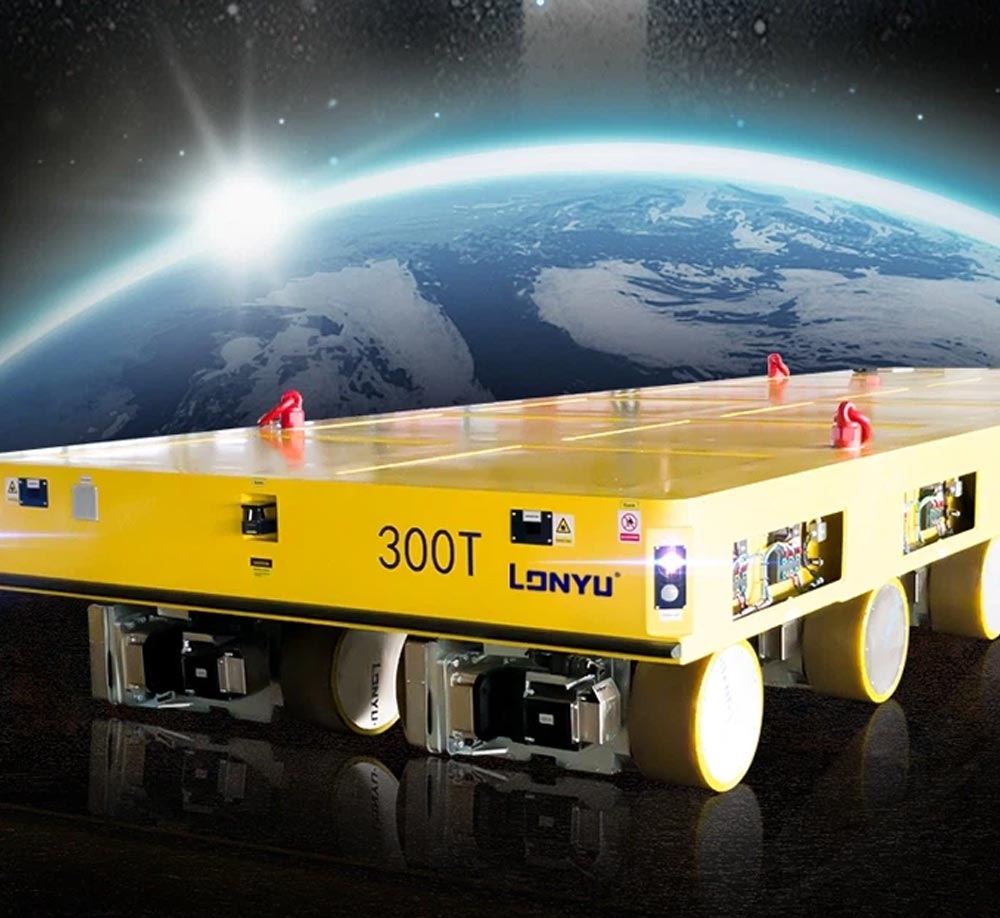
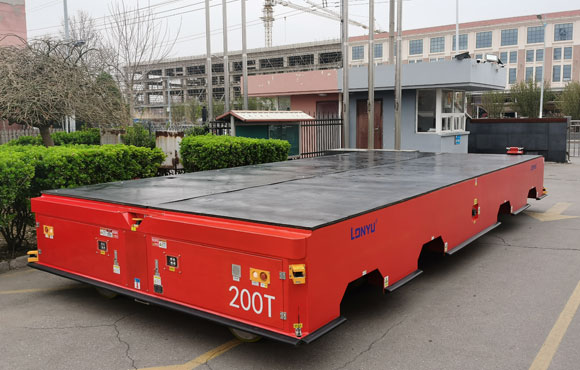
Professional AGV manufacturers design AGVs suitable for all kinds of scenes, from light AGVs with a load of 500 kg for small parts handling to heavy industrial transfer carts with a load of 1000 tons for large-scale industrial logistics. Take the ultra-low electric flat industrial transfer cart as an example-its core components include a frame, driving wheel modules, hydraulic suspension systems, lithium battery packs, lidar sensors and main control unit. The frame adopts a skeleton structure with precision welding and X-ray flaw detection, which can ensure the structural stability even under the rated load of 1.1 times, and the hydraulic suspension system can realize uniform lifting and load balance, which is a key innovation made by leading AGV manufacturer to adapt to complex warehouse ground conditions.
5 Key Steps to Implement AGV Robot Systems in Warehouses
The realization of AGV robot systems is a systematic project, which needs accurate planning and step-by-step implementation. The standardization process summarized from best practices of top AGV manufacturers includes the following five steps.
- Scenario analysis and demand customization: Conduct a comprehensive investigation on warehouse layout, material types, loading capacity and handling paths to determine the type of AGV (e.g., industrial conveyor for heavy loads, fork AGV for pallet handling) and the required number of units. For heavy industrial warehouses, a multi-drive industrial transport vehicles equipped with 4-20 drive units are the best choice.
- Navigation scheme design: Choose the appropriate navigation technology according to the warehouse environment-laser SLAM is suitable for flexible layouts without infrastructure, QR code or magnetic stripe navigation is suitable for fixed path and high-frequency handling scenes, and GNSS+ inertial navigation is suitable for outdoor-indoor integrated warehouses.
- System Integration & Debugging: Integrate AGV hardware with AGV robot systems (including scheduling, safety, and battery management modules), and conduct on-site debugging to test functions such as path planning, obstacle avoidance, and cluster scheduling. Key debugging indicators include navigation accuracy (10 mm), obstacle avoidance response time (60-120 ms) and cooperation efficiency of multiple AGVs.
- Staff training and trial Operation: Training warehouse operators and maintenance personnel on AGV operation, routine inspection and basic fault handling. A 1–2 week trial operation should be conducted. Based on actual operational data (such as waiting time and route efficiency), path planning can be adjusted accordingly.
- Official operation & Continuous Optimization: Launch full-scale AGV operation and connect the AGV robot systems to the warehouse’s MES/ERP system for data interconnection. Using the big data analysis function of the AGVS management platform, the operation parameters can be monitored in real time, and the dispatching strategies and maintenance plans can be continuously optimized.
Core Advantages of AGV Robots: Why They Have Replaced Traditional Handling Methods
1. Unparalleled efficiency and scalability
Traditional manual handling relies on manpower and forklifts, which is inefficient and has limited expansibility-labor productivity is easily affected by fatigue, and forklift operation is limited by space and personnel skills. In contrast, the AGV robot system can run 24/7 without interruption, with an average operating efficiency of 95% or more. Multi-drive collaborative industrial transfer carts can carry a variety of materials at the same time. AGVS intelligent scheduling system realizes dynamic path planning and cluster scheduling of multiple AGVs, avoiding “traffic jams” and ensuring optimal flow of materials. According to the actual case, a warehouse equipped with 20 AGVs can replace 50-80 manual porters, and the efficiency of order fulfillment is improved by more than 3 times.
2. Excellent safety and stability
Safety is the most important thing in warehouse operations. AGV manufacturers have built a variety of safety protection measures in AGV to eliminate the risk of human error. Standard safety functions include non-contact laser obstacle avoidance (detection angle 0-270°, maximum distance 4 meters), contact anti-collision rubber strips, audible and visual alarms and emergency stop buttons. The hydraulic suspension system of the industrial transfer cart ensures uniform load distribution, and each wheel bearing the same ground pressure, even on uneven ground or 5-degree slopes, it can prevent rollover and material damage. In addition, AGV is equipped with electrostatic discharge devices and BMS battery monitoring systems to monitor voltage, current and remaining power in real time, thus avoiding potential safety hazards such as electrostatic sparks and battery over-discharge.
3. Cost Reduction and Long-Term ROI
Although the initial investment in AGV robot systems is higher than that of the traditional handling equipment, the long-term return on investment (ROI) is remarkable. The lithium batteries used in AGVs have a cycle life of more than 2500 times and a service life of more than 5 years, and its monthly self-discharge rate is only 2%, which is far lower than that of the traditional nickel-cadmium batteries. Auto-charging technology enables AGV to charge itself when the power is low, and it is unnecessary to replace the battery manually, thus improving equipment utilization rate. Most warehouses will recover AGV investment within 2-3 years, and the total operating cost will be reduced by 20-30% every year after full operation. For heavy-duty logistics scenes, the industrial transfer carts can replace large cranes and forklifts, reducing equipment maintenance costs by 40% or more.
4. Adaptability to complex and diverse scenarios
Leading AGV manufacturers design AGV with strong adaptability to the environment to meet the needs of different warehouses. The loading surface of ultra-low industrial transfer cart is as low as 400 mm, and a lifting range is 100 mm. It can carry heavy material without overhead crane, which is very suitable for low-altitude warehouse environment. AGV with a constant temperature system can work normally at-30 degrees Celsius, which is suitable for refrigeration and polar logistics. In addition, AGV can realize omni-directional motion (straight line, lateral direction, turning and in-situ rotation) through differential drive wheel systems, and adapt to narrow warehouse spaces and complex handling paths. When crossing bumps or ditches, the hydraulic leveling system will automatically adjust the height of each driving unit to ensure the stability of loading surface and the safety of materials.
Key Indicators for Selecting AGV manufacturers and Industrial Transport Vehicles
Selecting the right AGV manufacturer and industrial transport vehicle is the key to the success of warehouse automation. According to industry standards and practical experience, the following key indicators can help enterprises make wise decisions.
| Evaluation Dimension | Core Indicators | Excellent Standard |
| Manufacturer Strength | Qualifications, R&D capability, project cases | National high-tech enterprise, leader in heavy-duty AGV standards, over 100 successful cases in the same industry |
| Product Performance | Load capacity, navigation accuracy, ground adaptability | Customizable load capacity (3-1000 tons), navigation accuracy ±10mm, ability to climb 5 degrees and cross 50mm trenches |
| Safety Protection | Safety measures, certification | 4+ safety protection measures, UL certification, ISO quality management system certification |
| After-Sales Service | Technical support, maintenance cycle, spare parts supply | 24/7 on-site technical support, maintenance cycle ≤4 hours, nationwide spare parts warehouse |
| System Compatibility | Integration with MES/ERP, scalability | Seamless connection with mainstream enterprise management systems, support for multi-AGV cluster scheduling and capacity expansion |
A professional AGV manufacturer not only provide high-quality industrial delivery vehicles and AGV hardware, but also provide one-stop solutions, including scene design, system integration and after-sales service. For example, leading manufacturers provide finite element analysis report of AGV frames and mechanical simulation data of driving parts to ensure that products meet the practical requirements in structural strength and deformation control.
FAQ about AGV Robots in Warehouse Operations
Q1: Can AGV robot systems be used in small and medium-sized warehouses with limited space?
A: Yes. AGV manufacturers design compact AGV and industrial transfer carts for small and medium-sized warehouses, with a minimum turning radius of 0 (in-situ rotation), which has omni-directional mobility and adapts to narrow spaces of 1.5-2 meters. Laser SLAM navigation technology eliminates the need for ground infrastructure such as magnetic strips and QR codes, reduces the reconstruction costs and realizes flexible layout adjustments.
Q2: How to solve the problem of AGV working on uneven warehouse floor?
A: The hydraulic suspension and independent drive system of the industrial transfer cart are the core solutions. The hydraulic suspension system automatically adjusts the travel of each driving unit according to the ground condition to ensure that each wheel is in contact with the ground and the load surface is horizontal. The independent drive system makes each wheel have independent power and speed control, which can adapt to uneven ground and small height differences (≤ 50 mm) without affecting handling stability.
Q3: What is the difference between heavy-duty industrial transfer trolley and ordinary AGV?
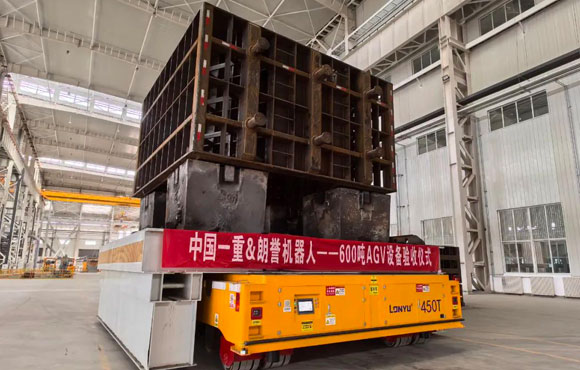
A: The heavy industrial transfer cart is specially designed for heavy-load (≥ 10 tons) industrial logistics scenes. It adopts reinforced frame structure, multi-drive coordination (4-20 drive units) and a hydraulic suspension system to realize load balance. Ordinary AGV is mainly used for medium and light load (≤ 5 tons) material handling, which has simpler structure and lower cost. A professional AGV manufacturer will customize the appropriate AGV type according to the load capacity and handling needs of the enterprise.
Q4: How to ensure the data security and system stability of AGV robot systems?
A: Leading AGV manufacturers have built multiple security barriers for AGV robot systems, including data encryption transmission (WiFi/5 g), dual-machine hot standby of dispatching system, real-time fault alarm, etc. AGVS management platform has functions of task log tracing, real-time monitoring and so on, which can record all operational data and realize rapid fault location and handling. In addition, the system supports offline operation mode, which ensures that AGV can complete basic handling tasks even in the case of a network failure.
Q5: What is the maintenance cycle and cost of AGV robots?
A: The daily maintenance of AGVs is simple, mainly including cleaning sensors, checking battery status and lubricating the driving parts. The daily maintenance time does not exceed 30 minutes. The major maintenance period is 6-12 months, which mainly includes the replacement of wearing parts (e.g., anti-collision rubber strips, wheels) and calibrating navigation systems. The annual maintenance cost is about 5-8% of the purchase cost of AGV, which is much lower than the maintenance cost of traditional forklifts and cranes. Professional AGV manufacturers provide free maintenance training and long-term supply of spare parts, which further reduces maintenance costs.
Conclusion
The rapid popularization of AGV robots on warehouse floors is not an accidental trend, but the result of technical innovation, market demand and cost-effectiveness. AGV manufacturers continue to optimize product performance and expand application scenarios. The industrial transport vehicle has evolved from a single handling tool to a core component of AGV robot systems, and the whole system is developing towards higher intelligence, stronger adaptability and better expansibility. With the acceleration of digitalization and intelligence of global supply chain, AGV robots will not only take over more warehouse floors, but also become the core link connecting factory production, warehouse storage and logistics distribution, and build a seamless intelligent logistics system for enterprises.
For enterprises seeking to change the warehouse operations, the key is to select professional AGV manufacturer who can provide customized solutions, and choose appropriate industrial transfer carts and AGV robot systems according to their actual scenarios and needs. With appropriate AGV solution, enterprises can not only improve warehouse efficiency and reduce costs, but also gain a competitive advantage in the fierce market competition, laying a solid foundation for sustainable development.