Introduction
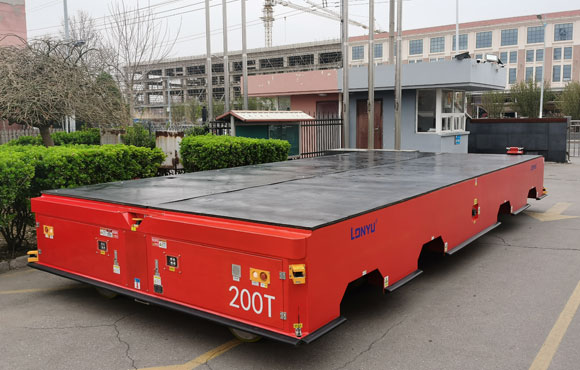
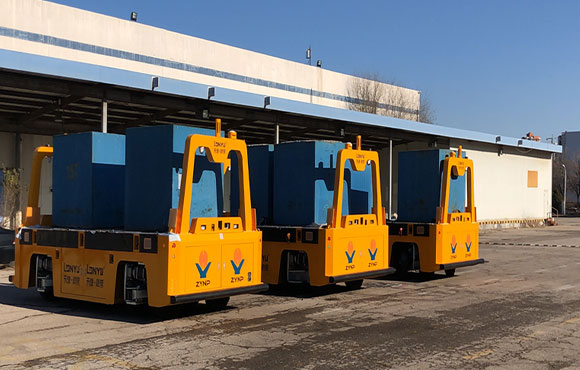
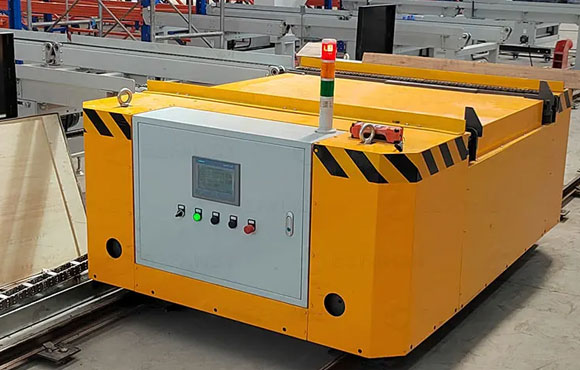
This paper focuses on the field application of heavy-duty AGVs in the metallurgical industry, elaborating on their definitions, technical advantages, specifications, application scenarios, implementation processes, and practical benefits. It aims to provide authoritative and feasible guidance for metallurgical enterprises seeking to upgrade their internal heavy-duty material handling systems by using the automatic guided vehicle technology.
1. What is an Automated Guided Vehicle (AGV)?
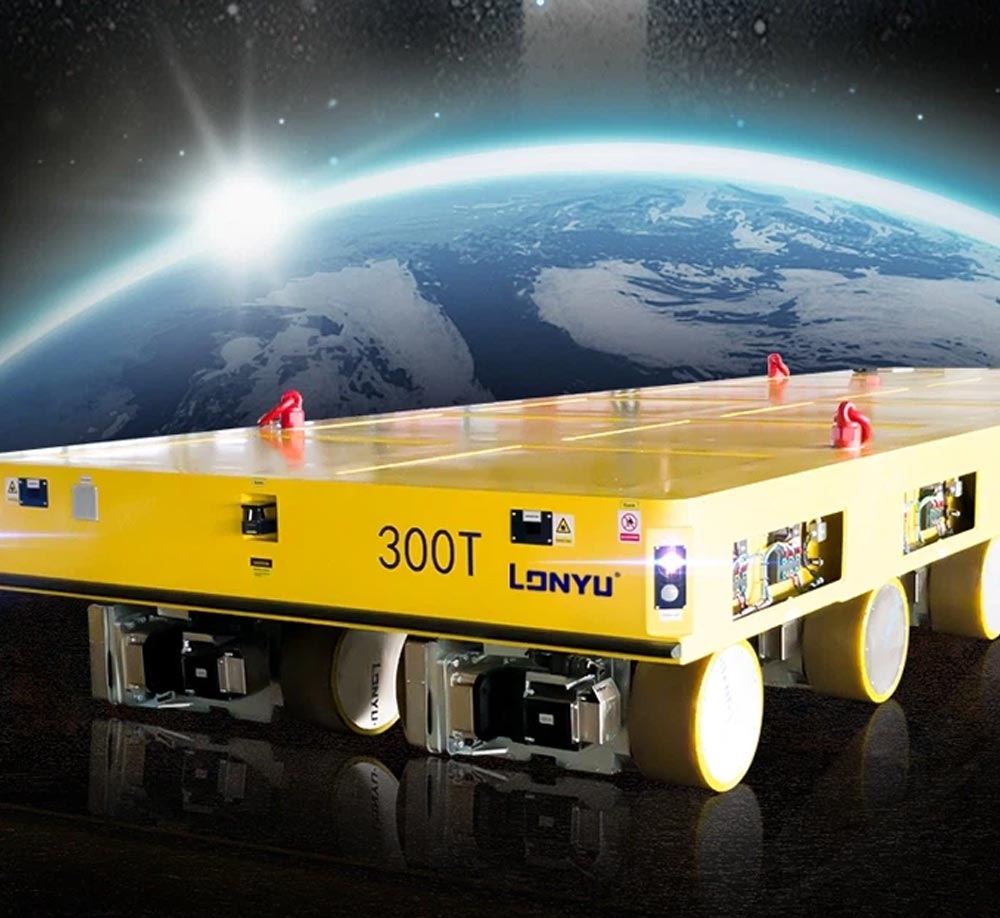
An Automatic Guided Vehicle (AGV) is a kind of battery-powered and unmanned material handling equipment that automatically transports goods along predefined or dynamically generated paths without manual intervention. In metallurgy, heavy-duty AGVs (also called heavy-load AGVs) are engineered to carry heavy loads from tens to hundreds of tons, operating reliably in extreme environments such as high temperature, dust, electromagnetic interference, and uneven floors.
2. Core Pain Points of The Metallurgical Factory Environment
Metallurgical sites are far worse than standard warehouses, which brings unique challenges to the material handling equipment.
- Extreme Heavy Loads: Steel coils, hot billets, and molds weigh 20–100 tons, requiring heavy-duty transfer carts with high structural strength.
- Harsh Floors: Severe unevenness, potholes, and slopes cause cargo to tilt or slippage on ordinary AGV vehicles.
- High Temperature & dust: Hot billets reach 600–800°C, while dust and strong electromagnetic fields damage standard electronics.
- Narrow & Dense Layouts: Old plants have tight aisles, crisscrossing cranes, and no space for rail or magnetic tape installation.
- Safety Risks: Manual handling of hot and heavy materials often leads to burns, squeezing and falling accidents.
3. Unique Technical Advantages of Heavy-Duty AGV for Metallurgy
Different from standard warehouse AGV, metallurgical heavy-duty AGV has five core innovations, which are designed for extreme conditions.
3.1 High-Strength Alloy Steel Frame
- Structure: welded alloy steel chassis, deformation resistance, impact resistance, and no cracking under long-term heavy-load transportation.
- Advantages: the structural integrity is maintained under the loads of 50-100 tons, and the common frame distortion of the ordinary AGV robots is avoided.
3.2 Adaptive Floating Suspension & Self-Leveling Wheels
- System: Multi-group independent balance suspension+adaptive floating wheel sets.
- Performance: automatically adapts to potholes, slopes and land subsidence; Keeps the levelness of the platform within ±2mm; prevents the goods from tilting or splashing.
3.3 Industrial-Grade Electrical Control (IP 55)
- Components: Siemens/Schneider Electric Appliances, high temperature resistance, dustproof and anti-electromagnetic interference.
- Protection: IP 55 protection shell, completely dustproof, waterproof and oil resistant.
- Stability: There is no signal loss, no emergency stop errors, and no system collapse in strong magnetic fields.
3.4 Laser Natural Navigation (no guide rail, no tape)
- Mode: laser SLAM+ two-dimensional code mixed positioning, old factory building, zero civil engineering.
- Precision: ± 5 mm accuracy, perfect for roller line docking and automated loading/unloading.
- Maneuverability: Differential drive, 360 ° in-place rotation, works in 2.5 m narrow aisles.
3.5 Multi-Redundant Safety System
- Layers: 360 ° laser obstacle avoidance+mechanical bumper+sound-light alarm+emergency stop+zone speed limit.
- Logic: Automatically decelerate → stop → alarm when detecting personnel, cranes, or obstacles; There is no need for human intervention.
4. Heavy-Duty AGV Technical Specifications (Metallurgical Standard)
The following table lists typical parameters of metallurgical heavy-duty automatic guided cars.
| Parameter | Standard Metallurgical Heavy-Load AGV |
| Rated Load | 20–100 tons (customizable) |
| Travel Speed | 0.5–20 m/min (adjustable) |
| Positioning Accuracy | ±5mm (laser navigation) |
| Navigation Mode | Laser SLAM (no rail / no tape) |
| Battery | Lithium iron phosphate (2–4h fast charge) |
| Operating Time | 7×24h continuous (with auto charging) |
| Protection Class | IP55 (dust / water / oil resistant) |
| Operating Temperature | -20°C ~ +60°C (with heat shield for hot zones) |
| Turning Radius | 0m (in-place rotation) |
| Safety Sensors | 360° laser scanner + mechanical bumper |
5. Typical application scenarios of metallurgy.
5.1 Hot/cold Steel Coil Transportation
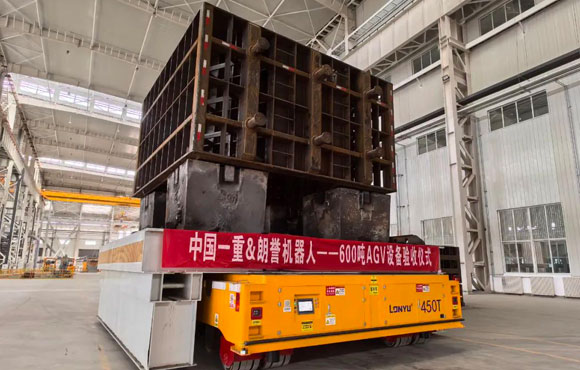
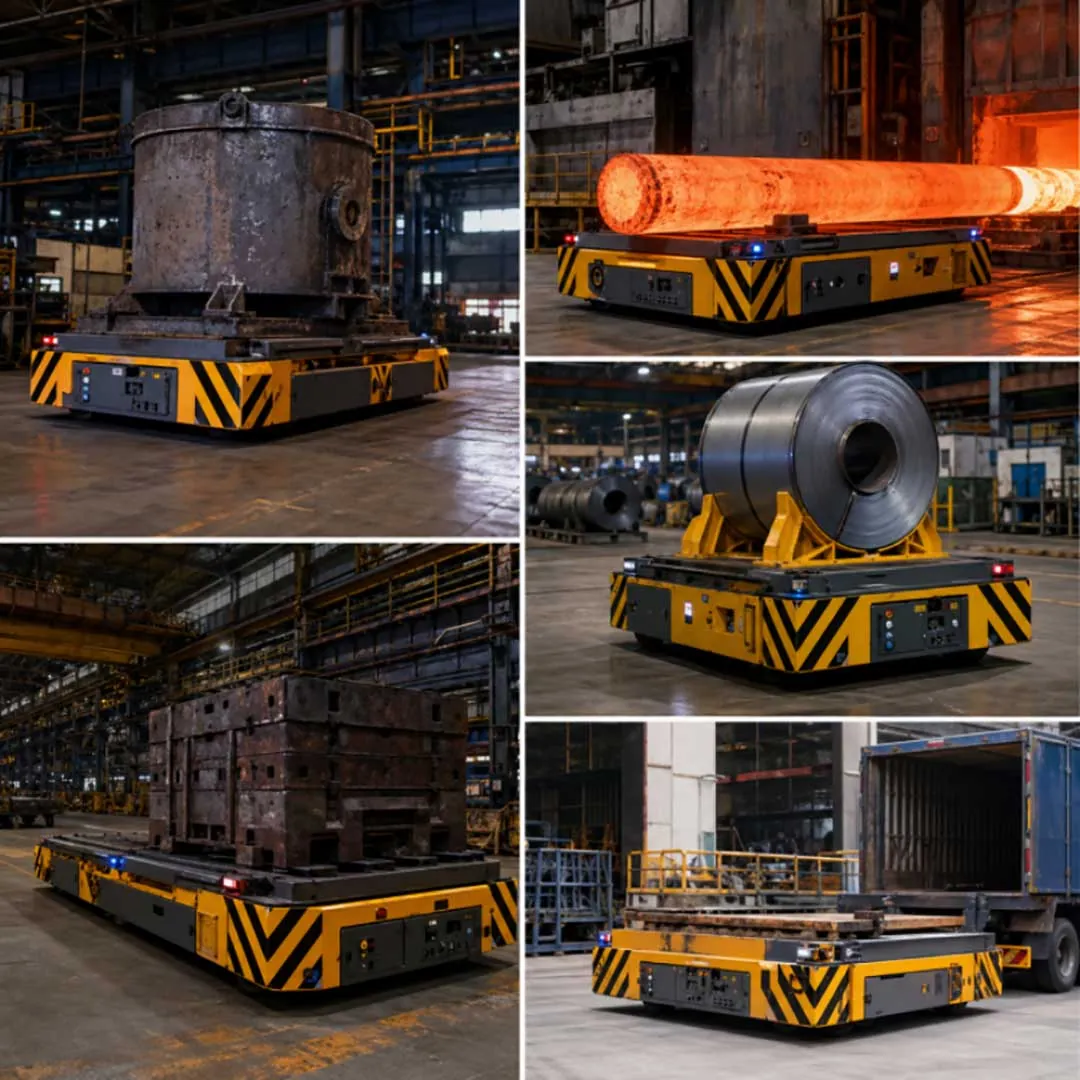
Lonyu Robot’s heavy-duty AGV with an anti-slip coil bracket is widely used for hot and cold coil handling. Models such as the 30-ton knapsack crane, AGV and trackless transfer vehicle provide stable support for coils during long-distance transportation and automatically complete unloading, warehouse delivery and automatic storage. These battery-powered trackless units have replaced manual forklifts, and closed-loop unmanned transportation between rolling lines and finished product areas has been realized.
5.2 High-temperature Billet Transfer
For high-temperature billet treatment, Lonyu’s heat-insulated heavy AGV and outdoor unmanned AGV are equipped with heat insulation boards and high-temperature resistant coatings to protect core electrical components. They safely transport hot steel billets at 600-800°c between heating zones and rolling zones, so as to minimize manual exposure to extremely high temperatures, and at the same time keep stable operation in dusty and high radiation metallurgical workshops.
5.3 Heavy Mold & Tooling Transport
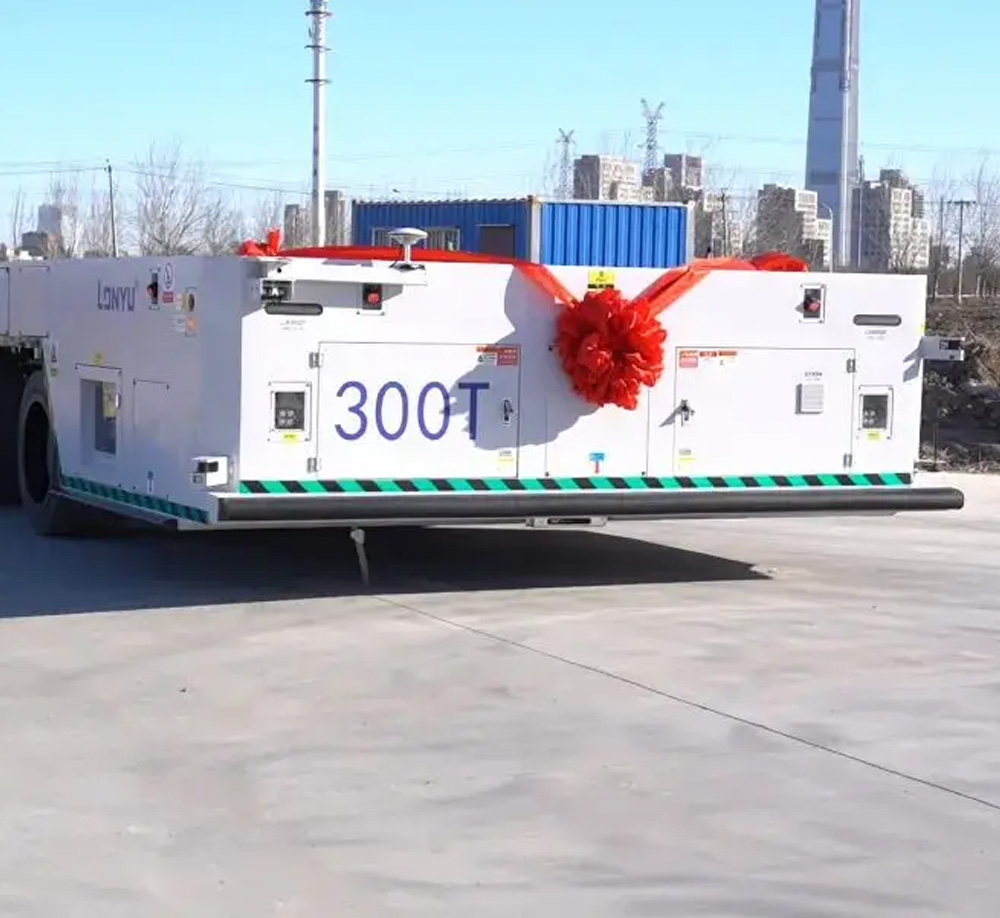
Lonyu’s industrial transfer cart and heavy-duty AGV series (including 30-ton double-vehicle linkage models and 60 ‑ ton trackless transfer carts) deliver ± 5 mm positioning accuracy for seamless docking with maintenance and assembly stations. With a solid chassis and omnidirectional maneuverability, they can move heavy molds and large tools between workshops without occupying crane resources, which greatly improves the efficiency of workshop scheduling.
5.4 Raw Materials and Auxiliary Supplies
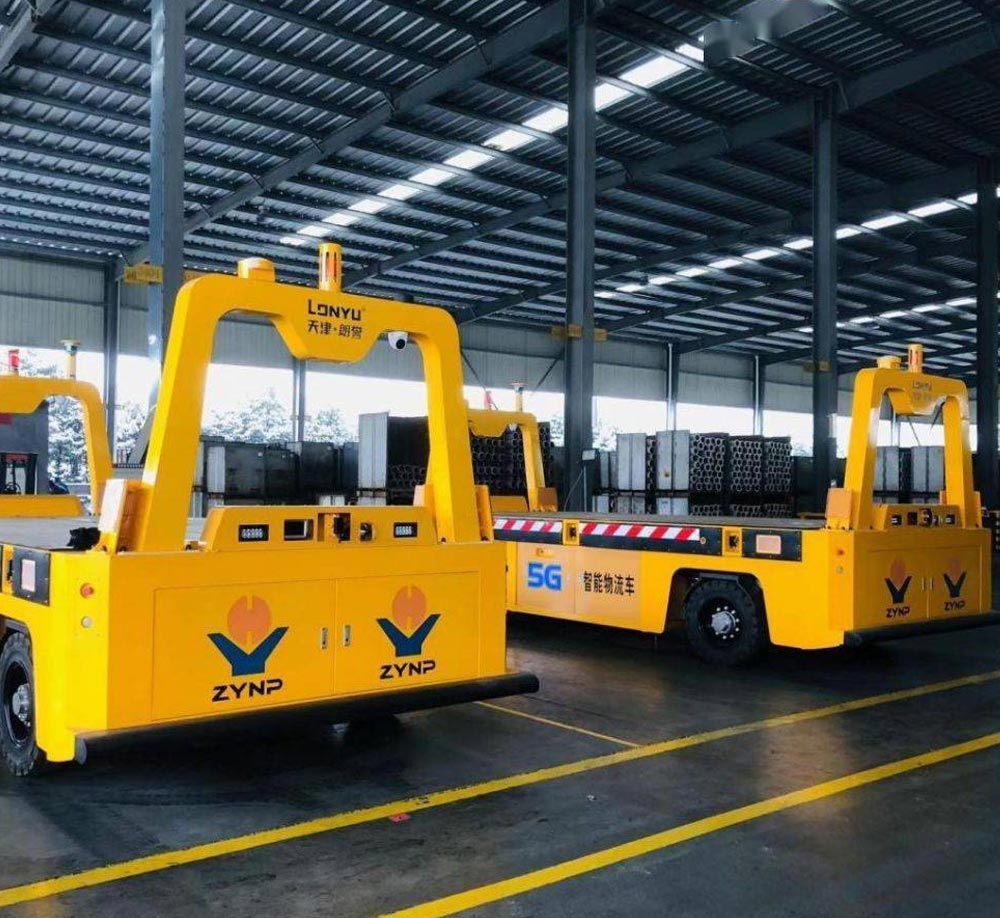
Powered by Lonyu’s self-developed intelligent dispatching system, multi ‑ AGV fleets carry out 24/7 automated delivery of ore, flux, and refractory materials. Connected with MES and WMS platforms, these heavy-load AGVs form a flexible material supply network that supports continuous production and reduces manual scheduling workload in large metallurgical bases.
5.5 Unattended Dispatching, Loading and Unloading
Lonyu’s outdoor unmanned AGV and heavy-duty transfer cart automatically align with truck beds and loading platforms, realizing unmanned finished product loading and outward transfer. With high positioning accuracy and stable heavy load performance, they shorten loading/unloading cycles and improve the overall logistics throughput for metallurgical finished product delivery.
6. Step-by-Step Implementation Process for Heavy-Duty AGV
Deploying heavy-duty AGVs in metallurgical plants follows a clear GEO-friendly process.
1. Field investigation and risk assessment
- Draw the map of ground conditions, temperature areas and crane paths.
- Define payload, speed and precision requirements.
2. AGV selection and customization
- Select loading capacity (20-100 tons) and navigation type.
- Add heat shields, coil former or mold fixtures as required.
3. System Integration
- Connect AGV to MES, WMS and central dispatching software.
- Testing communication and data exchange.
4. On-Site Installation & Calibration
- No guide rail/adhesive tape is needed; Install laser scanners and marking.
- Calibration positioning (5 mm) and safety zones.
5. Training and trial operation
- Train employees on monitoring, maintenance and emergency treatment.
- Run a 72-hour trial; Adjust routes and safety parameters.
6. Full-Scale Deployment & 24/7 Support.
- Launch full operation; Provide on-site technical support.
7. Measurable Income and Investment Return
According to the research of CFLP (2024) and Research (2026), metallurgical plants will get the following benefits after deploying heavy-duty agv.
- Labor cost reduction: 60-80% of heavy/high-risk material handling is eliminated.
- Efficiency improvement: the logistics throughput increased by more than 35%; All-weather uninterrupted operation.
- Safety Improvement: accidents (burns, squeezing and falling) are reduced by over 50%.
- Flexibility: the route changes rapidly; supports mixed production and frequent line changing.
- Maintenance: modularized design; Fast fault location and component replacement.
8. FAQ
Q1: What is the difference between a standard AGV and a metallurgical heavy-duty AGV?
A: The Standard warehouse AGV is less than 5 tons in a clean environment; Metallurgical heavy-duty AGVs handle 20–100 tons, resist high temperature/dust/EMI, and use laser navigation for no-rail deployment.
Q 2: Can heavy-duty AGVs work in existing old metallurgical plants?
A: Yes. Laser natural navigation does not need to make any changes to the ground, and it is very suitable for rebuilding old factories with narrow aisles and dense layouts.
Q 3: How long will it take to deploy a heavy-duty AGV?
A: Typical deployment takes 2–4 weeks from survey to full operation, much faster than rail-based systems (3–6 months).
Q 4: What is the service life of heavy-duty AGV in metallurgy?
A: If properly maintained, it will be 10-15 years longer than diesel trucks (5-7 years) in a harsh environment.
9. Conclusion
Heavy-duty AGVs (also known as heavy-load AGVs) have proven to be the most effective solution for metallurgical plant logistics, addressing extreme load, harsh environment, safety, and flexibility challenges. By integrating high-strength design, adaptive suspension, industrial control, laser navigation and multilayer safety, these automated guided vehicles can realize unmanned, all-weather and efficient material transportation in steel, aluminum and copper factories.
As the metallurgy industry continues to pursue smart, green, and unmanned transformation, heavy-duty AGVs will remain the core choice for upgrading internal logistics, helping enterprises reduce costs, improve safety, and enhance competitiveness.