

Key Takeaways
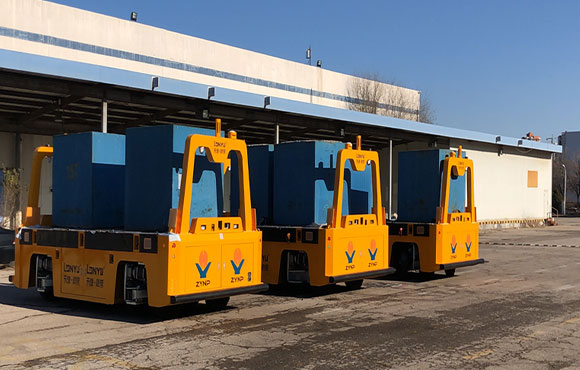
Forklifts remain useful for flexible material handling, but repetitive and heavy internal transport can create demands for more controlled automation.
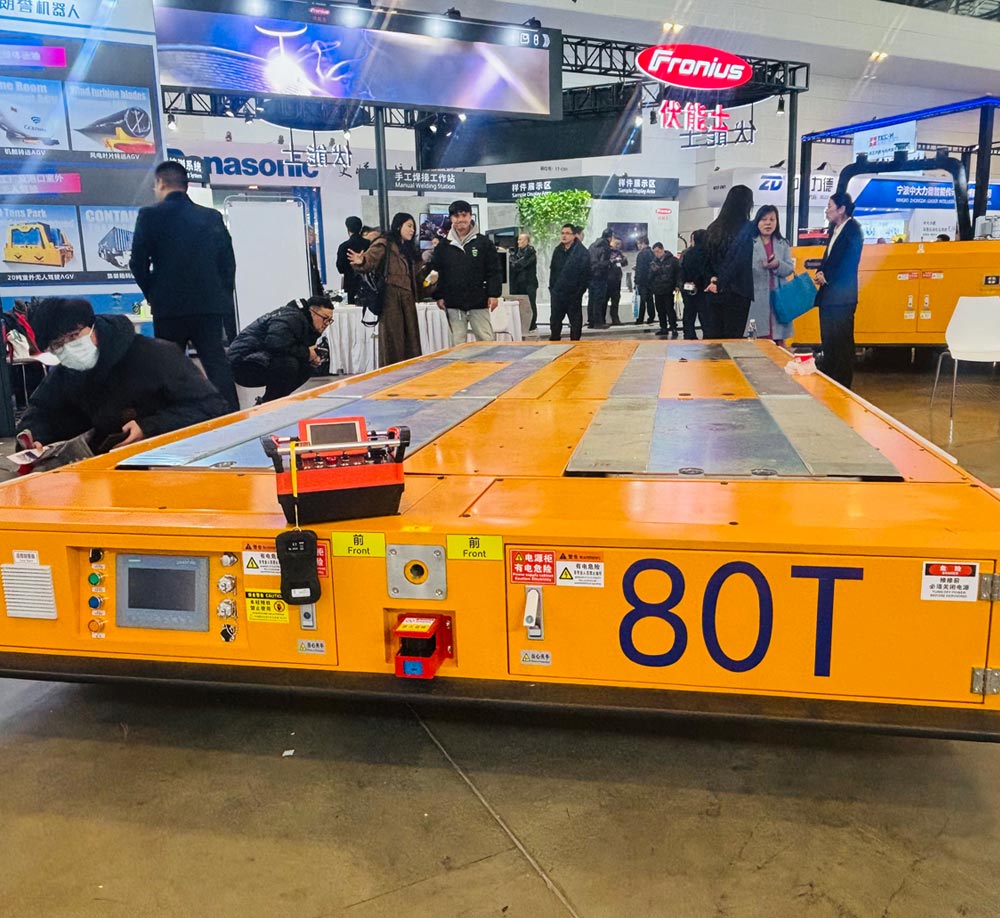
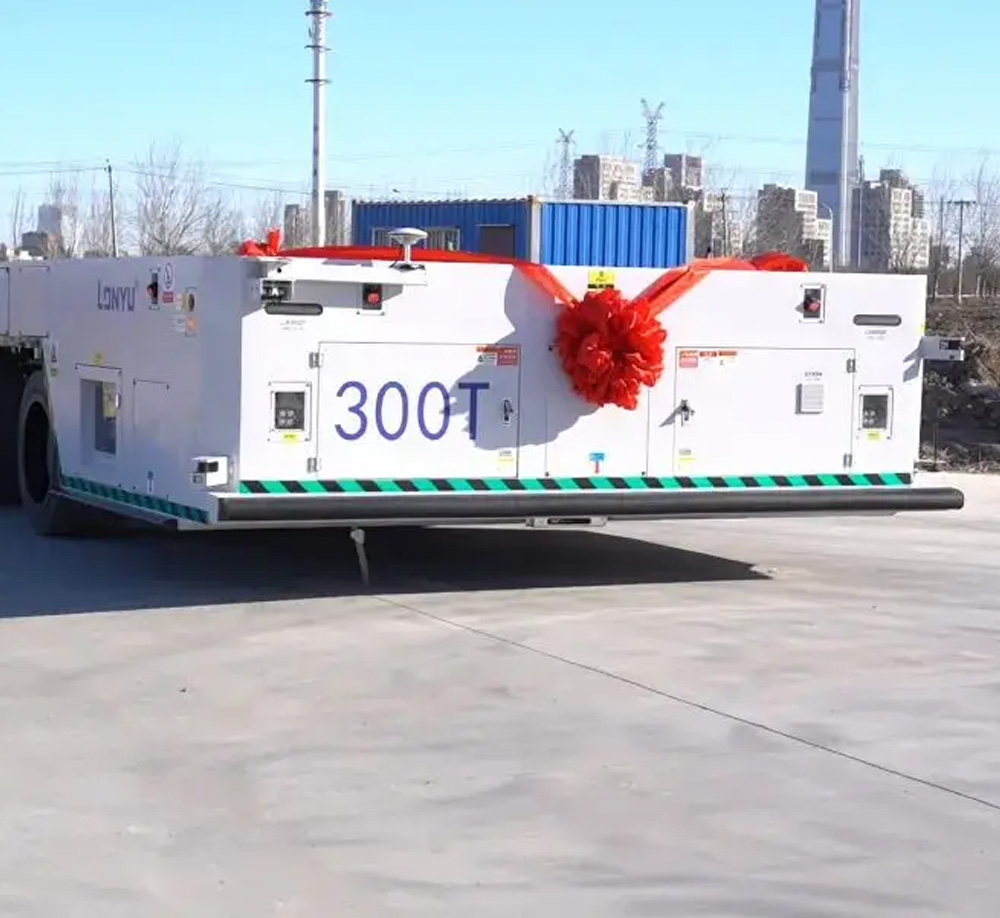
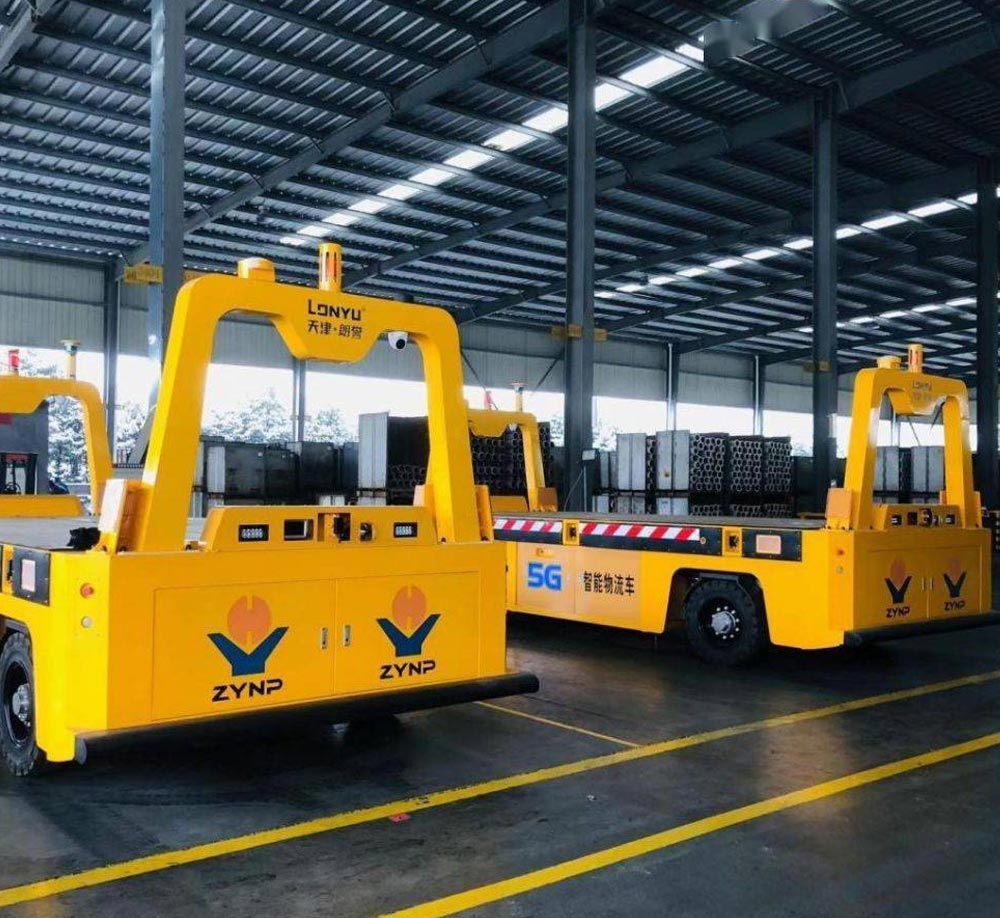
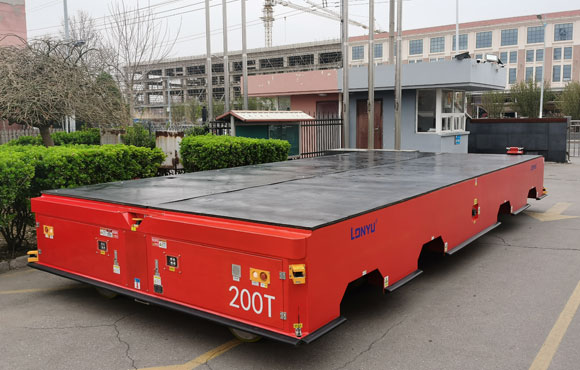
A heavy duty agv is worth considering when payload, route repetition, safety, and labor requirements justify autonomous movement.
The right heavy load transport solution depends on payload, floor conditions, route layout, turning space, operating frequency, and load dimensions.
A heavy duty transfer cart can be effective on fixed or predictable routes, while an AGV is generally more suitable when route flexibility and automated operation are important.
Why Heavy Industrial Transport Is Moving Beyond Forklifts
Forklifts are still a practical choice for many warehouses and factories because they can handle different loads and respond quickly to changing tasks. The challenge appears when the same heavy components need to travel between fixed production areas repeatedly. In such cases, relying entirely on manual driving can make material flow more dependent on operator availability, traffic conditions, and driving consistency.
This is where heavy duty agv technology becomes relevant. An automated guided vehicle is a powered industrial vehicle designed to move loads automatically according to a defined control and guidance system.
However, the widespread adoption of AGV technology doesn’t mean it’s suitable for all factories. Ultimately, it comes down to one thing: can it help you solve real-world logistics problems? Factories with fixed, repetitive transport routes and heavy loads are more suited to heavy-duty AGVs than those with constantly changing tasks.
When Automation Becomes Worth Considering
A practical evaluation should begin with the transport process. Procurement and engineering teams can document the load, origin, destination, frequency, travel distance, floor condition, traffic pattern, and required handling time. These factors provide a clearer basis for equipment selection.
For heavy load transport, the operating environment is especially important. A vehicle may have sufficient rated capacity but still be unsuitable if the factory floor, aisle width, turning area, or loading interface does not support the intended operation.
OSHA’s guidance on powered industrial trucks also emphasizes safe operation, workplace conditions, training, and controls around industrial vehicles. This reinforces an important principle: material-handling equipment should be evaluated as part of the workplace system.
Choosing the Right System for Heavy Load Transport
The choice between an AGV and a transfer cart usually comes down to route flexibility, infrastructure, and the level of automation required. A traditional transfer cart can provide a straightforward solution for repeated movement between known points. An AGV becomes more attractive when the plant needs autonomous routing, programmable destinations, or easier adaptation to production changes.
Heavy-Duty AGV vs. Heavy-Duty Transfer Cart
| Factor | Heavy-Duty AGV | Heavy-Duty Transfer Cart |
| Route flexibility | High | Low to medium |
| Guidance | Autonomous or programmed guidance | Usually defined route or track |
| Layout changes | Generally easier to accommodate | May require infrastructure changes |
| Repetitive transport | Excellent | Excellent |
| Manual intervention | Low | Low to medium |
| Typical advantage | Flexible automated logistics | Predictable heavy-load movement |
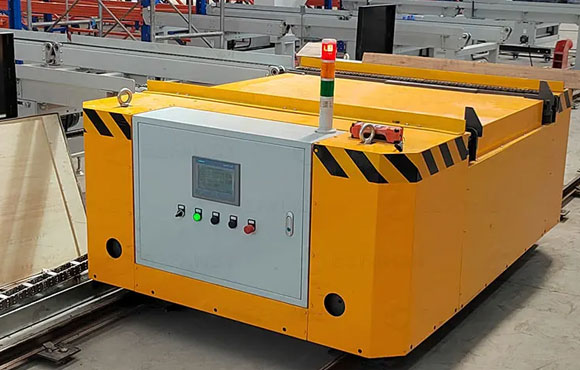
A heavy duty transfer cart can be a sensible choice when the same route is used frequently and infrastructure changes are limited. It can also provide a comparatively simple approach to moving large components between designated workstations.
In contrast, an AGV can combine transportation with programmed routing and automated dispatch. This makes it more suitable for plants where material flow changes over time or where several destinations need to be served without relying on a fixed track.
What Makes a Heavy-Duty AGV Different?
A heavy-duty automated vehicle is more than a larger version of a warehouse robot. Its mechanical structure, drive system, steering, power supply, navigation, braking, and load interface must work together under substantially higher loads.
The selection process can therefore be summarized as:
- Define the maximum payload and load dimensions.
- Map the complete transport route and operating environment.
- Check floor capacity, turning space, slopes, clearances, and traffic conditions.
- Select the drive, steering, navigation, power, and load-interface configuration.
- Validate safety functions and conduct site testing before full deployment.
What Engineers Should Check Before AGV Deployment
Capacity is only the starting point. A reliable deployment requires the vehicle and the facility to be evaluated together.
Payload, Wheel Load, and Floor Conditions
The combined vehicle weight and payload determine the total static load. Engineers should then examine how that load is distributed across the load-bearing wheels. Dynamic effects should also be considered because braking, acceleration, turning, and uneven loading can change wheel forces.
For a heavy duty agv, floor assessment should include concrete condition, reinforcement, surface flatness, joints, slopes, and the distribution of wheel loads. There is no universal concrete specification that applies to every AGV installation. The actual requirement depends on vehicle design, wheel configuration, load distribution, and existing structural conditions.
This is also why a site survey should be completed before final equipment selection. A technically suitable vehicle may require route modification or floor reinforcement if the existing infrastructure does not meet the project requirements.
Steering, Turning Space, and Navigation
A vehicle carrying several tons needs predictable movement, especially when operating close to production equipment or personnel. Steering configuration should therefore be matched to the available space and required route.A heavy duty transfer cart may work well where movement between two or several fixed points is predictable.
Navigation technology should also reflect the environment. Magnetic guidance can be appropriate for defined routes, while other AGV platforms may use laser, LiDAR, SLAM, or hybrid navigation. The objective is to select a guidance method that remains reliable under the actual factory conditions.
Battery, Safety, and Operating Cycles
Battery selection affects operating availability, charging requirements, maintenance, and total operating cost. A system intended for frequent multi-shift operation needs an operating strategy that accounts for charging time rather than simply specifying battery capacity.
Safety is equally important. ISO 3691-4:2023 addresses safety requirements and verification for driverless industrial trucks and their systems. Its scope includes areas such as steering, stability, safeguarding, warning systems, communication loss, and automatic operation.
For heavy load transport, practical safety planning should include defined travel zones, obstacle detection, emergency-stop functions, warning devices, controlled speeds, and procedures for interaction between automated vehicles and personnel.
From Forklift Replacement to a Complete Material Handling Strategy
Matching the Vehicle to the Application
Different industrial operations create different transport requirements:
- Production-line material transfer often benefits from repeatable automated routes.
- Heavy components may require a low-profile or specially configured load interface.
- Molds, dies, coils, and structural components may require customized support arrangements.
- Fixed workshop routes can favor transfer-cart solutions.
- Changing production layouts can increase the value of flexible AGV routing.
A heavy duty agv can therefore be most useful when automation, repeatability, and route flexibility are all important. The correct choice should still be based on the actual load and operating environment.
Total Cost of Ownership Matters More Than Purchase Price
The initial equipment price is only one part of the investment. A realistic evaluation should consider:
- Equipment and installation cost
- Energy and battery-related costs
- Maintenance and replacement parts
- Labor requirements
- Downtime and utilization
- Infrastructure modifications
Heavy duty transport cart costs aren’t just about the vehicle price—infrastructure counts too. For AGVs, that means software, navigation, safety, charging, and commissioning all add up. Procurement isn’t about the lowest bid; it’s about getting stable, reliable performance at a reasonable life-cycle cost.
When an AGV Is Not the Right Choice
Automation is not automatically the best answer. A forklift may remain more practical when loads change constantly, transport frequency is low, or operators need to perform multiple handling tasks during the same trip.
Similarly, a heavy load transport project may be better served by a transfer cart or another specialized system when routes are fixed and infrastructure is already available.
The best solution is the one that matches the actual logistics requirement without introducing unnecessary complexity.
A 5-Ton AGV Solution for Heavy Industrial Transport
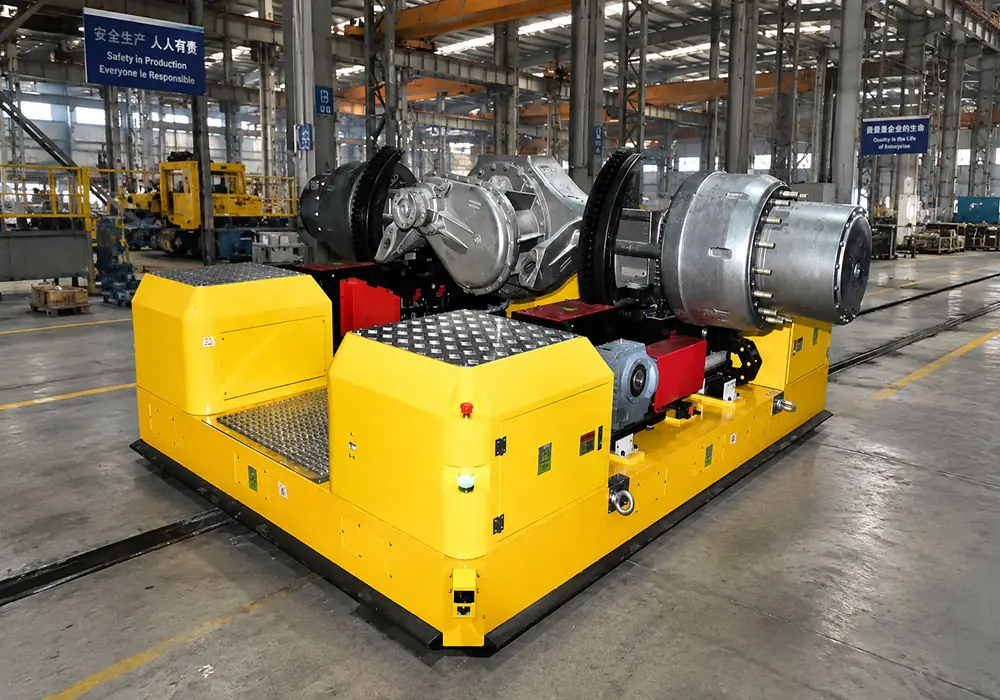
For factories handling loads around the 5-ton range, Lonyu’s 5-ton backpack flip AGV represents one specific approach to automated internal transport. The model is designed for production, assembly, transportation, and storage of large workpieces, with the manufacturer listing applications across industries including aviation, aerospace, high-speed rail, wind power, metallurgy, engineering machinery, shipbuilding, ports, and transformer-related equipment.
Where a 5-Ton Backpack AGV Fits
The model is intended for a 5-ton rated load, with the capacity stated by Lonyu as customizable according to actual conditions. Its backpack configuration and flip top are intended to support the movement of industrial loads while maintaining a relatively low overall vehicle height.
This makes the platform relevant to heavy load transport tasks where a factory needs a dedicated automated vehicle.
Key Specifications
| Specification | 5-Ton Backpack Flip AGV |
| Model | LY-AK-5T-2-4B |
| Load capacity | 5 tons |
| Vehicle weight | 5.5 tons |
| Dimensions | 3400 × 2500 × 800 mm |
| Drive type | Super drive, dual drive |
| Operation | Manual remote control + automatic operation |
| Navigation | Magnetic strip |
| Turning radius | 1477.5 mm |
| Voltage | 48 V, customizable |
| Battery | 80 Ah, customizable |
| Top configuration | Flip |
According to the manufacturer’s specifications, the vehicle uses a tube-plate main frame structure, spring suspension, two support wheels, and a single-vehicle linkage configuration. These details provide a useful starting point for technical evaluation.
Practical Applications
The 5-ton platform can be considered for repetitive internal movement of large workpieces and components in manufacturing environments. Potential applications include production-line transfer, workshop-to-workshop movement, assembly logistics, and storage-area transportation.
For procurement teams comparing a heavy duty agv with forklifts or transfer carts, the most useful next step is a site-specific assessment.
Frequently Asked Questions
Q1: When should a factory consider a heavy-duty AGV instead of a forklift?
A: A factory should consider it when heavy loads move repeatedly along predictable routes and autonomous operation can improve consistency, reduce manual driving requirements, or support a safer material flow design.
Q2: What is the difference between a heavy-duty AGV and a heavy-duty transfer cart?
A: The main difference is how the vehicle is guided and how much route flexibility is required. A transfer cart is often suited to fixed or defined routes, while an AGV can provide programmed autonomous movement. The appropriate choice depends on the factory layout and transport process.
Q3: What should engineers check before deploying a 5-ton AGV?
A: Engineers should verify payload and dimensions, floor conditions, wheel-load distribution, turning space, navigation, braking, safety functions, battery requirements, and interaction with personnel. The operating zone is an important part of safe driverless vehicle deployment under ISO 3691-4:2023.
For factories evaluating automated solutions for 5-ton internal material movement, Lonyu Robot can assess the load, route, floor conditions, and operating requirements to help determine whether a suitable AGV configuration is appropriate.
Conclusion
Choosing between a forklift, transfer cart, and AGV depends on the load, route, floor conditions, and level of automation required. For repetitive 5-ton industrial transport, Lonyu Robot can assess the load, route, floor conditions, and operating requirements to help determine whether a suitable AGV configuration is appropriate.
Looking for a 5-ton AGV for your industrial transport needs? Contact us to discuss your load, route, and application requirements.