

Key Takeaways
- Calculate the total cargo weight and identify its center of gravity and support points before comparing vehicle capacities.
- Check underside clearance and support height to determine whether a backpack lifting structure can access the cargo.
- Measure turning areas, aisle widths, and floor load limits before confirming vehicle dimensions.
- Evaluate full-load braking, obstacle detection, positioning accuracy, and battery performance through actual tests.
- Request technical drawings, load calculations, and acceptance test records before ordering.
Introduction
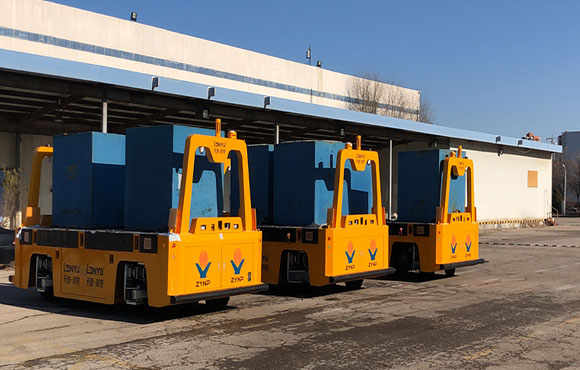
Moving oversized industrial equipment inside a factory can be difficult, especially when the cargo is extremely heavy or has an irregular shape. Large transmission boxes and machinery components may have an offset center of gravity. Their bottom structures can also restrict the space available for lifting.
Forklifts may not have enough capacity for exceptionally heavy workpieces. Using several vehicles together requires careful coordination. Conventional transfer carts can also create problems when the cargo needs to be lifted directly from underneath.
A heavy duty agv provides another way to move large industrial components between production areas. However, choosing one requires more than checking its rated payload. Buyers need to understand how the cargo will be supported, how the vehicle will pick it up, and whether it can complete the factory route safely.
What Should You Check Before Selecting an AGV for Heavy Industrial Loads?
Start with the cargo drawing rather than the vehicle catalogue. Its dimensions, weight distribution, and bottom structure determine the basic requirements for the transport equipment.
How Do Load Weight, Dimensions, and Center of Gravity Affect AGV Selection?
Why can two workpieces with identical weights require different vehicles? Their support arrangements and center-of-gravity positions may create very different loading conditions.
Calculate the gross transport weight. Include the main equipment, support frame, lifting fixtures, and attachments. Then mark the center of gravity on the drawing. Do not assume it sits at the geometric center.
Consider two components weighing 100 tonnes each. The first has four evenly distributed support points and a central center of gravity. The second has two support points near one end, while most of its weight is concentrated on the same side.
The second component creates a different load distribution. Its lifting points may experience much higher forces. Simply dividing the total weight by four would not provide a reliable loading calculation.
The supplier should calculate the reaction force at each support point and check how these forces transfer through the lifting structure to the vehicle chassis and wheels.
Cargo dimensions matter as well. A long workpiece may extend beyond the vehicle body, which changes its turning envelope and the space needed for safe movement.
Before requesting a quotation, prepare a drawing showing the overall dimensions, gross weight, center-of-gravity coordinates, and support-point locations. This allows the supplier to check the actual load arrangement instead of relying on the rated payload alone.
How Do Factory Routes and Floor Conditions Affect Heavy-Load Transport?
A vehicle may have sufficient capacity but still fail to pass through a factory or operate safely on its floor.
Measure the narrowest aisle, door opening, and turning area. Include columns, machine foundations, and loading stations. If the vehicle needs to rotate in place, measure the complete movement envelope with the cargo attached.
Floor capacity requires particular attention during heavy load transport. The floor must support the vehicle’s own weight as well as the workpiece. For example, a vehicle weighing 35 tonnes while carrying a 200-tonne load creates a total moving mass of approximately 235 tonnes.
However, total mass alone does not determine whether the floor is suitable. Engineers also need to examine individual wheel loads, wheel contact areas, floor thickness, and the condition of supporting beams. Local loading can be more critical than the average load across the entire floor.
OSHA’s guidance on industrial truck operating conditions identifies floor loading limits, damaged surfaces, oil, and uneven ground as important safety concerns. It emphasizes that the operating surface must support the vehicle and its load.
For an existing factory, obtain the structural floor drawings and check the rated loading capacity. Pay particular attention to expansion joints, underground channels, elevated floors, and areas with previous structural repairs.
Which Loading Method Fits the Cargo Structure?
The next question is how the vehicle will collect the workpiece.
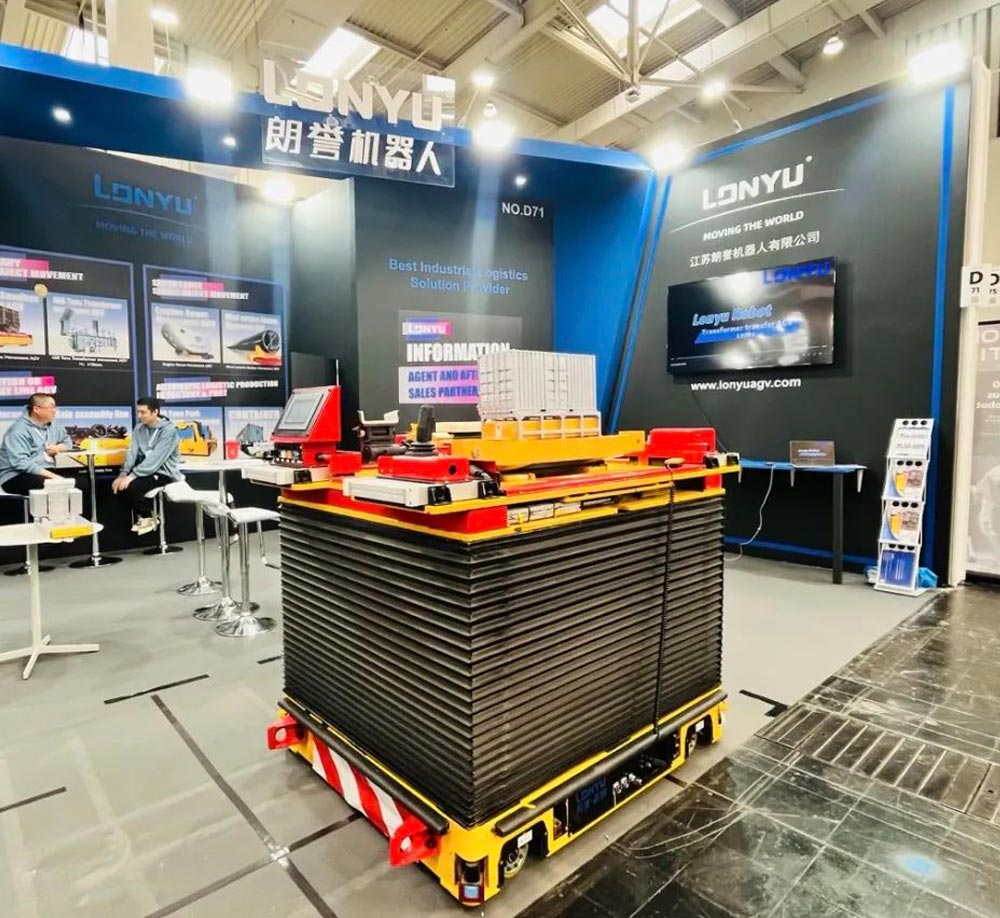
A platform-type vehicle carries cargo on its upper deck. A backpack-type vehicle enters underneath the cargo and lifts it from designated support positions. The second arrangement can be useful when the workpiece has sufficient bottom clearance.
Three measurements determine whether it will work: the lowest underside clearance, the support height, and the required lifting stroke.
For example, a component may have adequate clearance at its four corners but a low crossbeam running through the middle. The vehicle could enter from the wrong direction and collide with that crossbeam before reaching the lifting points.
The buyer should therefore provide a bottom-view drawing. It should identify crossbeams, protruding parts, support pads, and the intended entry direction.
If the workpiece has accessible support positions and enough room underneath, a backpack structure is worth considering. If the bottom is obstructed, a platform carrier or a specially designed loading arrangement may be more suitable.
Which Mechanical and Navigation Features Matter Most in an AGV?
After confirming the cargo and loading method, examine how the vehicle moves through the factory and reaches each destination.
How Do Drive and Steering Systems Affect Heavy-Load Movement?
A vehicle that travels straight under full load may still struggle when turning. During a turn, wheel forces change and the load distribution across the chassis can become uneven.
Differential drive controls direction by adjusting wheel speeds. Multi-wheel drive distributes driving effort across several wheels. Actual performance depends on motor capacity, wheel placement, steering control, and floor friction.
For a narrow factory route, in-place rotation or lateral movement may be necessary. A wider production hall may only require forward and reverse travel.
A heavy load transport vehicle should demonstrate the required movements with the actual load. Ask the supplier to test straight travel, reverse travel, turning, and lateral movement where applicable. Record the load weight, speed, and floor condition during these tests.
Also check the minimum turning radius and the clearance needed around the cargo. A long component can extend beyond the vehicle body, so measuring the vehicle alone may produce an incorrect route assessment.
Which Navigation System Suits the Factory Layout?
Magnetic stripe navigation follows a predefined route marked by magnetic strips on the floor. It works well when production routes remain relatively fixed. However, changing the route may require physical adjustments to the strips.
Laser navigation uses environmental references and a mapped route. It may be more convenient when the factory frequently changes its transport paths, although sensor conditions and map maintenance still need attention.
Choose magnetic navigation when the route is stable and installation work is acceptable. Consider laser navigation when frequent route changes justify a more flexible arrangement.
Positioning performance also needs to be divided into separate measurements. Route accuracy describes deviation while travelling. Stopping accuracy measures the final position. Repeatability indicates whether the vehicle can return to nearly the same position over repeated cycles.
Ask suppliers to provide separate test results for these three measurements. The test should identify the load condition, approach direction, and measurement method.
How Can Buyers Evaluate AGV Safety and Daily Operating Performance?
The most useful safety evidence comes from tests that reproduce the intended working conditions. A list of installed protective devices cannot replace actual verification.
What Should Buyers Check About Braking and Obstacle Detection?
An empty vehicle and a fully loaded vehicle do not have the same braking requirements. Greater moving mass can increase stopping distance, especially when the vehicle travels at a higher speed.
Request braking records at the intended operating speed. The supplier should identify the cargo weight, floor material, surface condition, and measurement method. Compare braking figures only when the test conditions are similar.
Obstacle detection needs equally careful inspection. Check the sensor coverage at the front, rear, and sides. A wide workpiece may extend beyond the vehicle body, creating areas that require additional protection.
Also confirm how the vehicle responds when a person or object enters its route. Does it stop immediately, slow down, or trigger an alarm? The response should be defined in the safety requirements.
Which Safety Standards and Tests Should Be Considered?
ISO 3691-4:2023 specifies safety requirements and verification methods for driverless industrial trucks and their systems. It provides a reference for reviewing AGV safety design and protective functions.
However, citing this standard does not automatically mean that a particular vehicle has obtained third-party certification. Buyers should distinguish between design references, documented conformity assessments, and independent certification.
Ask for a risk assessment and safety test records. The Factory Acceptance Test (FAT) should verify the agreed functions before shipment. The Site Acceptance Test (SAT) should confirm that the vehicle operates safely on the actual factory route.
Include emergency stopping, obstacle detection, fault response, and recovery procedures in the acceptance criteria. Define the test conditions before manufacturing begins.
How Should Battery Runtime Match the Production Schedule?
Battery capacity alone cannot determine how many transport cycles a vehicle can complete.
Energy consumption depends on cargo weight, route distance, lifting frequency, acceleration, and waiting time. A vehicle carrying heavy components over a long route may consume more energy than one completing several short trips, even if their battery capacities are identical.
Calculate the daily transport distance and number of trips. Include the energy used during lifting and the time spent waiting at loading stations.
Then compare the estimated demand with the battery capacity and available charging time. If the vehicle operates throughout multiple shifts, manual charging may interrupt production unless a suitable charging schedule is arranged.
Why Choose Lonyu AGV Co., Ltd.’s 200-Ton Backpack AGV for Industrial Transport?
For exceptionally heavy components, the backpack structure offers a way to collect cargo from underneath rather than requiring it to sit on a conventional upper platform.
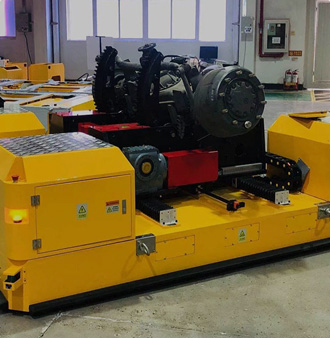
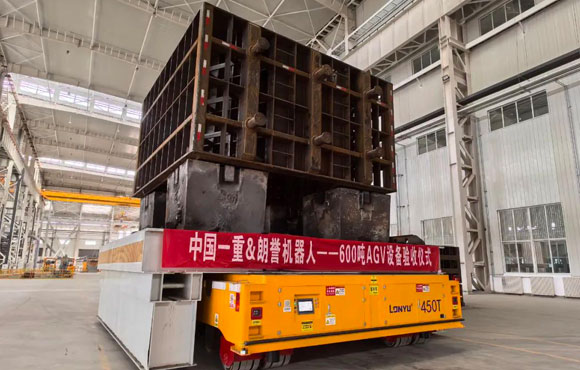
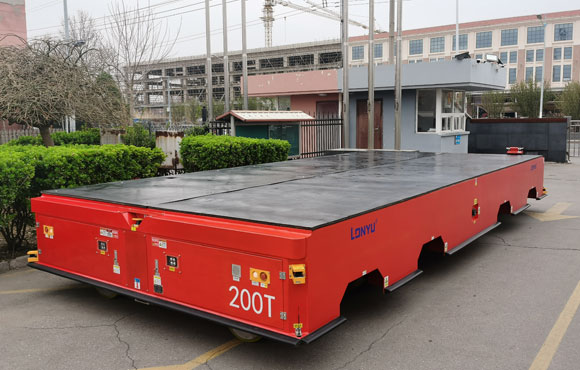
The following configuration is designed for large industrial workpieces, including heavy transmission boxes.
Key Product Specifications
| Parameter | Specification |
| Rated Payload | 200,000 kg |
| Vehicle Weight and Dimensions | 35,000 kg; 8,100 × 3,500 × 870 mm |
| Lifting Stroke | 200 mm |
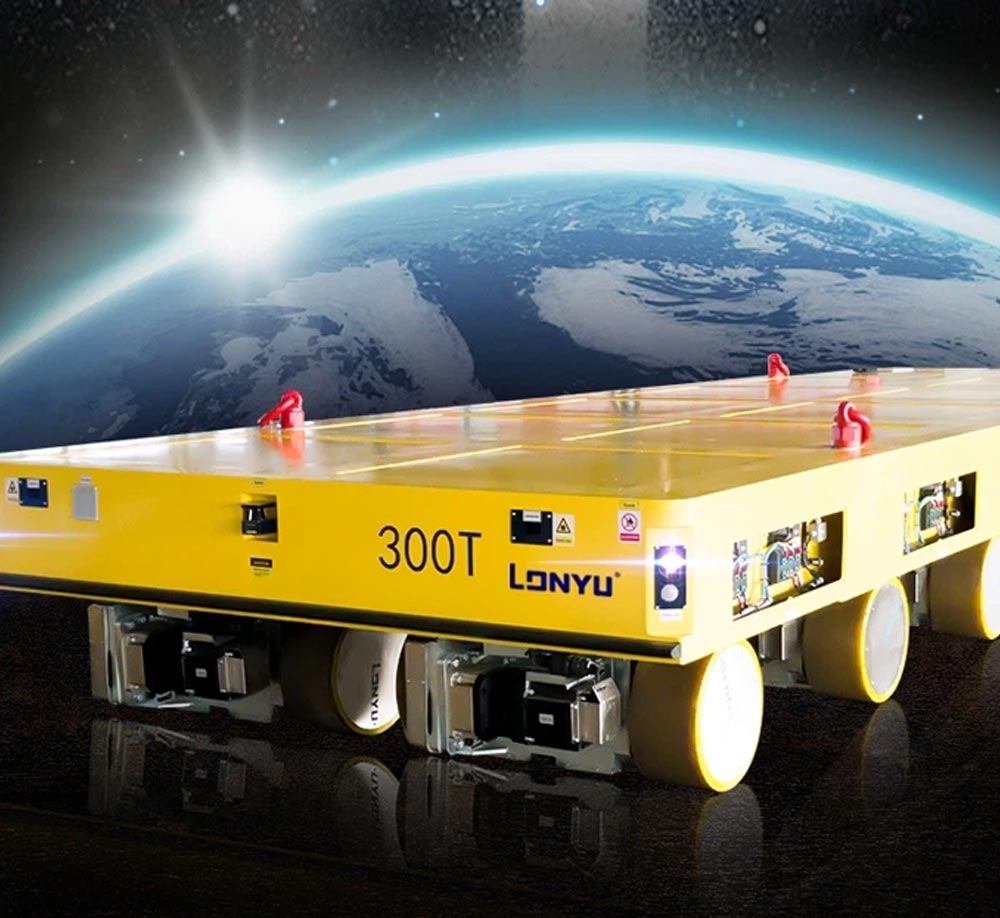
| Drive Configuration | Differential drive; 8 driving wheels; 16 wheels total |
| Travel Speed and Navigation | 0–30 m/min; magnetic stripe navigation |
| Battery and Safety | 96V/600Ah LiFePO4; laser obstacle avoidance, contact collision avoidance, alarms and emergency stop |
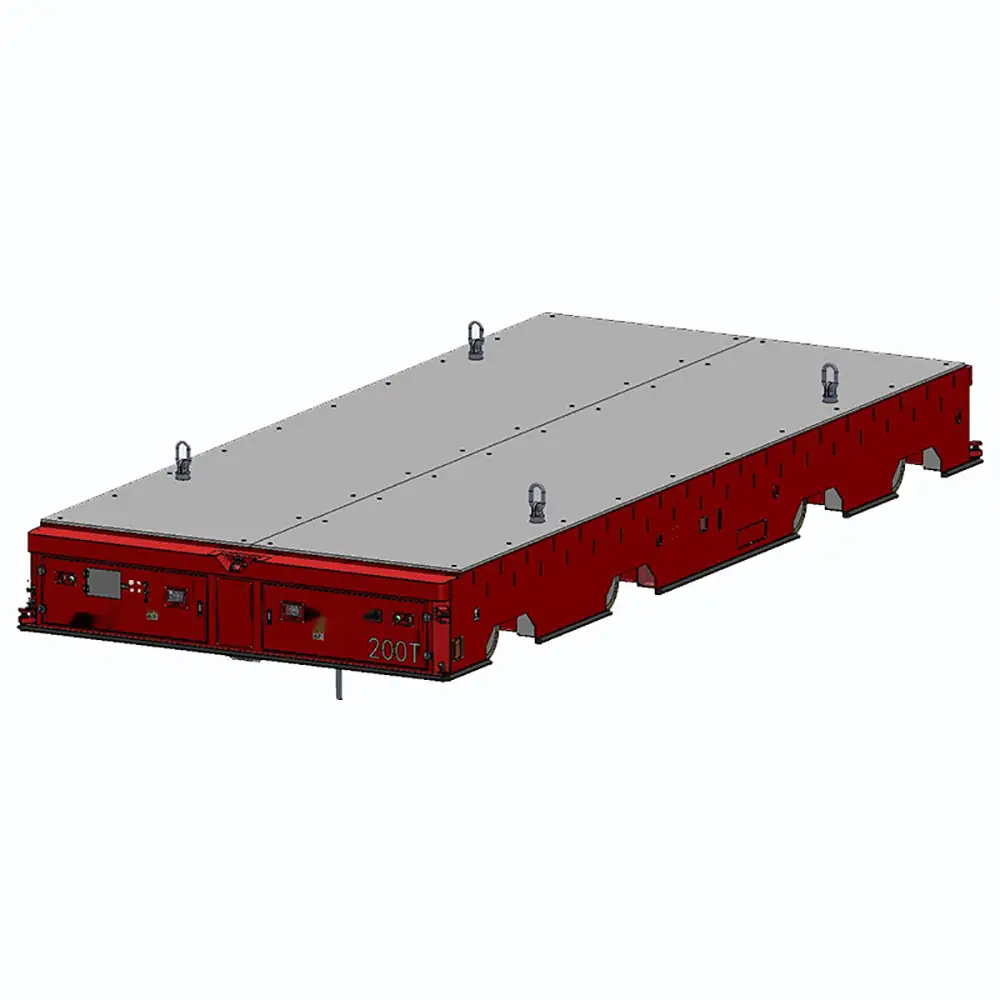
Backpack Lifting for Large Industrial Transmission Boxes
A heavy duty transport cart with a backpack structure enters beneath the cargo and raises it from designated support positions. This arrangement can reduce the need for a separate loading platform when the workpiece already has suitable support points.
The listed lifting stroke is 200 mm. Buyers should compare this distance with the required pickup height and the available space beneath the cargo.
For a large transmission box, the bottom-view drawing is particularly important. It should identify the crossbeams, support pads, protruding parts, and entry direction. The supplier can then check whether the lifting structure can reach the designated positions without interference.
Multi-Wheel Drive and Multi-Directional Movement
This vehicle uses differential drive with eight driving wheels and sixteen wheels in total. Its specified movement functions include forward and reverse travel, lateral movement, in-place rotation, and turning under both empty and full-load conditions.
These functions are useful when a large component needs to move through a production hall and align with a designated workstation. Lateral movement can help with final positioning when the approach space is limited. In-place rotation can assist when the vehicle needs to change direction in a restricted area.
Its listed climbing ability is no more than 5°. This value should be checked against the actual slope, floor friction, cargo position, and braking requirements before operation.
Hydraulic Suspension and Wheel Load Distribution
The vehicle uses hydraulic suspension with a passive suspension arrangement. This design is specified to support more even loading across multiple wheels.
The arrangement is relevant when a large vehicle passes over minor floor variations. If wheel contact changes significantly, individual wheels may carry different loads. Buyers should request the suspension drawings and wheel-load calculations, particularly when handling workpieces with an offset center of gravity.
Navigation, Positioning, and Safety Functions
The vehicle uses magnetic stripe navigation and lists an inching accuracy of ±3 mm. This value can serve as a reference for fine adjustments near loading and unloading stations. It should not be confused with overall route navigation accuracy.
Its safety configuration includes laser obstacle avoidance, contact collision avoidance, sound and light warnings, and emergency stop controls. The specified braking distance is no more than 500 mm under full load and 300 mm without load.
The vehicle also uses a 96V/600Ah lithium iron phosphate battery and manual charging. Buyers should include charging location and available charging time in their production planning.
Before acceptance, confirm the braking test speed, cargo weight, floor conditions, sensor coverage, and positioning measurement method.
Frequently Asked Questions
How much weight can this 200-ton backpack AGV carry?
Its listed rated payload is 200,000 kg. However, the cargo must also meet the specified load distribution, support-point arrangement, floor capacity, and operating conditions. Submit the cargo drawing for engineering confirmation before treating the rated payload as an approved working load.
Can this backpack AGV lift any large industrial transmission box?
No. The workpiece needs sufficient underside clearance and suitable support positions. The listed lifting stroke is 200 mm. The supplier must check the lowest obstruction, support height, and lifting-point alignment before confirming compatibility.
What are the travel speed and braking distance of this AGV?
The listed travel speed is 0–30 m/min. Its specified braking distance is no more than 500 mm under full load and 300 mm without load. Confirm the corresponding test speed, floor conditions, and load configuration before using these figures as acceptance criteria.
Why is floor capacity important when selecting a heavy-load AGV?
The floor must support the combined weight of the vehicle and its cargo. Wheel loads may not be evenly distributed, especially during turning or when the cargo has an offset center of gravity. Obtain structural floor information and check local load limits before approving the route.
Should I choose magnetic or laser navigation?
Magnetic navigation suits relatively fixed routes because it requires physical magnetic strips. Laser navigation may be more suitable when routes change frequently. Compare installation work, maintenance requirements, environmental conditions, and positioning test results before deciding.
Conclusion
Choosing the right vehicle requires more than comparing payload ratings. Cargo geometry, lifting access, wheel loading, route clearance, and daily operating requirements all affect the final configuration.
A well-prepared technical specification also makes it easier to define acceptance tests and maintenance arrangements before manufacturing begins.
If you are sourcing an AGV for oversized industrial equipment, send Lonyu AGV Co., Ltd. your cargo weight, dimensions, center-of-gravity location, underside and support-point drawings, required lifting height, factory layout, transport route, and operating schedule to discuss a suitable configuration and request a technical proposal and quotation.