

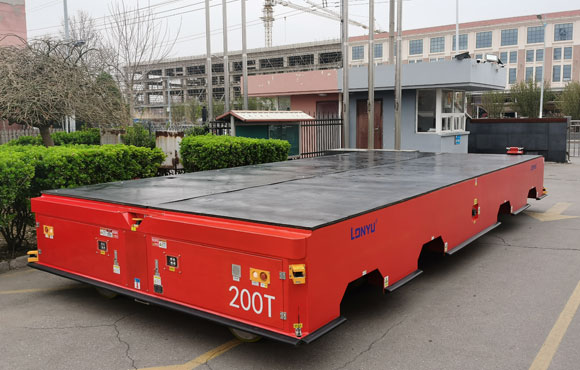
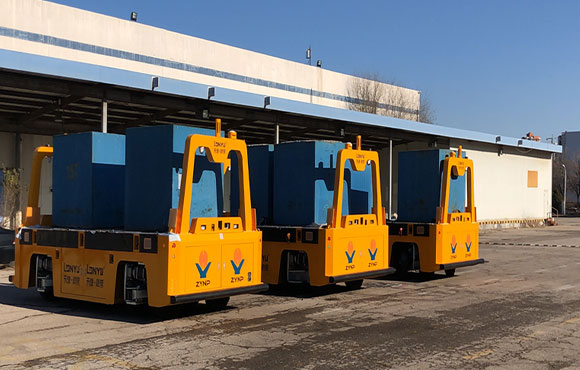
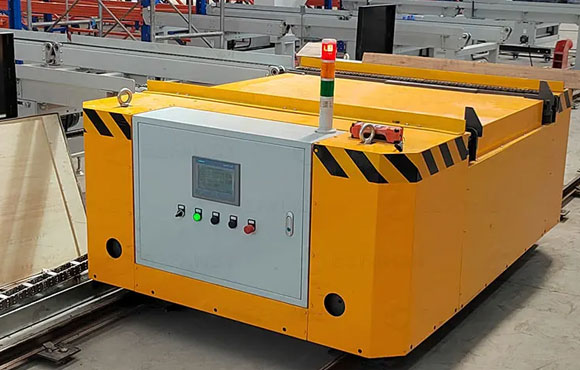
With the development of smart manufacturing, more factories are adopting heavy duty AGV solutions to improve the transportation of heavy materials and large components. By using automated navigation, intelligent control, and electric drive technology, AGV systems help improve internal transportation efficiency. This guide explains how an automated guided vehicle works and the key factors companies should consider when selecting a heavy-load transportation solution.
What Is a Heavy Duty AGV Robot?
An automated guided vehicle (AGV) is an industrial vehicle designed to transport materials automatically according to programmed routes or navigation systems.
Traditional transport methods usually depend on fixed routes or manual handling, while AGV systems can adapt to different factory layouts through various navigation methods.
Standard AGVs are widely used in warehouses and production lines. Heavy duty AGVs are built for industrial applications that involve transporting large and heavy components, such as transformers and other oversized workpieces.
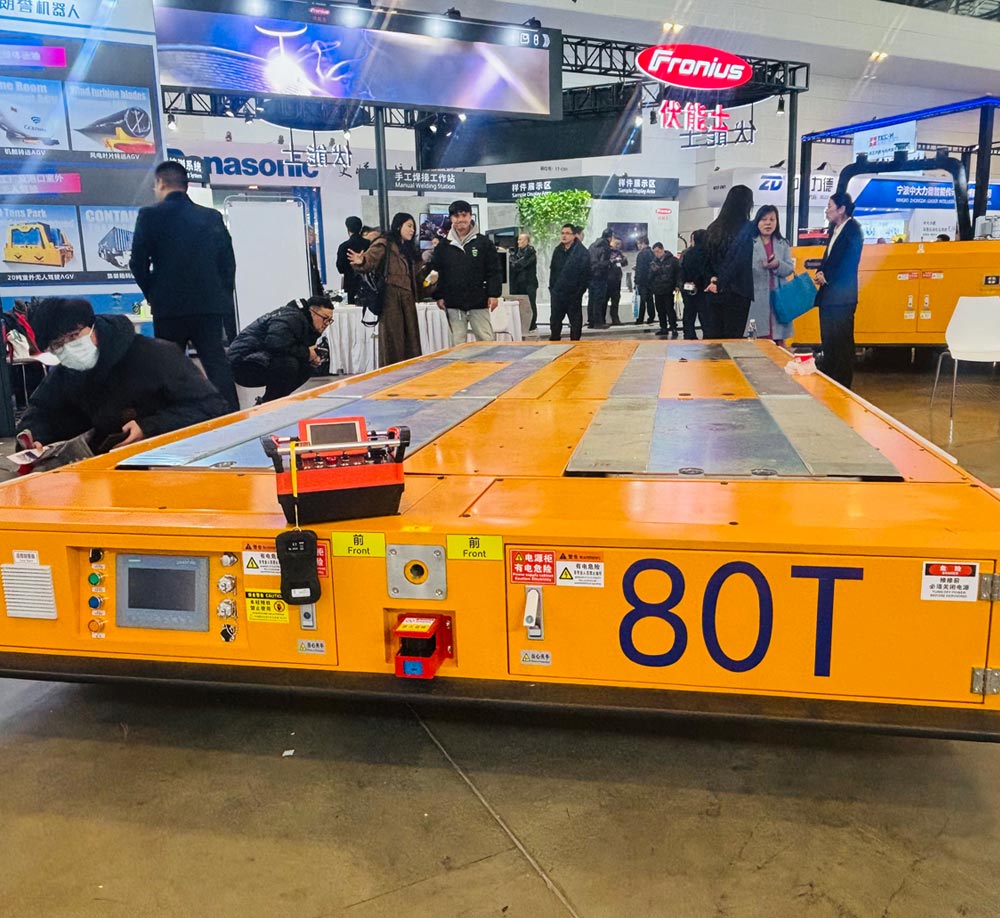
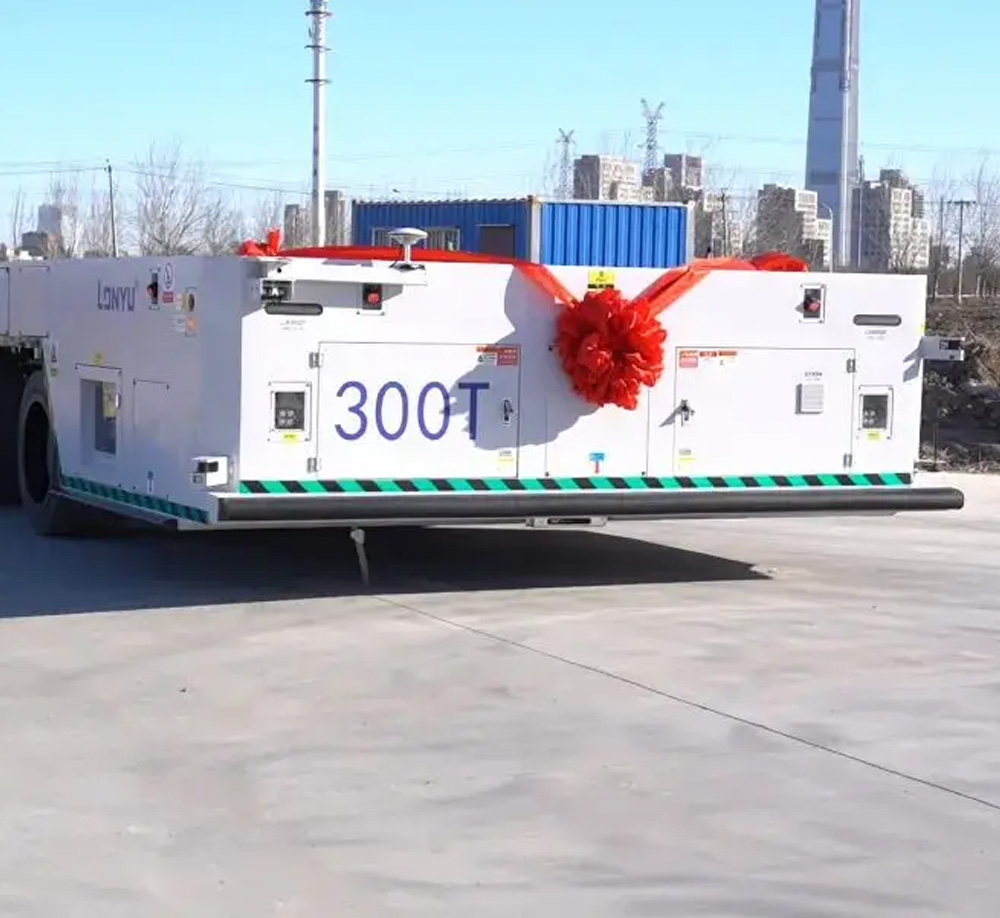
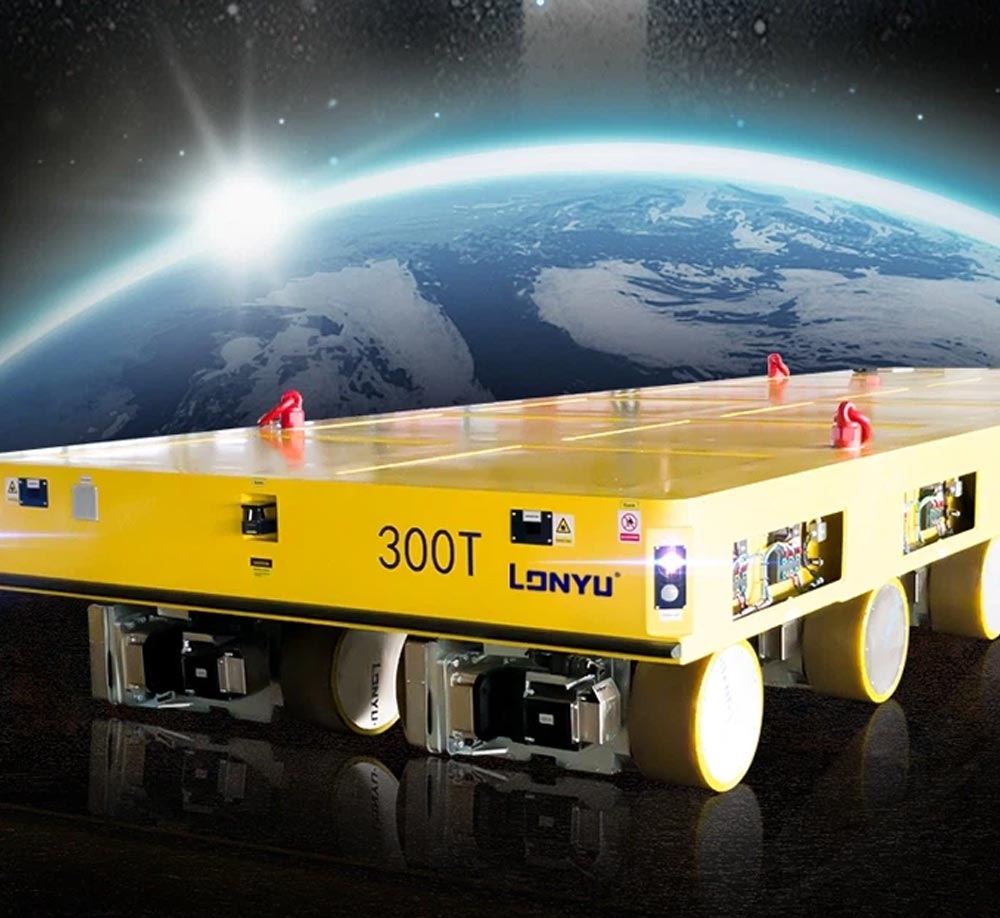
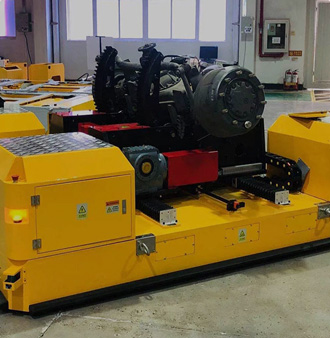
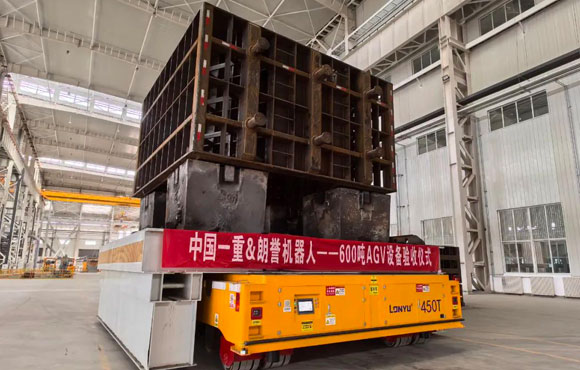
Heavy-duty AGVs are mainly used for transporting materials such as large industrial components, transformers, and other heavy workpieces. They integrate mechanical structures, drive systems, battery systems, control systems, and safety protection technologies to provide stable transportation performance.
How Does an Automated Guided Vehicle System Work?
An automated guided vehicle system combines navigation technology, drive systems, power systems, and safety functions to complete material transportation tasks.
The working process usually includes route planning, vehicle movement control, obstacle detection, and transportation execution. AGV configurations are selected based on the factory layout and transportation requirements.
Navigation Technologies Used in AGV Systems
Navigation is one of the most important technologies affecting AGV performance. Different environments require different navigation solutions.
Common AGV navigation methods include:
- Magnetic stripe guidance
- Magnetic nails
- QR code navigation
- Laser navigation
- SLAM navigation
- Inertial navigation
- GNSS
- Vision navigation
Factories with complex layouts usually need more flexible navigation solutions, while fixed routes may work well with simpler guidance methods. The final choice depends on the working environment and transportation requirements.
Drive and Control Systems of Industrial AGVs
The drive system determines how an AGV moves and handles different transportation conditions.
When transporting heavy components, the AGV requires a strong drive system to ensure smooth and stable movement. Important elements include the motor system, controller, suspension structure, and communication functions.
Depending on project requirements, AGV communication systems can support wireless LAN, 2.4G, 5G, GPRS, or GSM.
Advantages of Using Heavy Duty AGV Robots for Industrial Transportation
Improved Transportation Safety
Heavy industrial transportation involves higher risks because of the weight and size of materials being moved.
In heavy material handling, AGV systems can take over repetitive transportation tasks and reduce potential risks caused by manual operation.
Safety features commonly used in heavy-duty AGV applications include obstacle detection, collision protection, warning systems, and emergency stop functions.
These functions improve safety and reliability during AGV transportation operations.
Flexible Transportation Without Fixed Tracks
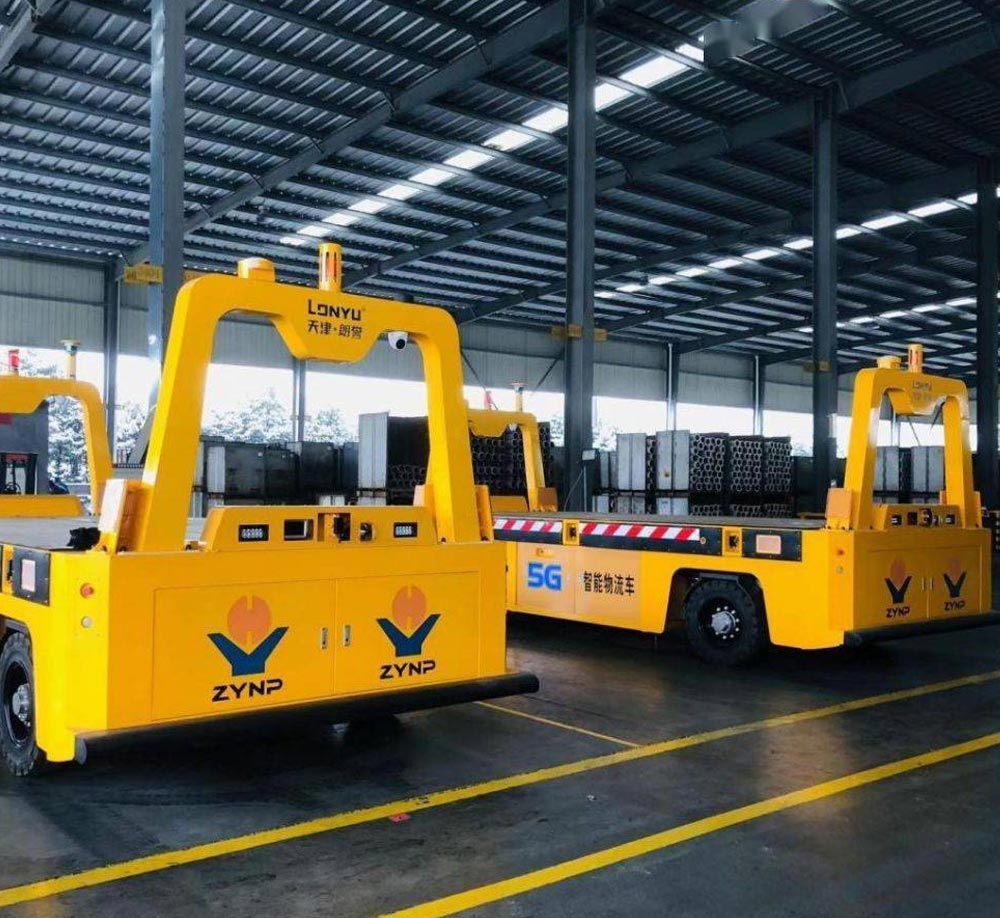
Unlike rail-based transfer equipment, trackless AGV carts can operate on the factory floor without fixed rails, making them easier to adapt to different transportation routes.
AGV movement directions can include:
- Forward movement
- Reverse movement
- Left and right movement
- Rotation
- Diagonal movement
This makes AGV systems easier to use in factories where production layouts and transportation routes may change.
Supporting Smart Manufacturing Development
As manufacturers continue to adopt smart factory concepts, internal logistics has become an important part of production automation.
In automated factories, AGV systems are used to transport materials between different working areas and production stages.
For industries that transport large and heavy components, automated solutions can improve material handling efficiency and make future production changes easier to manage.
Key Factors to Consider When Selecting a Heavy Duty AGV
The right AGV should match the transportation tasks and operating conditions of the factory. For heavy industrial projects, companies should consider not only the vehicle capacity but also the overall system performance.
Load Capacity and Transportation Requirements
Load capacity is one of the first factors companies should evaluate when choosing a heavy load transport vehicle.
However, the rated load is not the only consideration. The actual transportation requirements may also depend on:
- Weight of transported materials
- Size and shape of components
- Load distribution
- Center of gravity
- Operating environment
For example, transporting a large transformer requires stable load support and proper structural design to ensure safe movement.
Professional AGV manufacturers usually evaluate the overall transportation conditions before designing a solution. Factors such as deformation, stress distribution, and eccentric loading may need to be considered according to project requirements.
Navigation Method and Working Environment
The working environment directly affects AGV selection.
Before choosing an AGV system, companies should evaluate the factory layout, transportation routes, and operating conditions. Different navigation technologies may provide different advantages depending on the application.
For example, some factories may require flexible route changes, while others may prioritize stable and repeatable transportation paths.
A suitable navigation system can improve transportation efficiency and help the AGV operate reliably in complex industrial environments.
Battery Performance and Operating Time
Battery performance directly affects the working efficiency of an AGV.
For industrial applications, companies should consider factors such as operating time, charging method, and production schedules before selecting a suitable power solution.
Lithium iron phosphate batteries are commonly used in industrial AGV applications because of their stable performance and maintenance-free characteristics.
The battery system can be designed according to different production cycles. For heavy-load transportation projects, the required operating time should be evaluated based on actual working conditions.
Safety Protection Features
Safety is a critical consideration when transporting heavy materials.
A reliable heavy-duty AGV should include multiple protection functions to reduce operational risks and improve transportation reliability.
The safety system may include:
- Laser obstacle avoidance
- Collision protection
- Audible and visual warning
- Emergency stop function
These protection features help the AGV respond to potential obstacles and provide safer operation in industrial environments.
Manufacturer Experience and Customization Capability
Choosing an experienced agv robot manufacturer is important for companies with complex transportation requirements.
Unlike standard logistics equipment, heavy-duty AGV projects often require customized solutions based on load capacity, factory layout, transportation routes, and application scenarios.
When evaluating suppliers, companies should consider:
- Engineering and R&D capability
- Industry application experience
- Customization ability
- Project support capability
A manufacturer with experience in heavy-load applications can better understand the challenges of industrial transportation and provide suitable solutions.
Lonyu 60 Ton Heavy Duty AGV Robot for Transformer Handling Applications
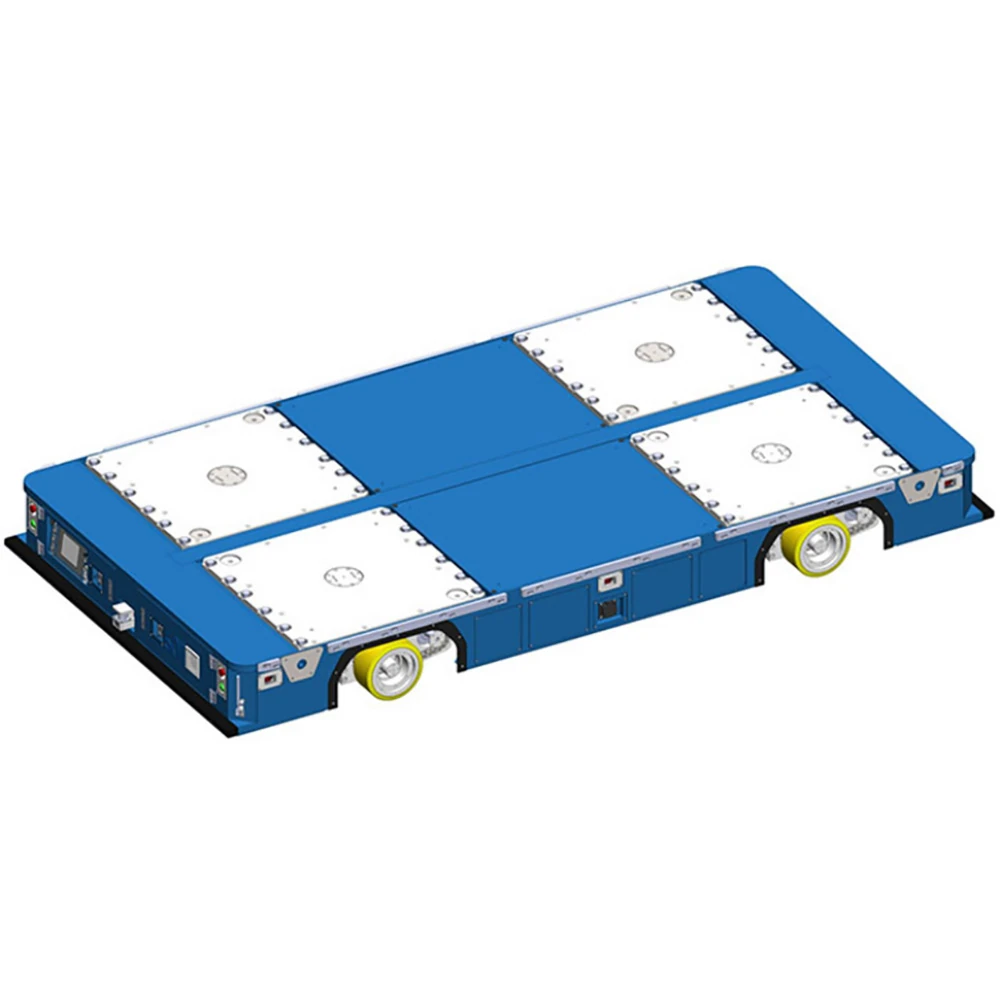
For industries requiring stable transportation of heavy components, Lonyu developed a 60 Ton Heavy Duty AGV Robot designed for transformer handling and other heavy-load transportation applications.
The model 24286A is designed for indoor industrial environments and provides a transportation solution for applications requiring reliable movement of heavy materials.
Designed for Heavy Load Transportation
The Lonyu 60 Ton Heavy Duty AGV Robot has a rated load capacity of 60 tons. It adopts a four-wheel drive structure with eight wheels and is designed to provide stable movement during heavy-load transportation.
The main specifications include:
- Rated load: 60 tons
- Maximum vehicle dimensions: 4100mm × 2100mm × 420mm
- Operating environment: Indoor
- Travel speed: 30m/min under no-load and full-load conditions
- Lifting stroke: 100mm
With these characteristics, the vehicle is suitable for industrial applications where large components require safe and stable transportation.
Stable Structure and Driving Performance
The performance of a heavy-duty AGV depends on both structural strength and driving stability.
The Lonyu 60 Ton Heavy Duty AGV Robot uses Q235B steel material for the vehicle body. Q355B material can also be used for special requirements or specific project conditions.
The vehicle adopts:
- Low-voltage servo motor
- Independent servo controller
- Hydraulic suspension system
The suspension system helps improve shock absorption and supports stable movement during transportation.
For project design, Lonyu can conduct finite element analysis, deformation analysis, and center of gravity eccentric load analysis to evaluate structural performance.
Safety and Operation Features
For transformer handling and other heavy industrial applications, safety protection is essential.
The Lonyu 60 Ton Heavy Duty AGV Robot is equipped with:
- Laser obstacle avoidance sensor
- Contact collision avoidance
- Audible and visual warning
- Emergency stop function
The vehicle has an IP44 protection level and is designed with a service life of up to 10 years under normal use and proper maintenance.
The control method is manual, and the charging method is manual charging according to the product specifications.
Lonyu Heavy Duty AGV Experience and Industrial Applications
Lonyu AGV Co., Ltd. was established in 2008 and focuses on the research, development, and production of AGV solutions.
The company specializes in:
- Heavy-duty AGV
- Light-duty AGV
- AGV intelligent dispatching systems
Lonyu integrates mechanical, electrical, software, and system development capabilities to provide transportation solutions for oversized and overweight materials.
For many years, the company has focused on heavy-duty AGV development, smart factory projects, and intelligent logistics solutions. Its technologies are designed to support unmanned and flexible transportation for demanding industrial applications.
Lonyu has more than 800 actual application cases worldwide, covering industries such as aerospace, industrial manufacturing, high-speed rail, wind power, shipbuilding, and heavy-duty transportation.
Heavy Duty AGV Applications Across Different Industries
Heavy-duty AGV systems are mainly used in industries where large and heavy materials require efficient and safe transportation.
Transformer Manufacturing and Energy Equipment
Transformer production involves large components that require stable transportation solutions during manufacturing and assembly.
A heavy-duty AGV can provide flexible internal transportation support for transformer handling applications.
Aerospace and Large Industrial Components
Large components used in aerospace and industrial manufacturing often require reliable transportation methods due to their size, weight, and handling requirements.
Shipbuilding and Heavy Machinery Manufacturing
Shipbuilding and heavy machinery industries involve oversized materials that require strong transportation capability.
Heavy-duty AGV systems can support the movement of large workpieces during production processes.
Wind Power and Rail Transit Industries
Wind power equipment and rail transit components also require solutions capable of handling large-scale transportation tasks.
Heavy-duty AGV technology can support flexible material movement in these industrial environments.
Conclusion: Choosing the Right Heavy Duty AGV Solution
Heavy-duty AGV systems are becoming an important part of modern industrial transportation. For companies handling transformers, large components, and oversized materials, the right AGV solution can improve transportation flexibility, safety, and production efficiency.
Before selecting an AGV system, companies should carefully evaluate load requirements, navigation technology, battery performance, safety functions, and supplier experience.
With the development of smart manufacturing, heavy-duty AGV solutions will continue to play an important role in creating more flexible and intelligent industrial logistics systems.
If you are looking for a reliable heavy-duty AGV solution for transformer handling or other heavy material transportation applications, contact Lonyu AGV to discuss your project requirements and explore a customized solution for your industrial needs.
FAQ
1. What is a heavy duty AGV robot used for?
A heavy duty AGV robot is used for transporting oversized and overweight materials in industries such as transformer manufacturing, aerospace, shipbuilding, wind power, and heavy machinery.
2. How do I choose the right heavy duty AGV for my application?
Choosing a suitable heavy duty AGV requires considering factors such as load capacity, transportation distance, working environment, navigation method, battery performance, and safety requirements. Companies should first define their handling tasks and application conditions, then select an AGV configuration that matches their production needs.
3. What factors should companies consider when selecting an AGV system?
Companies should consider load requirements, navigation method, battery performance, safety functions, operating environment, and the experience of the AGV manufacturer.