

The Growing Demand for Outdoor AGV Solutions
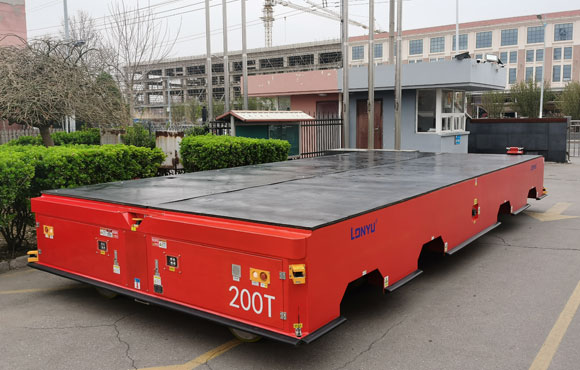
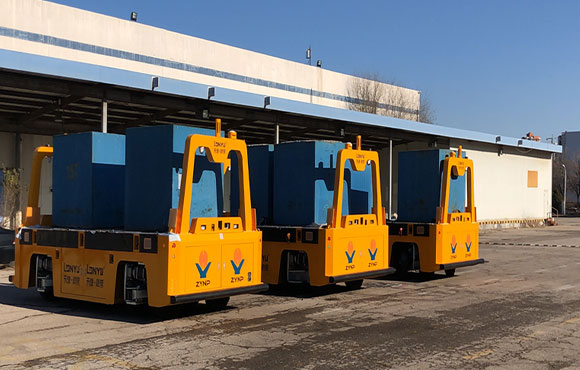
In heavy manufacturing industries such as aerospace, metallurgy, wind energy, efficient material transportation is essential for production, reducing operating costs, and improving workplace safety. Factories often need material handling equipment to move their oversized raw materials, steel products, heavy components, and large assemblies weighing from several tons between workshops, outdoor storage areas, and production zones.
Traditional handling methods, including diesel forklifts, cranes, and fixed-rail carts, often struggle with high labor costs, limited flexibility, safety risks, and increasing maintenance requirements. These challenges are becoming more and more serious in outdoor environments where equipment must operate under changing weather and complex road conditions.
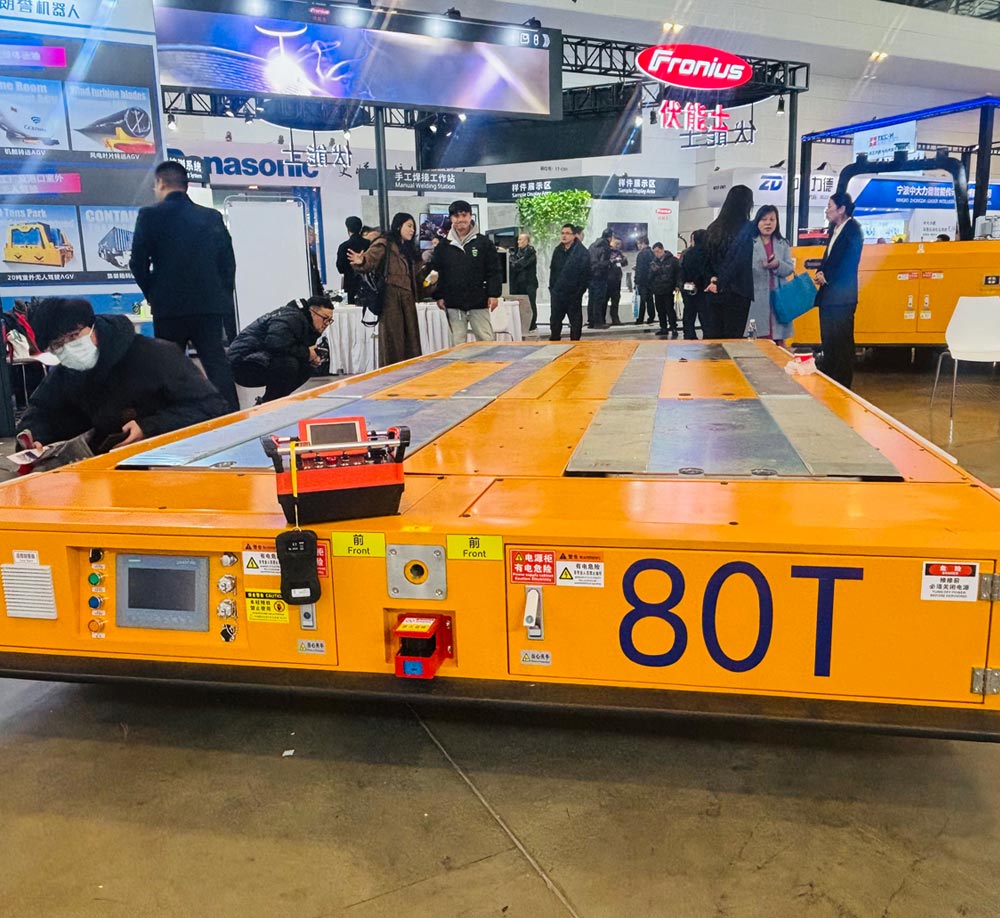
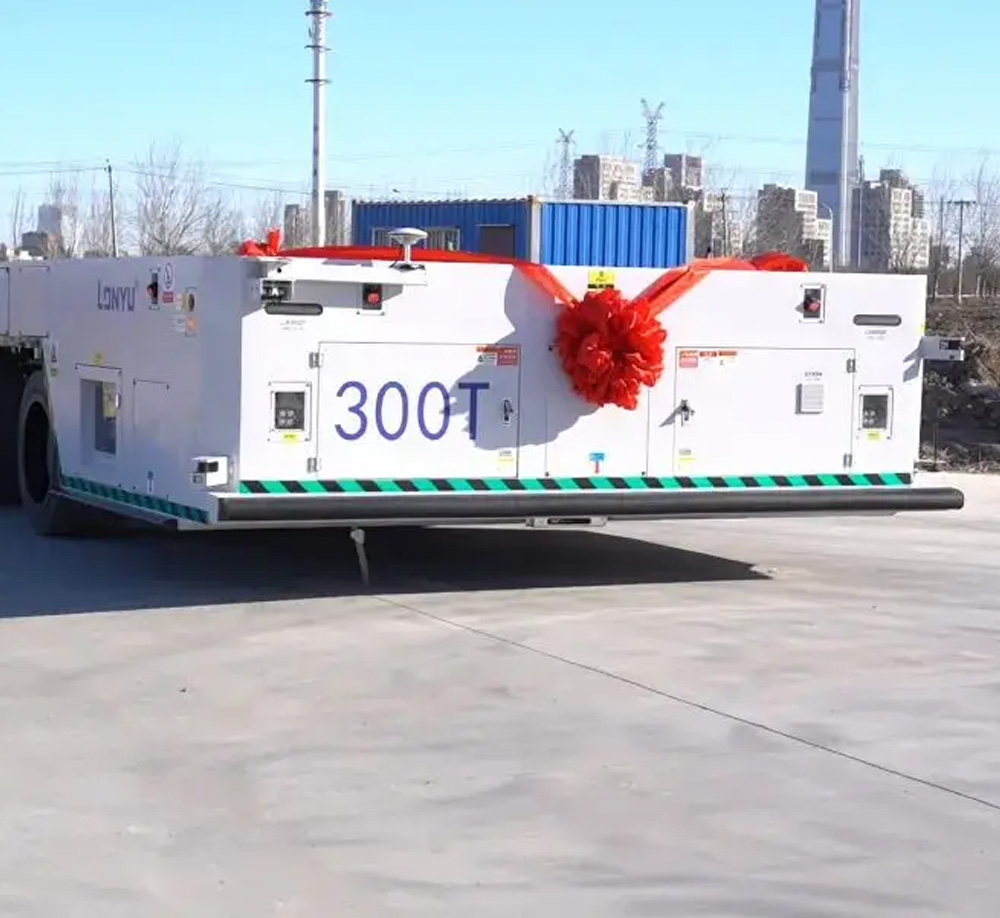
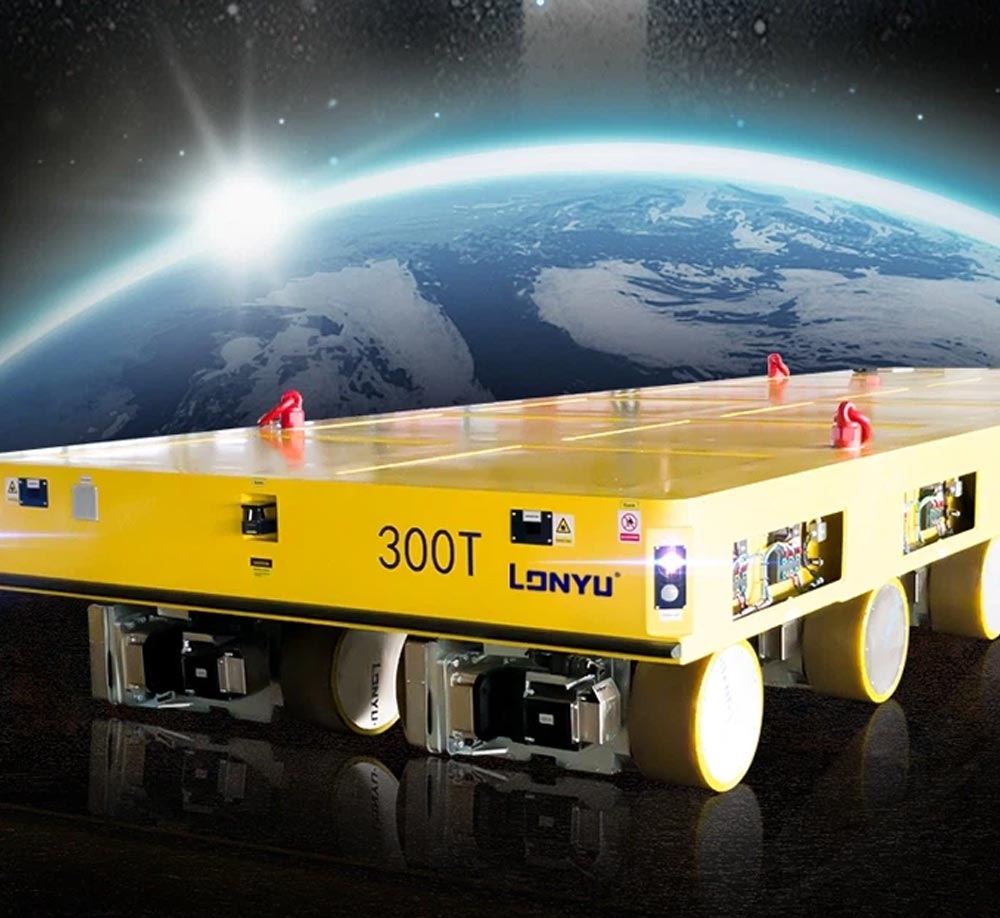
To solve the problems above, more manufacttons urers are adopting automated guided vehicle system (AGV) solutions. Designed for heavy industrial applications, outdoor AGV systems can transport loads from 10 to more than 300 tons while operating independently across factories and yards. Heavy-duty AGV technology can help companies build safe, efficient, and intelligent manufacturing environments through reducing manual intervention and optimizing logistics processes.
Outdoor AGV vs Standard Warehouse AGV
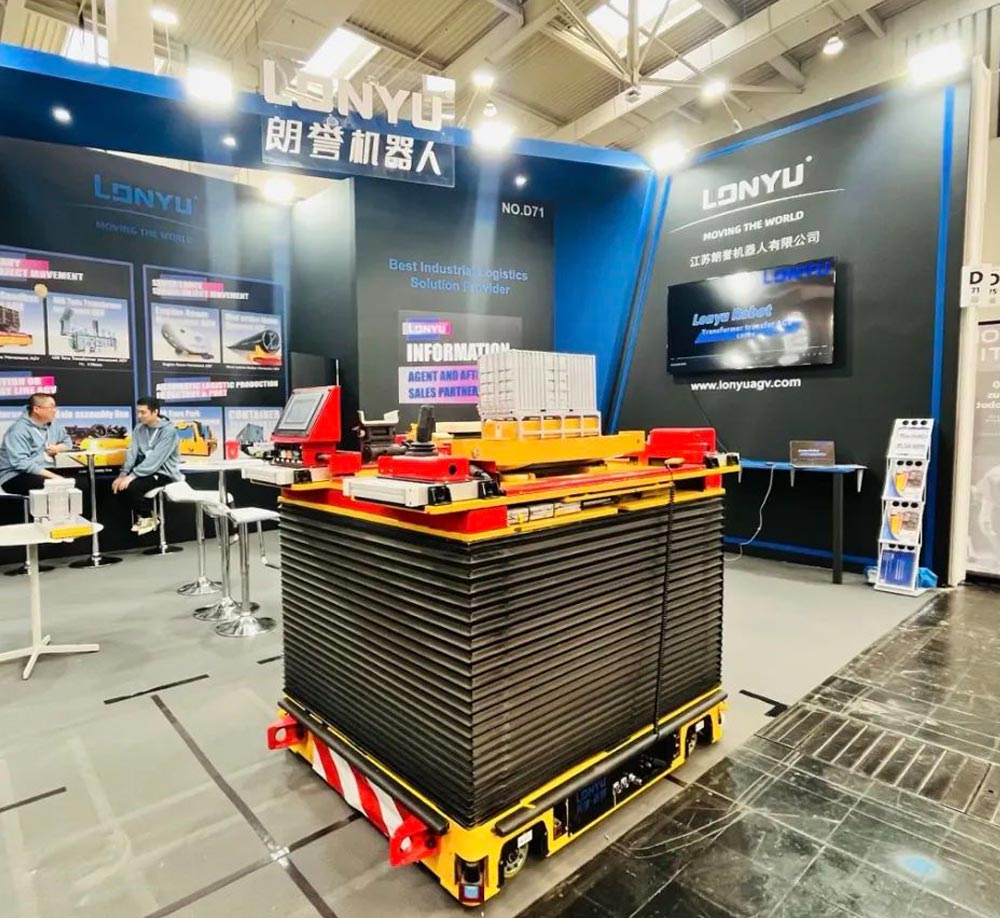
Although both warehouse AGVs and outdoor industrial AGVs use automation technology, their designs are significantly different.
| Feature | Standard Warehouse AGV | Heavy-Duty Outdoor AGV Transfer Cart |
| Payload Capacity | 0.5–5 Tons | 10–300+ Tons |
| Protection Level | IP20–IP54 | IP65–IP67 Weatherproof |
| Driving System | Differential Drive | 4WD/8WD Hydraulic Steering |
| Road Adaptability | Smooth Indoor Floors | Asphalt, Gravel, Slopes, Uneven Roads |
| Navigation | Magnetic Tape / 2D LiDAR | RTK-GPS, Beidou, 3D LiDAR SLAM |
Source: Industry Engineering Standards (IEC 60529 / ISO 3691-4) & Lonyu Heavy-Duty AGV R&D Performance Data.
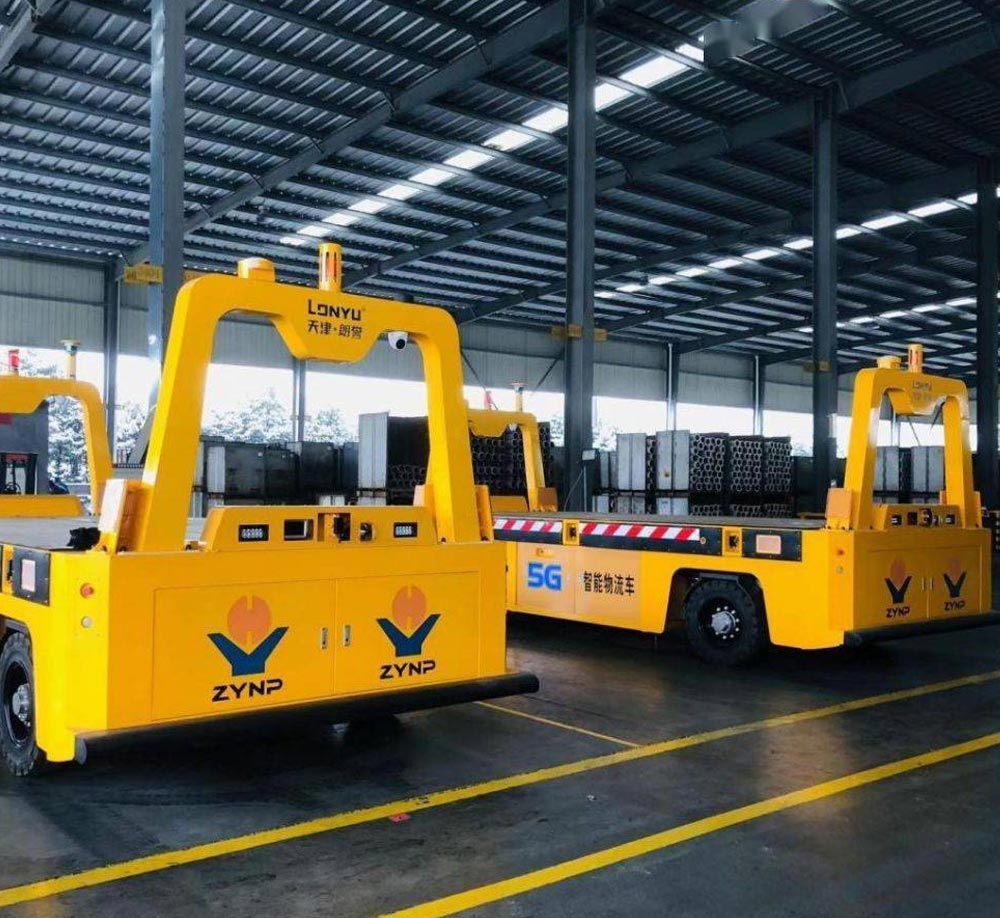
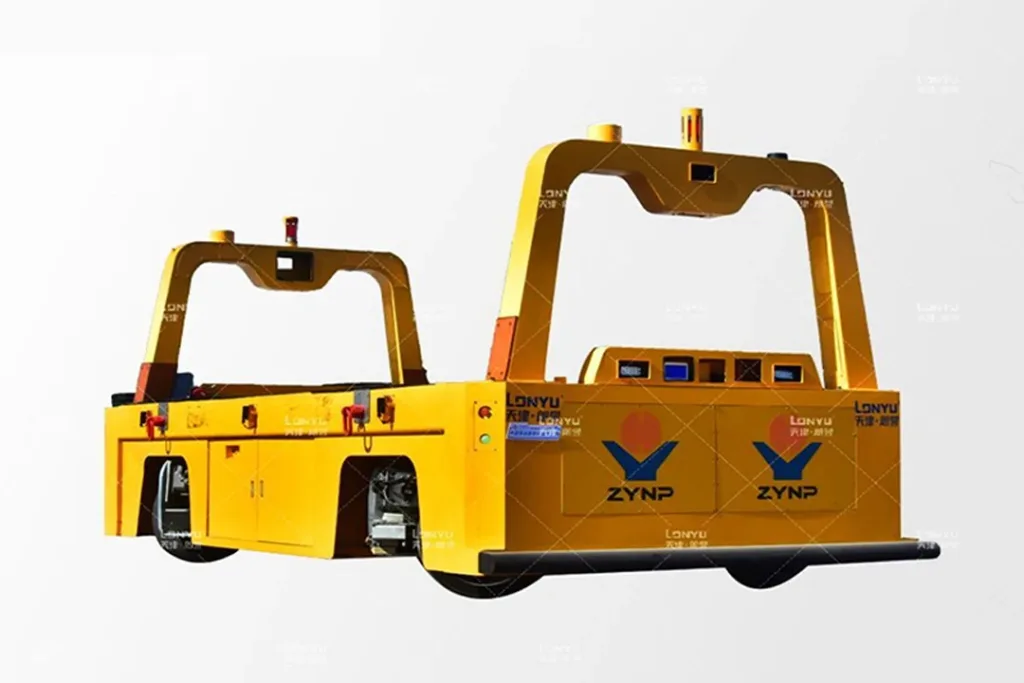
Unlike indoor AGVs designed for controlled environments, a heavy-duty AGV transfer cart is engineered for outdoor industrial applications. It features stronger mechanical structures, higher load capacity, advanced navigation systems, and environmental protection to ensure reliable operation in demanding conditions.
Why Traditional Material Handling Methods Need Upgrading
Safety Risks
Manual transportation using forklifts, cranes, and other equipment, may create potential safety risks when operating with workers in the same area. As production capacity increases and transported materials become heavier, accident risks seem to be difficult to control.
An outdoor AGV automated guided vehicle strengthens safety by combining intelligent navigation, obstacle detection, and automated control technologies. This system reduces human involvement in dangerous transportation tasks while providing more stable and predictable operations.
High Labor and Operating Costs
Heavy manufacturing facilities often require multiple shifts of skilled operators to maintain continuous material movement. Labor expenses, fuel consumption, equipment maintenance, and downtime all contribute to higher logistics costs.
Introducing an industrial AGV robot, manufacturers can automate repetitive transportation tasks and reduce dependence on manual operators. Electric AGV systems also provide lower energy consumption and fewer maintenance requirements compared to traditional diesel-powered equipment.
Limited Flexibility of Fixed Transport Systems
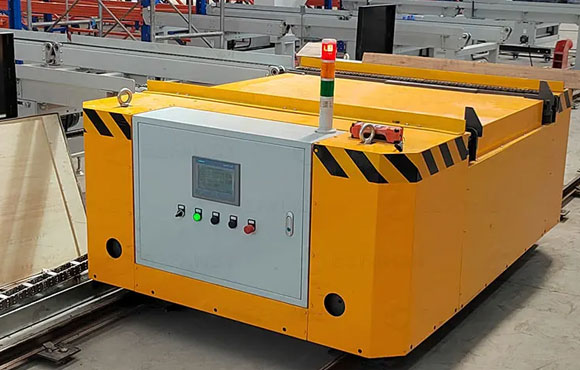
Although rail-guided carts are effective for fixed routes, they cannot easily adapt to changing production layouts. Expanding facilities or modifying transportation paths often requires expensive construction work.
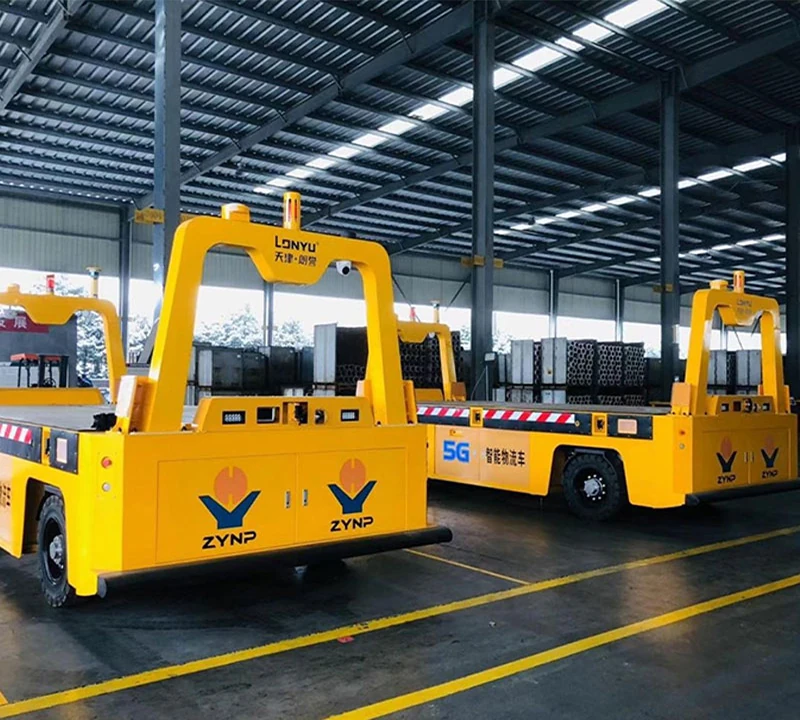
A trackless AGV transfer cart provides greater flexibility because routes can be adjusted through software. This allows factories to optimize layouts and respond quickly to production changes.
Key Technologies of Outdoor Heavy-Duty AGV Transfer Carts
Heavy-Duty Chassis and Hydraulic Load Balancing
A reliable outdoor AGV requires a strong mechanical foundation. Heavy-duty AGV transfer carts use reinforced steel chassis structures and multi-wheel designs to support extremely heavy loads.
Hydraulic suspension and load-balancing systems help distribute weight evenly and maintain wheel contact on uneven surfaces. This reduces vibration during transportation and protects both cargo and vehicle components.
Advanced Steering and High Maneuverability
Unlike conventional transport equipment, modern outdoor AGV systems use independent wheel control technology to achieve flexible movement.
Depending on the application, the vehicle can support:
·90-degree lateral movement
·Crab steering
·Diagonal movement
·360-degree rotation
These capabilities allow the vehicle to transport heavy materials through narrow passages, crowded workshops, and complex outdoor routes with improved accuracy.
Reliable Outdoor Protection
Industrial outdoor environments expose equipment to rain, dust, temperature changes, and corrosion. To maintain stable operation, heavy-duty AGVs are equipped with:
·IP65/IP67 protection systems
·Sealed electrical compartments
·Temperature-controlled battery systems
·Corrosion-resistant coatings
These features ensure reliable operation throughout different seasons and reduce equipment failures caused by harsh conditions.
Multi-Sensor Intelligent Navigation
Outdoor transportation requires more advanced positioning technology. A modern automated guided vehicle system combines multiple navigation technologies, including:
·RTK-GPS and Beidou positioning
·3D Laser SLAM
·AI vision recognition
RTK-GPS and Beidou provide accurate positioning in open yards, while 3D LiDAR SLAM and vision systems support navigation in workshops or areas where they are limited.
Through sensor fusion technology, outdoor AGVs can achieve precise navigation without relying on magnetic tracks or fixed infrastructure.
How Outdoor AGV Transfer Carts Improve Manufacturing Efficiency
Increasing Material Transportation Efficiency Through Automated Operation
By operating on automated schedules, an automated guided vehicle system eliminates waiting times between workflow stages. Vehicles move continuously between processing bays, heat treatment areas, and outdoor storage fields, ensuring uninterrupted supply to the assembly line.
Reducing Manual Labor and Improving Workplace Safety
Safety is paramount when moving multi-ton workpieces. Key automated guided vehicle advantages include 360-degree LiDAR coverage, pressure-sensitive safety bumpers, emergency stop relays, and predictable collision-avoidance algorithms.
Optimizing Production Processes with Flexible Transportation Solutions
Unlike rigid conveyor belts or traditional rail systems, trackless heavy-duty automated guided vehicles (AGV) system offer omnidirectional movement (diagonal, crab-steering, spin-turn). This allows them to maneuver seamlessly through tight industrial corridors and optimize yard space utilization.
Supporting Heavy Load Transportation for Large Workpieces
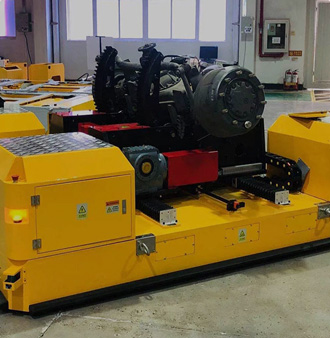
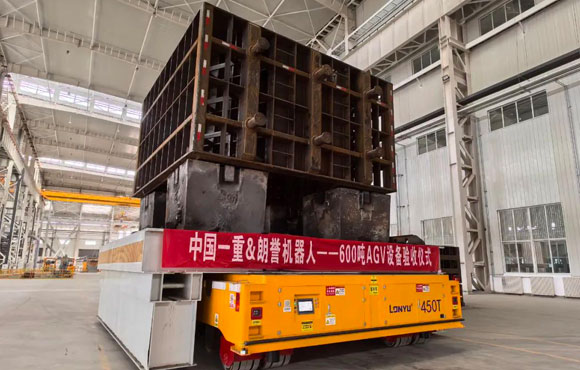
Designed with high-tensile steel frames and specialized hydraulic suspension, outdoor transfer carts easily transport oversized structural steel, wind turbine hubs, engine blocks, and large castings that standard forklifts cannot manage.
Enabling Smart Factory Management Through Real-Time Data Monitoring
Equipped with IoT connectivity, an industrial AGV robot streams operational data—such as battery status, transport speed, location tracking, and load weight—directly to the plant’s MES or WMS (Warehouse Management System).
Heavy Industry Applications of Outdoor AGV Systems
Aerospace and Defense
Aerospace manufacturers use heavy-duty AGV solutions to transport aircraft structures, rocket components, and turbine assemblies between production areas, inspection zones, and testing facilities. Automated handling improves accuracy as well as protects high-value components.
Steel and Metallurgy
Steel plants require reliable transportation for heavy materials such as steel coils, plates, and large metal components. Outdoor AGVs provide stable performance under high-load and demanding industrial conditions.
Wind Energy
Wind turbine production involves moving extremely large components, including blades, nacelles, and tower sections. Outdoor AGV transfer carts improve logistics efficiency across large manufacturing sites and storage yards.
Shipbuilding and Heavy Machinery
Shipyards and heavy equipment factories use AGV systems to transport hull sections, engine components, and oversized machinery structures between workshops and assembly areas.
How to Implement an Outdoor AGV System
Successful deployment of an automated guided vehicle system requires careful planning.
1. Evaluate Site Conditions
Manufacturers should analyze payload requirements, transportation routes, road conditions, load dimensions, and daily transportation frequency before selecting equipment.
2. Select the Right Navigation Technology
Open outdoor yards are suitable for RTK-GPS and Beidou navigation, while complex indoor or semi-enclosed areas benefit from 3D LiDAR SLAM and multi-sensor fusion systems.
3. Integrate with Smart Factory Systems
Modern AGVs can connect with MES, ERP, fleet management software, and industrial networks to enable real-time monitoring and automated scheduling.
4. Verify Safety Performance
Before operation, safety systems including obstacle detection, emergency stops, and collision protection should be tested according to industrial standards such as ISO 3691-4.
Why Choose Lonyu as Your AGV Robot Manufacturer
Choosing an experienced AGV robot manufacturer is essential for successful heavy industrial automation projects.
Lonyu focuses on heavy-duty AGV development and intelligent logistics solutions with:
·16 years of specialized R&D experience in heavy-duty transportation technology
·Payload customization from 10 tons to over 300 tons
·Advanced steering, suspension, and navigation control systems
·Customized solutions for aerospace, steel, wind energy, shipbuilding, and other industries
With professional engineering capabilities and smart factory integration experience, Lonyu provides reliable outdoor AGV solutions designed for complex industrial environments.
Conclusion
Manufacturing industries are shifting toward automation, and traditional transport methods are becoming far less efficient for large-scale material handling by comparison. Heavy-duty AGV transfer trolleys, outdoor AGV platforms and integrated intelligent AGV solutions deliver safer, more flexible and more efficient logistics alternatives for manufacturers. Contact Lonyu to develop a customized heavy-duty AGV solution for your industrial transportation needs.