

Key Takeaways
Long transformers require careful consideration of weight, dimensions, load distribution, route conditions, and positioning accuracy.
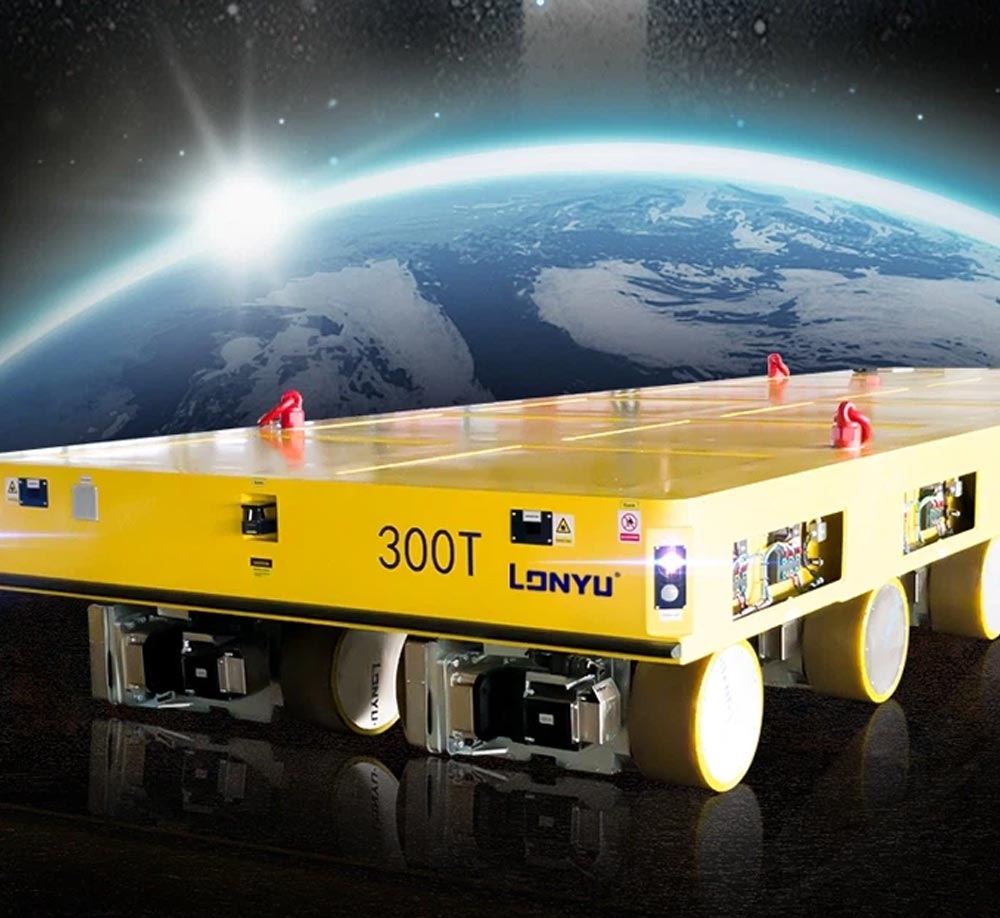
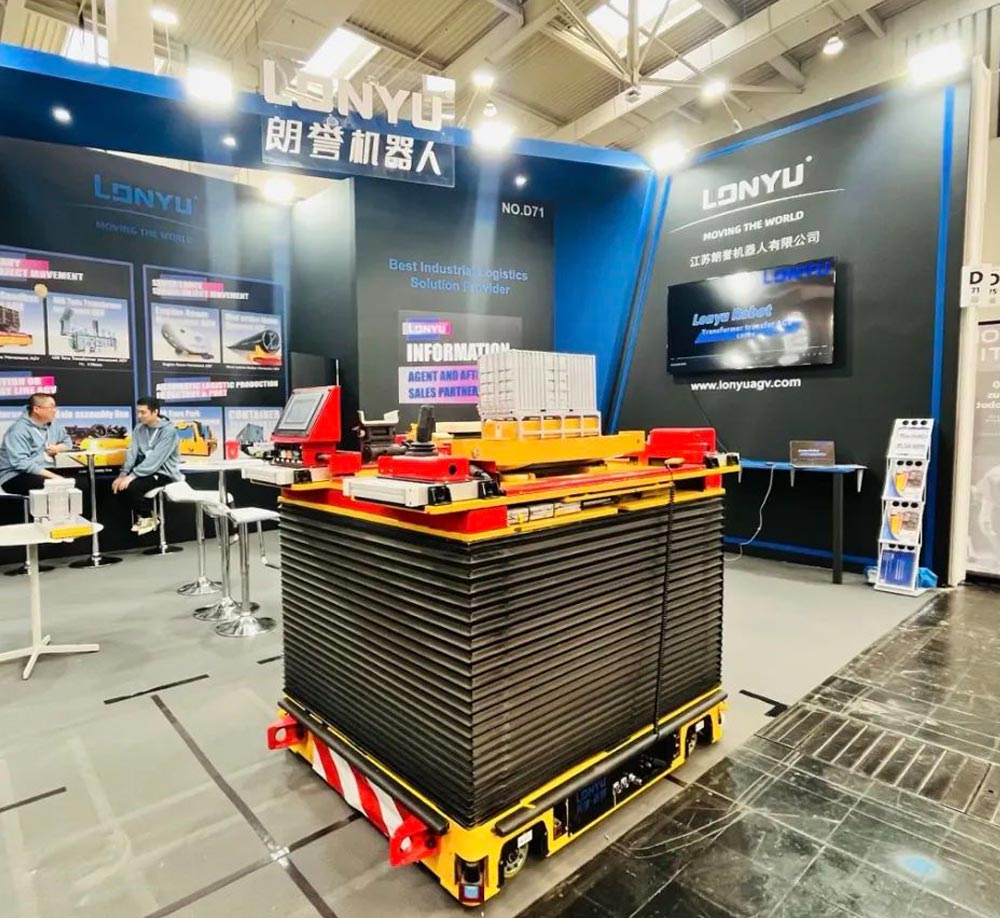
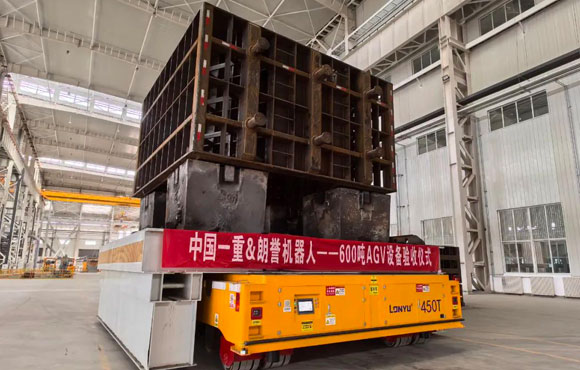
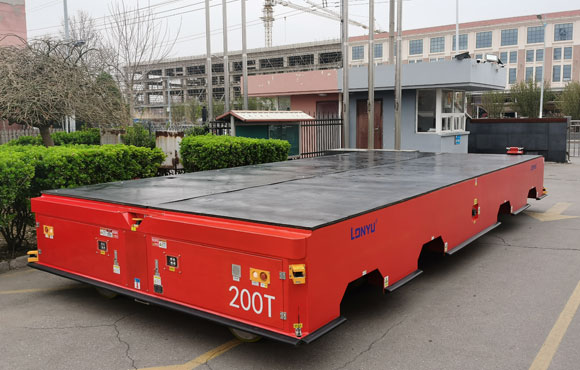
A heavy duty agv can provide a controlled alternative to conventional manual transport methods for demanding industrial handling tasks.
Double-vehicle linkage systems are particularly useful when a long load needs support at multiple positions while both transport units move in coordination.
Safe operation depends on route assessment, stable load support, controlled movement, obstacle detection, and emergency response.
Why Are Long Transformers Difficult to Transport?
Transformers are not difficult to move simply because they are heavy. Their overall dimensions, center of gravity, support points, and required positioning accuracy can make internal transportation more complicated than ordinary material handling.
A heavy load transformer may need to travel between production, testing, assembly, storage, or loading areas. During this process, the transport system must maintain a stable platform while dealing with turns, narrow routes, nearby equipment, and changes in operating direction.
Weight Is Only One Part of the Challenge
For long electrical equipment, total weight should be considered together with load distribution. A transport system must account for the transformer itself, the supporting structure, and the way the load is distributed across the available wheels or support points.
Particularly when the load is relatively long, it needs more attention. If the weight is concentrated in one place, the floor pressure will increase, and the vehicle may also become unstable.Before selecting equipment, manufacturers should therefore confirm the transformer dimensions, weight, center of gravity, support locations, and factory floor conditions.
Long Loads Also Require Better Maneuverability
Conventional transport equipment can become difficult to operate when a transformer needs to move through a restricted production area. A long body increases the space required for turning and alignment.
Heavy load transport inside a factory should not be evaluated only by rated capacity. Directional flexibility, controllable speed, braking, positioning, and route clearance are also important.
What Should a Heavy-Duty AGV Provide for Transformer Handling?
A suitable transport system should match the actual handling environment. For transformer manufacturing and related power-equipment facilities, several factors deserve attention.
Load Capacity and Load Distribution
The first step is to confirm whether the vehicle can safely handle the complete transport load. The basic relationship can be expressed as:
Total transport load = payload + vehicle weight + handling accessories
The actual selection should also consider wheel loading, floor capacity, load-support locations, and the operating conditions of the facility.
Navigation and Safety
A modern AGV can combine automatic navigation with sensors and control systems to maintain a planned route. For driverless industrial trucks, ISO 3691-4:2023 defines safety requirements and verification methods, and specifically includes automated guided vehicles within its scope.
The standard also emphasizes that the operating zone affects safe operation. In practical transformer handling, this means the route should be assessed for obstacles, clearances, floor conditions, pedestrian movement, and other potential hazards before regular operation begins.
Controlled Movement Is Essential
When moving large transformers, acceleration should be slow, and steering should be stable. A suitable transportation system must ensure that starting, stopping, turning, and final positioning are all under control. The value of handling lies not in the movement itself, but in ensuring the load remains fully controllable throughout the process.
How Does a Double-Vehicle Linkage AGV Handle Long Transformers?
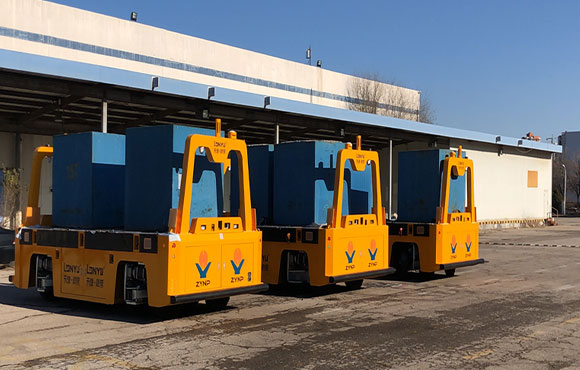
When a transformer is too long for convenient support by a single transport unit, a double-vehicle configuration offers another approach. Two AGV units can support different sections of the load while operating as a coordinated transport system.
Two Vehicles Create Distributed Support
Instead of concentrating the entire long load on one platform, two coordinated vehicles can provide support at separate positions. This arrangement can be useful when the transformer has a long body and requires more flexible positioning of its support points.
The two vehicles must remain coordinated during movement. Their relationship is therefore not simply that of two independent carts traveling together. Their control system needs to maintain the required relative position while the load is being transported.
Adjustable Linkage Distance Adds Flexibility
Different transformers can have different lengths and support requirements. A fixed distance between two transport units may therefore limit the range of loads that can be handled.
An adjustable linkage distance allows the transport configuration to be adapted to different load dimensions. This can make a double-vehicle system more practical for production environments where equipment sizes are not always identical.
Coordinated Movement During Turning and Positioning
Long loads can create challenges during changes of direction. If the two vehicles move inconsistently, the load may become misaligned.
A coordinated system can instead manage movement as one transport task. Depending on the system configuration, movement can include forward and backward travel, lateral movement, and rotation in place. This type of flexibility can be valuable when a transformer needs to be positioned accurately inside a production or testing area.
How Can Transformer Transport Safety Be Improved?
Safe operation begins before the AGV starts moving. The transport route, floor, load-support method, and operating procedures should be evaluated as one system.
Step 1: Confirm the Load and Route
Before transportation, confirm the transformer weight, dimensions, center of gravity, and support points. Then inspect the planned route for floor capacity, clearance, obstacles, slopes, turning areas, and pedestrian activity.
Step 2: Set the Transport Configuration
The distance between support units should match the load dimensions and the intended support positions. The load should remain properly supported throughout the planned movement.
Step 3: Test Movement at Controlled Speed
Initial testing should cover straight movement, directional changes, stopping, and final positioning. Operators can use these tests to identify route or clearance issues before normal production operation.
Step 4: Verify Safety Functions
Obstacle detection, collision protection, alarms, emergency stopping, and braking should be checked before routine use. ISO 3691-4:2023 specifically addresses areas such as stability, safeguarding, steering, load handling, overspeed, warning systems, and loss of communication for applicable driverless industrial truck systems.
Transformer transportation also deserves attention beyond the vehicle itself. IEC 60076-1:2011 covers power transformers and includes a specific transport clause, along with requirements related to safety, environmental considerations, and tank testing.
30-Ton Double-Vehicle Linkage AGV for Long Transformer Handling
For applications that require coordinated handling of long and heavy loads, Lonyu’s 30 ton Double-Vehicle Linkage AGV combines two transport units into one coordinated system.
The AGV has a 30-ton rated load, a vehicle mass of 9 tons, and is designed to carry products from 11 to 27 meters, with an adjustable linkage distance. Its listed vehicle dimensions are 5000 × 3000 × 660 mm, with a 140 mm lifting height and 80 mm chassis ground clearance.

| Specification | 30-Ton Double-Vehicle Linkage AGV |
| Rated load | 30 tons |
| Vehicle mass | 9 tons |
| Suitable load length | 11–27 m |
| Movement | Forward/backward, lateral, in-place rotation |
| Lifting height | 140 mm |
| Navigation | Manual control / laser automatic navigation |
| Protection level | IP65 |
| Battery | Lithium battery |
| Application | Indoor and outdoor |
The vehicle uses differential drive and supports multidirectional movement. Its design also includes a floating plate mechanism, hydraulic suspension, and load-related detection functions. These features are intended to help maintain platform stability when handling large loads.
For coordinated operation, the two vehicles communicate through encrypted Wi-Fi. Front and rear cable sensors and angle-deflection sensors monitor the relative movement of the vehicles to help maintain the linkage during transportation.
Safety functions include laser obstacle detection, contact collision protection, sound and light alarms, emergency-stop controls, and automatic stopping when an obstacle is detected. The listed laser detection system covers a 0°–270° detection angle and can detect obstacles at distances of up to 10 m.
For transformer manufacturers, the value of this configuration is its ability to combine distributed support with flexible movement. Instead of selecting equipment only according to maximum payload, the system can be considered according to the transformer length, support requirements, available route, and required positioning method.
When Should You Consider a Double-Vehicle Linkage AGV?
A double-vehicle system can be worth evaluating when the load is both heavy and long, especially when conventional forklifts or fixed transport routes provide limited flexibility.
It may be suitable when:
- the transformer requires support at two separated positions;
- the load length makes single-platform handling difficult;
- the factory has restricted maneuvering space;
- lateral movement or in-place rotation is useful;
- repeated internal transformer transportation is required.
The right choice should ultimately come from the actual load and site conditions. A detailed assessment of transformer dimensions, weight distribution, floor conditions, route layout, required movement, and safety requirements can help determine whether a double-vehicle linkage system is appropriate.
FAQ
Q1: Why use two AGVs to transport a long transformer?
A: Two coordinated vehicles can support different sections of a long transformer and distribute the transport task across separate support positions. This can provide greater flexibility than relying on one transport platform for certain long-load applications.
Q2: What should be checked before using an AGV for transformer handling?
A: Check the transformer weight and dimensions, center of gravity, support points, floor capacity, route clearance, turning space, pedestrian conditions, navigation method, and emergency safety functions.
Q3: What makes adjustable linkage distance useful for transformer transportation?
A: Transformer dimensions and support positions can vary. Adjustable linkage distance allows the two transport units to be configured for different load lengths and support requirements.
Q4: Can the 30-ton double-vehicle linkage AGV move in different directions?
A: Yes. The listed movement modes include forward and backward travel, horizontal movement, and rotation in place. This provides flexibility when a long transformer needs to be positioned within a constrained industrial area.
Conclusion
Safe transformer handling requires more than sufficient payload capacity. The transport system must also address load distribution, route conditions, maneuverability, positioning, and safety.
For long transformer applications, a double-vehicle linkage approach provides a practical way to combine two coordinated transport units. Lonyu’s 30-ton system is designed for 11–27 m loads and offers adjustable linkage distance, multidirectional movement, and multiple safety functions.
If your project involves long transformers or other heavy loads, evaluating the load dimensions and transport route first can provide a clearer basis for selecting the appropriate AGV configuration. Contact us to discuss your transformer handling requirements and find a suitable AGV solution for your application.