

1. Introduction
Driven by automation technology, global logistics and manufacturing industry are undergoing a profound change. With industrial automation expanding from confined factory environments to a wide range of outdoor scenarios, including industrial parks, ports and mining areas, the application scenarios of AGV technology have undergone a revolutionary transformation. What began as specialized indoor material handling equipment has evolved into versatile solutions capable of operating across diverse operational landscapes.
There is a common misunderstanding in the industry, that is, outdoor AGV is only an indoor AGV equipped with different tires or basic weather protection. This oversimplification fails to recognize the fundamental technological disparities that distinguish these two systems. The transformation from indoor operation to outdoor operation is not a superficial modification, but a comprehensive reconstruction of the core technical architecture of AGV systems.
This article provides an in-depth, technical comparison between indoor AGVs and outdoor AGVs, dissecting their fundamental differences across environmental perception, navigation systems, chassis design, communication infrastructure, and control algorithms. By examining these core components, industry professionals, logistics managers and potential investors can gain critical insights to choose the material handling equipment that best suits their specific operational requirements. As a leading AGV robot manufacturer, Lonyu Robot has accumulated rich professional knowledge in these two fields, which enables us to make a wise analysis of these technical differences.
2. Indoor AGVs: Navigation Specialists in Controlled Environments
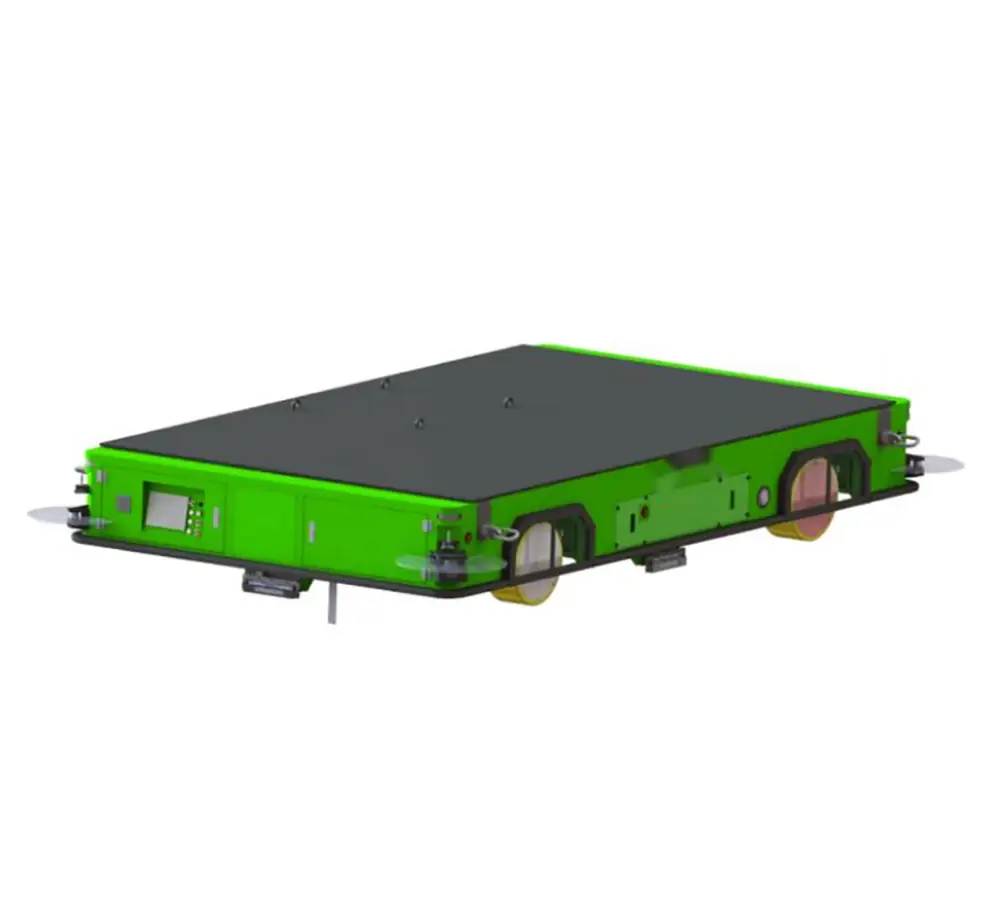
Indoor AGV represents the established foundation of automatic guided vehicle technology, and it is optimized for the predictable and controlled conditions of manufacturing facilities, warehouses and distribution centers. These environments provide stable operating parameters that allow for precision-focused engineering solutions.
2.1 Environmental Characteristics
Indoor operating environment provides several advantages for the design of AGV.
- Consistent lighting conditions: Uniform lighting, no direct sunlight or dark challenges.
- Precision-surfaced floors: Smooth, level concrete surfaces with minimal gradients or imperfections.
- Structural barriers: Predictable, mostly static barriers, including equipment, racks and occasional human workers.
- Stable climate control: Keep the temperature and humidity and protect from all weather factors.
- Controlled space: Definite path and limited operation layout changes.
These controlled conditions enable indoor AGV to give priority to accuracy and efficiency, rather than environmental flexibility, thus making them specialized tools to optimize internal logistics.
2.2 Technical Architecture Components
2.2.1 Positioning and Navigation Systems
Indoor AGV mainly uses three kinds of mature navigation technologies, each of which is optimized for the controlled indoor environment.
Laser SLAM (Simultaneous Localization and Mapping) is the most advanced indoor navigation solution, which uses 2D or 3D LiDAR sensors to scan and draw the surrounding environment continuously. By comparing real-time sensor data with the pre-built environmental maps, these systems have achieved excellent positioning accuracy of 5-10mm. This technology provides excellent flexibility, and realizes dynamic path adjustments without physical modification of facilities.
QR code/visual tag navigation adopts a machine-readable code grid, which is placed on the floor at regular intervals. AGV’s downward vision system recognizes these codes to determine the exact position and direction, providing excellent accuracy up to 1mm. This cost-effective solution is especially popular in electronic manufacturing and e-commerce fulfillment centers where absolute accuracy is crucial.
Magnetic navigation relies on magnetic tape or labels embedded or fixed on the floor. AGV detects these magnetic signals through special sensors, and follows the predetermined paths with high reliability. Although not as flexible as SLAM systems, magnetic navigation provides excellent stability and anti-environmental interference ability, making it ideal choice for fixed route applications in automobile assembly lines.
2.2.2 Control Systems
Indoor AGV control systems have extremely high accuracy, and the positioning accuracy is usually required in millimeters. Advanced motion controllers perform sub-millimeter adjustments to ensure accurate docking with production equipment, conveying systems or storage locations. These control systems give priority to smooth acceleration curve, minimum vibration and accurate stopping accuracy, which are the basic characteristics when dealing with sensitive parts or operating near workers and machines.
2.2.3 Communication Architecture
Indoor AGV communication mainly depends on the powerful Wi-Fi 6 or industrial 5G networks covering the whole facility. The automated guided vehicle systems support low-delay and high-reliability communication, which is very important for centralized fleet management, real-time traffic control and accurate coordination between multiple vehicles. Compared with the outdoor system, the stable and interference-free indoor environment can realize efficient wireless communication and has the lowest redundancy requirements.
2.3 Lonyu’s Technological Advantages in Indoor AGV Systems
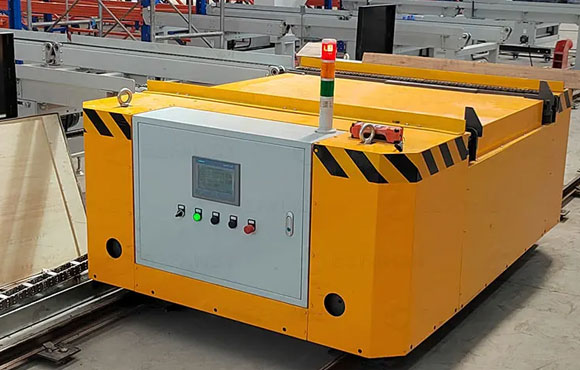
As a famous manufacturer of AGV robot, Lonyu Robot has established its technical advantages in indoor AGV control systems through proprietary algorithms and precision engineering. Our advanced motion control algorithm can achieve excellent stability and accuracy even in complex and dynamic indoor environment, when obstacles and workflow patterns are constantly changing.
Lonyu’s indoor AGV platforms feature multi-layered obstacle detection and avoidance systems that combine primary LiDAR sensing with supplementary ultrasonic and tactile sensors for comprehensive environmental awareness. Our proprietary fusion algorithm processes data from multiple sensors to create an accurate environmental model and realize intelligent decision-making for safe navigation around workers, mobile devices and temporary obstacles. This advanced method ensures reliable operation even in the most dynamic manufacturing environment, and establishes Lonyu’s leading position in the field of precision material processing equipment.
3. Outdoor Automated Guided Vehicles: All-Terrain Performers in Complex Environments
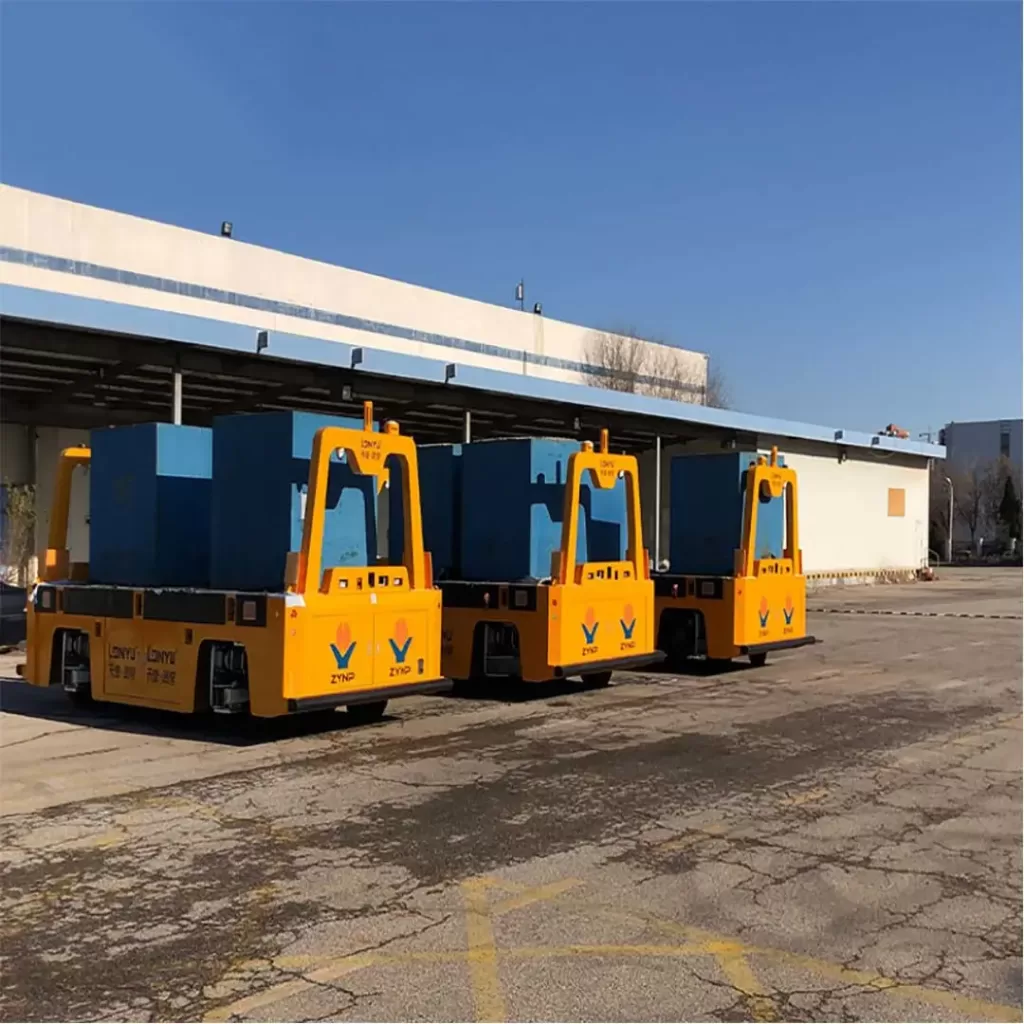
Outdoor AGVs represent the evolutionary frontier of automated guided vehicle technology, engineered to conquer the unpredictable challenges of unconstrained outdoor environments. Despite the extreme environmental changes and unpredictable obstacles, these robust systems must operate reliably.
3.1 Environmental Challenges
There are huge obstacles in the outdoor operating environments and completely different technical methods are needed.
- Extreme lighting changes: From strong direct sunlight to total darkness, challenging shadows and reflections.
- Bad weather conditions: Rain, snow, fog, dust, strong winds, and extreme temperature ranging from -20°C to +50°C.
- Unpredictable terrain: Uneven surfaces, slopes, potholes, debris and temporary obstacles.
- Dynamic environmental factors: Moving vehicles, unpredictable pedestrian traffic, wild animals and changing operation layouts.
- Signal interference: Atmospheric interference, signal attenuation and accidental complete signal loss.
These harsh conditions require outdoor AGV to give priority to environmental adaptability, sensor redundancy and stable operation, rather than ultra-precision focusing of indoor automated guided vehicle.
3.2 Core Technical Architecture Differences
3.2.1 Environmental Perception: Multi-Sensor Fusion
Outdoor AGV relies on complex sensor fusion architecture, which integrates a variety of complementary sensing technologies to ensure reliability when a single sensor fails or its performance declines. This multi-layered approach usually includes.
- Multi-beam LiDAR: 3D laser scanning mainly used for remote obstacle detection and mapping, which can resist most weather conditions.
- High-resolution cameras: Enhanced HDR and thermal imaging technology for object classification and detail recognition.
- RTK (Real-Time Kinematic) GPS: Centimeter-level satellite positioning when signals are available.
- IMU (Inertial Measurement Unit): Continuous positioning during the interruption of satellite signals.
- Ultrasonic sensors: Short-range obstacle detection for Close-range Maneuvering.
- Radar: Weather resistance detection in fog, dust or heavy precipitation.
This comprehensive sensor suite has created an elastic sensing system, and no single technical failure will affect the overall operational safety, thus solving the fundamental challenge of outdoor reliability.
3.2.2 Chassis and Drivetrain Design
Outdoor automated guided vehicle chassis represents a fundamental difference from indoor designs, and it is specially designed for environmental flexibility and terrain adaptability.
- Heavy-duty suspension systems: Advanced long-stroke independent suspension system can maintain stability across uneven road surface.
- Reinforced frame structure: Strong structural design, able to withstand vibration, impacts and environmental pressure.
- High-torque transmission system: Powerful motors and enhanced traction control, suitable for slopes, wetlands and various terrain.
- Large-diameter, heavy-duty tire: Pneumatic or solid rubber tire, specially designed for outdoor conditions, with enhanced wear resistance.
- Excellent ground clearance: Elevated chassis to pass through obstacles, uneven terrain and temporary obstacles.
3.2.3 Environmental Protection
Outdoor AGV has industrial-grade environmental seal, usually rated as IP 65 or higher, which provides complete protection against dust entry and low-pressure water jet from any direction. Key electronic components have extra conformal coating and redundant seals to ensure operation in rain, snow and high humidity. Thermal management systems maintains the optimum working temperatures in extreme environmental ranges, from freezing conditions to high temperature.
3.2.4 Decision-Making and Path Planning
Outdoor AGV navigation systems adopts complex dynamic path planning algorithms, which capable of handling dynamic and unpredictable environmental changes. These systems continuously evaluate multiple potential routes, adjusting trajectories in real-time to avoid unexpected obstacles, adverse weather conditions, or temporary route restrictions. Unlike indoor automated guided vehicle, which usually follows the optimized fixed paths, outdoor vehicles must constantly reassess their environment and make independent route decisions to run with a higher autonomy.
3.2.5 Communication Redundancy
Outdoor AGV communication systems needs full redundancy to keep the connection in challenging environment.
- Dual-mode wireless: Support 5G/LTE and Wi-Fi at the same time, automatically and seamlessly switch.
- Satellite communication backup: It is suitable for areas without ground wireless coverage.
- Local Mesh Network: Vehicle-to-vehicle communication in cooperation with the fleets.
- Edge computing ability: Autonomous operation during communication interruptions.
This multi-layered communication approach ensures uninterrupted connectivity and operational continuity regardless of environmental challenges.
4. Core Technical Differences Comparison Table
The following table systematically compares the basic technical differences in key performance between indoor AGV and outdoor AGV:
| Comparison Dimension | Indoor AGVs | Outdoor AGVs |
| Primary Navigation Technology | Laser SLAM, QR code, magnetic guidance | GPS/RTK + IMU + 3D LiDAR fusion |
| Positioning Accuracy | ±1mm to ±10mm | ±2cm to ±10cm (depending on conditions) |
| Environmental Protection Rating | IP20 to IP40 | IP65 or higher (typically IP67) |
| Suspension System | Basic or none (fixed chassis) | Advanced independent suspension with long travel |
| Drive System | Low-profile, precision-optimized | High-torque, heavy-duty with traction control |
| Environmental Adaptability | Limited to controlled indoor conditions | All-weather operation: rain, snow, dust, temperature extremes |
| Sensor Configuration | Primary LiDAR + secondary ultrasonic | Multi-sensor fusion: 3D LiDAR + radar + visual + GPS + IMU |
| Communication Requirements | Single reliable Wi-Fi/5G network | Multi-network redundancy with satellite backup |
| Terrain Capability | Smooth, level floors only | Uneven terrain, slopes, obstacles, variable surfaces |
| Primary Design Focus | Precision, efficiency, quiet operation | Durability, reliability, environmental resilience |
Source: Adapted from the 2025 technical report of Industrial Automation Standards Committee (IASB): Comparative Analysis of AGV Systems.
5. Lonyu Robot: Technology Empowerment, Comprehensive Solutions
As an innovative AGV robot manufacturer with profound professional knowledge in the field of indoor and outdoor automation, Lonyu Robot has successfully bridged the technical gap between the two fields. Our technological development has proved how advanced indoor algorithms can adapt to and enhance the harsh requirements of outdoor operation.
5.1 Technological Expertise Expansion
Lonyu strategically extended its core competence in precise control and environmental awareness from indoor to outdoor applications. Our proprietary algorithms were originally developed for the ultra-precision requirements of indoor navigation, and now it has been enhanced, which has strong environmental adaptability characteristics that are crucial to outdoor reliability. This technology transfer leads to the outdoor AGV to maintain extraordinary accuracy when needed, while demonstrating the flexibility required by the unconstrained environment.
Our R&D team has created a unified technical architecture, supporting indoor and outdoor platforms, sharing core control principles, and implementing optimization for specific environments. This method ensures consistent performance, reliability and user experience across our entire product line, making Lonyu a comprehensive supplier of automatic guided vehicle technology solutions.
5.2 Customized Solution Capabilities
Lonyu focuses on providing a fully integrated “Chassis + Algorithm” solution, tailored to specific customer needs. In addition to our standard product lines, we are also good at developing customized AGV platforms to meet unique operational challenges. Our engineering team works closely with customers to analyze environmental conditions, load requirements, navigation challenges and integration requirements to design the best solutions.
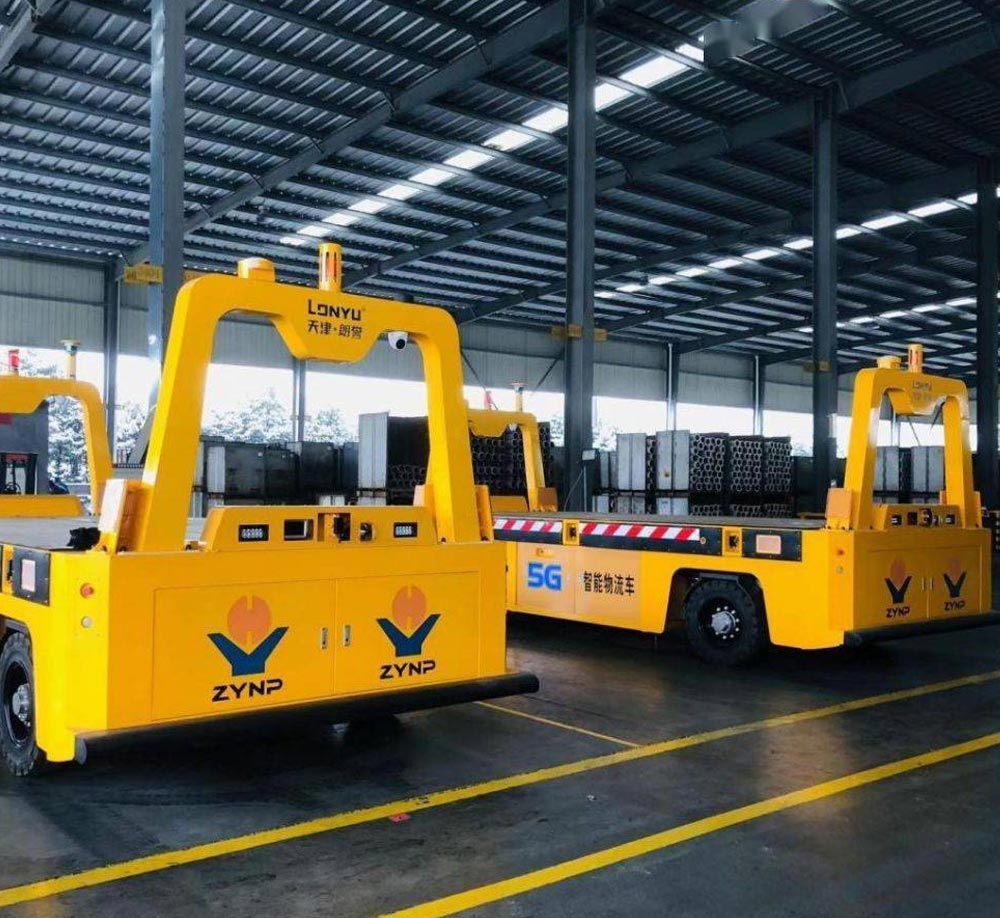
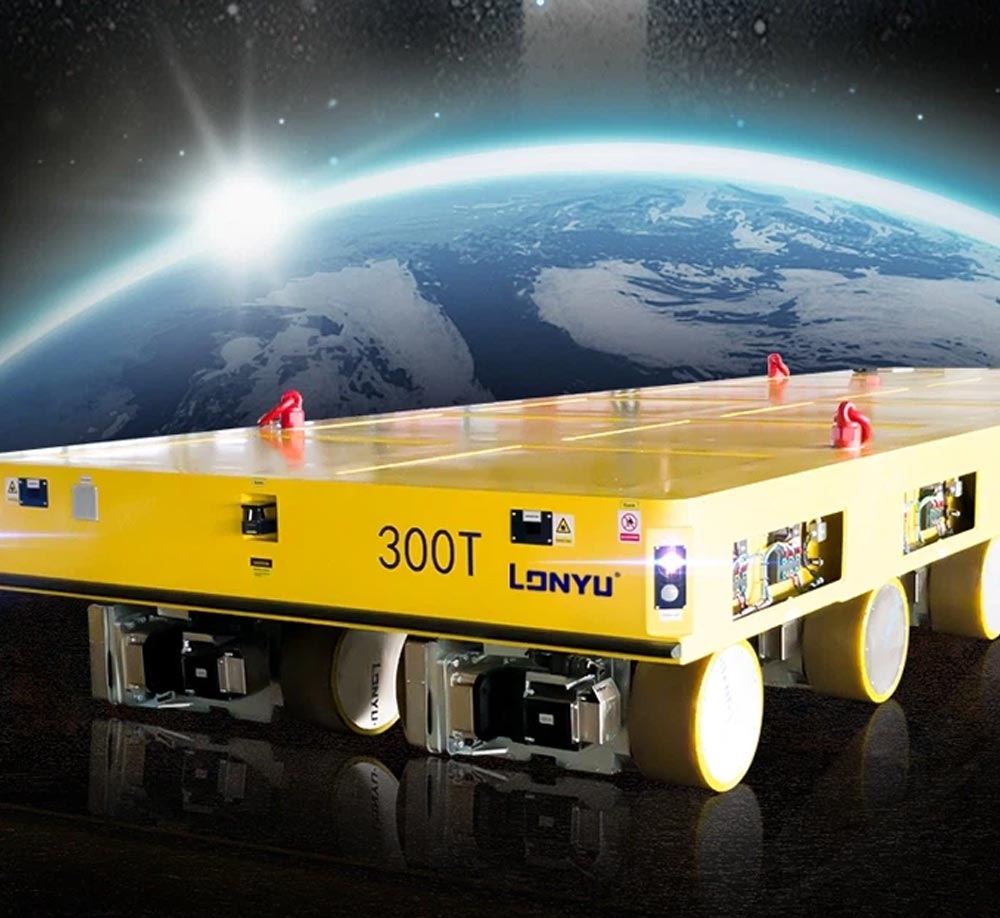
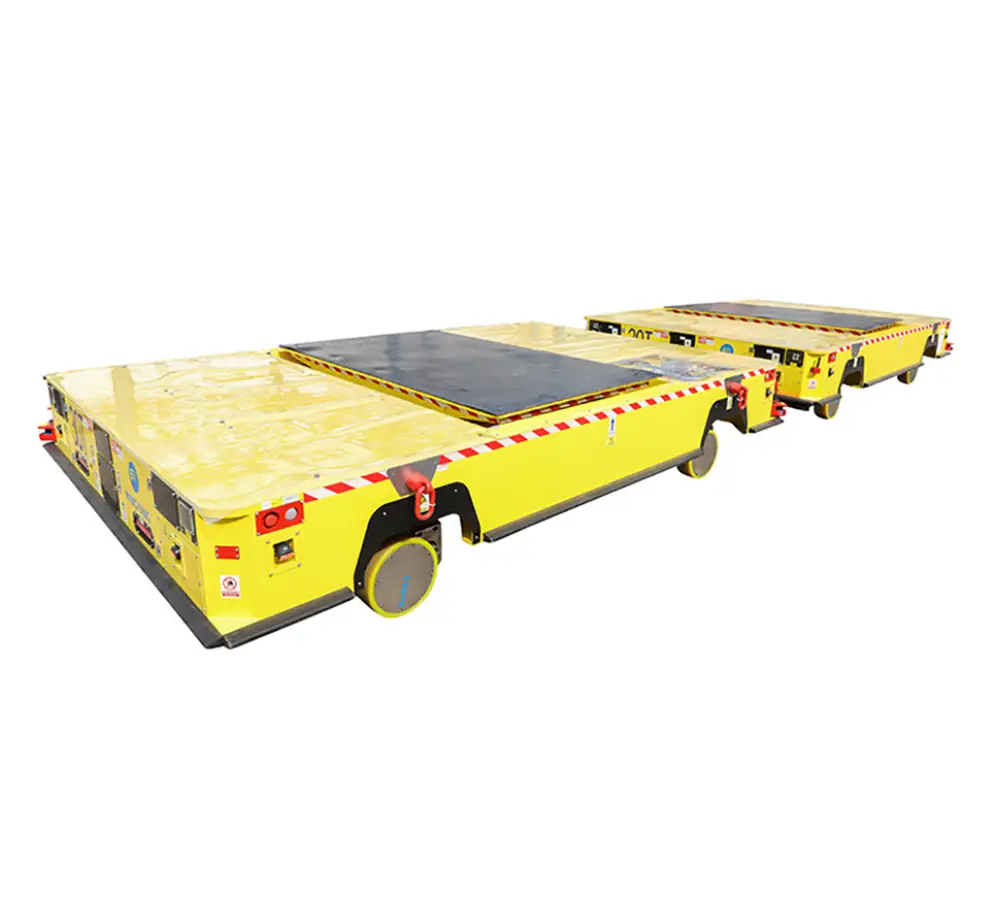
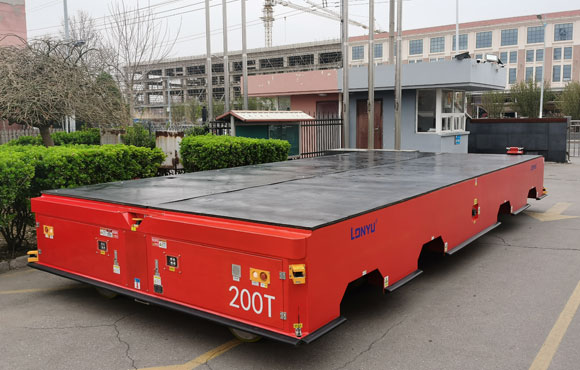
For outdoor applications, Lonyu provides special chassis designs, including heavy platforms for industrial sites, all-terrain vehicles for construction sites and weather-resistant vehicles for port operations. Every customized solution contains appropriate sensor fusion, navigation algorithms and environmental protection measures to ensure reliable performance in the target environment.
5.3 Industry Applications and Implementation Success
Lonyu’s double expertise in indoor and outdoor material handling equipment has been successfully implemented in different industries.
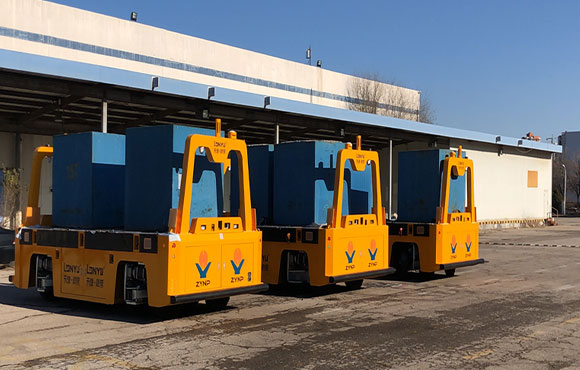
- Logistics in manufacturing park: seamless transportation of materials between production buildings across outdoor venues.
- Airport ground support: handling of luggage and cargo throughout the apron and operation areas.
- Port and dock operations: container transportation in challenging coastal environment.
- Mining and resource exploitation: transportation of materials under rough and dusty outdoor conditions.
- Large-scale logistics parks: transportation between facilities across large operational areas.
These implementations demonstrate Lonyu’s capability to deliver comprehensive automation solutions that bridge indoor and outdoor operations, creating truly integrated logistics ecosystems.
6. Conclusion
The comparison between indoor AGV and outdoor AGV reveals that they are fundamentally different systems, not just variants of the same technology. The transition from indoor to outdoor operation represents a comprehensive technological transformation affecting every core system component.
Indoor AGVs are precision instruments optimized for controlled environment, and its advanced navigation systems have achieved excellent precision. In contrast, outdoor AGVs function as robust, all-terrain platforms engineered for environmental resilience, relying on multi-layered sensor fusion and redundant systems to maintain reliability in unpredictable conditions.
Understanding these fundamental differences is essential for businesses seeking to implement appropriate material handling equipment solutions. The choice between indoor and outdoor AGV systems should be determined by specific environmental conditions, precision requirements and operational challenges, rather than superficial considerations.
As a leading AGV robot manufacturer, Lonyu Robot has comprehensive professional knowledge in these two fields, and continues to promote the technology of automatic guided vehicle by expanding the boundaries of accuracy and environmental adaptability. By understanding and solving these basic technical differences, we provide optimized solutions to meet the changing automation requirements of modern industry in indoor and outdoor operating environments.